
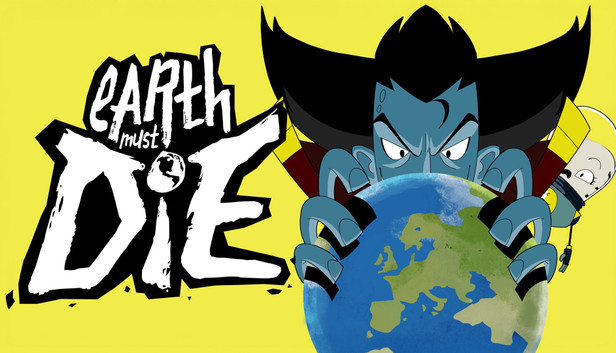
Earth Must Die: A Relentless Descent into a World That Has Already Given Up
There’s a certain kind of game that doesn’t try to comfort you. It doesn’t soften its edges, explain itself too clearly, or pretend that things will work out in the end. Earth Must Die is one of those games. From its opening moments, it makes a quiet but unmistakable statement: this world is broken beyond repair, and survival is no longer the goal. Endurance is.
At first glance, Earth Must Die looks like a familiar post-apocalyptic action title. A ruined planet. Scattered remnants of civilization. Hostile forces roaming what’s left of human territory. But it quickly becomes clear that the game isn’t interested in spectacle or heroics. Instead, it leans into something darker and more uncomfortable — the idea that humanity’s final act may not be redemption, but resistance without hope.
It’s a game that lingers. Not because it’s flashy or loud, but because it refuses to let you look away from the consequences of collapse.
A Setting Where the End Has Already Happened
Earth Must Die is set decades after ecological failure has rendered most of the planet uninhabitable. Oceans have receded into poisoned basins. Cities stand half-buried in ash and sand. Forests are skeletal remains, frozen in time. Whatever catastrophe ended the world is never spelled out in neat exposition, and that restraint works in the game’s favor.
The environment tells the story instead. You see it in collapsed infrastructure, in abandoned shelters that were never finished, in messages scrawled onto walls by people who believed someone might still come after them. The game trusts players to piece together what happened, and it never confirms whether it really matters anymore.
What makes the world compelling isn’t just its desolation, but how final it feels. This isn’t a setting waiting to be saved. There’s no sense that rebuilding is possible. Nature isn’t reclaiming the planet in some poetic cycle — it’s dying alongside everything else. The sky itself often looks wrong, dim and heavy, as if the atmosphere is barely holding together.
Exploration becomes less about discovery and more about witnessing what remains. Each location feels like a memorial rather than a playground.
You Are Not the Hero
You play as a lone operative known only by a designation, not a name. There are no origin cutscenes explaining who you are or why you’re still fighting. That absence is intentional. Earth Must Die isn’t interested in individual heroism. You’re not special — you’re simply the one who hasn’t stopped moving yet.
The objective is brutally simple: eliminate hostile entities that now dominate the planet’s surface. These entities are never fully explained. They are not monsters in the traditional sense, nor aliens in a clear invasion narrative. They are presented as a force that emerged because the Earth failed, not in spite of it.
This ambiguity adds to the game’s unsettling tone. You’re not fighting an enemy you can defeat. You’re pushing back against something inevitable.
Throughout the game, occasional transmissions break through the static. Fragmented voices. Incomplete orders. Desperate requests that arrive too late to matter. There is no command center guiding you, no reassuring voice telling you you’re doing the right thing. Often, it feels like the system sending these messages no longer knows why it’s still operating.
That emotional distance defines the player’s role. You’re not meant to feel powerful. You’re meant to feel stubborn.

Gameplay That Reflects Its Themes
Earth Must Die is mechanically demanding, but not in a showy way. Combat is precise, weighty, and punishing. Ammunition is scarce. Weapons degrade. Enemies don’t politely take turns attacking. If you make a mistake, the game rarely forgives it.
There’s a deliberate lack of spectacle. Explosions feel dull and heavy, not triumphant. Gunfire echoes uncomfortably across empty landscapes. Melee combat is exhausting rather than empowering. Every encounter reinforces the idea that violence here is a necessity, not a thrill.
Enemy design supports this philosophy. Foes are not varied for novelty’s sake. They are repetitive, relentless, and increasingly aggressive. They don’t taunt or posture. They advance. Slowly at first, then all at once.
The real challenge comes from managing exhaustion and positioning. Sprinting too often drains stamina quickly. Firing recklessly leaves you exposed. Retreat is frequently the smartest option — and sometimes the only one.
Progression exists, but it’s muted. You don’t unlock flashy abilities or become significantly stronger. Improvements feel incremental and practical: slightly better stability, marginally faster reloads, minor increases in resistance. You never outgrow the danger. You simply become a little better at surviving it.
That restraint is crucial. Earth Must Die would collapse under its own themes if it allowed players to feel invincible.
Exploration as Emotional Weight
The game’s environments are large but intentionally sparse. You won’t find collectible clutter or constant distractions. Long stretches of silence are common, broken only by wind, distant mechanical hums, or the echo of your own movement.
This design choice won’t appeal to everyone, but it’s central to the experience. Earth Must Die wants players to sit with discomfort. To feel the scale of emptiness. To notice how long it’s been since anything lived here.
Occasionally, you’ll stumble upon remnants of human life: a child’s drawing preserved behind cracked glass, a half-functional radio still repeating an emergency loop, or a shelter stocked with supplies that were never used. These moments are never highlighted or explained. The game doesn’t pause to tell you how to feel.
That quiet restraint is where the emotional impact lands hardest. The absence of commentary makes these discoveries feel personal rather than scripted.
A Narrative Told Through Silence
There is a story in Earth Must Die, but it’s not delivered through traditional means. There are no extended dialogue trees, no cinematic monologues spelling out themes. Instead, the narrative unfolds through implication.
Fragments of logs hint at failed evacuation plans. Environmental storytelling suggests that humanity knew what was coming but underestimated how fast it would happen. Some late-game locations imply that certain groups tried to weaponize the collapse rather than stop it.
Nothing is confirmed outright. The game resists tidy answers. Even the title, Earth Must Die, is never explained or contextualized within the narrative. It stands on its own as both a statement and a warning.
That ambiguity will frustrate players looking for clear lore or definitive conclusions. But for those willing to engage with the game on its own terms, the restraint adds authenticity. This is not a story about solutions. It’s about aftermath.
Sound and Atmosphere as Storytelling Tools
If Earth Must Die has a standout strength, it’s atmosphere. The sound design is meticulous. Footsteps crunch differently depending on terrain. Wind howls through ruined structures in ways that feel physically uncomfortable. Distant sounds often turn out to be nothing — or something much worse.
Music is used sparingly. Long stretches pass without a score, allowing ambient noise to dominate. When music does appear, it’s minimal and oppressive, more like a low pulse than a melody.
This approach reinforces tension without relying on jump scares or sudden spikes in volume. Fear in Earth Must Die comes from anticipation, not surprise.
Visually, the game avoids high contrast and bright colors. The palette is muted: grays, rusted reds, sickly greens. Lighting is often flat or obscured, making it difficult to see threats until they’re close. It’s not visually “pretty,” but it is cohesive.
Everything about the presentation supports the same idea: this world is exhausted.
 Earth Must Die is hard, but rarely unfair. When you fail, it’s usually clear why. Poor positioning. Overconfidence. Ignoring warning signs. The game doesn’t trick you — it challenges your discipline.
There are accessibility options, but they’re subtle. Instead of dramatically lowering difficulty, the game allows small adjustments that preserve tension. This ensures that the experience remains intact even when tailored.
What’s notable is how the game handles repetition. Death doesn’t feel like punishment so much as inevitability. Checkpoints are placed to respect the player’s time, but not so generously that failure loses its weight.
Each attempt feels like another push against an immovable force.
Not a Game for Everyone
Earth Must Die is intentionally uncompromising, and that will limit its audience. Players looking for empowerment, narrative closure, or mechanical variety may find it draining. There are moments when the bleakness feels overwhelming, and the pacing can be slow to the point of discomfort.
But those qualities are also what make the game distinctive. It doesn’t dilute its themes to appeal to a wider market. It knows exactly what it wants to be.
There are rough edges. Some systems could use refinement. Certain enemy encounters lean too heavily on attrition rather than creativity. A few late-game areas blur together visually. But these issues feel secondary to the game’s core intent.
 Earth Must Die arrives at a time when many games focus on empowerment fantasies and endless progression. In contrast, it offers a meditation on limits — ecological, emotional, and human.
It asks uncomfortable questions without providing answers. What does resistance mean when victory is impossible? Is persistence meaningful if it changes nothing? Does survival still matter when the world itself is beyond saving?
The game doesn’t preach. It doesn’t moralize. It simply places the player in a dying world and asks them to keep going.
That’s not an easy experience. But it’s a memorable one.
Earth Must Die is not a game you finish and immediately recommend to everyone you know. It’s a game you sit with. One that lingers in quiet moments, long after the screen fades to black.
It’s harsh, restrained, and unapologetically bleak — but also thoughtful, cohesive, and honest. It understands that sometimes the most powerful stories aren’t about winning, but about enduring when nothing else remains.
For players willing to meet it on its own terms, Earth Must Die offers something rare: a game that doesn’t try to save the world, because it knows the world is already gone.
And in that refusal, it finds its voice.
