
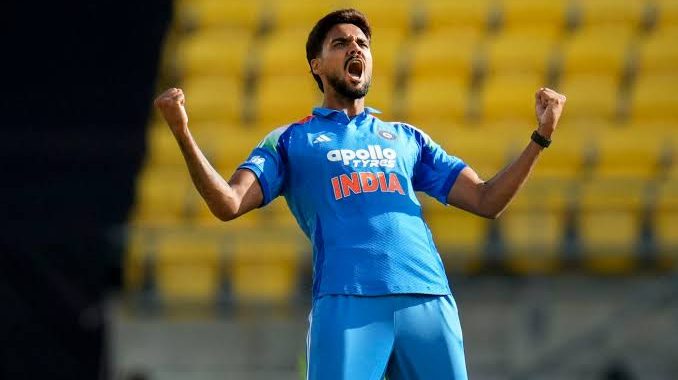
India Begin New Zealand ODI Tour with Convincing Five-Wicket Victory in Rain-Affected Auckland Clash
India made an impressive start to their 2026 tour of New Zealand, defeating the hosts by five wickets under the Duckworth-Lewis-Stern (DLS) method in the opening One Day International at Eden Park, Auckland, on Wednesday, November 4. A commanding batting performance from Virat Kohli, supported by Shubman Gill, helped India chase down the revised target of 143 runs in just 22.4 overs, finishing with 56 balls remaining.
The opening match of the five-game ODI series provided plenty of talking points. India’s fast bowlers delivered an impressive performance to restrict New Zealand to 185 runs, while Kohli once again demonstrated why he remains one of the finest players in the history of the 50-over format. Although rain interrupted the contest and reduced the available playing time, India remained composed and made excellent use of the revised conditions.
Anshul Kamboj was named Player of the Match for his outstanding bowling performance, finishing with figures of two wickets for just 22 runs in his allotted 10 overs. Arshdeep Singh and Gurnoor Brar also played important roles in dismantling the New Zealand batting order.
The result gave India a valuable 1-0 advantage in the five-match series and provided the visitors with plenty of confidence heading into the second ODI.

New Zealand Win the Toss and India Choose to Bowl
The opening encounter at Eden Park was expected to be an interesting contest between two competitive international sides. New Zealand entered the series hoping to take advantage of familiar home conditions, while India arrived with a strong squad and considerable expectations.
Indian captain Shubman Gill won the toss and elected to field first. The decision was influenced by the conditions, with the Indian team looking to make the most of the early movement available to their fast bowlers.
The weather had already created some uncertainty before the match began, with brief showers causing a short delay. Nevertheless, the teams were able to begin the contest after the interruption.
Eden Park is traditionally known for its distinctive dimensions and lively atmosphere. The surface offered enough bounce and movement to encourage the fast bowlers, and India’s decision to bowl first soon began to look like a sensible one.
New Zealand wanted to establish a strong opening partnership and build a competitive total. However, India’s disciplined bowling attack ensured that the hosts never enjoyed the kind of start they would have wanted.
India’s Fast Bowlers Put New Zealand Under Pressure
New Zealand’s innings began with early difficulties as India’s bowlers found their rhythm. Arshdeep Singh provided an important breakthrough by dismissing Will Young for nine runs from 11 deliveries.
Young attempted to attack the bowling but could not find the required control. Shreyas Iyer completed the catch, giving India their first wicket and putting the hosts under immediate pressure.
Henry Nicholls also struggled to establish himself at the crease. He managed nine runs before falling to Arshdeep Singh, leaving New Zealand searching for stability.
The early wickets forced the home side to reconsider its approach. Instead of playing freely, the New Zealand batters had to focus on rebuilding their innings and avoiding further damage.
Tim Seifert attempted to provide some momentum. Playing in place of Devon Conway, who had suffered a concussion during a training-ground collision, Seifert took responsibility for keeping the innings moving.
He scored 38 runs from 43 deliveries, becoming New Zealand’s leading contributor among the top-order batters. His innings included several attractive strokes, particularly when he found opportunities to attack the shorter deliveries.
However, India’s bowlers continued to maintain pressure.
The dismissal of Seifert by Gurnoor Brar was another significant moment. The New Zealand batter attempted to pull a short delivery but failed to control his shot, allowing a substitute fielder to complete the catch.
Gurnoor Brar’s ability to generate extra bounce proved particularly useful. He consistently challenged the New Zealand batters with deliveries that were difficult to control.
Anshul Kamboj Delivers an Outstanding Spell
While Arshdeep Singh and Gurnoor Brar collected important wickets, Anshul Kamboj produced one of the most impressive bowling performances of the match.
Kamboj bowled with excellent discipline, concentrating on maintaining consistent lines and lengths rather than trying to force unnecessary variations.
His figures of two wickets for 22 runs in 10 overs reflected his control and patience. He also bowled two maiden overs, making it difficult for New Zealand to score freely during his spell.
His contribution was particularly important because New Zealand needed to build partnerships after losing early wickets.
Kamboj removed Mitchell Santner and Nathan Smith, further weakening the middle and lower order. His ability to extract movement and maintain pressure made him a difficult bowler to negotiate.
In modern ODI cricket, bowlers are often expected to deliver attacking performances while also controlling the scoring rate. Kamboj managed both responsibilities effectively.
His performance eventually earned him the Player of the Match award, a deserved recognition for a spell that played a major role in India’s victory.
New Zealand’s Middle Order Fails to Build a Major Partnership
Following the early setbacks, Daryl Mitchell and Glenn Phillips were expected to provide some resistance.
Both players have experience of handling pressure in international cricket, and New Zealand needed their contributions to prevent the innings from falling apart.
Mitchell scored 28 runs, while Phillips added 30. Their contributions helped New Zealand move forward, but neither batter managed to convert a promising start into a substantial innings.
Tom Latham also failed to make a meaningful contribution, departing for just three runs.
The Indian bowlers continued to attack the stumps and use the bounce available on the surface. Their fielding was equally important, with sharp catches ensuring that New Zealand could not recover through individual mistakes.
At several stages, the hosts appeared capable of reaching a respectable total. However, regular wickets prevented them from establishing the momentum required for a competitive score.
The dismissal of Phillips was particularly important because he had the ability to accelerate during the later stages of an ODI innings.
New Zealand eventually found themselves in serious trouble, with the lower order having to take responsibility for adding valuable runs.
Blair Tickner Provides a Late Fighting Contribution
Just when it appeared that New Zealand might struggle to reach even 150 runs, Blair Tickner produced an entertaining counterattacking innings.
Batting towards the end of the order, Tickner showed remarkable intent and refused to allow the Indian bowlers to dominate completely.
He scored 34 runs from only 23 deliveries, including several aggressive shots that brought some excitement back to the New Zealand dressing room.
His innings was particularly valuable because the top and middle order had failed to build a substantial total.
Tickner’s contribution helped New Zealand move beyond a disappointing position and gave the home side something to defend.
Jacob Duffy also contributed during the closing stages, helping Tickner add valuable runs.
Their last-wicket partnership of 39 runs proved important in taking New Zealand to 185 before the innings ended.
Gurnoor Brar eventually dismissed Tickner, with KL Rahul completing the catch.
New Zealand were bowled out for 185 in 40.2 overs.
For India, Arshdeep Singh finished with four wickets for 70 runs, Gurnoor Brar collected three wickets for 44 runs, and Anshul Kamboj claimed two wickets for 22 runs. The bowling effort demonstrated India’s depth and ability to create pressure through different styles of fast bowling.
Rain Interruptions Change the Nature of India’s Chase
With 185 runs on the scoreboard, New Zealand needed early wickets to have any realistic chance of defending their total.
However, the weather once again became an important factor.
India began their innings knowing that the conditions could change the equation at any moment. Rain interruptions affected the available playing time and eventually forced the officials to revise the target using the DLS method.
India suffered an immediate setback when Rohit Sharma was dismissed for a duck in the opening over.
Kyle Jamieson provided the breakthrough, giving New Zealand an early reason to believe that they could challenge the visitors.
Rohit’s dismissal was a significant moment because India had expected their experienced opening batter to provide a strong foundation.
However, the early wicket brought Virat Kohli to the crease.
The experienced right-hander looked comfortable from the beginning and immediately began applying pressure on the New Zealand bowling attack.
Shubman Gill joined Kohli in the middle, and the two batters soon established a partnership that changed the direction of the match.
Rain interrupted India’s innings when the visitors were 54 for one after 10.5 overs. Further delays affected the contest, and the playing conditions were adjusted.
Eventually, India were set a revised target of 143 runs in 32 overs.
The revised target gave the visitors a clear objective, but New Zealand still needed wickets to make the contest interesting.
Virat Kohli Produces a Memorable Batting Performance
Virat Kohli was undoubtedly the standout batter of the match.
Walking to the crease after Rohit Sharma’s early dismissal, Kohli looked determined to take control of the chase.
His innings combined excellent timing, aggressive stroke play and the kind of composure that has made him such a successful ODI batter.
Kohli scored 74 runs from just 51 deliveries, hitting 13 fours and one six.
His ability to handle New Zealand’s pace attack was particularly impressive. The short-pitched deliveries that had troubled the home batters became opportunities for Kohli to score boundaries.
He played several attractive pull shots and hooks, using the pace of the ball to his advantage.
Kohli also demonstrated excellent judgement outside the off stump, refusing to chase unnecessary deliveries and waiting for opportunities to score.
One of the most impressive aspects of his innings was his ability to maintain a high scoring rate without appearing reckless.
He reached his half-century in only 35 deliveries, registering his 80th ODI fifty.
The innings was another reminder of his exceptional ability in run chases. Kohli has repeatedly demonstrated that he can manage pressure situations while maintaining an attacking approach.
The timing of the performance made it even more special, as he was approaching his 38th birthday.
Although New Zealand eventually managed to dismiss him, the damage had already been done.

Shubman Gill Provides Valuable Support
While Kohli attracted most of the attention, Shubman Gill played an equally important supporting role.
The Indian captain scored 37 runs from 56 deliveries and helped stabilise the innings after Rohit’s early dismissal.
Gill understood the importance of avoiding another quick wicket and focused on building a partnership with Kohli.
His innings was not as aggressive as Kohli’s, but it provided the stability India needed.
The pair added 113 runs for the second wicket, effectively putting the visitors in control of the contest.
Gill rotated the strike, played sensible cricket and allowed Kohli to take greater responsibility for attacking the New Zealand bowlers.
Their partnership also ensured that India were comfortably positioned when rain interrupted the match.
Nathan Smith eventually dismissed Gill, with Tom Latham completing the catch.
However, his contribution had already placed India in a commanding position.
Jacob Duffy Creates a Brief Moment of Hope for New Zealand
New Zealand needed something special to return to the contest, and Jacob Duffy provided a brief opportunity through an impressive spell.
Duffy finished with three wickets for 49 runs in seven overs.
He dismissed Kohli, Shreyas Iyer and Axar Patel, creating a short period of uncertainty in the Indian dressing room.
Kohli’s dismissal was particularly significant. Having dominated the bowling attack, he was caught by Tim Seifert after scoring 74.
Shreyas Iyer contributed 15 runs from 13 deliveries before becoming Duffy’s next victim.
Axar Patel departed without scoring, leaving India five wickets down.
For a short period, New Zealand appeared capable of making the finish more competitive.
However, the required target was already within reach, and India had enough batting depth to complete the chase.
KL Rahul and Naman Dhir remained calm during the closing stages.
Their responsibility was simple: avoid unnecessary risks and take India across the finish line.
They achieved exactly that.
India Complete the Chase with 56 Balls Remaining
India eventually reached 143 for five in 22.4 overs, winning the opening ODI by five wickets under the DLS method.
KL Rahul remained unbeaten on three, while Naman Dhir finished unbeaten on five.
The final stages of the chase were not entirely straightforward because New Zealand had managed to collect several wickets in quick succession.
Nevertheless, India’s strong start and Kohli’s outstanding innings meant that the visitors never lost control of the larger picture.
Winning with 56 balls remaining was an impressive statement, particularly against a New Zealand side playing at home.
The result reflected India’s superiority across the match, especially in the bowling department and during the important second-wicket partnership.
Key Performances That Defined the Match
Several individual performances played an important role in determining the outcome.
Virat Kohli’s 74 from 51 balls was the defining batting contribution. His aggressive approach ensured that India remained ahead of the required scoring rate throughout the chase.
Shubman Gill’s 37 provided stability and helped establish the 113-run partnership that effectively decided the contest.
On the bowling side, Anshul Kamboj’s figures of two for 22 in 10 overs were outstanding. His economical spell restricted New Zealand and earned him the Player of the Match award.
Arshdeep Singh’s four-wicket haul was another major contribution. He consistently troubled the New Zealand batters and provided important breakthroughs.
Gurnoor Brar also deserves recognition for his three wickets, particularly his ability to create discomfort through extra bounce.
For New Zealand, Tim Seifert’s 38 and Blair Tickner’s late contribution of 34 were among the few positive batting performances.
Jacob Duffy’s three wickets during India’s chase provided some resistance, but his efforts were not enough to prevent defeat.
What the Result Means for the Series
India’s five-wicket victory gives them a 1-0 lead in the five-match ODI series.
Starting an overseas series with a victory is always valuable, especially when playing against a team as competitive as New Zealand.
The visitors will be pleased with their bowling performance, which demonstrated the importance of maintaining pressure and taking wickets at regular intervals.
India also received an encouraging reminder of Kohli’s continued importance in the ODI format.
His experience, confidence and ability to control a chase remain major strengths for the team.
Gill will also be encouraged by the way his side responded after losing Rohit early.
For New Zealand, the defeat provides several areas to address before the next match.
Their batting unit will need to improve its ability to build partnerships and deal with India’s pace attack.
The contribution from the lower order was encouraging, but the team cannot regularly depend on late batting performances to rescue an innings.
Their bowlers showed some promise, particularly Duffy, but defending a relatively modest total against India’s batting lineup was always going to be difficult.
The second ODI in Wellington will offer New Zealand an opportunity to respond.
Conclusion: India Make a Strong Statement in Auckland
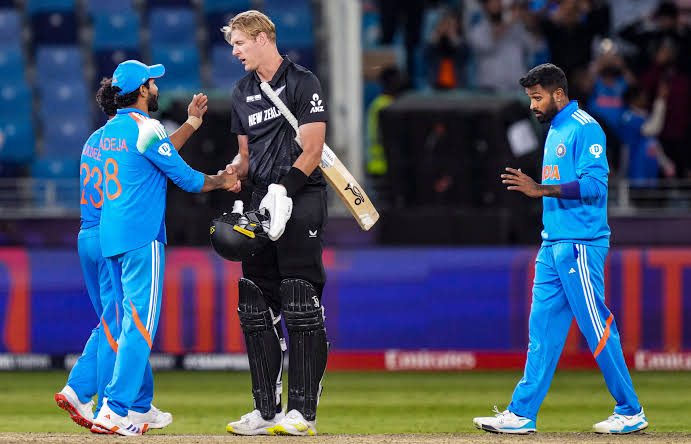
India’s opening ODI victory against New Zealand was a convincing performance built on disciplined bowling, excellent partnerships and an outstanding individual contribution from Virat Kohli.
New Zealand were restricted to 185 runs in 40.2 overs, with India’s fast bowlers making the most of the conditions. Arshdeep Singh, Gurnoor Brar and Anshul Kamboj played central roles in restricting the hosts.
Although rain interruptions changed the structure of the chase, India adapted effectively to the revised target.
Kohli’s 74 from 51 deliveries was the highlight of the evening, while Gill’s supporting contribution ensured that India recovered quickly from the early loss of Rohit Sharma.
New Zealand briefly threatened a comeback through Jacob Duffy’s three wickets, but the visitors remained composed and completed the chase comfortably.
Anshul Kamboj’s exceptional bowling figures earned him the Player of the Match award and underlined India’s impressive bowling depth.
The five-wicket victory, achieved with 56 balls remaining under the DLS method, gives India an encouraging start to their New Zealand tour.
For the hosts, the challenge now is to recover quickly, improve their batting performance and find a way to compete more effectively against India’s bowling attack.
The opening encounter belonged to India, and with four matches still remaining, the visitors will be eager to carry this momentum into the rest of the series.
