
TR-49 Review: A Masterclass in Narrative Deduction and Code-Breaking Puzzles
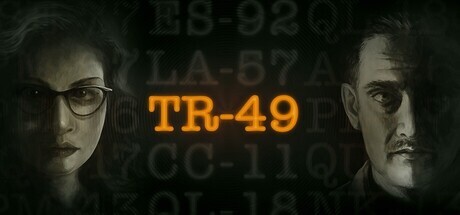
When TR-49 launched on January 21, 2026, it quietly but confidently inserted itself into the higher echelons of narrative puzzle games. Developed and published by inkle, the British indie studio known for 80 Days, Heaven’s Vault, and Overboard!, TR-49 is a title that wears its originality proudly — eschewing conventional gameplay loops in favor of intellectual discovery, meticulous deduction, and an experience that feels more like decoding a forgotten archive than “playing a game.”
Setting the Stage — What Is TR-49?
TR-49 places the player in an evocative and atmospheric scenario: you wake in a dusty basement beneath a cathedral, facing a mysterious, analog-esque computer machine once rumored to originate near Bletchley Park, the famed site of WWII codebreaking. The year is in an alternate 2010s where conflict has resurfaced, and this machine — a relic of a bygone era — may hold not just secrets, but something far more consequential.
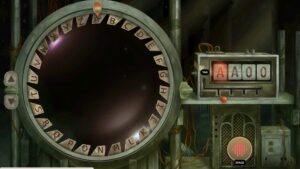
The narrative premise is deceptively simple yet riddled with nuance: you must input four-character codes — two letters and two numbers — into the machine. These combinations correspond to obscure books, journals, letters, and documents stored in its archive. Every successful code unlocks a fragment of text, which may contain references, clues, or further codes leading deeper into the archive’s interconnected web of knowledge.
At its heart, TR-49 is less a puzzle game in the brick-breaking or hidden-object sense and more a narrative deduction experience where understanding comes from observation, inference, and curiosity. It rewards lateral thinking and a willingness to dive into text in a way few games do.
Gameplay & Mechanics — The Elegant Machine of Discovery
Core Loop — Reading, Deduction, Discovery
The core gameplay loop in TR-49 revolves around interacting with the titular machine’s interface — a circular screen flanked by analog dials. You adjust letter and number wheels to enter what you believe to be a valid code, then watch as the machine whirs, flickers, and presents a new document. If the code is correct, the document appears; if not, the machine simply waits for another attempt.
The challenge lies not in reflexes or combat, but in analysis and pattern-recognition. Many codes are directly inferable: author initials and publication years often correspond with clues embedded in other texts. For example, a reference to someone publishing “two years after X” might suggest shifting the last two digits of a code up by two.
This loop encourages experimentation. You read a passage expecting nothing, yet find a tiny clue — a name, a date, or an arcane reference — that could unlock dozens of new possibilities. It turns the act of reading itself into a form of gameplay, a gratifying shift from the twitch-focused mechanics of many mainstream games.
Non-Linear Structure & Player Agency
One of TR-49’s strengths is its non-linear pacing. There is no mandated path; players can choose which leads to follow at any given moment. If one avenue feels fruitless, you can backtrack and explore another line of inquiry — and many players find that this freedom is where the game’s magic lies.
This design choice means no two playthroughs feel the same. One player might uncover a certain series of documents first; another might take a completely different route. The game’s logic web feels organic, less like a pre-designed maze and more like a sprawling intellectual sandbox.
Atmospheric Presentation
Graphically, TR-49 is minimalistic — there is little more than the machine and the document texts themselves. What the game lacks in flashy visuals, it more than makes up for in atmospheric immersion. The flickering screen, muted lighting, and subtle sound design draw you into this isolated world of discovery.
Critically, the audio drama elements add depth to the experience. A voice over a radio (often your only link to the outside world) offers commentary and hints, gradually revealing the personal story of your handler and enhancing the narrative tension. For some players, this adds a compelling layer; for others, these interjections can interrupt the flow of deduction — a subjective design choice that has sparked debate among reviewers.
Narrative & Worldbuilding — More Than Just Codes
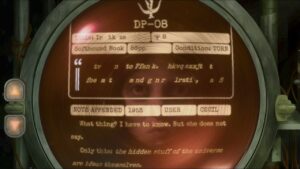
TR-49 is less interested in traditional storytelling and more invested in narrative discovery. There’s no cutscene-heavy plot or linear dialogue trees. Instead, the story unfolds through what you uncover in the archive — a patchwork of texts that range from philosophical essays to personal letters, all tied to a broader mystery involving the machine and the war raging above.
The narrative structure evokes comparisons to investigative titles like Her Story and Immortality — where meaning is not handed to the player but patiently unearthed. It’s a literary mystery that doesn’t spoon-feed answers, inviting players to connect dots across disparate sources.
This approach leads to a deeply intellectual narrative experience. You’re not just solving puzzles; you’re piecing together a story about obsession, secrecy, and the power of language itself. Some texts feel like discarded academic musings; others carry emotional weight or philosophical depth. Extracting thematic meaning can feel almost like academic research — and that’s the point.
Strengths — Where TR-49 Truly Shines
1. Exceptional Deductive Gameplay
The puzzle engine in TR-49 is elegant in its simplicity and profound in its implications. There’s a satisfying clarity when a new piece fits into your understanding of the archive, and the absence of artificial difficulty curves means progression feels earned.
2. Intellectual Engagement
TR-49 excels at engaging the mind. Players who enjoy sleuthing out connections, interpreting text, and engaging with subtle clues will find the experience deeply rewarding. It’s a game where “reading” is the game — and where every discovery feels genuinely earned.
3. Unique Narrative Delivery
Rather than using cinematics or scripted events, TR-49 weaves its story through interconnected written artifacts. This non-traditional delivery makes the journey itself the story — a bold decision that few games attempt.
4. Immersive Sound Design & Voice Acting
Despite its minimal visuals, the voice acting and audio cues significantly enhance immersion. The voice over the radio, coupled with environmental sounds and music, gives the game tactile weight and emotional texture.
5. Critical Acclaim
Critics have generally embraced TR-49, with a Metascore in the mid-80s indicating strong overall reception. Reviews praise its intelligent design, narrative depth, and engaging deduction challenges, with many labeling it a standout within its subgenre.
Weaknesses & Limitations — Where It May Falter
No game is perfect, and TR-49’s unconventional nature means it isn’t for everyone. Several common criticisms and limitations are worth noting:
1. Steep Learning Curve & Accessibility
The unfiltered reliance on text and patterns can feel daunting. Players not inclined toward text-heavy games or those seeking immediate gratification may find the experience slow or esoteric. Additionally, some interface choices — like flickering text — have been flagged as potentially uncomfortable or hard to read for players with visual or reading challenges, especially in later game segments.
2. Pacing Issues
While many relish the non-linear structure, others find that progress can feel “stalled” between major discoveries. The game’s deliberate pace rewards patience, but this can also test it, making for extended segments of parsing text with little feedback.
3. Audio Interruptions
For some, the radio dialogues and voice interjections can be more distracting than immersive — pulling players out of their concentration rather than enhancing it. This is a subjective issue, but it’s a common point brought up in several critiques.
4. Technical Issues at Launch
Shortly after release, a minority of players reported crashes and save file corruption, particularly during intensive database navigation or autosave triggers. While not universal, these bugs disrupted progress for affected users and highlighted the challenges of launching a text-heavy puzzle game with myriad possible player paths.
Technical & Accessibility Considerations
TR-49 launches on PC (Steam) and iOS, and while its technical demands are modest compared to action-oriented games, text clarity and interface responsiveness are critical. Players are advised to optimize display settings to maintain crisp text readability, as blurriness or stuttering can hinder the core gameplay — reading and deduction. From an accessibility standpoint, the game’s reliance on dense text and subtle pattern recognition means that features like variable text sizes, dyslexia-friendly fonts, or alternative navigation aids could significantly broaden its appeal. As it stands, however, such options are limited, leaving some players at a disadvantage.
Final Verdict — A Triumph for Curious Minds
TR-49 is more than just a game — it’s an intellectual playground. In a medium where spectacle often overshadows substance, it stands out as a bold experiment in how narrative, deduction, and interactivity can merge to form something distinctively thoughtful and unforgettable.
Players who thrive on close reading, pattern recognition, and narrative depth will find TR-49 rewarding, even addictively so. There’s real satisfaction in unravelling its mysteries, not just because you solve puzzles, but because you understand the world it presents.
However, its appeal is not universal. Those seeking action, quick rewards, or conventional gameplay loops may find the experience slow, repetitive, or impenetrable. Yet for the right audience — lovers of puzzles, lovers of narrative, and lovers of stories that don’t hold your hand — TR-49 delivers not just a game, but a compelling intellectual odyssey.
