
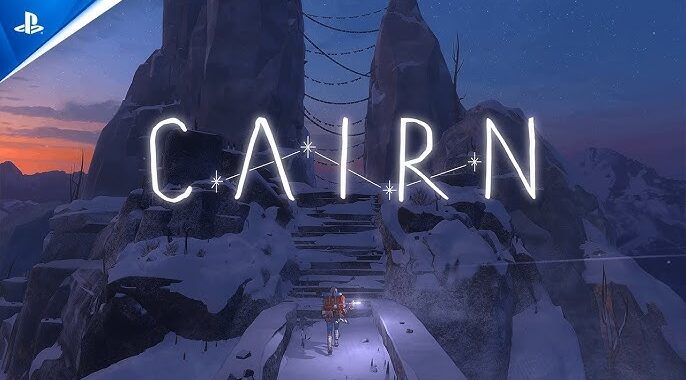
Cairn Review
In an era when blockbuster franchises and vast open-world adventures dominate headlines, few titles arrive quietly, then rapidly become impossible to ignore. Cairn, the mountain-climbing survival-sim from French studio The Game Bakers, is one such phenomenon — a game that is redefining how interactivity can evoke physical fear, emotional reflection, and sheer awe. Released on January 29, 2026, for PlayStation 5 and PC, Cairn has quickly become the first true indie hit of the year, earning critical acclaim for its meticulous mechanics and unforgettable climb.
At first glance, Cairn may appear deceptively simple: control a climber making her way up an unforgiving mountain. But as with the real world’s tallest peaks, simple outlines hide staggering complexity. Designed as a survival climber, Cairn positions you as Aava, a seasoned alpinist on a solitary mission to conquer Mount Kami — a summit no one has reached before — and to discover what drives a human to risk everything for a vertical dream.
A Climb Unlike Any Other
Cairn’s core design philosophy blends realism and interactivity in a way most games shy away from. Rather than automating traversal, the game requires deliberate, measured inputs for every hand and foot placement. As Aava scales the sprawling rockface, players must read the terrain, manage stamina, and think like a mountaineer — not just a gamer.
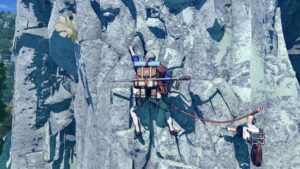
The climbing system is perhaps Cairn’s most distinctive feature. Players don’t simply press a button to grab a ledge — they guide Aava’s limbs individually, evaluating each potential grip, testing balance, and risking slips that can lead to catastrophic falls. The mechanics evoke comparisons to games like Death Stranding and Baby Steps in their methodical pacing, yet Cairn adds its own twist: it’s a survival challenge and a physical simulation, forcing players to constantly negotiate risk and reward.
This tactile approach isn’t just about difficulty — it’s about immersion. Every breath, strain, and grip matters. Aava’s body language, labored breathing, and fatigue cues communicate her state without intrusive UI meters, making players feel every stretch and tremble. The third-person view, combined with a meticulous animation system, reinforces the sense that this is no arcade climb, but something far more visceral.

The World Beneath the Grip
While climbing mechanics are central, Cairn balances them with a broader survival component. Aava isn’t just scaling sheer rock — she must manage her hunger, thirst, body temperature, and injuries, recuperating at bivouacs, cooking meals, taping wounds, and placing pitons that serve as checkpoints along the ascent. The mountain is both a resource and a threat: caves may hide fresh water or edible plants, but weather and time of day can make each climb perilous.
This survival layer adds depth and tension to each decision. Do you push upward toward a risky ledge to shorten your route, knowing you may exhaust your stamina? Or do you backtrack to gather water and rest, balancing safety against the diminishing light? These choices lend Cairn a constant emotional charge — every advance is hard-earned, and every mistake punished.
Yet, for all its grit, Cairn finds surprising beauty in its design. The mountain itself — with its misty chasms, jagged crags, and sweeping vistas — is rendered with striking artistry, reinforcing the duality of terror and tranquillity. It’s a setting that evokes awe just as often as it induces panic, a contradiction that defines the game’s tone.
Narrative Climbs: Story Between the Rocks
Though Cairn’s central appeal lies in its mechanics, its narrative ambitions are equally compelling. The game tells Aava’s story not through cutscenes, but through the climb itself — a narrative woven into the environment, occasional encounters with other climbers, and the emotional subtext of every breath and stumble.
Aava is no superhero. She’s a determined, driven alpinist whose obsession with conquering Kami forms the game’s emotional core. Interviews with the developers reveal that Cairn explores the psychology of this pursuit: “Cairn is about Aava’s obsession — a kind of relentless drive that keeps her from thinking about anything but the ascent of Kami,” says creative director Emeric Thoa. This psychological layer adds rich complexity. Conversations with those Aava leaves behind — friends, colleagues, and partners — emerge sporadically, offering human context to the climb. Encounters with fellow climbers on the mountain further illuminate varied motivations: some seek glory, others companionship, and still others, like Aava, chase something ineffable. These threads subtly frame Cairn not simply as a physical journey, but as an emotional and philosophical one.
Critical Acclaim and Player Reception
Despite its unconventional nature, Cairn has resonated strongly with critics and players alike. On OpenCritic, it holds a high average score — around 87 — placing it among the most acclaimed games released in early 2026. Reviews praise the game’s innovative mechanics, visual design, and emotional depth, signaling that niche concepts can still find wide appreciation.
Major outlets have been overwhelmingly positive. GameSpot described Cairn’s perilous climb as “gorgeous and grueling drama,” highlighting how its tension and artistry blend into a compelling whole. The Guardian lauded the game’s emotional intensity, noting how its realistic climbing challenges mirror Aava’s psychological journey, producing moments of awe and exhaustion in equal measure. Forbes called it one of the most uniquely irresistible — and frustrating — experiences in recent gaming memory, capable of both calm reflection and intense anxiety.
However, some outlets acknowledge strain. Kotaku noted that the experience can provoke frustration as much as appreciation, especially for players less inclined toward methodical, slow-paced challenges. GamesRadarpointed out occasional control quirks and feedback issues, noting that while Cairn’s systems are compelling, they sometimes feel unwieldy or inconsistent.
Nevertheless, across platforms and publications, the consensus is clear: Cairn has struck a chord. Its “very positive” Steam rating and early critical traction suggest that gamers are eager for experiences that challenge not just their reflexes, but their patience, empathy, and imagination.
Innovation Amid Tradition — A New Frontier for Simulation
What makes Cairn particularly noteworthy is how it fits into — and expands — the landscape of modern gaming. In recent years, a cluster of climbing and traversal-focused games (Jusant, Baby Steps, Peak) have explored movement as central gameplay. Yet Cairn takes this further by stripping away conventions: no health bars clutter your view, no minimaps dictate your route, and progress is measured in vertical meters and emotional weight, not levels or scores.
The game also situates itself in a broader cultural moment. With climbing and outdoor adventure capturing imaginations — whether through real-life ascents, documentaries, or films — Cairn taps into a collective fascination with human limits. It rejects action’s usual glamorization of danger, instead embracing the grind, the fear, and the slow triumph of persistence.
This philosophical ambition is rare in AAA titles, and Cairn’s success suggests there’s appetite for games that elevate simulation into art. By prioritizing player agency over scripted spectacle, it becomes not just a game about climbing, but a reflection on why we seek challenges that, in the real world, might cost us everything.
Technical and Accessibility Observations
Despite its accolades, Cairn’s launch hasn’t been entirely without blemishes. Some criticisms point to occasional control responsiveness issues, graphical glitches, and interface choices that can hamper immersion, especially on less powerful hardware.
Players on handheld platforms like Steam Deck have reported micro-stutters and scaling quirks, indicating room for optimization post-release.These are not showstoppers, but they serve as reminders that even meticulously crafted indie projects face technical friction when bringing ambitious systems to life.
 Cairn is not merely an entertaining diversion — it’s a statement. It demonstrates that gaming’s broadest potential doesn’t always lie in spectacle, but in evoking genuine emotion through interactivity. By making every grip feel consequential, every mistake memorable, and every pause a moment of reflection, Cairn invites players to inhabit the climb in a deeply personal way.
As we move further into 2026, Cairn’s impact will likely ripple across genres. Its success reinforces that simulation — when thoughtfully designed — can be as emotionally resonant as narrative-heavy epics, and as tense as competitive thrillers. In doing so, Cairn reminds us why we play games in the first place: for challenge, for connection, and, occasionally, to stand on the metaphorical summit of a mountain that once seemed unconquerable.
Cairn doesn’t just ask can you climb? — it asks why do you want to? And in answering that, it becomes one of the year’s most compelling gaming experiences.
