
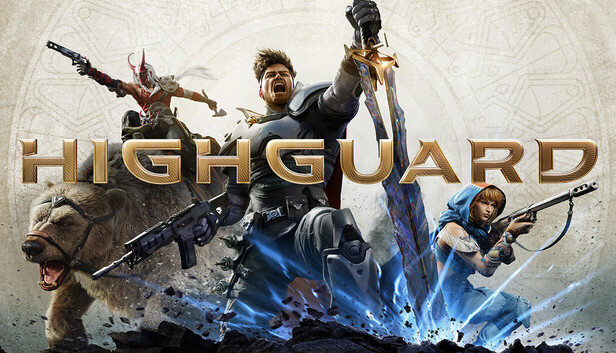
HighGuard: A World That Pushes Back
It’s becoming harder for new games to stand out. Big releases tend to blur together, built from familiar mechanics and safe ideas. HighGuard doesn’t fit comfortably into that pattern. It’s not flashy for the sake of attention, and it doesn’t rush to impress in its opening minutes. Instead, it takes its time, trusting that players willing to slow down will discover something deeper underneath.
At its core, HighGuard is a game about responsibility. It’s about standing watch in a world that doesn’t always want saving, making choices that don’t come with clear answers, and learning that power — even when earned — carries consequences. It blends tactical combat, open exploration, and political decision-making into an experience that feels deliberate and surprisingly grounded.
The Ardent Expanse: A Land That Remembers
The game takes place in the Ardent Expanse, a wide and varied land shaped by centuries of conflict. Kingdoms have risen and fallen here, borders have shifted, and scars from old wars still linger in the landscape. At the center of it all stands the Beacon Citadel, a towering structure that once unified the region through its radiant energy. That light is now fading, and with it, the fragile balance holding the Expanse together.
You step into the role of a newly sworn Sentinel of the HighGuard, an order tasked with defending the Citadel and maintaining stability across the land. Unlike many games that crown the player a hero immediately, HighGuard treats your position with caution. Authority must be earned, and trust is never guaranteed.
The world itself feels dense and lived-in. Forests stretch for miles, broken by small settlements that depend on trade routes and protection. Mountain passes are treacherous and slow, while deserts drain stamina and patience alike. The environment isn’t just scenery — it actively shapes how you move, fight, and plan.
What makes the Expanse compelling is how it reacts to your presence. Towns you protect grow safer and busier. Regions you ignore become vulnerable. Threats don’t simply wait for you to arrive; they expand, adapt, and sometimes disappear without your involvement. The game never lets you forget that you are only one part of a much larger system.

Combat That Rewards Thought Over Speed
Combat in HighGuard avoids excess. There are no wild combos or endless particle effects. Instead, fights are measured, tense, and often unforgiving. Positioning matters. Timing matters. Rushing in rarely ends well.
Encounters unfold in real time, but they feel closer to tactical duels than action brawls. Enemies telegraph their intentions, giving observant players a chance to react — or retreat. Terrain plays a major role. High ground offers advantages, narrow paths can be used to control enemy movement, and environmental hazards can quickly turn the tide.
Weapons each have a distinct identity. Swords favor balance and precision, heavier arms trade speed for power, and ranged options demand patience and positioning. Abilities are learned gradually and improve through use, reinforcing the sense that your Sentinel grows through experience rather than arbitrary upgrades.
What stands out is how failure is handled. Losing a fight doesn’t feel cheap or random. More often than not, it’s clear what went wrong — a mistimed block, a poor engagement choice, or simply underestimating the enemy. Victory feels earned, not handed out.
More Than Fighting: Power and Consequence
While combat is important, it’s far from the whole picture. HighGuard places equal weight on diplomacy, leadership, and moral judgment. Throughout the Expanse, factions vie for influence, each with its own vision for the future.
Some believe stability must come through strict order and control. Others push for freedom, even if it means chaos. A few seek balance, though they rarely agree on what that actually means. None of these groups are portrayed as purely right or wrong, and aligning with one often means alienating another.
Your choices ripple outward. Supporting a faction might stabilize one region while destabilizing another. Solving a problem through force may bring quick results but long-term resentment. Choosing compromise can prevent bloodshed, but it may also embolden threats you’ll face later.
What makes these decisions compelling is that the game rarely spells out their consequences in advance. You act based on incomplete information, personal judgment, and instinct — much like a real leader would. Sometimes, the results don’t become clear until hours later, when a village closes its gates to you or a former ally refuses aid.

Exploration That Feels Earned
Exploring the Ardent Expanse is slow, deliberate, and often dangerous. This isn’t a world designed for effortless fast travel or constant reward. Venturing off main routes can lead to forgotten ruins, hidden camps, or encounters that reshape entire regions — but it can also lead to ambushes or wasted time.
The game encourages curiosity without over-guiding the player. Clues are subtle. Maps are incomplete. Some secrets reveal themselves only after you’ve spent time understanding the land and its people. Ancient structures hint at lost civilizations. Half-buried relics tell stories without words.
Environmental traversal adds another layer of tension. Harsh weather affects stamina. Nightfall limits visibility and increases risk. Choosing when to push forward and when to rest becomes a strategic decision rather than a convenience.
There’s a strong sense that the world doesn’t exist to serve the player. It exists on its own terms, and you must learn to move within it.
Characters That Feel Like People
The cast of HighGuard is one of its quiet strengths. Characters aren’t defined by a single trait or role. Many are tired, conflicted, or shaped by past failures. Conversations feel grounded, often revealing as much through hesitation and tone as through words.
Dialogue choices matter, but not always in obvious ways. Sometimes it’s what you don’t say that changes how someone views you. Trust builds slowly, and once broken, it’s difficult to restore. Allies can drift away. Enemies can become reluctant partners.
The game avoids heavy exposition, letting relationships develop naturally through shared experiences and decisions. It’s a subtle approach, but one that makes emotional moments land with more weight when they finally arrive.
A Thoughtful Presentation
Visually, HighGuard strikes a balance between realism and stylization. The world feels grounded without being dull. Lighting plays a major role, especially during dawn and dusk, when the landscape takes on a softer, almost melancholic tone.
Sound design is understated but effective. Wind howls across open plains. Armor clinks during tense standoffs. Music fades in and out rather than demanding attention, reinforcing mood without overpowering gameplay.
The interface stays out of the way, providing information when needed and disappearing when it’s not. It respects the player’s attention, something increasingly rare in modern games.
Not Without Its Friction
That said, HighGuard isn’t perfect. Its deliberate pace won’t appeal to everyone. Players expecting constant action may find the early hours slow. The systems can feel overwhelming at first, especially as political and combat mechanics overlap.
Some narrative threads end abruptly or remain unresolved, which may frustrate players looking for clear closure. There are moments where the game’s ambition shows through its rough edges.
Still, these flaws feel tied to its identity rather than carelessness. HighGuard is willing to risk alienating some players in order to stay true to its vision.
 What ultimately sets HighGuard apart is how it treats the player. It doesn’t rush you. It doesn’t flatter you. It asks you to pay attention, to think, and to live with the outcomes of your choices.
It’s a game that trusts its audience — trusts them to engage with complexity, to accept uncertainty, and to find meaning without constant guidance. That trust pays off in moments of quiet reflection, hard-won victories, and decisions that linger long after you’ve turned the game off.
In a medium often driven by spectacle, HighGuard finds its strength in restraint. It offers a world that pushes back, a role that carries weight, and an experience that feels earned rather than engineered.
And when it finally ends, what remains isn’t just a story you completed — it’s a world you shaped, for better or worse.
