
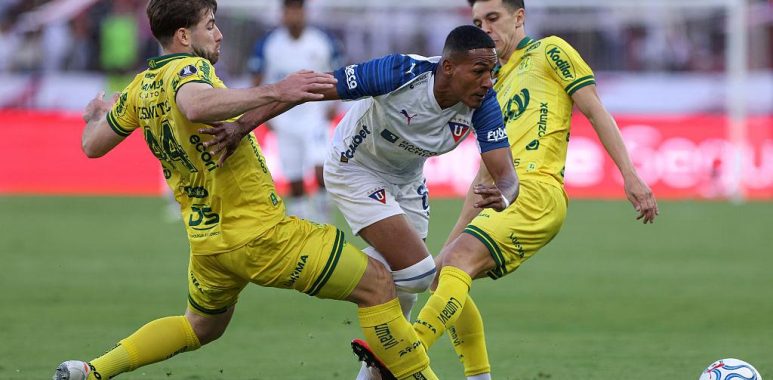
Liga de Quito Survive the Pressure and Edge Mirassol on Penalties to Reach the Quarterfinals
There are nights in the Copa Libertadores when the thin air of Quito feels like an extra defender, the crowd at the Estadio Rodrigo Paz Delgado becomes a twelfth man, and a single save can rewrite an entire campaign. On Thursday, August 20, 2026, Liga Deportiva Universitaria de Quito lived one of those nights. After a tense 0-0 draw in the second leg of the Round of 16 against Brazilian debutants Mirassol, the Ecuadorian side prevailed 5-4 in the penalty shootout to book their place in the quarterfinals. The aggregate finished 1-1, just as it had after the first leg in São Paulo state a week earlier. Gonzalo Valle’s early save from Victor Luis set the tone, and Fernando Cornejo’s decisive kick sealed the deal. Liga advance to face Palmeiras. Mirassol’s fairy-tale first run in the competition ends with heads held high.
Preview: A Rematch with Everything on the Line
Going into the return leg, the tie sat perfectly balanced. In the first leg on August 13 at the Estádio José Maria de Campos Maia, Mirassol had taken a 15th-minute lead through Eduardo. Liga responded late, Michael Estrada equalizing in the 82nd minute to leave the series open. Both sides had already tasted victory against each other in the group stage: Liga won 2-0 at home in April, Mirassol answered 2-0 in Brazil in May. Neither team had managed to impose lasting superiority.
Liga, the 2008 champions and perennial Ecuadorian contenders, entered the match as slight favorites on paper thanks to home advantage and the altitude of roughly 2,850 meters. Under Gustavo Álvarez they had topped Group G on goal difference after finishing level on 12 points with Mirassol. Their recent form mixed solid domestic results with the usual demands of juggling league and continental calendars. Key figures included goalkeeper Gonzalo Valle, defender Ricardo Adé, midfielders Jesús Pretell and Fernando Cornejo, and the attacking threat of Estrada and Janner Corozo. The home crowd at Casa Blanca has historically made life difficult for Brazilian visitors, and Liga’s record against Brazilian clubs at altitude has long been a source of quiet confidence.
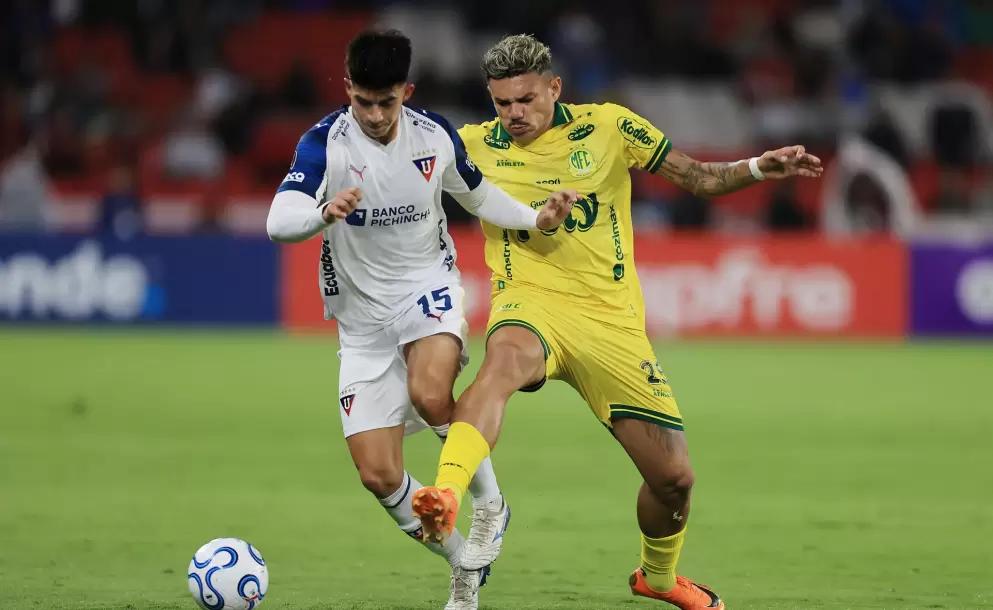
Mirassol arrived as the competition’s most compelling underdog story. Playing in the Libertadores for the first time, the São Paulo-state club had punched above its weight throughout the group stage, winning all three home games without conceding and finishing as runners-up. Coach Rafael Guanaes rotated heavily for the trip to Quito, resting several regulars with the Brazilian Serie A calendar in mind. Reinaldo, Eduardo and Wallisson did not even travel. The side that took the field was a mix of squad players and young legs asked to cope with the thin air and a hostile environment. Still, Mirassol had shown organization, set-piece threat and the ability to frustrate stronger opponents. A draw would force penalties; an away goal or a win would make history.
The stakes were clear. The winner would face either Palmeiras or Cerro Porteño in the last eight. For Liga it was a chance to reach consecutive quarterfinals and keep alive hopes of another deep run. For Mirassol it was the opportunity to become the first Brazilian debutant to reach the quarterfinals since Criciúma in 1992. Kickoff was set for 17:00 local time under Argentine referee Yael Falcón, with the usual CONMEBOL scrutiny of every challenge and every VAR check.
Analysis: Tactics, Atmosphere and the Weight of Expectation
The second leg never exploded into open, end-to-end chaos. Instead it became a study in contrasting approaches under pressure. Liga controlled more of the ball—roughly 63 percent possession according to available data—and tried to use the width of the pitch and the energy of the stands to stretch Mirassol. Yet the visitors refused to sit deep and wait for the inevitable. Even with a rotated lineup, Mirassol pressed in midfield, disrupted Liga’s rhythm, and created the clearer chances across the 90 minutes. Their expected goals were competitive, and they forced Valle into several important interventions.
Mirassol’s defensive shape was compact. They limited Liga’s big chances and made the Ecuadorians work for every yard of progressive space. When they broke forward they did so with purpose, particularly down the flanks and through second-ball situations. Liga, for their part, looked occasionally labored in the final third. Estrada and the attacking midfielders found themselves isolated at times, and the usual home fluency was missing. Álvarez’s side improved after the interval with substitutions—Deyverson and Alexander Alvarado among them—but the finishing remained blunt.
Altitude played its expected role. Brazilian players unfamiliar with the conditions often struggle with recovery between sprints and with decision-making late in games. Mirassol managed the physical side better than many predicted, which speaks to their preparation and collective mentality. Liga’s advantage was supposed to grow as the match wore on; instead the visitors stayed dangerous into stoppage time. That fact alone made the eventual penalty outcome feel almost cruel for the Brazilians.
The psychological layer was just as important. Liga carried the weight of expectation. Anything less than progression would have been viewed as underachievement at home. Mirassol carried the freedom of the underdog. Their campaign had already exceeded most outside forecasts. Guanaes’ decision to prioritize the domestic league by resting key names was pragmatic, yet it also underlined how far the club had come: they could afford to treat a Libertadores knockout tie as one piece of a larger puzzle rather than the only priority.
Referee Falcón kept the game under reasonable control. Yellow cards were issued for tactical fouls and overzealous challenges—Denilson, Adé, Chico Kim and André Luis among those booked—but the contest never descended into bitterness. VAR was available and used when necessary, though no major flashpoint dominated the narrative. The real drama was reserved for the penalty area after 90 scoreless minutes.
In the broader context of the 2026 tournament, the result fits a familiar pattern. Ecuadorian sides continue to punch above their domestic resources on the continental stage when the crowd and the altitude align. Brazilian clubs, even the less glamorous ones, bring structure and competitive intensity that make every tie a battle. Mirassol’s exit does not diminish their achievement; reaching the Round of 16 as debutants and pushing a traditional power all the way to penalties is a statement. Liga’s progression keeps them among the serious contenders, but the manner of the win—grinding rather than dominating—suggests they will need sharper edge against Palmeiras.
Top Highlights
The match itself produced few moments of pure individual brilliance, but several sequences stood out and the shootout provided the lasting images.
Early exchanges saw both goalkeepers tested from distance. Liga forced Walter into a save from a long-range effort, and Mirassol answered with a similar attempt from Victor Luis. The pattern of the first half was established: Liga probing, Mirassol remaining compact and looking for transitions.
Mirassol created the clearer openings. One sequence in particular forced Valle into a sharp reaction save from Fernandinho. Later Denilson threatened. The visitors’ ability to generate shots—outnumbering Liga in total attempts according to several reports—underlined their quality even without several first-choice attackers.
Liga’s best moments came after the break. Substitutions injected energy. Deyverson’s introduction gave the attack a different focal point. There were half-chances from set pieces and crosses, but the final ball or the finish never quite arrived. Estrada remained a constant nuisance without finding the decisive touch he had produced in the first leg.
The decisive phase arrived after the final whistle. Penalties at Casa Blanca under the lights, the crowd roaring with every step of every taker.
Victor Luis stepped up first for Mirassol. Valle guessed correctly, diving to his left and pushing the effort away. The stadium erupted. Deyverson converted Liga’s first with composure. Alesson leveled for Mirassol. Jesús Pretell restored the lead. Carlos Eduardo equalized again. Michael Estrada made it 3-2. Neto Moura replied. Gian Franco Allala kept Liga ahead. Bruno Santos made it 4-4. Then Fernando Cornejo walked forward, placed the ball, and drove it home. Liga 5-4. Qualification secured.
Valle’s save was the clear highlight of the night. Without it the shootout might have followed a different path. Cornejo’s ice-cool finish provided the perfect closing image. For Mirassol, the four successful penalties showed character; the single miss proved costly in the cruelest way.
Other notable moments included the tactical fouls that broke up promising counters, the late substitutions that kept both benches involved, and the visible fatigue that set in as the clock wound down. No red cards, no major controversies, just a hard, professional knockout tie decided by the thinnest of margins.
Summary
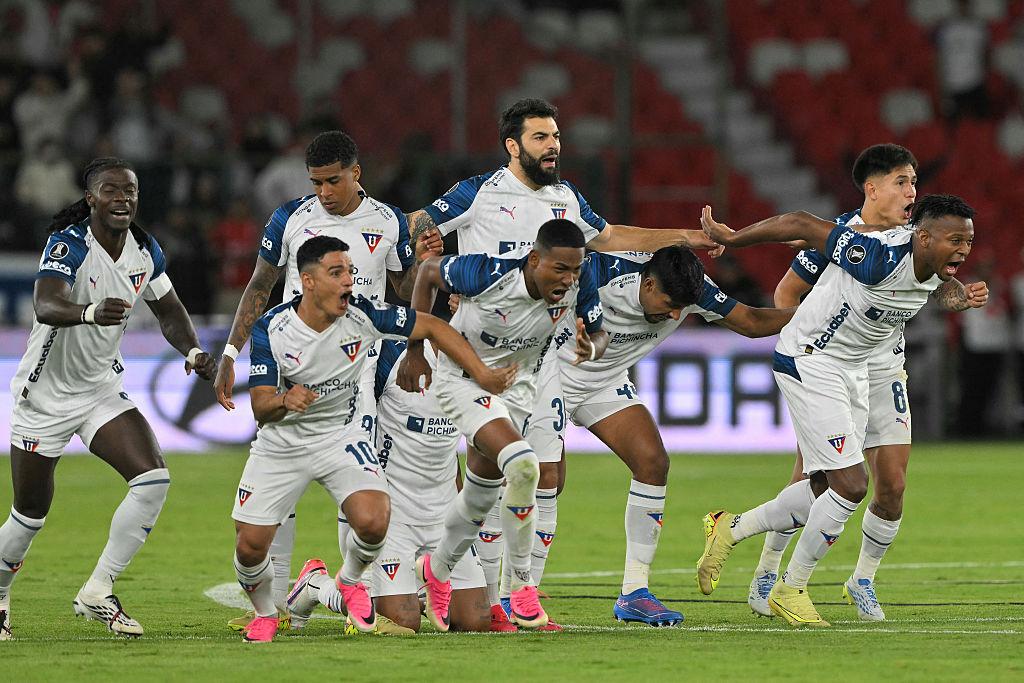
Ninety minutes of tension ended without a goal. A week earlier the sides had shared the spoils 1-1 in Brazil. On August 20 in Quito they shared another blank, and the lottery of penalties favored the home team. Liga de Quito are through to the quarterfinals of the 2026 CONMEBOL Libertadores. Mirassol’s remarkable first campaign is over.
The Ecuadorians will now prepare for Palmeiras, a side that eliminated them in the previous season’s semifinals in dramatic fashion. That rematch carries history and added motivation. For Liga the path continues; for their supporters the belief that another deep run is possible remains alive.
Mirassol leave the competition with credit. A club from outside the traditional Brazilian elite reached the knockout stages, competed with dignity against a strong Ecuadorian side at altitude, and forced the tie to the very last kick. Their players and coaching staff can return home knowing they represented the club with pride. The experience gained in this campaign will serve them in future seasons, both domestically and, one hopes, on the continental stage again.
Football at this level often refuses neat narratives. Liga did not produce their most fluent performance, yet they found a way. Mirassol played with courage and organization, yet they fell short by the narrowest margin. The altitude, the crowd, the save, the final penalty—all of it combined to produce a result that felt both inevitable and hard-earned. In the Libertadores, that combination is often enough.
Liga de Quito move on. The quarterfinals await. The story of this particular Round of 16 tie is complete: two draws, one dramatic shootout, and one South American giant still standing.
