
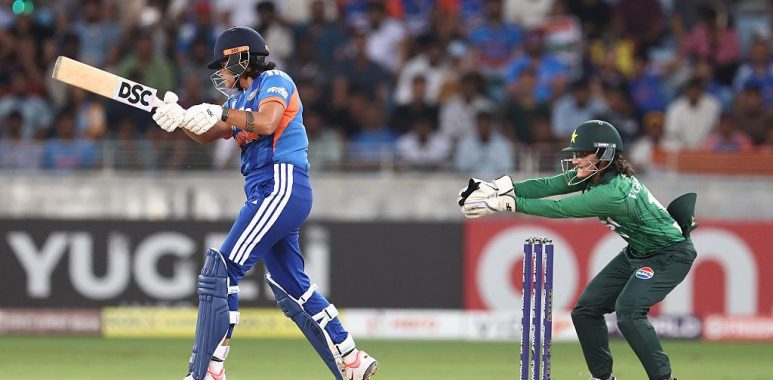
India Dominate Pakistan by Seven Wickets in One-Sided Women’s Asia Cup Clash
In the warm evening air of Dubai, under the floodlights of the Dubai International Cricket Stadium, the Women’s Asia Cup delivered another chapter in one of cricket’s most intense rivalries. On Saturday, 5 September 2026, India Women faced Pakistan Women in a Group A encounter that had been billed as the standout fixture of the group stage. What unfolded was a clinical demonstration of superiority from the Indian side, who dismantled their opponents and sealed a seven-wicket victory with a full 68 balls remaining. The result left India unbeaten after three matches and firmly on course for the semi-finals, while Pakistan were left to reflect on a batting performance that will rank among their most disappointing in the format.
Pakistan captain Fatima Sana won the toss and elected to bat first on a surface that had shown some early assistance to the spinners in previous games at the venue. The decision made sense on paper. Pakistan had posted competitive totals earlier in the tournament and hoped that a solid start would allow their middle order to build something substantial against an Indian attack known for its variety and control. For the first few overs it appeared the plan might work. Openers Muneeba Ali and Shawaal Zulfiqar negotiated the new ball with care, putting together a partnership of 27 runs. Shawaal looked particularly fluent, striking three boundaries in a 14-ball stay that suggested she could anchor the innings. Muneeba contributed 13 from 15 deliveries, rotating the strike and looking set for a longer contribution.
Then the Indian spinners took over. Harmanpreet Kaur, marking her 150th match as captain in T20 internationals, sensed the conditions early and introduced spin almost immediately after the powerplay. The move paid instant dividends. Left-arm spinner Shree Charani, still only 22, began to extract sharp turn and bounce. Her first breakthrough came when she trapped Shawaal leg before wicket for 14. The ball drifted in, straightened just enough, and the umpire had little hesitation. From that moment the innings unravelled at an alarming rate.
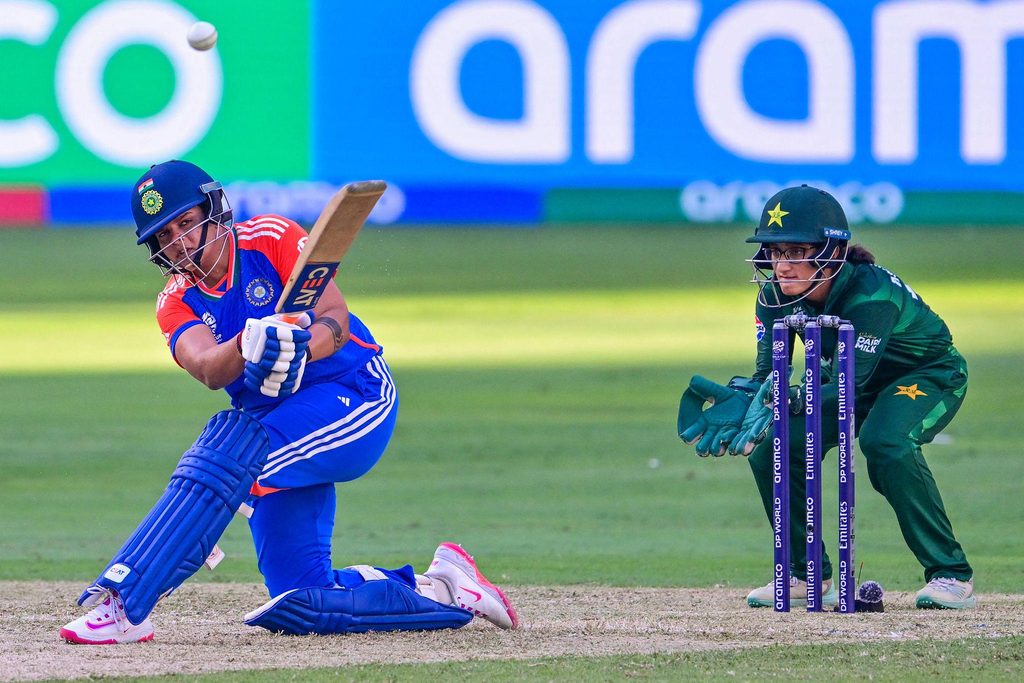
Gull Feroza lasted just four balls before offering a simple catch off Charani. Ayesha Zafar, promoted to provide some impetus, managed only two runs before lofting a delivery straight to the Indian captain at mid-off. Within a handful of overs Pakistan had slumped from a relatively comfortable 27 without loss to 32 for four. The pressure was relentless. Prema Rawat, the leg-spinner, joined the attack and immediately found her rhythm. She bowled Sadaf Shamas for three, the ball spinning past a tentative push and crashing into the stumps. Deepti Sharma then trapped Fatima Sana in front for a seven-ball duck, a massive blow given the captain’s ability to stabilise innings in the past.
The collapse gathered pace. Eyman Fatima was run out for five after a mix-up that spoke of the mounting confusion in the middle. Prema Rawat claimed two more wickets, including Umm-e-Hani and Nashra Sandhu, finishing with outstanding figures of three for nine from her four overs. Charani completed her spell with three for seven, figures that underlined just how completely she had dominated the contest. Deepti Sharma added two wickets of her own, including the final one when Tuba Hassan was stumped by Richa Ghosh after a brief resistance of nine runs. Shafali Verma chipped in with the wicket of Muneeba Ali. Pakistan were all out for 55 in 18.1 overs, their lowest total in women’s T20 internationals. The previous mark of 56, recorded against New Zealand in Dubai two years earlier, had been surpassed in the most painful fashion.
The dressing room atmosphere on the Pakistan side must have been heavy. Ten wickets had fallen for just 28 runs after that promising start. Only two batters reached double figures. The rest of the order managed single-digit scores or ducks. The pitch was not unplayable, but the combination of accurate length, subtle variations and sharp fielding left the batters with almost no room for error. Indian fielders backed their bowlers at every opportunity, diving to cut off singles and creating constant pressure. The run-out of Eyman Fatima was a perfect example of that intensity.
Chasing a target of 56 should have been a formality for a side as deep and experienced as India. Yet the early stages of the reply offered a reminder that no chase is entirely straightforward. Fatima Sana, determined to make amends for her batting failure, produced a fiery spell with the new ball. She removed Shafali Verma for 12 in the second over, the opener having already struck a six and a four to give India a flying start. Shafali had also reached the milestone of 3,000 runs in T20 internationals during her brief stay, becoming the youngest player to achieve that landmark. Pratika Rawal fell soon after for four, caught behind off Sana. Smriti Mandhana, usually so composed, was trapped leg before for nine as Sana claimed her third wicket. India were suddenly 29 for three, and for a brief moment the contest felt tighter than the final margin would suggest.
That was as close as Pakistan came. Harmanpreet Kaur walked out and immediately imposed her authority. Alongside the experienced Deepti Sharma, she rebuilt the innings with calm assurance. There was no need for panic. The required rate was never an issue, and the pair simply waited for the right balls to score. Harmanpreet brought up the fifty for the side with a crisp boundary and then finished the match in style. Facing Nashra Sandhu, she stepped down the pitch and lofted a clean six over long-on that sailed toward the sightscreen. The winning runs came with 68 balls still unused, India finishing on 57 for three in just 8.4 overs. Harmanpreet remained unbeaten on 18 from 18 deliveries, Deepti on 12 from 14. Fatima Sana finished with three for 17, the only Pakistan bowler to make a genuine impact.
The contrast between the two innings could not have been starker. Pakistan’s batting had been brittle under pressure, while India’s bowling had been relentless and intelligent. The Indian spinners operated as a unit, changing angles, varying pace and never allowing the batters to settle. Charani’s ability to drift the ball in and then spin it away created constant uncertainty. Prema Rawat’s leg-spin added another layer of difficulty, especially against batters who struggled to pick the length early. Deepti’s control through the middle overs ensured there was no release. Even Shafali’s part-time wrist spin claimed a valuable wicket.
For Harmanpreet the evening carried extra significance. Leading her country for the 150th time in the shortest format is a landmark few captains, male or female, will ever reach. She has guided India through multiple campaigns, navigating the highs of World Cup runs and the inevitable setbacks that come with high-level sport. On this night she celebrated each wicket with visible joy and then sealed the win with that trademark six. The moment encapsulated her leadership: calm under early pressure in the chase, decisive in her bowling changes, and clinical when the opportunity arrived to finish the job.
The broader context of the rivalry added weight to the result. India have now won five consecutive T20 internationals against Pakistan and hold a dominant 7-1 record against them in the Women’s Asia Cup. Matches between these two sides always carry an intensity that transcends the scoreboard. Crowds respond differently, players feel the extra scrutiny, and every contest becomes a measuring stick. On this occasion the measuring stick revealed a clear gap in execution. Pakistan’s batters were unable to adapt once the spinners settled into their rhythm, while India’s all-round strength allowed them to absorb a brief wobble and still cruise home.
Looking at the tournament picture, India finished their group stage with a perfect three wins from three matches. Their net run rate soared, and they booked a semi-final place with room to spare. The side has looked sharp in every department. The top order has firepower, the middle order has experience, and the bowling unit possesses both pace and spin options that can exploit different conditions. Harmanpreet will have noted the early wickets in the chase as an area for continued attention, but overall the performance confirmed India’s status as favourites.
Pakistan face a different challenge. Their final group match against Hong Kong became a must-win encounter if they were to keep semi-final hopes alive. The batting order will need to show greater resilience and clearer plans against quality spin. Openers provided a platform in this match, yet the middle order failed to convert that start into anything meaningful. Captain Fatima Sana will demand more from her side, knowing that individual brilliance alone cannot compensate for collective collapses.
The atmosphere at the Dubai International Cricket Stadium reflected the one-sided nature of the contest. Early in the Pakistan innings there was a buzz of expectation, the kind that accompanies any India-Pakistan fixture. As wickets tumbled the energy shifted. Indian supporters grew louder with each dismissal, while the Pakistan contingent watched in growing silence. By the time India began their chase the result felt inevitable, yet the early wickets to Fatima Sana briefly revived interest. Once Harmanpreet and Deepti settled, the outcome was never in doubt. The final six brought a roar from the Indian fans and a sense of relief that the formalities were complete.
Beyond the numbers, the match highlighted the growing depth of women’s cricket in Asia. Young players like Shree Charani and Prema Rawat are now central to India’s plans, capable of controlling matches against strong opposition. Their success in this game will give them confidence for the knockout stages. For Pakistan, the emergence of players capable of performing under pressure remains a work in progress. The side has talent, but consistency across an entire innings continues to elude them in high-stakes fixtures.
As the players left the field, the usual post-match formalities took place under the lights. India celebrated a comprehensive win that kept their campaign on track. Pakistan began the process of analysing where it went wrong and how to respond in their remaining fixture. The Asia Cup moves forward with India looking increasingly formidable and Pakistan fighting to stay in contention. For those who watched the contest unfold, the evening served as a reminder of the fine margins at this level and the importance of adapting when conditions demand it.
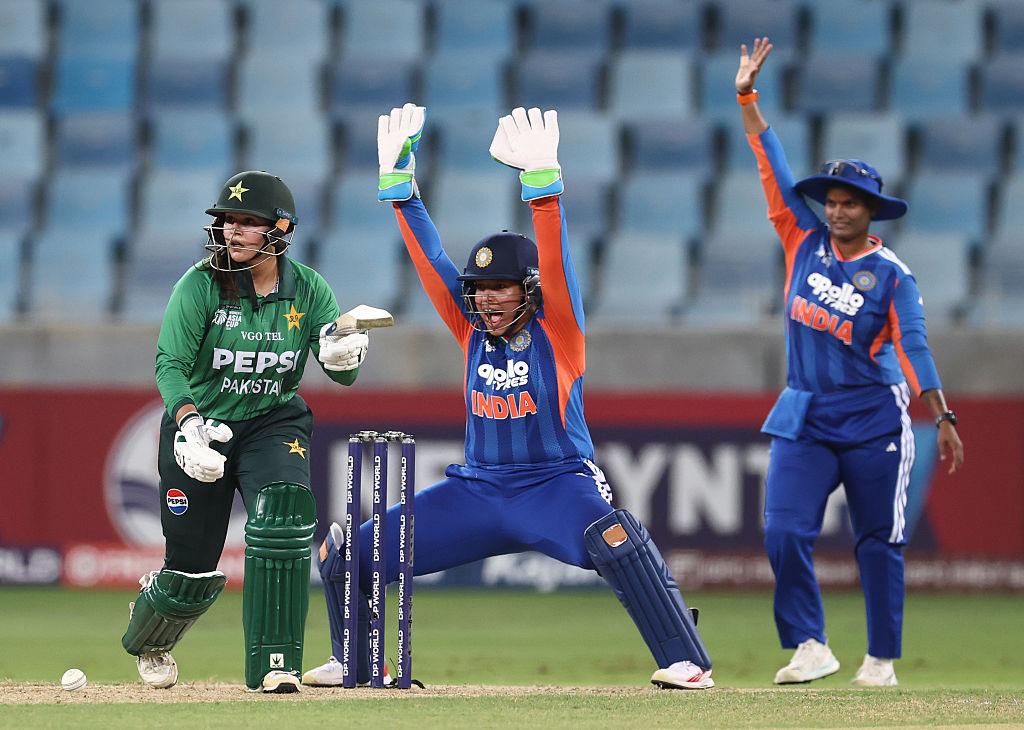
India’s bowlers set the tone from the moment the spinners were introduced. Charani’s three wickets came through a combination of flight, drift and accurate length that forced errors. Prema Rawat’s leg-spin complemented that approach perfectly, attacking the stumps and creating chances through variation. Deepti Sharma’s experience allowed her to bowl tight lines and pick up key wickets at crucial moments. The fielding supported every effort, with sharp catches and decisive run-outs. In contrast, Pakistan’s batters struggled to find a method once the early partnership was broken. Defensive shots found edges, aggressive options led to mistimed strokes, and the scoreboard pressure mounted rapidly.
The chase, though brief, offered its own lessons. Fatima Sana’s three wickets demonstrated that Pakistan still possess the ability to strike early and create problems. Had the target been higher, those breakthroughs might have produced a different contest. As it was, India’s depth ensured that even the loss of three top-order wickets did not derail the pursuit. Harmanpreet’s calm presence at the crease stabilised the innings, and her partnership with Deepti was marked by sensible running and selective aggression. The winning six was the perfect punctuation mark on a dominant performance.
In the days that follow, both teams will turn their attention to the next phase of the tournament. India can approach the semi-finals with confidence, knowing they have already secured top spot in their group and demonstrated the ability to dismantle opposition batting line-ups. Pakistan must regroup quickly, address the technical and mental aspects of their batting collapses, and produce a complete performance in their remaining match. The Asia Cup has already produced several one-sided results, but few have been as emphatic as this particular India-Pakistan clash.
The final scoreline of India Women 57 for three defeating Pakistan Women 55 all out by seven wickets with 68 balls remaining will be recorded in the history of the rivalry as another comprehensive Indian victory. For the players involved, the memories will linger longer. Harmanpreet will remember the milestone of her 150th captaincy appearance and the six that sealed the win. Shree Charani will recall the figures of three for seven that earned her the player of the match award. Pakistan’s batters will reflect on a total of 55 that fell short of their standards and the need to respond with greater resolve.
Cricket at this level is rarely decided by a single moment. It is the accumulation of small advantages, the ability to apply pressure over sustained periods, and the capacity to recover from setbacks that separate sides. On this Saturday evening in Dubai, India displayed all of those qualities. Pakistan, for large parts of the contest, did not. The result was a victory that underlined the current gap between the two teams and set the stage for the decisive phase of the Women’s Asia Cup. As the floodlights dimmed over the Dubai International Cricket Stadium, one side left the ground with momentum and belief, while the other began the harder task of rebuilding for the challenges still to come.
