
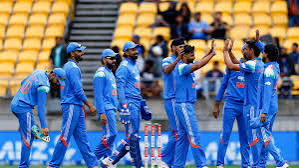
India Edge New Zealand by Four Runs in Rain-Interrupted Wellington Thriller to Take 2-0 Series Lead
India produced another impressive performance under pressure to defeat New Zealand by four runs via the Duckworth-Lewis-Stern (DLS) method in the second One Day International of their 2026 tour of New Zealand. The day-night encounter, played at Hnry Stadium in Wellington on Saturday, November 7, turned into a tense contest in which the bowlers dominated, the batters struggled for consistency, and the weather ultimately played a decisive role.
In a match that was interrupted by rain and reduced to 47 overs per side, India demonstrated their ability to handle difficult conditions and defend a narrow advantage. New Zealand, despite showing considerable determination with the ball, could not prevent the visitors from securing another victory. The result gave India a 2-0 lead in the five-match ODI series and placed the home side under considerable pressure ahead of the third match.
Gurnoor Brar was the standout performer of the afternoon, delivering a superb bowling performance that restricted New Zealand to just 134 runs. His four-wicket haul proved crucial, while contributions from Auqib Nabi, Anshul Kamboj and Axar Patel ensured that the hosts never found the freedom required to build a competitive total.
India’s chase was far from straightforward. The visitors lost important wickets during the opening stages and were forced to rebuild their innings under challenging circumstances. Shreyas Iyer and KL Rahul provided valuable contributions, but New Zealand continued fighting until rain eventually brought the contest to an end.
India finished on 113 for seven after 26 overs, just ahead of the required DLS target of 109, securing a memorable four-run victory.
New Zealand’s Difficult Start After India Choose to Bowl
The day began with India winning the toss and captain Shubman Gill deciding to field first. Considering the conditions in Wellington and the possibility of further rain, the decision to bowl offered India an opportunity to take advantage of the conditions and put early pressure on the New Zealand batting lineup.
The match had already experienced a weather-related delay before the action got underway. Once play began, India’s bowlers immediately justified their captain’s decision.
New Zealand found it difficult to establish themselves during the opening overs. The Indian bowling attack maintained disciplined lines and lengths, while the movement and bounce available from the surface made batting uncomfortable.
Will Young was among the first players to depart, scoring six runs from 17 deliveries before being caught by KL Rahul off Auqib Nabi. Tim Seifert followed shortly afterwards without troubling the scorers, giving Nabi another important breakthrough.
The early wickets created considerable pressure on the home side. New Zealand were unable to establish a strong opening partnership, and the Indian bowlers continued attacking the stumps and testing the outside edges.
Anshul Kamboj added to the visitors’ impressive start by dismissing Henry Nicholls for 11. The left-handed batter struggled to find his rhythm and was unable to provide the stability New Zealand desperately needed.
At 23 for three, the hosts were already facing a difficult situation.
India’s bowling approach was straightforward but effective. Rather than attempting unnecessary variations, the visitors concentrated on maintaining pressure, making the batters work hard for every run and taking advantage of opportunities whenever they appeared.
Daryl Mitchell Provides Much-Needed Resistance
With New Zealand losing wickets regularly, Daryl Mitchell became the most important figure in the home side’s innings.
Mitchell displayed patience, composure and experience during a difficult period. He understood that New Zealand needed someone to remain at the crease and prevent the innings from collapsing completely.
Rather than taking unnecessary risks, he concentrated on rotating the strike and punishing loose deliveries. His innings was built around determination and careful shot selection.
The experienced batter eventually scored 55 runs from 104 deliveries, including five boundaries and two sixes. Although his scoring rate was relatively modest, his contribution was extremely important in the context of New Zealand’s innings.
Mitchell’s approach reflected the challenges of batting on a surface where timing was not particularly easy. He resisted the temptation to play too many attacking shots and concentrated on giving the team a chance to reach a respectable total.
Tom Latham could not make a substantial contribution, departing for seven runs after being dismissed by Gurnoor Brar. Glenn Phillips also failed to make an impact, falling for a duck as Brar continued his excellent spell.
New Zealand were struggling to find partnerships, and India’s bowlers appeared to have control of the contest.
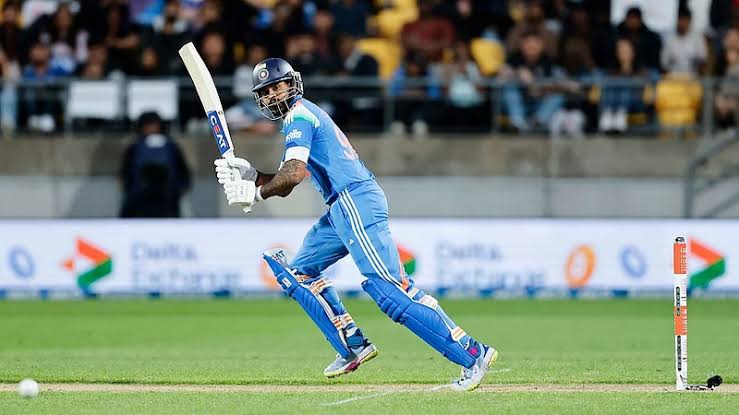
Mitchell Santner Helps New Zealand Recover
Captain Mitchell Santner joined Daryl Mitchell at a crucial stage and helped New Zealand rebuild their innings.
The partnership between the two Mitchells became the most productive stand of the innings. Both players understood that losing another wicket quickly could leave the hosts with an extremely disappointing total.
Santner played positively without taking unnecessary risks. He scored 31 runs from 38 deliveries, including a boundary and two sixes.
His willingness to attack the bowling provided some much-needed momentum. The partnership also allowed Daryl Mitchell to continue playing his natural game while ensuring that the scoreboard kept moving.
Together, they added a valuable 50-run partnership for the sixth wicket from 76 deliveries.
For a team that had lost several early wickets, this partnership represented an important recovery. New Zealand were still far from a commanding position, but the middle-order stand prevented India from completely dominating the innings.
However, India’s bowlers eventually broke through again.
Gurnoor Brar continued to trouble the New Zealand batters, and the Indian attack maintained its discipline throughout the middle and final stages.
Mitchell eventually departed after scoring his half-century, while Santner’s dismissal left the lower order with another difficult challenge.
The remaining batters could not provide the necessary support, and New Zealand were eventually bowled out for 134 in 41 overs.
Gurnoor Brar Leads India’s Bowling Attack
The biggest difference between the two teams during the first innings was India’s ability to take wickets at regular intervals.
Gurnoor Brar delivered an outstanding performance, finishing with figures of four wickets for 30 runs in his 10 overs.
His contribution was particularly significant because New Zealand never managed to establish a strong batting foundation. Brar consistently challenged the batters and ensured that the hosts could not turn their recovery into a substantial total.
Auqib Nabi also played an important role, claiming two wickets for 31 runs. His early breakthroughs put New Zealand under immediate pressure and helped India establish control of the innings.
Anshul Kamboj finished with two wickets for 25 runs, while Axar Patel picked up two wickets for 28 runs.
The bowling figures demonstrated the effectiveness of India’s collective effort. Every major bowler contributed, and New Zealand were unable to identify a reliable way of building partnerships against the disciplined attack.
Brar’s performance earned him the Player of the Match award, a fitting recognition for a spell that shaped the entire contest.
New Zealand’s total of 134 was below what they would have wanted, especially after having the opportunity to bat first.
However, the hosts were not finished yet.
India’s Chase Begins With Early Problems
India entered the second innings needing 135 runs to win, but the revised conditions and the pressure of a rain-affected contest meant that the chase required careful handling.
The visitors had experienced a strong start to the series, but New Zealand were determined to fight back on home soil.
Jacob Duffy immediately gave the home side encouragement.
Shubman Gill, India’s captain, was dismissed for a golden duck, leaving the visitors with an early setback. The dismissal gave New Zealand an opportunity to attack India’s top order before the batting lineup could settle.
Duffy then removed Virat Kohli for seven runs, putting India in an uncomfortable position.
Losing two important batters so early was not part of India’s plans. The visitors needed someone to take responsibility and prevent the situation from becoming worse.
Rohit Sharma attempted to provide stability, playing a controlled innings of 23 runs from 28 deliveries.
He struck two boundaries and two sixes, showing glimpses of his attacking ability. However, Kyle Jamieson eventually dismissed him, adding another important wicket to New Zealand’s account.
India were now required to rebuild their innings with the scoreboard under pressure.
Shreyas Iyer and KL Rahul Attempt to Stabilise the Chase
Shreyas Iyer and KL Rahul became central figures in India’s attempt to recover.
Both batters understood that New Zealand’s bowling attack was gaining confidence, and losing another wicket could make the chase considerably more complicated.
Iyer played with patience and gradually found opportunities to score. He contributed 30 runs from 46 deliveries, including four boundaries and a six.
His innings was important because it helped India maintain a connection with the required target despite the loss of early wickets.
Rahul, meanwhile, adopted a careful approach at the other end. He concentrated on preserving his wicket, rotating the strike and avoiding unnecessary risks.
The wicketkeeper-batter eventually remained unbeaten on 26 from 38 deliveries, striking two fours and two sixes.
Their contributions helped India remain competitive, although New Zealand continued to find opportunities to strike.
Axar Patel managed only seven runs before departing, while Iyer also fell after producing a valuable innings.
The dismissal of Iyer was another important moment because India were attempting to build a partnership that could take the match away from the home side.
New Zealand’s bowlers sensed an opportunity and continued attacking the lower order.
New Zealand’s Bowlers Fight Back
Although New Zealand had struggled with the bat, their bowling performance was significantly better.
Kyle Jamieson led the attack with an impressive spell, finishing with three wickets for 35 runs in 10 overs.
His height, pace and ability to extract bounce created problems for the Indian batters. He repeatedly challenged them with deliveries that were difficult to attack comfortably.
Jacob Duffy also produced an excellent performance, taking three wickets and giving New Zealand important breakthroughs during the chase.
The pair ensured that India could not simply cruise towards the target despite having a relatively modest score to chase.
Matthew Fisher also contributed by dismissing Axar Patel, while the home side continued to put pressure on India’s lower order.
Naman Dhir attempted to maintain the momentum, scoring 12 runs from 16 deliveries. However, he was dismissed by Duffy while trying to keep the scoring rate moving.
Anshul Kamboj also departed after scoring just one run.
India were seven wickets down, and New Zealand were increasingly hopeful of producing a remarkable turnaround.
KL Rahul remained at the crease, and the visitors needed to maintain their composure.
Rain Changes the Direction of the Contest
Weather remained an important factor throughout the match, and the rain eventually returned during India’s chase.
The interruption arrived at a particularly dramatic stage.
India had reached 113 for seven after 26 overs. According to the DLS calculation, the visitors were marginally ahead of the required score.
New Zealand had fought hard to create pressure and take wickets, but the weather prevented the match from reaching its natural conclusion.
There were discussions about a possible resumption after the rain initially eased. However, the weather conditions did not improve sufficiently, and further rain forced the officials to abandon any remaining hopes of completing the contest.
The DLS method was therefore used to determine the result.
India were four runs ahead of New Zealand under the revised calculation and were officially declared the winners.
The result was a narrow one, but it reflected the importance of India’s disciplined bowling performance during the first innings and their ability to remain just ahead during the interrupted chase.
For New Zealand, the defeat was particularly frustrating because their bowlers had worked extremely hard to bring the contest back into balance.
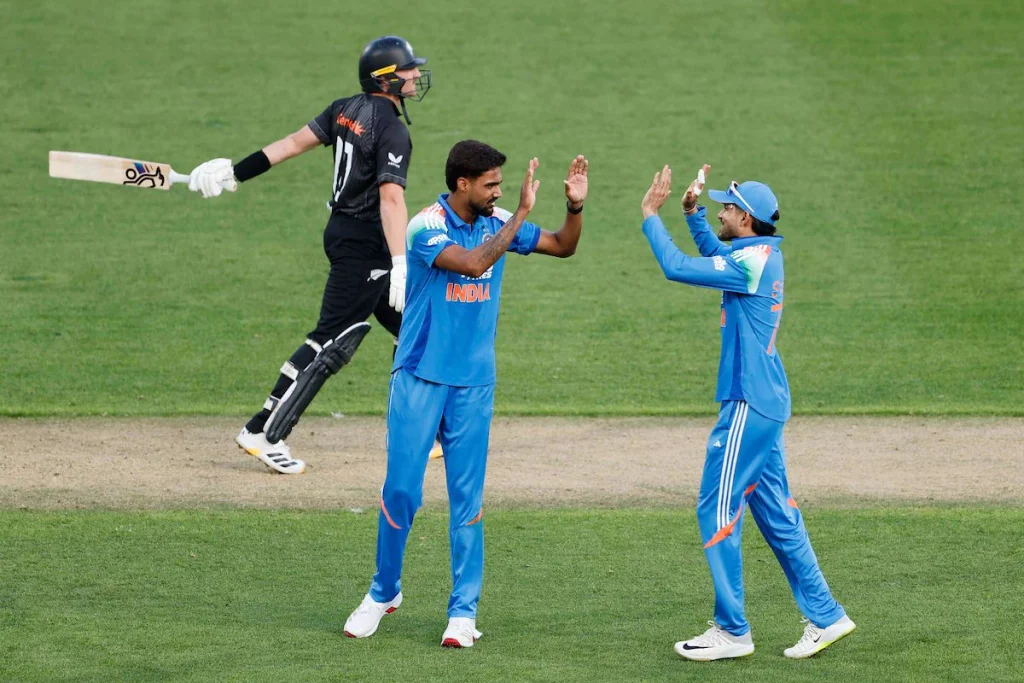
A Memorable Performance From Gurnoor Brar
Gurnoor Brar’s performance was undoubtedly one of the major talking points of the match.
Taking four wickets in a low-scoring ODI requires concentration, consistency and the ability to maintain pressure throughout an innings.
Brar delivered all three.
His spell of 10 overs for 30 runs demonstrated his growing importance to India’s bowling plans. He was particularly effective during the middle overs, when New Zealand were attempting to rebuild their innings.
His wickets prevented the home side from developing any meaningful momentum and ensured that India’s target remained manageable.
Brar also demonstrated the value of having a varied bowling attack. With Nabi, Kamboj and Axar Patel contributing, India were able to maintain pressure from both ends.
The performance will provide considerable encouragement to the Indian team management as they continue evaluating their bowling combinations during the New Zealand tour.
What the Result Means for the ODI Series
The four-run victory gave India a 2-0 lead in the five-match ODI series.
Having already won the opening ODI by five wickets through the DLS method, the visitors have now established a strong advantage.
Two rain-affected matches have produced two victories for India, demonstrating that the team has been able to adapt to changing conditions and remain competitive despite interruptions.
For New Zealand, the challenge becomes increasingly difficult.
The hosts will need to improve their batting performance and find ways to handle India’s fast bowlers more effectively. Their bowling attack showed considerable promise in Wellington, but the lack of runs during the first innings ultimately proved costly.
Daryl Mitchell’s contribution was encouraging, while Santner’s innings demonstrated the importance of experienced players stepping forward during difficult periods.
However, New Zealand cannot depend on one or two batters to carry the entire responsibility. Greater contributions from the top and middle order will be essential if they want to challenge India in the remaining matches.
India, meanwhile, will take confidence from their collective performance.
The bowling unit delivered an excellent display, the middle order showed resilience, and KL Rahul’s unbeaten innings helped the visitors remain in control during the chase.
There will still be areas for improvement, particularly regarding the early wickets lost during the second innings. India cannot afford to make similar mistakes in every match, especially against a strong New Zealand attack.
Looking Ahead to the Third ODI
The teams will now turn their attention to the third ODI, scheduled to take place in Hamilton on November 10.
India will enter the contest with considerable confidence after securing back-to-back victories. The visitors will be eager to continue their winning momentum and move closer to sealing the series.
New Zealand, on the other hand, will be desperate for a response.
The home side will need to produce a more convincing batting performance while maintaining the intensity displayed by their bowlers in Wellington.
The third match could become an important opportunity for the hosts to regain confidence and prevent India from establishing an unassailable advantage.
Both teams possess experienced international players, and the remaining matches should provide further opportunities for individual performances and tactical adjustments.
Conclusion: India Win a Thrilling Battle in Wellington
India’s four-run victory over New Zealand was a reminder that cricket matches are not always decided by huge totals or spectacular batting performances.
Sometimes, discipline, patience and small advantages make the biggest difference.
New Zealand struggled during the first innings, but Daryl Mitchell and Mitchell Santner gave their team something to defend. Their bowlers then produced an impressive response, putting India under significant pressure and taking seven wickets during the chase.
However, India’s bowlers had already created the foundation for victory through an outstanding first-innings performance led by Gurnoor Brar.
KL Rahul’s unbeaten contribution and Shreyas Iyer’s valuable innings helped the visitors remain competitive when the pressure increased.
Ultimately, the rain brought the contest to an end, and India emerged victorious under the DLS method by four runs.
It was not a completely comfortable victory, but it was an important one.
India demonstrated resilience, composure and the ability to handle difficult conditions, while New Zealand will take encouragement from their spirited bowling comeback despite the disappointing result.
With India now leading the five-match ODI series 2-0, the visitors have taken another significant step towards series success.
The Wellington encounter may have been shortened by rain, but it delivered plenty of drama and provided another example of how narrow the margins can be in international cricket.
