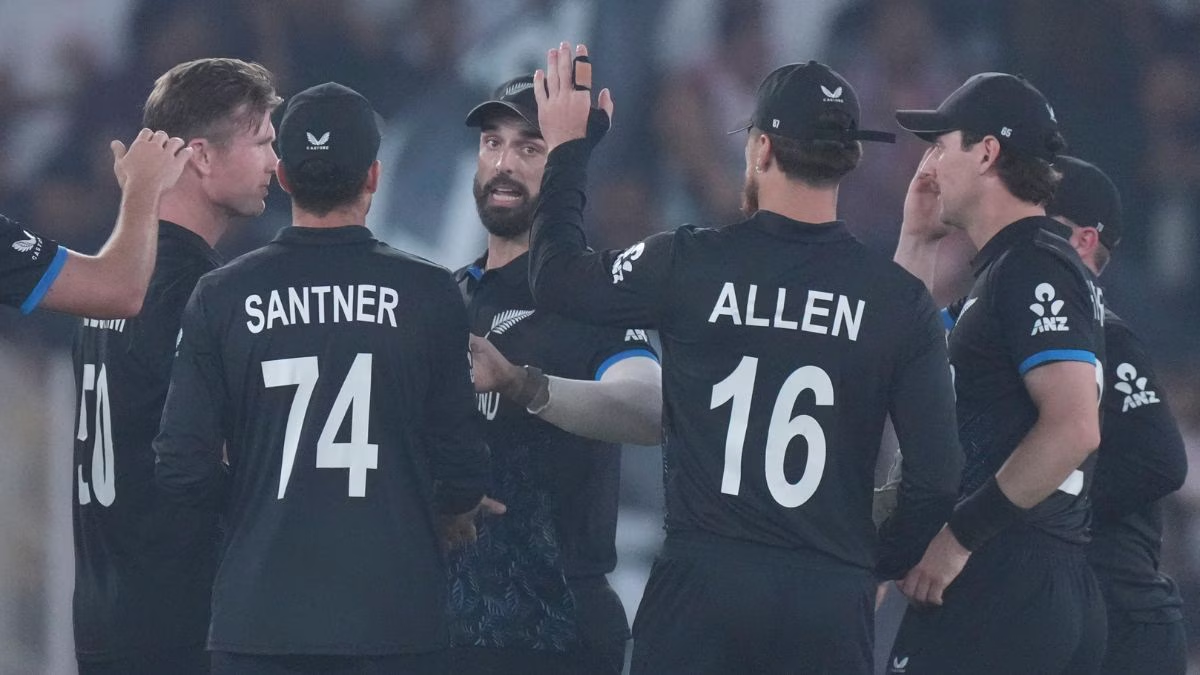

Glenn Phillips Fires Black Caps to Super Eights Qualification with Eight-Wicket Win Over Canada in 2026 T20 World Cup
The historic MA Chidambaram Stadium in Chennai, known as Chepauk, hosted a masterclass in clinical T20 cricket on February 17, 2026, as New Zealand dismantled Canada by eight wickets with 29 balls to spare in the 31st match (occasionally listed as the 32nd due to scheduling notations) of the ICC Men’s T20 World Cup 2026. This Group D league-stage encounter saw Canada post a respectable 173/4, highlighted by Yuvraj Samra’s groundbreaking 110 off 65 balls—the first century by a Canadian in T20 World Cup history. However, New Zealand’s response was ferocious: Glenn Phillips smashed an unbeaten 76 off 36 balls (nine fours, four sixes), while Rachin Ravindra contributed an unbeaten 59 off 39, powering the Black Caps to 176/2 in just 15.1 overs. The emphatic victory not only confirmed New Zealand’s qualification for the Super Eights as runners-up in Group D behind unbeaten South Africa but also showcased their explosive batting depth and composure in high-stakes chases.
The 2026 T20 World Cup, co-hosted by India and Sri Lanka, represented the tournament’s most ambitious expansion yet, with 20 teams divided into four groups of five. The top two from each group advanced to the Super Eights, where points carried forward and net run rate (NRR) often decided fates. Group D was a mix of established powerhouses and emerging challengers: South Africa (pre-tournament favorites and group leaders), New Zealand (resilient campaigners with a strong spin attack), Afghanistan (mystery spinners Rashid Khan and Mujeeb Ur Rahman), United Arab Emirates (consistent qualifiers), and Canada (debutants from the Americas region who had earned their spot through impressive regional performances).
By this stage, South Africa had already secured top spot with four wins, while New Zealand needed a strong result to overtake Afghanistan on NRR and claim the second qualification berth. Canada, winless in their previous matches against South Africa, Afghanistan, and UAE, played for pride and experience in their maiden World Cup campaign. The match carried extra weight for New Zealand, who had endured a mixed group phase—dominant wins mixed with narrow losses—and sought momentum heading into the Super Eights Group 2 (alongside England, Pakistan, and Sri Lanka).
Chepauk’s pitch, typically slow and low with grip for spinners in the middle overs but offering true bounce under lights, suited teams batting second due to minimal dew. Canada captain Dilpreet Bajwa won the toss and elected to bat, hoping to post a defendable total and exploit any early movement. New Zealand, under Mitchell Santner, fielded their balanced unit: explosive openers Finn Allen and Tim Seifert, all-round firepower from Phillips and Ravindra, and a spin-heavy attack with Santner, Ravindra, and Ish Sodhi.
Canada’s innings was defined by Yuvraj Samra’s heroic knock. The right-handed opener, a product of Canada’s domestic circuit and qualifiers, played with remarkable composure and flair. After an early wicket (openers partner dismissed by Matt Henry’s inswinger), Samra built partnerships—first with Dilpreet Bajwa (36 off 39, steady rotation) for over 120 runs, then brief cameos from Nicholas Kirton and others. Samra’s century came off 65 balls (12 fours, three sixes), featuring elegant cover drives, powerful pulls over midwicket, and innovative ramps against pace. He accelerated in the death, targeting Jacob Duffy and Henry with sixes, but New Zealand’s bowlers pulled back brilliantly in the final overs—Duffy (1/25) and Henry (1/28) conceding just 28 in the last five. Canada ended at 173/4—a competitive score on a tricky track, but one New Zealand’s batting lineup relished chasing.
Post-innings, Samra, emotional in the presentation, said: “This century means everything to me and Canadian cricket—first in a World Cup for us. We gave ourselves a platform, but New Zealand chased superbly. Proud of the fight.” Bajwa added: “173 was par or better here. Their openers took it away early—lessons learned for future.”
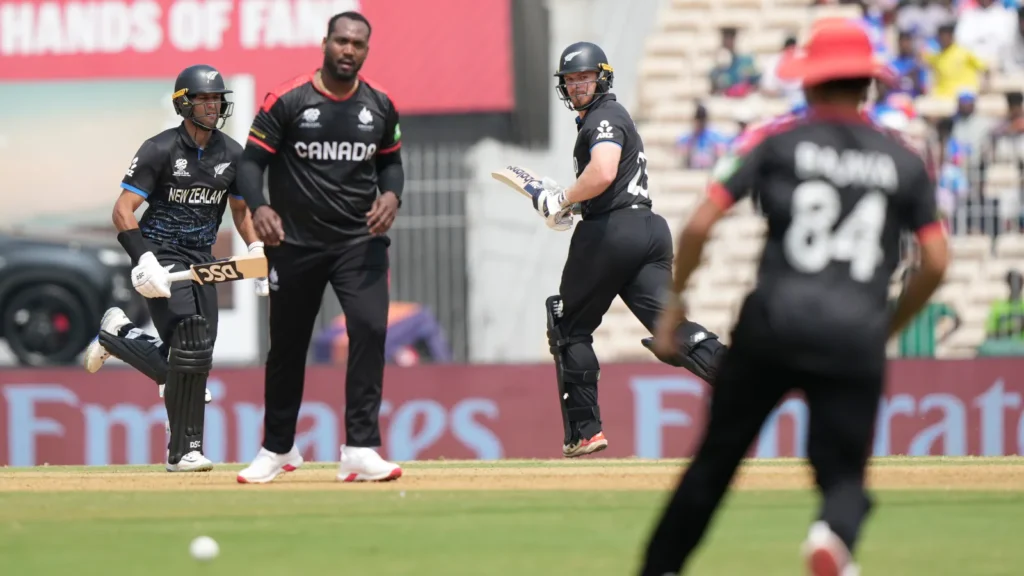
New Zealand’s chase began explosively despite early setbacks. Finn Allen fell cheaply to Saad Bin Zafar’s left-arm spin, and Tim Seifert followed soon after, leaving the Black Caps 20/2 in the powerplay. But the arrival of Rachin Ravindra and Glenn Phillips turned the game decisively. Ravindra played the anchor role with trademark elegance—rotating strike, elegant drives through covers, and calculated lofted shots—while Phillips unleashed pure aggression. The pair added an unbeaten 156 for the third wicket, dismantling Canada’s attack.
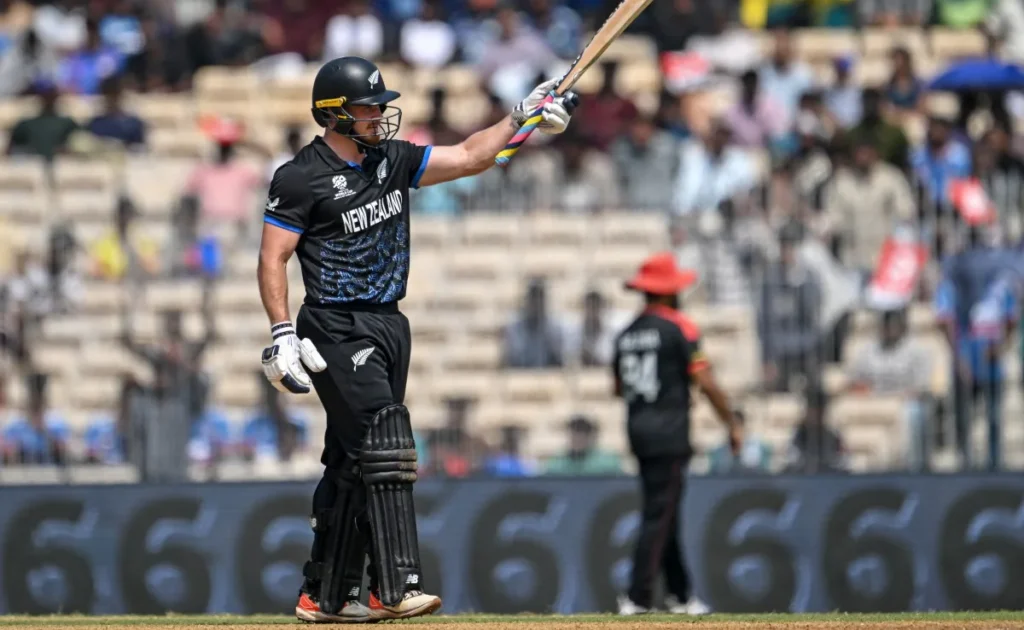
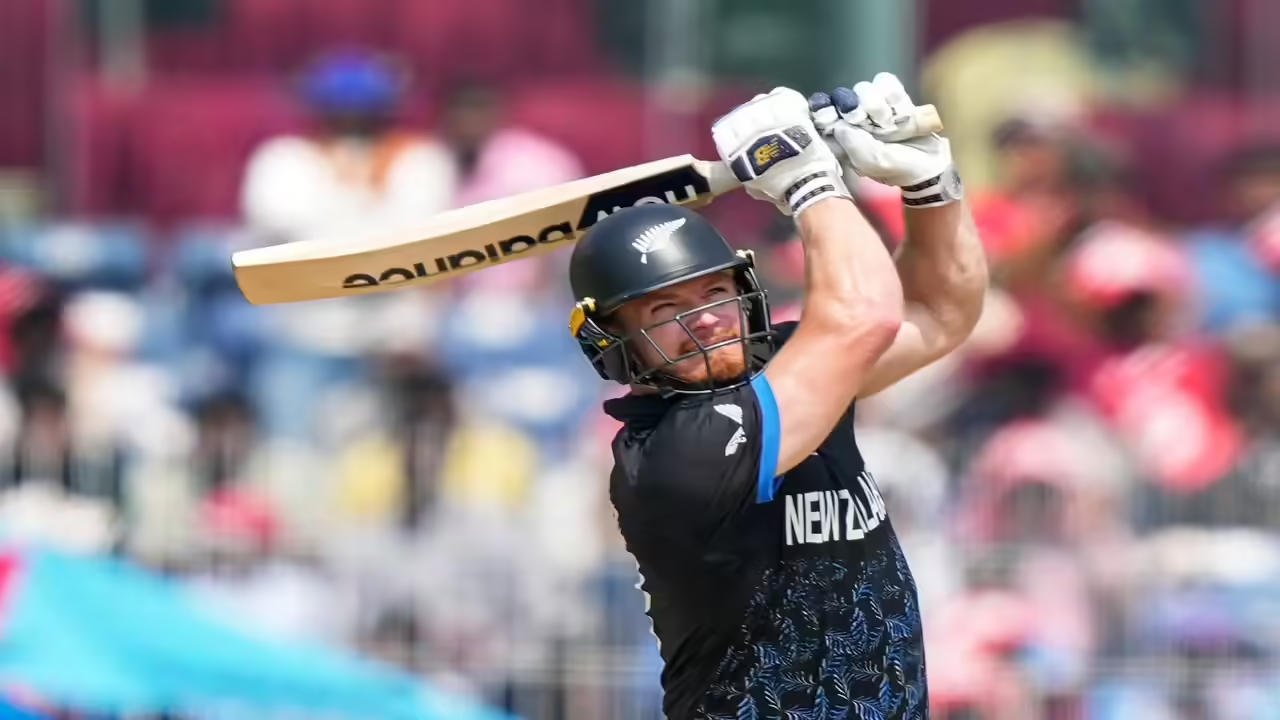
Phillips reached his fifty off just 25 balls, smashing boundaries off Jaskarandeep Singh, Shivam Sharma, and Dilon Heyliger—pulls over midwicket, lofted drives over long-on, and innovative scoops. His 76* off 36 included nine fours and four towering sixes, equaling some of the fastest World Cup fifties by a New Zealander. Ravindra, unbeaten on 59 off 39 (crisp timing and placement), complemented perfectly, ensuring no further wickets fell. The required rate never climbed above eight, and Phillips sealed victory with a six off the ball he faced in the 15.1 over—New Zealand home with 29 balls remaining.
Phillips, named Player of the Match, reflected: “The wicket was good once set—Rachin and I just backed our instincts. Samra’s ton was brilliant, but we wanted to chase aggressively to boost NRR. Great to qualify.” Santner praised the team: “Our batting depth is a strength. This win gives us momentum for Super Eights.”
Statistically, the match was landmark: Samra’s 110 was Canada’s highest World Cup score and the first century by an Associate batter in the 2026 edition. Phillips’ 76* was his fastest in World Cups, and New Zealand’s 176/2 in 15.1 overs ranked among the quickest successful chases of 170+ targets in the tournament. The eight-wicket margin with 29 balls spare highlighted their efficiency and depth.
The result secured New Zealand’s Super Eights spot in Group 2 with six points (behind England’s dominant run), setting up clashes against Pakistan (abandoned due to rain), Sri Lanka (won by 61 runs), and England (loss by two wickets). Canada exited winless but with inspiration—Samra’s century a beacon for North American cricket and proof that associates can compete at the highest level.
This Chennai encounter exemplified T20 cricket’s evolution: individual brilliance (Samra’s ton, Phillips’ blitz), strategic bowling (New Zealand’s death control), and fine margins in qualification. New Zealand’s performance reinforced their status as consistent contenders—resilient, adaptable, and explosive. As the Super Eights unfolded—leading to semis (South Africa vs New Zealand in Kolkata, England vs India in Mumbai)—this victory stood as a statement: the Black Caps were peaking at the right time.
For Canada, the campaign ended with valuable lessons—facing top attacks built resilience for future qualifiers. In a World Cup defined by upsets, associate growth, and high drama, New Zealand’s eight-wicket rout etched a chapter of clinical dominance and qualification joy.ing top attacks built resilience for future qualifiers. In a World Cup defined by upsets, associate growth, and high drama, New Zealand’s eight-wicket rout etched a chapter of clinical dominance and qualification joy.