

Australia Women Secure Clinical Five-Wicket Victory Over India
India Women tour of Australia 2026
Match: India Women vs Australia Women
Date: Friday, 27 February 2026
Result: Australia Women won by 5 wickets (with 83 balls remaining)
Cricket tours often evolve like stories—each match adding a new chapter, each performance shaping the narrative. By the time India Women met Australia Women on 27 February 2026, the tour had already produced tight contests, dramatic finishes, and moments of individual brilliance.
But this particular match unfolded differently.
Instead of suspense stretching into the final overs, Australia produced a controlled, calculated performance that steadily dismantled India’s challenge. Their bowlers applied early pressure, their fielders backed every delivery with sharp intensity, and their batters completed the chase with composure.
The result was a five-wicket victory with 83 balls remaining, a margin that illustrated just how dominant the Australian side had been on the day.
Still, the match was far from forgettable. It featured elegant strokeplay, bursts of aggressive bowling, and several moments when India threatened to turn the tide.
Another Chapter in a Growing Rivalry
The rivalry between India Women and Australia Women has matured into one of the most compelling matchups in international cricket.
Australia’s reputation as a powerhouse is well established. Their players combine technical discipline with fearless aggression, and their record across formats has set a benchmark for other teams.
India, meanwhile, has steadily emerged as one of the few sides capable of consistently challenging that dominance. Over the past decade, their team has developed depth in both batting and bowling, along with a brand of cricket built on resilience.
When these two teams face each other, the result is rarely predictable.
Yet on this warm February afternoon, Australia seemed determined to assert their authority from the very first over.
Conditions Favoring Batting
The match began under clear skies and pleasant temperatures.
The pitch looked firm, evenly colored, and typical of Australian surfaces that provide reliable bounce. Such conditions often encourage attacking batting once players settle in.
India won the toss and decided to bat first.
The choice reflected a familiar strategy—set a target and attempt to pressure the chasing side.
But Australia had other plans.
Australia’s Bowlers Strike Early
India’s openers walked to the crease with confidence, aware that a solid start would be crucial.
Australia’s pace attack, however, began with impressive discipline.
The new ball swung slightly, and the bowlers repeatedly targeted a testing length outside off stump. The Indian batters found it difficult to score freely during the opening overs.
Dot balls accumulated.
The pressure built quietly but steadily.
Then came the breakthrough.
The First Wicket
A delivery angled across the batter tempted an ambitious drive.
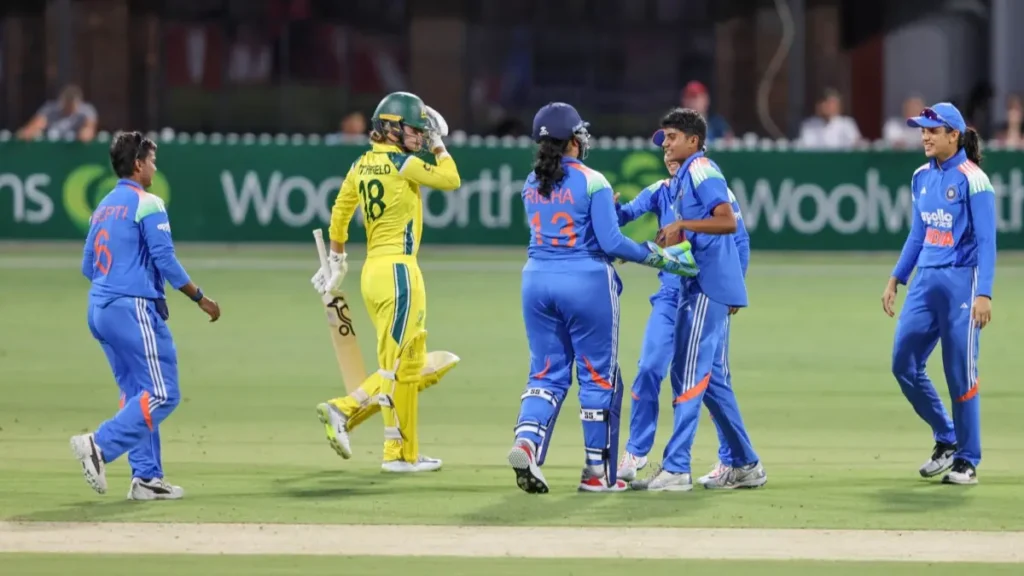
The edge flew toward the slips where a sharp catch completed the dismissal.
Australia erupted in celebration.
The early wicket had not only removed a key batter but also injected energy into the fielding side.
India now faced the challenge of rebuilding their innings.
Mandhana’s Resistance
Whenever India needs stability at the top of the order, Smriti Mandhana often becomes the focal point.
Her approach on this occasion reflected patience and composure. Instead of forcing aggressive strokes, she focused on timing and placement.
A graceful cover drive brought India their first boundary.
Moments later, a well-placed cut shot raced to the rope.
For a few overs, Mandhana appeared capable of anchoring the innings.
Australia Tighten the Grip
Australia responded by introducing spin during the middle overs.
The slower pace forced India’s batters to adjust their timing. Fielders closed in around the bat, increasing the pressure with every dot ball.
Eventually, Mandhana attempted to lift a delivery over the infield.
The shot lacked elevation.
A fielder at mid-off moved forward and held the catch cleanly.
India’s most composed batter had departed.
A Middle-Order Struggle
The dismissal triggered a difficult phase for India.
Partnerships began but failed to flourish. Every time a batter seemed ready to accelerate, Australia produced another breakthrough.
One wicket fell to a clever slower delivery that deceived the batter completely.
Another came through sharp fielding—an accurate throw catching the runner just short of the crease.
The scoreboard reflected Australia’s growing control.
Harmanpreet’s Counterattack
India’s captain Harmanpreet Kaur attempted to change the momentum.
Known for her fearless batting, she played several confident strokes that briefly lifted the scoring rate.
A powerful pull shot sailed over mid-wicket for six, drawing cheers from the Indian supporters in the crowd.
For a moment, it seemed India might launch a late surge.
But Australia remained disciplined.
India’s Modest Total
As the innings approached its final overs, India’s lower order tried to add quick runs.
A few boundaries pushed the score upward, but the Australian bowlers prevented any dramatic acceleration.
When the innings ended, India had posted 138 for 9.
It was a total that demanded exceptional bowling if India hoped to defend it.

Australia Begin the Chase
Australia’s openers approached the target with calm confidence.
The required run rate was manageable, and the pitch continued to offer excellent batting conditions.
From the outset, the batters focused on positive intent.
A crisp drive through extra cover brought the first boundary of the chase.
Another followed soon afterward through square leg.
The scoreboard moved quickly.
An Assertive Opening Partnership
Australia’s opening pair built momentum through controlled aggression.
They rotated the strike regularly and punished any loose deliveries.
India’s bowlers searched for breakthroughs but struggled to contain the flow of runs.
Within the first several overs, Australia had already reduced the required total significantly.
India Finally Strike
The breakthrough eventually arrived.
A delivery that bounced slightly more than expected induced an edge that carried safely to the wicketkeeper.
The Indian players celebrated enthusiastically.
The dismissal provided a glimmer of hope.
But Australia’s depth soon became evident.
Middle-Order Calm
Australia’s next batter walked to the crease with confidence.
Instead of attempting risky shots, she focused on maintaining the steady pace of the chase.
Singles came easily, and boundaries appeared whenever India’s bowlers missed their lengths.
The required runs continued to decrease.
Australia looked firmly in control.
A Brief Spark from India
India briefly threatened to create tension when their spinners removed two quick wickets.
One batter mistimed a lofted shot to deep mid-wicket.
Another was bowled while attempting an aggressive sweep.
For a few moments, the contest seemed alive again.
But Australia’s remaining batters handled the situation calmly.
Closing the Game
With the target approaching, Australia’s batters accelerated slightly.
A boundary through point brought the score within touching distance.
Moments later, a gentle push into the outfield produced the winning runs.
Australia had completed the chase with 83 balls remaining, sealing a comfortable five-wicket victory.
Celebrations for Australia
The Australian players congratulated each other near the pitch.
It had been a performance defined by precision.
Their bowlers had dismantled India’s batting lineup, while the batters executed the chase without unnecessary risk.
For the home side, the result reinforced their reputation as one of the most efficient teams in international cricket.
India Reflect on Missed Opportunities
India, meanwhile, were left to analyze the match carefully.
Their bowlers showed determination, but the modest total made the task extremely difficult.
The team’s inability to build long batting partnerships proved decisive.
Yet even in defeat, there were positives—moments of aggressive batting and committed fielding that demonstrated the team’s fighting spirit.
Key Performances
Australia’s bowlers collectively produced disciplined spells, particularly during the middle overs when India struggled to score freely.
Their batters then delivered a professional chase, with the opening partnership providing a strong foundation.
India’s resistance through Mandhana and Harmanpreet briefly threatened to lift the innings, but the momentum never fully shifted.
A Tour Full of Lessons
Tours of Australia have historically tested visiting teams more than most.
The pace of the pitches, the quality of opposition, and the demanding travel schedule all combine to challenge players both physically and mentally.
For India Women, the 2026 tour has provided valuable experience.
Matches like this—where Australia executed their plans flawlessly—offer lessons that could shape future encounters between the teams.
Looking Ahead
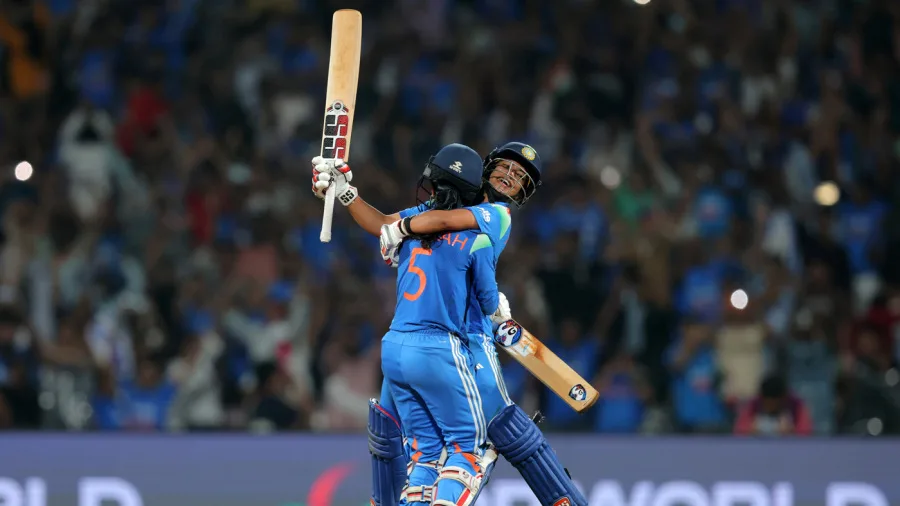
The rivalry between India and Australia shows no signs of slowing down.
Every series adds new layers to the contest: emerging players, tactical innovations, and memorable individual performances.
While this match ended comfortably in Australia’s favor, the broader competition between the two sides remains intense.
And if the past few years are any indication, their next meeting could produce a completely different outcome.
For now, however, Australia Women walk away with a convincing five-wicket victory, achieved through discipline, confidence, and a performance that left little doubt about the result.
