
India Crowned World Champions After Crushing New Zealand in the 2026 Final
ICC Men’s T20 World Cup Final – 8 March 2026
India beat New Zealand by 96 runs
World Cup finals are usually tense affairs—tight margins, nervous batting, and games that drift deep into the final overs. The 2026 ICC Men’s T20 World Cup final, however, told a different story.
On a warm Sunday evening in Ahmedabad, India delivered a performance of authority and control, overpowering New Zealand by a staggering 96 runs to claim the trophy. What began as a highly anticipated clash between two of the tournament’s most consistent teams gradually turned into a showcase of India’s dominance.
The margin of victory reflected the scale of India’s superiority on the night. From the moment their batting lineup took control of the innings to the relentless bowling that dismantled New Zealand’s chase, the hosts dictated nearly every phase of the match.
By the end of the evening, fireworks lit up the sky and thousands of fans inside the stadium celebrated a historic triumph.

A Final Built on Momentum
Both teams arrived in the final with impressive momentum.
India had survived a thrilling semi-final against England, holding on to win by seven runs in a high-scoring encounter that tested their composure under extreme pressure. New Zealand, meanwhile, had cruised past South Africa in their semi-final with remarkable ease, chasing down a target in barely 13 overs.
With those performances fresh in memory, expectations were enormous. Many analysts predicted a tight contest between two balanced sides capable of brilliance with both bat and ball.
The Narendra Modi Stadium in Ahmedabad was packed hours before the toss. Waves of blue jerseys dominated the stands, though a passionate group of New Zealand supporters also made their presence felt.
When the teams walked onto the field, the tension was unmistakable.
India Choose to Bat
Winning the toss in a World Cup final often brings difficult decisions.
India opted to bat first—a bold choice considering the pressure of setting a total in such a high-stakes match. The pitch looked firm and batting-friendly, and the Indian management clearly believed their lineup had the firepower to post a daunting score.
New Zealand’s captain accepted the challenge calmly. Their strategy was straightforward: early wickets, disciplined bowling, and then a controlled chase.
For a few overs, that plan seemed possible.
Early Overs: Cautious Beginnings
India’s opening pair began the innings with measured intent rather than explosive aggression.
The first couple of overs were quiet by modern T20 standards. New Zealand’s bowlers stuck to tight lines, forcing the Indian batters to respect the new ball.
But slowly, the pressure began to shift.
A crisp drive through cover broke the boundary drought. A pull shot in the following over produced another four. The crowd, initially tense, began to find its voice.
India’s innings was starting to take shape.
Kishan Ignites the Powerplay
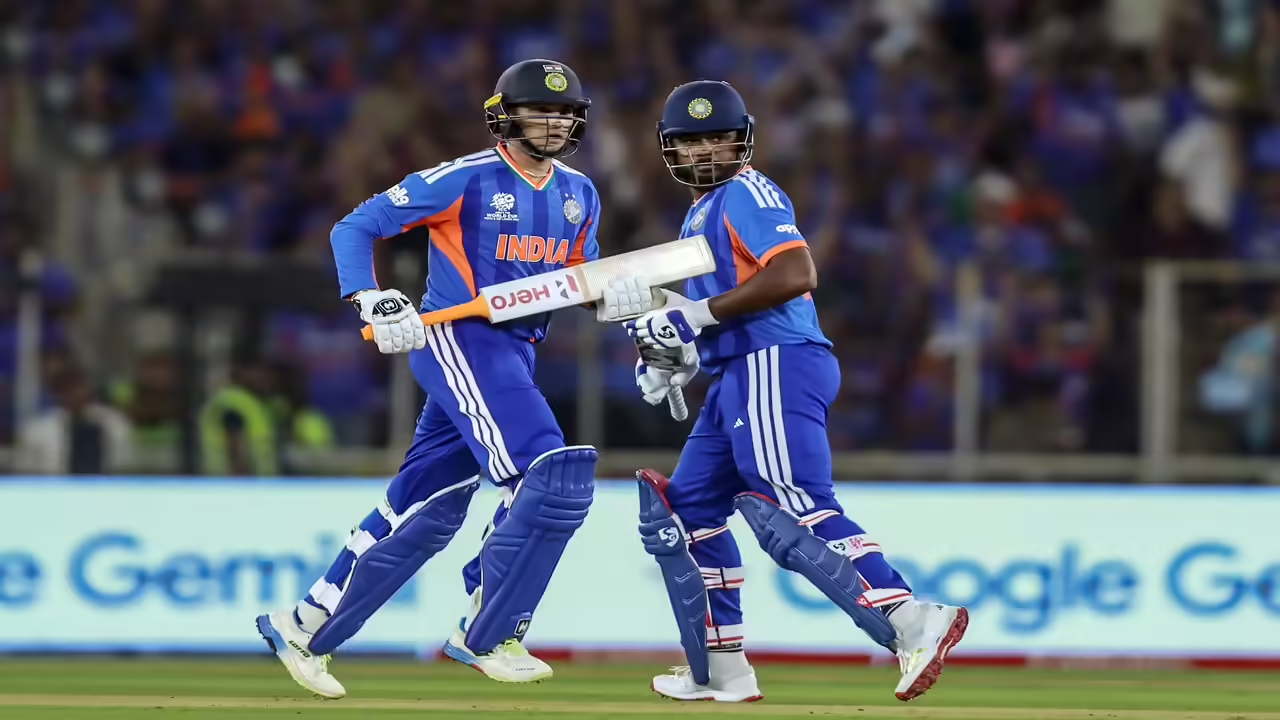
Ishan Kishan played a pivotal role in accelerating India’s scoring rate during the powerplay.
His approach was fearless yet calculated. Short deliveries were pulled confidently, while fuller balls were driven with elegant timing.
One particular over from a New Zealand seamer changed the momentum entirely. Kishan launched two sixes and a boundary, sending the crowd into a frenzy.
Suddenly, India’s total began climbing rapidly.
New Zealand attempted to respond with field changes and bowling rotations, but the momentum had shifted.
Samson Takes Control
While Kishan provided early fireworks, Sanju Samson delivered the innings that defined the final.
Walking in after the first wicket, Samson looked composed from the very beginning. His shot selection was precise, his timing immaculate.
He started patiently, working singles and placing the ball into gaps.
Then the boundaries began to flow.
A cover drive raced to the rope. Moments later, a lofted shot sailed over long-on. Samson’s ability to shift gears without losing control proved crucial.
New Zealand’s bowlers tried different tactics—slower balls, bouncers, spin—but Samson adapted effortlessly.
A Captain’s Innings Without the Armband
Though not the captain, Samson’s performance had the qualities of leadership.
He guided the innings through the middle overs, ensuring that India never lost momentum even as wickets occasionally fell at the other end.
The partnership building around him steadily wore down New Zealand’s bowling attack.
By the time Samson crossed his half-century, India were already on course for a massive total.
The crowd sensed something special.
The Final Overs Explosion
T20 cricket often turns in the last five overs, and India made the most of that phase.
With Samson anchoring the innings and the lower middle order ready to attack, the final overs produced a barrage of boundaries.
New Zealand’s bowlers fought hard, but the Indian batters were relentless.
Sixes cleared the ropes. Hard-driven fours pierced the infield. The scoring rate climbed dramatically.
By the end of the innings, India had posted a formidable total of 255 for 5—a score that felt enormous even in a final.
A Mountain to Climb
Chasing 256 in a World Cup final is never easy.
Even for a confident team like New Zealand, the task was daunting. They needed an aggressive start while avoiding early wickets—an extremely delicate balance.
India, however, began the defense of their total with remarkable precision.
The new-ball bowlers attacked the stumps, forcing New Zealand’s openers into cautious shot selection.
The pressure began building almost immediately.
Bumrah Strikes Early
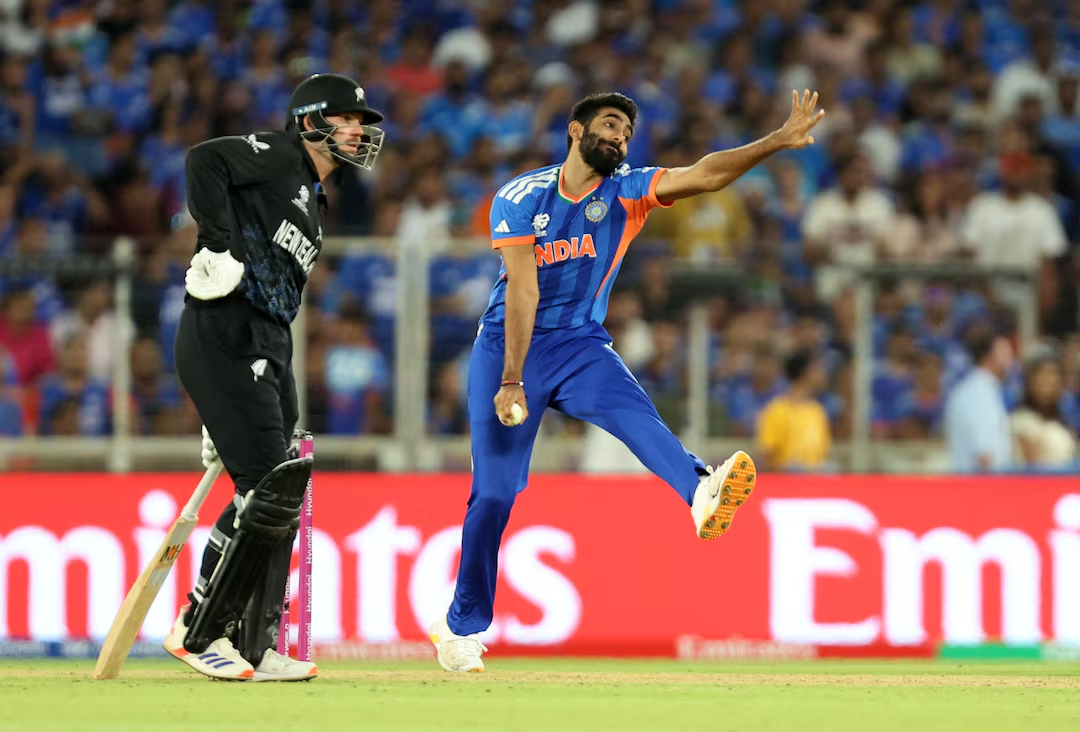
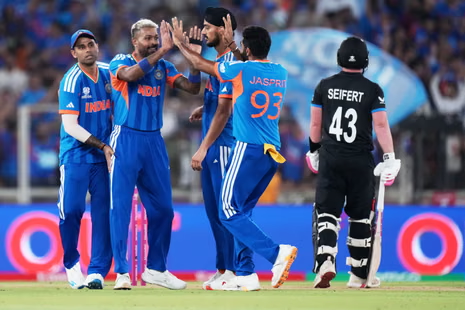
Jasprit Bumrah delivered the breakthrough India needed.
His opening spell combined pace, accuracy, and subtle variations. The decisive moment came when a perfectly executed delivery beat the bat and shattered the stumps.
The stadium erupted.
That early wicket shifted the psychological balance heavily in India’s favor.
New Zealand still had plenty of batting depth, but the required run rate remained daunting.
New Zealand Attempt a Recovery
Despite the early setback, New Zealand attempted to rebuild.
Their middle-order batters tried to rotate the strike and look for occasional boundaries. For a brief period, the innings stabilized.
However, the required run rate continued climbing.
Every dot ball increased the pressure. Every wicket felt heavier.
India’s bowlers sensed the opportunity.
Spin Tightens the Grip
The introduction of spin further complicated New Zealand’s chase.
Axar Patel delivered one of the most effective spells of the match. His disciplined line and clever variations forced New Zealand’s batters into risky shots.
Two wickets fell in quick succession.
One mistimed drive was caught in the deep. Another batter misjudged the turn and lost his stumps.
The collapse had begun.
Fielding That Refused to Relax
India’s fielding was exceptional throughout the chase.
Diving stops prevented boundaries. Quick throws cut down potential twos. Even routine singles required effort.
These small details gradually drained New Zealand’s momentum.
By the halfway point of their innings, the required run rate had climbed beyond reach.
Bumrah Finishes the Job
Returning for his second spell, Bumrah sealed the outcome.
His control at the death overs was outstanding. Yorkers landed with precision, and slower deliveries fooled the batters repeatedly.
Two more wickets followed quickly, leaving New Zealand’s lower order exposed.
The match, which had once promised a competitive final, was now firmly under India’s control.
The Final Moments
Eventually, the last New Zealand wicket fell in the 19th over.
The moment the catch was taken, the stadium erupted.
Players sprinted across the field in celebration. The crowd roared with unrestrained joy.
India were world champions.
Celebrations Across the Stadium
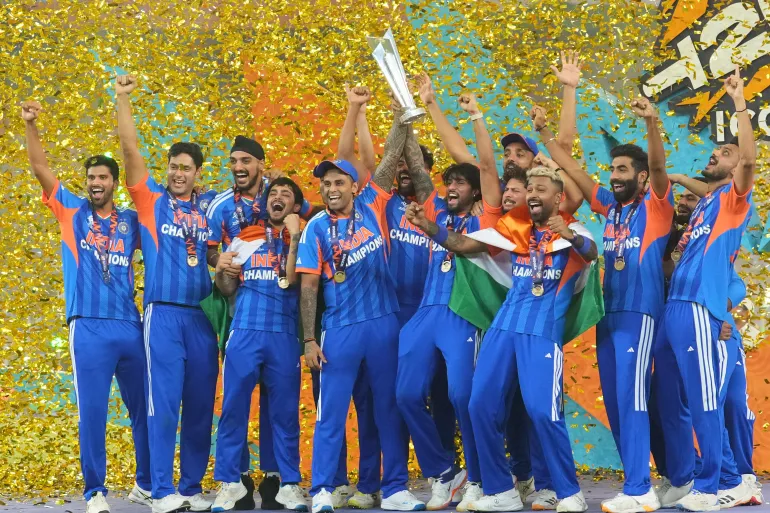
The trophy presentation turned into a festival.
Fireworks illuminated the night sky above Ahmedabad. Players draped in the Indian flag walked around the field acknowledging the fans.
The roar from the stands echoed long after the final ball had been bowled.
For many supporters, it was a moment they had waited years to witness again.
The Heroes of the Final
Sanju Samson’s 89-run innings formed the backbone of India’s huge total. His combination of composure and aggression made him the central figure in the batting effort.
Ishan Kishan’s explosive start ensured India seized early momentum.
With the ball, Jasprit Bumrah produced a match-winning spell, finishing with four wickets and dismantling New Zealand’s hopes of a comeback.
Axar Patel’s disciplined spin bowling added further control during the middle overs.
A Tournament to Remember
India’s journey through the 2026 World Cup was defined by resilience and explosive performances.
From thrilling group-stage matches to nail-biting knockouts and finally a dominant performance in the final, the team demonstrated depth and adaptability.
The final itself served as the perfect conclusion—a match where India’s strengths aligned at the right moment.
New Zealand’s Brave Campaign
For New Zealand, the defeat was painful but should not overshadow an outstanding tournament.
Their journey to the final included several impressive victories, including a remarkable semi-final win.
While the final proved difficult, their consistency throughout the competition earned admiration from fans around the world.
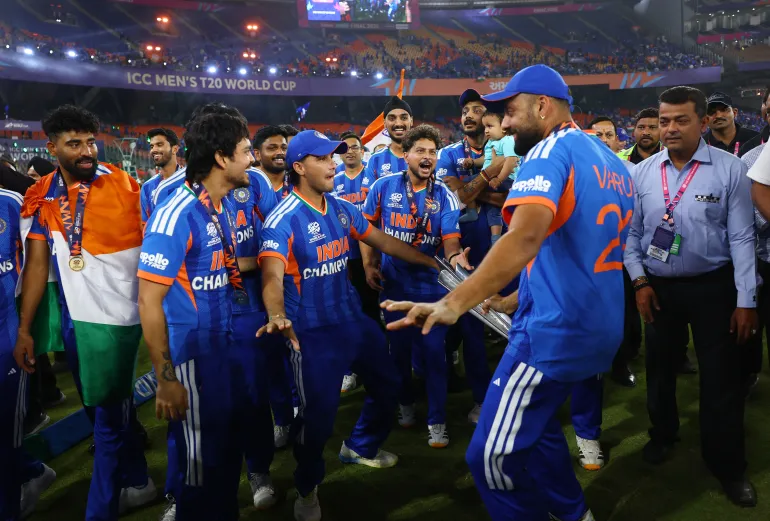
Champions of 2026
As the celebrations continued into the night, one truth became clear.
India had not merely won the final—they had dominated it.
A massive total, relentless bowling, sharp fielding, and an unforgettable atmosphere combined to produce a victory worthy of a World Cup final.
On 8 March 2026, in front of a roaring crowd in Ahmedabad, India lifted the ICC Men’s T20 World Cup trophy once again.
And for millions of fans, it was a night they would never forget.
