
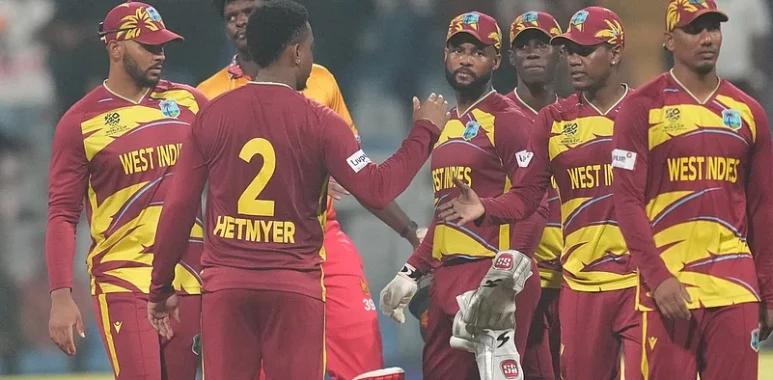
New Zealand Storm into the Final with Ruthless Win Over South Africa
ICC Men’s T20 World Cup 2026 – 1st Semi-Final
4 March 2026 | New Zealand won by 9 wickets (with 43 balls remaining)

Semi-finals are supposed to be tense. Tight. Unpredictable.
This one, however, turned into something else entirely.
On a warm evening in Ahmedabad on 4 March 2026, New Zealand produced one of the most dominant performances of the ICC Men’s T20 World Cup, dismantling South Africa with startling efficiency. What began as a competitive knockout match quickly turned into a display of controlled bowling followed by breathtaking batting.
By the time the chase ended—with 43 balls still unused—the outcome felt almost surreal. New Zealand had marched into the final with a nine-wicket victory that left the cricketing world stunned.
And at the heart of it all was one unforgettable innings.
Finn Allen.
A Semi-Final Filled with Expectation
The stage could hardly have been bigger.
Knockout cricket always carries a unique pressure. A month of competition boils down to a few hours where everything—form, tactics, nerves—gets tested simultaneously.
South Africa entered the match with momentum. Their performances in the Super Eights had been solid, combining disciplined bowling with aggressive batting.
New Zealand, meanwhile, had quietly built their campaign with typical calm efficiency. They rarely dominated headlines but consistently produced results.
When the teams walked onto the field, the match felt evenly poised.
For about an hour.
South Africa’s Calculated Start
South Africa won the toss and chose to bat.
The decision seemed logical. In high-pressure knockout games, posting a total can sometimes ease the burden of chasing. The Proteas hoped to build a platform and challenge New Zealand’s batting depth.
Their opening pair started with cautious intent.
There were no reckless swings in the early overs—just controlled strokes and careful running between the wickets. The powerplay produced a respectable flow of runs without major risks.
New Zealand’s bowlers, however, rarely looked unsettled.
Matt Henry, leading the attack, found consistent bounce and movement. His line outside off stump forced South Africa’s batters into disciplined shot selection.
Eventually, the pressure created an opportunity.
A mistimed pull shot found a fielder.
The first breakthrough arrived.

New Zealand’s Bowling Discipline
From that moment onward, New Zealand began to dictate the tempo of the innings.
They didn’t rely on dramatic spells or explosive wicket bursts. Instead, they squeezed South Africa through subtle pressure.
The field placements were precise. The bowlers stuck to their plans.
Rachin Ravindra played a crucial role in this phase. His left-arm spin slowed the scoring rate significantly and forced the South African batters to take risks.
Twice those risks backfired.
Both dismissals came from attempted big shots that never quite cleared the fielders.
Suddenly, South Africa’s innings felt uncertain.
The Middle Overs: Momentum Slips
T20 cricket often pivots during the middle overs, and this match proved no different.
South Africa struggled to find rhythm during this phase.
Singles replaced boundaries. Dot balls increased. The pressure slowly built.
New Zealand’s fielding added to the squeeze. Diving stops, quick returns, and constant chatter from the fielders ensured South Africa never felt comfortable.
Even when partnerships formed, they never truly accelerated.
At the 15-over mark, South Africa had a decent platform—but not the kind that usually decides semi-finals.
They needed a late surge.
A Late Push from the Proteas
To their credit, South Africa did attempt to lift the scoring rate in the final overs.
A couple of powerful hits brought brief excitement to the crowd. Boundaries started appearing more frequently, and the scoreboard finally began moving at a quicker pace.
Yet New Zealand never allowed the innings to explode completely.
Yorkers at the death, clever slower balls, and calm fielding prevented the Proteas from crossing the 180 mark.
When the innings ended at 169 for 8, the total felt competitive—but not intimidating.
In knockout cricket, though, totals around 170 often prove tricky.
At least, that was the assumption.

The Chase Begins Quietly
New Zealand’s chase started without fireworks.
The opening over produced just a few runs, with South Africa’s bowlers probing for early movement.
For a brief moment, the match felt balanced.
Then came the second over.
A boundary through point.
A lofted drive over mid-off.
A powerful pull shot into the stands.
The crowd erupted.
Finn Allen had arrived.
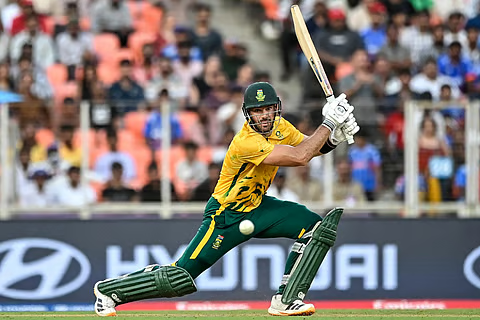
Finn Allen’s Storm
What followed was not just aggressive batting—it was controlled chaos.
Allen’s innings unfolded at breathtaking speed.
Every over seemed to contain a moment that shifted the energy inside the stadium. His footwork was decisive, his timing near flawless, and his confidence unmistakable.
South Africa’s bowlers tried everything.
Short balls.
Slower deliveries.
Wide yorkers.
Allen treated them all with equal authority.
One over disappeared for 20 runs. The next followed with another flurry of boundaries.
Within minutes, the required run rate had collapsed.
Power and Precision
Allen’s brilliance was not just about raw power.
There was a method behind the assault.
When the ball was short, he pulled it effortlessly. When bowlers pitched fuller, he drove through the covers with elegance.
Occasionally he used delicate placement, guiding the ball between fielders for easy boundaries.
This mixture of power and finesse made him nearly impossible to contain.
The South African bowlers looked increasingly frustrated.
The Century That Changed Everything
As Allen crossed fifty, the crowd sensed something special.
The New Zealand dressing room watched with growing excitement. Every boundary pushed the team closer to the final.
But Allen wasn’t finished.
He continued attacking relentlessly, bringing up his century in just 33 balls—one of the fastest hundreds in World Cup history.
The milestone triggered a thunderous reaction from the stands.
His teammates applauded from the balcony. Even some neutral fans rose to their feet.
It was an innings worthy of a semi-final stage.
Seifert’s Calm Support
While Allen dominated the headlines, Tim Seifert played an equally important supporting role.
His unbeaten 58 provided stability throughout the chase.
Where Allen attacked, Seifert rotated strike. When bowlers overcorrected, he punished them with controlled boundaries.
The partnership between the two ensured that New Zealand never lost momentum.
Even after Allen’s century, Seifert maintained the tempo with intelligent batting.
Together, they dismantled South Africa’s bowling attack.
South Africa Runs Out of Answers
As the overs ticked by, the outcome became inevitable.
Field placements grew defensive. Bowlers rotated frequently in search of breakthroughs.
But nothing worked.
The only wicket New Zealand lost came long after the match had effectively been decided.
By then, the chase was nearly complete.
Victory in the 13th Over
The winning runs arrived with almost casual ease.
A crisp boundary through the infield sealed the result.
New Zealand had chased down the target in just 12.5 overs.
Nine wickets in hand.
Forty-three balls unused.
For a semi-final, it was astonishing dominance.
A Statement Performance
Knockout victories often define a team’s tournament.
This one certainly did.
New Zealand’s performance combined discipline, composure, and explosive batting in a way few teams manage under pressure.
Their bowlers restricted a strong South African lineup.
Their batters turned the chase into a spectacle.
Most importantly, they did it all without visible panic or desperation.
South Africa’s Semi-Final Frustration
For South Africa, the defeat was painful.
Their campaign had been impressive until this point, but the semi-final exposed how quickly momentum can vanish in T20 cricket.
The batting effort was respectable but lacked the explosive finish needed against a strong opponent.
Once Allen began his assault, their bowlers struggled to recover.
Still, reaching the semi-final remained a significant achievement for the team.
The Allen Factor
Every World Cup produces a few unforgettable performances.
Finn Allen’s century belongs firmly in that category.
In a knockout match where pressure often restricts attacking play, he delivered an innings that was fearless, precise, and devastatingly effective.
It was not merely a fast hundred—it was a match-defining one.
And perhaps a tournament-defining one.
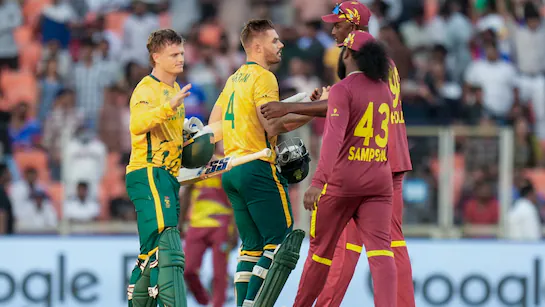
Eyes on the Final
With this victory, New Zealand secured their place in the World Cup final.
The team now stands just one win away from lifting the trophy.
Their semi-final performance sent a clear message: they are not just participants in the final—they are serious contenders for the title.
Confidence will be high. Momentum is firmly on their side.
Cricket’s Unpredictable Drama
Semi-finals are supposed to produce tension until the final over.
This one told a different story.
It reminded fans that cricket can swing wildly depending on a single extraordinary performance.
South Africa arrived with hopes of reaching the final.
But on this night, Finn Allen and New Zealand had other plans.
And they executed them with breathtaking clarity.
