

Match Analysis: Manchester City vs Crystal Palace
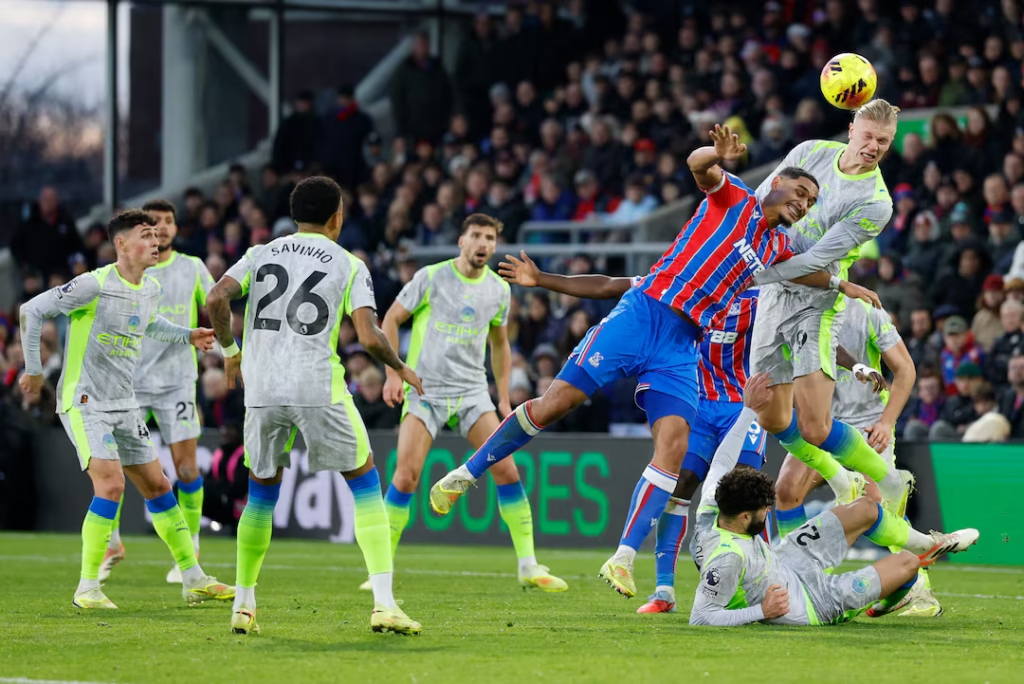
Manchester City were set to host Crystal Palace at the Etihad Stadium in a Premier League fixture originally scheduled as part of Matchweek 31, but the match has been postponed due to fixture congestion, including City’s involvement in the Carabao Cup final around that period. City enter this period as perennial title challengers or defending champions, sitting near the top of the 2025/26 table with around 55-60 points from 28-30 games (depending on games played), powered by their signature possession dominance, midfield orchestration from Kevin De Bruyne, Rodri, and Phil Foden, and prolific output from Erling Haaland. Their home form at the Etihad remains near-unbeaten, with intricate build-up and clinical exploitation of spaces defining their season. Crystal Palace, positioned in mid-table with approximately 38-42 points from similar games, have shown resilience under Oliver Glasner with a compact, counter-attacking style, physicality, set-piece danger, and flair from Eberechi Eze, Jean-Philippe Mateta, and wide threats. Their away record against elite sides has included gritty draws through organization and moments of quality. The stakes remain high upon rescheduling: City aim to maintain pressure in the title race or secure top spots, while Palace target points for a strong top-half finish. Tactical contrast features City’s fluid, high-possession 4-3-3 against Palace’s disciplined 3-4-2-1 or 4-2-3-1 that looks to frustrate and transition quickly. Key battles include Haaland’s runs testing Palace’s back three versus Eze/Mateta’s directness exploiting City’s high line. When played, expect an intense atmosphere at the Etihad, where the home crowd’s energy creates a demanding backdrop for visitors.

Insights
- Manchester City boast an exceptional home record this season, rarely dropping points at the Etihad with high goal output and stingy defending against varied opposition.
- Crystal Palace have been competitive away, earning draws and points against top sides through compact shape, set-piece efficiency, and counter-attacks.
- City typically deploy a possession-dominant 4-3-3 or fluid variants, emphasizing midfield rotations, intricate passing, and Haaland’s movement.
- Palace favor a 3-4-2-1 or 4-2-3-1, focusing on blocking central channels, wing-back energy, and quick transitions led by Eze and Mateta.
- Key matchup: Erling Haaland’s finishing against Crystal Palace’s center-backs, who rely on aerial strength and positioning to contain threats.
- Head-to-head history favors Manchester City strongly in recent seasons, including a convincing win earlier this campaign at Selhurst Park.
- Season stakes position City in the title or top-four contention, while Palace aim for mid-table security and possible upward push.
- Injury updates suggest both teams manage typical late-season concerns, with core squads available but rotation likely upon rescheduling.
- Fan atmosphere at the Etihad Stadium is modern and intense, with over 53,000 supporters generating substantial noise when the fixture is played.
Match Forecasts
- Erling Haaland and Phil Foden are expected to lead City’s attack, with Haaland’s runs and Foden’s creativity creating significant danger.
- Main tactical battle revolves around midfield control, where City’s dominance seeks to break down Palace’s compact block.
- Set-piece threats loom for Palace, who excel in dead-ball situations, while City remain dangerous from open-play and wide deliveries.
- Substitutes like Julián Álvarez or Jack Grealish for City, or Daichi Kamada for Palace, could inject quality and shift momentum late.
- Crystal Palace’s defensive vulnerabilities may emerge during transitions if City recover possession high and exploit spaces.
- Game tempo likely controlled by City early but could open if Palace counter effectively or score from a set piece.
- Late-game scenarios often involve City pushing for a second goal or Palace holding firm for a point in added time.

Match Facts
- Manchester City hold a commanding recent head-to-head record, winning the majority of encounters against Crystal Palace in the Premier League.
- Etihad Stadium has a capacity of approximately 53,400, serving as a fortress-like venue with strong home advantage for Manchester City.
- Referee notes for rescheduled big-club fixtures typically feature experienced officials with VAR attention to key moments.
- Broadcast details pending new date; originally set for Sky Sports (UK) and Peacock/ESPN+ (US) coverage.
- Weather forecast for Manchester in late March (original date) was mild around 8-12°C; rescheduled timing may vary seasonally.
- Team milestones include Manchester City nearing records for home points totals and Palace approaching mid-table benchmarks.
- Player records feature Erling Haaland closing in on prolific seasonal goal tallies against mid-table opposition.

This postponed fixture represents a classic test of elite dominance versus disciplined resilience when eventually rescheduled. Manchester City will look to control possession, probe patiently, and exploit spaces with their technical superiority and individual quality, capitalizing on the Etihad’s environment to overwhelm opponents. Crystal Palace, known for their organization and counter-threat, are likely to sit deep, absorb pressure, and remain dangerous from set pieces or transitions where Eze’s flair and Mateta’s presence can punish lapses. The delay due to cup commitments adds intrigue, potentially shifting form lines upon replay. The match could hinge on midfield battles, transition efficiency, and composure under pressure. A City win would bolster their campaign significantly, while any points for Palace would be a valuable upset against top opposition. Expect a high-quality, tactical contest full of intensity when the fixture is rearranged, underscoring the Premier League’s competitiveness.