

India Women Hold Nerve in Rain-Interrupted Thriller to Beat Australia by 21 Runs (DLS)
India Women tour of Australia 2026
Australia Women vs India Women
Date: Sunday, 15 February 2026
Result: India Women won by 21 runs (DLS method)
Cricket in Australia often delivers contests that feel both intense and unpredictable. On Sunday, 15 February 2026, one such encounter unfolded during the India Women tour of Australia. A match that began under bright skies gradually turned into a dramatic evening of shifting momentum, unexpected rain, and a tense finish decided by the Duckworth–Lewis–Stern (DLS) method.
When the umpires finally confirmed the result, India Women had secured a 21-run victory over Australia Women. It was a win built on disciplined bowling, timely partnerships, and calm decision-making in conditions that became increasingly difficult.
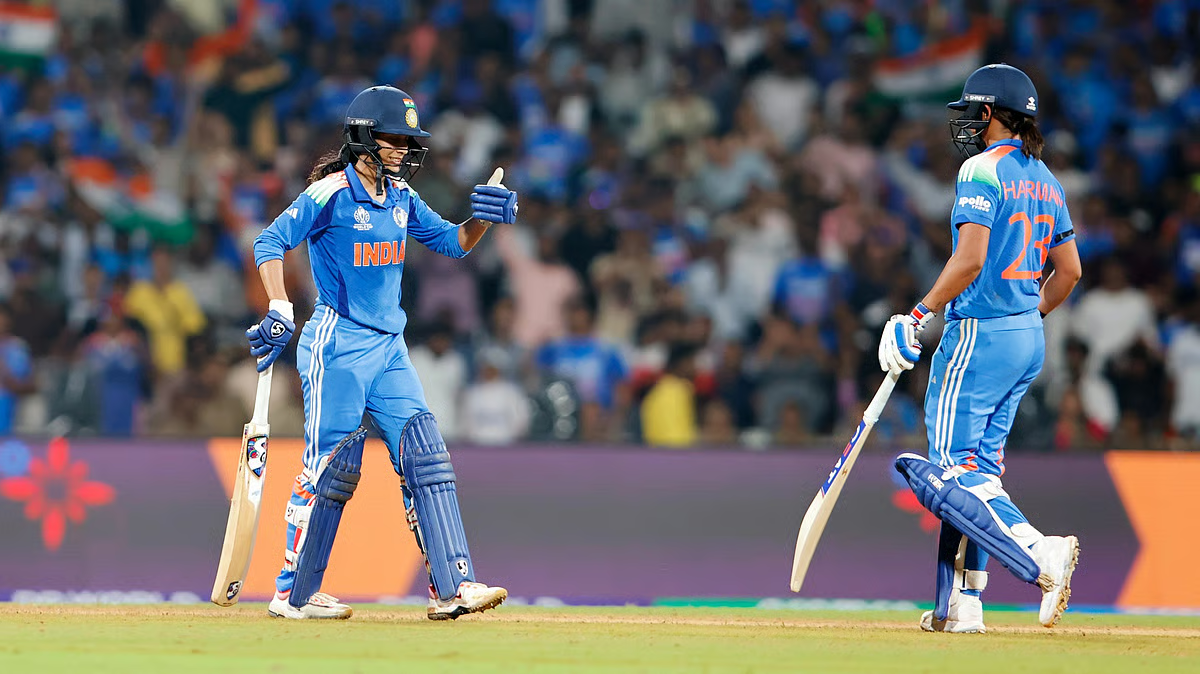
For India, the result carried special significance. Victories in Australia rarely come easily, and beating the hosts—even in a rain-affected match—offered a strong indication that the touring side had arrived well prepared.
Anticipation Builds Before the Match
Whenever India and Australia meet in women’s cricket, the contest carries a certain intensity. Over the past decade, the rivalry between the two sides has grown steadily, producing memorable matches across formats.
Heading into this fixture, both teams had reasons for confidence.
India had begun their tour with a comfortable win over the Governor-General XI in a warm-up game at North Sydney Oval. The performance gave the squad valuable time to adjust to Australian conditions.
Australia, meanwhile, remained one of the most formidable teams in world cricket. Their home record was impressive, and their players were deeply familiar with the conditions.
The venue filled steadily during the afternoon. Fans wearing blue and gold jerseys mingled in the stands, creating a lively but friendly atmosphere.
No one in the crowd suspected that the weather would eventually become the central character of the match.
Australia Win the Toss
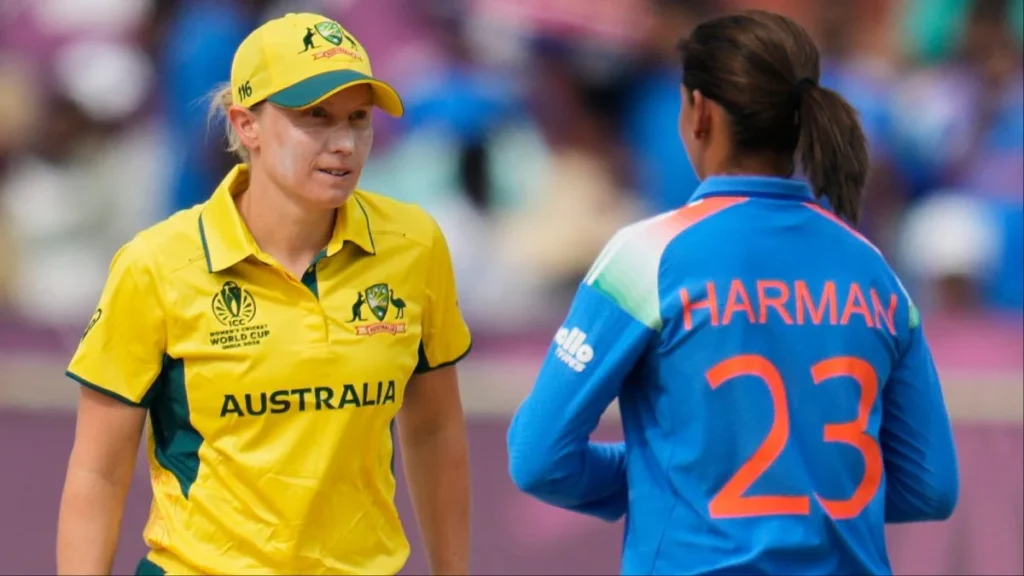
Australia’s captain won the toss and elected to field first.
The decision appeared logical. Early moisture in the surface suggested that bowlers might find assistance during the opening overs, and chasing under lights could become easier if dew formed later.
India’s batters walked out knowing they needed a steady start.
Australian bowlers, backed by an energetic fielding unit, were ready to test them immediately.
India’s Careful Beginning
The first few overs unfolded cautiously.
Australia’s pace attack targeted a tight line just outside the off stump, forcing the Indian openers to play with patience. Scoring opportunities were limited, and boundaries proved difficult to find.
India responded sensibly.
Instead of forcing shots, the batters focused on rotating the strike and building a foundation.
Gradually, the tension began to ease.
A crisp cover drive broke the early pressure, racing toward the boundary rope. Moments later, a flick through mid-wicket brought another four.
The innings had begun to move.
Mandhana’s Elegant Strokeplay
Smriti Mandhana soon settled into her familiar rhythm.
Her batting style—graceful yet authoritative—became the highlight of India’s early overs. She leaned into drives with precision and placed the ball cleverly through gaps in the field.
The Australian bowlers maintained discipline, but Mandhana’s timing allowed India to keep the scoreboard moving.
One particular stroke drew applause from both sets of supporters. A full delivery outside off stump was driven effortlessly through cover, the ball gliding across the outfield.
It was a reminder of the class she brings to the top of the order.
Australia Strike Back
Just as India seemed ready to accelerate, Australia found their breakthrough.
A sharp delivery angled across the batter induced a faint edge that flew to the wicketkeeper. The catch was taken cleanly, ending the promising opening partnership.
The dismissal energized the Australian players.
Another wicket soon followed, this time through clever bowling that disrupted the batter’s timing.
India suddenly found themselves rebuilding.
Middle-Overs Recovery
The next phase of the innings became a test of patience.
India’s middle order focused on stability rather than aggression. Singles and twos replaced boundaries, but the partnership ensured the team did not lose momentum.
Harmanpreet Kaur played a particularly important role during this period.
Her batting combined calm judgment with occasional bursts of power. Whenever the Australian bowlers missed their length, she punished them decisively.
A powerful pull shot over mid-wicket brought India’s supporters to their feet.
The innings had regained balance.
Acceleration Before the Rain
As the innings progressed into the final overs, India began increasing the scoring rate.
A couple of well-timed boundaries lifted the total, while smart running between the wickets added valuable runs.
However, just as the match approached its most exciting phase, the weather intervened.
Dark clouds gathered above the stadium. Within minutes, light rain began falling.
The umpires halted play.
Rain Disrupts the Contest
At first, the delay seemed minor.
Players remained near the boundary while ground staff hurried onto the field with covers. Spectators waited patiently, hoping the rain would pass quickly.
But the drizzle continued.
After nearly half an hour, the umpires confirmed that the match would resume with a reduced number of overs. The DLS method would now determine the revised target for Australia.
When play restarted, India had posted a competitive total—one that still offered the bowlers a chance to defend it.

Australia Begin the Chase
Chasing under revised conditions is never easy.
Australia’s openers knew they needed to balance caution with aggression, particularly since the target had been adjusted.
India’s bowlers, meanwhile, sensed an opportunity.
The new ball moved slightly under the lights, and the pitch offered just enough assistance to keep the batters guessing.
Early Breakthrough
India struck early.
A disciplined line outside off stump forced an ambitious drive, and the ball carried safely to a fielder positioned at point.
The wicket lifted the energy in the Indian camp.
Australia’s batting lineup remained strong, but losing an opener so soon increased the pressure.
Australia Fight Back
Despite the setback, Australia’s middle order responded confidently.
A partnership began to form through controlled batting. The players rotated the strike effectively and punished loose deliveries whenever they appeared.
The chase regained momentum.
Several boundaries followed in quick succession, and for a brief period the match looked evenly balanced.
India needed a moment of inspiration.
Spin Changes the Momentum
That moment arrived when India introduced spin.
The slower pace disrupted Australia’s rhythm, forcing the batters to adjust their timing. Dot balls began to accumulate, and frustration slowly crept in.
Eventually, one batter attempted a big shot against the spin.
The ball climbed high into the air.
A fielder stationed near the boundary judged the catch perfectly.
Another wicket for India.
The Rain Returns
Just as the contest was reaching its most tense phase, rain returned to the stadium.
This time the interruption proved decisive.
After another delay, the umpires assessed the situation and recalculated the target using the DLS method.
Australia now needed a challenging number of runs from a limited number of overs.
India suddenly held the advantage.

Pressure Mounts on Australia
With the revised target demanding quick scoring, Australia’s batters had little choice but to attack.
India’s bowlers responded with remarkable discipline.
Yorkers landed accurately at the base of the stumps. Slower deliveries forced mistimed shots. Fielders covered the boundaries with determination.
Every dot ball increased the pressure.
The Decisive Spell
India’s fast bowlers delivered the decisive spell during the final overs.
Two wickets fell in quick succession—both the result of attempted big hits that failed to clear the field.
The Australian dugout grew quieter.
The required run rate continued rising.
India could sense victory approaching.
The Final Moments
When the last over began, Australia needed an improbable sequence of boundaries.
The Indian bowler walked back slowly, gathering her thoughts before beginning the run-up.
First ball—dot.
Second ball—single.
The tension eased slightly among the Indian players.
By the final delivery, the result was all but certain.
Australia could not reach the revised target.
India Women had won by 21 runs under the DLS method.
Celebration and Reflection
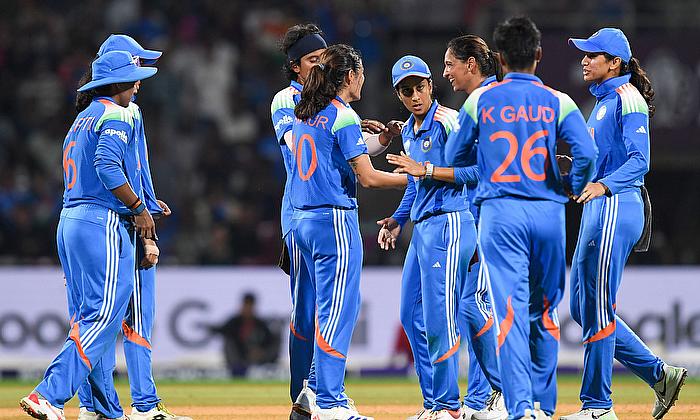
The players gathered near the pitch, exchanging handshakes after a fiercely competitive contest.
For India, the victory carried real significance. Winning against Australia on their home soil—particularly under pressure—boosted confidence throughout the squad.
The team had shown resilience in several phases of the match: rebuilding the innings after early wickets, adapting to weather interruptions, and defending their total with disciplined bowling.
Key Performances
Smriti Mandhana’s elegant start gave India early momentum, while Harmanpreet Kaur’s composed innings stabilized the middle overs.
India’s bowlers shared the responsibility effectively, delivering tight spells that prevented Australia from accelerating.
Fielding also played an important role. Several sharp catches and athletic stops in the outfield ensured that Australia could not dominate the chase.
A Rivalry Continues
India and Australia have built one of the most compelling rivalries in women’s cricket.
Matches between the two teams rarely follow predictable scripts. Instead, they produce moments of drama—unexpected partnerships, brilliant bowling spells, and thrilling finishes.
This rain-affected contest added another chapter to that growing story.
Looking Ahead
With this victory, India gained valuable momentum early in their Australian tour.
The team demonstrated an ability to adapt quickly to foreign conditions, a quality that will be crucial in upcoming matches.
Australia, meanwhile, will likely analyze the game carefully. Despite the defeat, they showed flashes of their usual strength and remain capable of bouncing back.
Cricket’s Unpredictable Nature
In the end, the match illustrated why cricket continues to captivate fans around the world.
A game that began under calm skies turned into a strategic battle shaped by rain, revised targets, and shifting momentum.
Through it all, India Women maintained composure.
And when the final calculations were complete, they walked away with a memorable 21-run victory on Australian soil.
