
Bangladesh Seal Series Victory with Commanding Chase in Harare
Harare, July 12, 2026 – In a match that showcased both resilience and clinical efficiency, Bangladesh defeated Zimbabwe by seven wickets in the third One Day International at Harare Sports Club on Saturday. The visitors chased down the target with 84 balls to spare, wrapping up the series in style and underlining their growing dominance in African conditions.
The day began under clear skies with a decent crowd turning up to witness what many hoped would be a competitive contest. Zimbabwe, playing at home, had fought hard in the previous matches but ultimately fell short against a more experienced Bangladeshi side. This victory not only gave Bangladesh a series win but also boosted their confidence ahead of future assignments in the ICC cycle.
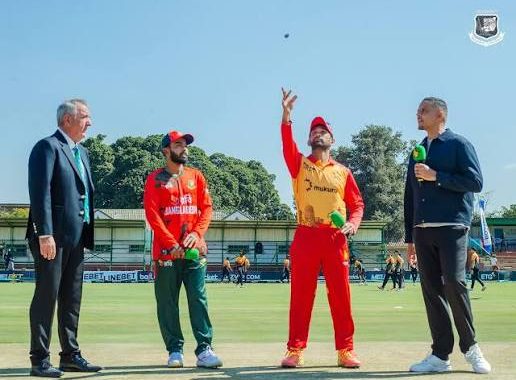
Zimbabwe captain Craig Ervine won the toss and elected to bat first, hoping his openers could set a solid platform on a pitch that offered some early assistance to the seamers but looked good for batting once settled. The home team got off to a cautious start, with Tinashe Kamunhukamwe and Wessly Madhevere navigating the new ball carefully. Bangladesh pacers Taskin Ahmed and Mustafizur Rahman bowled with discipline, keeping the scoring rate in check during the powerplay.
Taskin struck first in the sixth over, inducing an edge from Kamunhukamwe that was safely pouched behind the stumps by Litton Das. That early breakthrough set the tone for Bangladesh’s bowling effort. Zimbabwe struggled to accelerate, losing Madhevere shortly after to a sharp delivery from Mustafizur that nipped back. At 45 for two, the pressure was on Ervine and the middle order to stabilize.
Sean Williams joined Ervine and the pair added a valuable 68 runs for the third wicket. Williams, known for his aggressive intent, found some rhythm with a few crisp boundaries, but Bangladesh’s spinners, led by Shakib Al Hasan and Nasum Ahmed, began to tighten the screws. The slow surface in Harare favored the tweakers, and they varied their pace cleverly to induce mistakes.
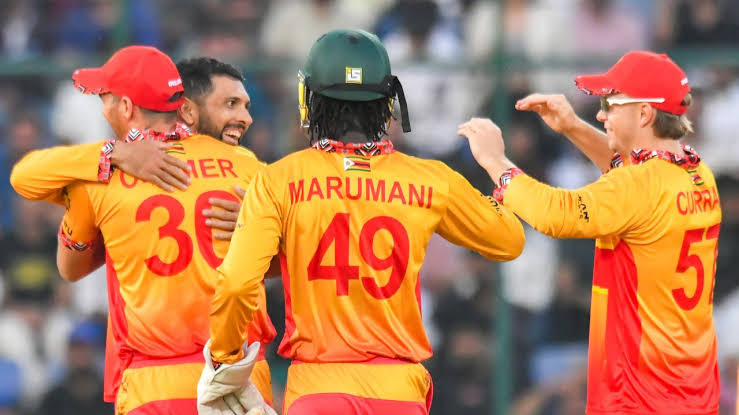
Ervine reached his half-century in 78 balls, a gritty knock that held the innings together. However, just as Zimbabwe seemed to be building momentum, Shakib trapped Williams lbw with a delivery that turned just enough. The home side’s middle order then collapsed in a heap. Sikandar Raza, often the catalyst for Zimbabwe, was dismissed for a duck, caught at mid-wicket attempting a big shot off Mehidy Hasan Miraz.

The lower order showed some fight, with Ryan Burl and Blessing Muzarabani adding quick runs, but it was not enough to push the total beyond a competitive mark. Zimbabwe were eventually bowled out for 238 in 47.3 overs. Mustafizur Rahman was the pick of the bowlers with figures of four for 42, using his cutters and slower balls to excellent effect. Taskin claimed three wickets, while Shakib and Mehidy chipped in with one each. The bowling unit operated as a cohesive group, adapting well to the conditions.
During the innings break, discussions in the Zimbabwe dressing room likely centered on how to defend a total that was below par on this ground. Harare Sports Club has historically favored teams chasing, provided they do not lose early wickets.
Bangladesh’s chase began positively. Openers Litton Das and Tanzid Hasan came out with clear intent, playing with freedom and rotating the strike efficiently. Litton, in particular, looked in sublime touch, dispatching anything loose with authority. The pair added 72 runs in quick time before Tanzid edged a delivery from Muzarabani to the keeper.
Shanto joined Litton and the duo consolidated the innings. Litton brought up his fifty and continued to anchor the chase. Zimbabwe tried to apply pressure through their spinners, but the Bangladeshi batters were equal to the task, using their feet well and picking gaps in the field. Ervine rotated his bowlers frequently, but the lack of penetration was evident.
The turning point came when Litton fell for 78, caught in the deep attempting to accelerate. At that stage, Bangladesh needed around 120 runs with plenty of overs remaining. Najmul Hossain Shanto took charge, batting with composure and finding an able ally in Mushfiqur Rahim. The experienced Rahim played his trademark steady game, nudging singles and occasionally punishing the bad balls.
Shanto reached his half-century and looked set for a match-winning knock. Zimbabwe’s fielding, which had been sharp earlier, began to show signs of fatigue as the required rate stayed manageable. The pressure of defending a below-par total started telling on the home side.
With the game well in hand, Bangladesh lost Rahim to a smart catch in the outfield, but by then only 40-odd runs were needed. Towhid Hridoy joined Shanto and the pair finished the job comfortably. Shanto remained unbeaten on 67, while Hridoy played a quick cameo. Bangladesh reached the target in 36.2 overs, losing just three wickets in the process.
This comprehensive victory highlighted several positives for Bangladesh. Their bowling attack showed depth, with both pacers and spinners contributing effectively. The batting lineup demonstrated maturity in the chase, not panicking even after the fall of a couple of wickets. Captain Najmul Hossain Shanto led from the front with both bat and tactical acumen.
For Zimbabwe, it was another disappointing result in a series where they showed glimpses of potential but lacked consistency. Their batting relied too heavily on a few individuals, and the bowling unit struggled to contain the Bangladeshi batters in the middle overs. Ervine will be looking for better performances from his middle order in upcoming games.
Post-match, Shanto expressed satisfaction with the team’s performance. “The boys played really well today. The bowlers set it up nicely, and then the batters executed the chase perfectly. We are happy to win the series and will take this momentum forward,” he said.
Ervine, on the other hand, acknowledged the shortcomings. “We did not have enough runs on the board. Credit to Bangladesh for chasing it down so comfortably. We need to improve our death bowling and find ways to build bigger totals at home.”
This result extends Bangladesh’s strong record against Zimbabwe in recent years. The Tigers have now won multiple bilateral series on Zimbabwean soil, proving their adaptability to sub-Saharan conditions. Players like Mustafizur and Shakib continue to be the backbone of the side, while the emergence of younger talents like Tanzid and Hridoy bodes well for the future.
Looking back at the series, the first ODI saw Bangladesh edge out a close victory thanks to a stellar all-round performance from Shakib. Zimbabwe bounced back in the second game with a spirited effort led by Raza’s explosive batting, but the third match tilted decisively in favor of the visitors.
The conditions in Harare played a significant role. The pitch offered early seam movement but became easier for batting as the day progressed. Weather remained favorable throughout, with no interruptions, allowing for a full contest.
From a tactical perspective, Bangladesh’s decision to bowl first after losing the toss worked out brilliantly. Their seamers extracted movement and their spinners controlled the middle phase. In contrast, Zimbabwe’s inability to build partnerships cost them dearly.
Individual performances deserve special mention. Mustafizur Rahman’s four-wicket haul was a masterclass in variations. His ability to bowl yorkers and slower deliveries at crucial junctures disrupted Zimbabwe’s rhythm. Litton Das’s fluent fifty laid the foundation for the chase, while Shanto’s unbeaten knock was the hallmark of a mature leader.
Zimbabwe’s Sean Williams and Craig Ervine showed fight, but the team as a whole needs more depth. Young players like Kamunhukamwe have talent, but converting starts into big scores remains a challenge.
This win not only seals the ODI series for Bangladesh but also provides valuable preparation for their next challenges. With the T20 format and Test cricket on the horizon, the team management will be pleased with the balance shown across departments.
For cricket fans in Bangladesh, this is yet another reason to celebrate. The national team continues to grow in stature, competing confidently against various opponents worldwide. In Zimbabwe, the focus will shift to rebuilding and identifying areas for improvement ahead of their domestic season and future international commitments.
The match also highlighted the improving standard of cricket in the region. Both teams displayed competitive spirit, and the game was played in excellent spirit, a testament to the growing friendship between the two cricket boards.
As the players shook hands at the end of the contest, it was clear that Bangladesh had been the better side on the day. Their clinical approach in all three phases of the game set them apart. With this victory, they climb further in the confidence ladder, ready to take on bigger challenges.
In summary, the third ODI in Harare will be remembered for Bangladesh’s dominant batting display and disciplined bowling. Zimbabwe fought valiantly but could not match the visitors’ quality. As the series concludes, Bangladesh emerge as worthy winners, while Zimbabwe look ahead with lessons learned and determination renewed.
The cricketing journey continues for both nations, each with their unique aspirations and paths to glory. For now, the Tigers roar loud in Harare, celebrating a well-deserved triumph.
