
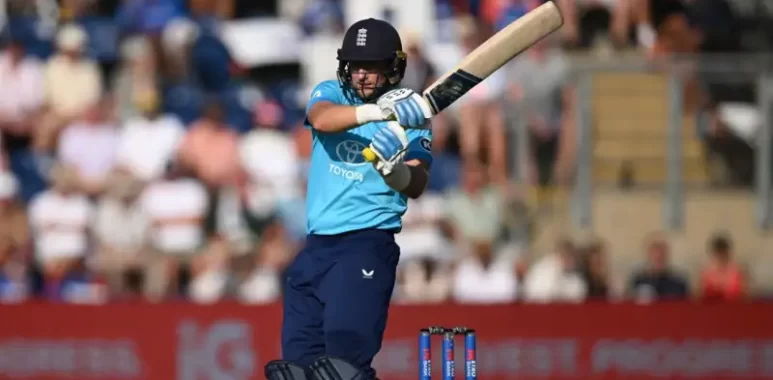
England Seals Thrilling Victory in Cardiff Thriller as India Falter in Chase
Cardiff witnessed another chapter in the storied rivalry between England and India as the hosts clinched a hard-fought victory in the second One Day International on Thursday night. In a match that swung like a pendulum under the floodlights at Sophia Gardens, England chased down India’s total with four wickets in hand and 35 balls to spare, leveling the series at one apiece. The win not only boosted England’s confidence heading into the decider but also highlighted the depth in their batting lineup and the growing pains in India’s middle order during this transitional phase.
The atmosphere in Cardiff was electric from the moment the players walked out. A packed crowd, many waving the tricolor or the St George’s Cross, created a cauldron of noise that only intensified as the game progressed. This day-night encounter had all the ingredients of a classic: early momentum shifts, individual brilliance, and a tense finish that kept everyone on the edge of their seats until the very end.
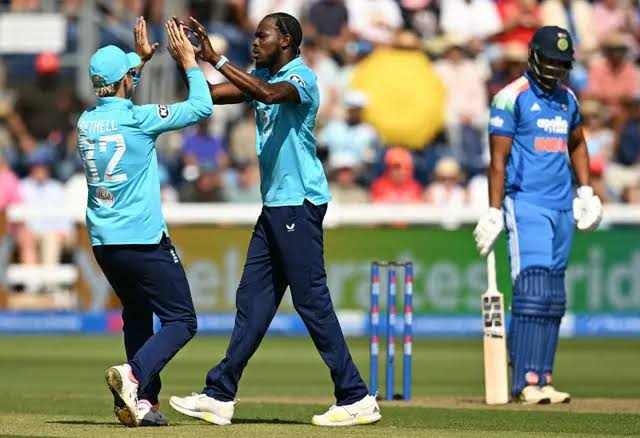
England captain Jos Buttler won the toss and elected to field first, a decision influenced by the cool evening conditions and the prospect of dew later on. India, led by the experienced Rohit Sharma, were forced to bat under lights after a relatively dry start to their innings. The pitch offered some assistance to the seamers early on, with a touch of swing and variable bounce that made stroke-making tricky at times.
India’s openers, Shubman Gill and Rohit Sharma, began cautiously, wary of the new ball in the hands of England’s pacers. Reece Topley and Jofra Archer set a fiery tone, with Archer’s express pace troubling Gill in particular. The first breakthrough came in the seventh over when Topley induced an edge from Rohit, who had looked solid but fell for 28. That brought Virat Kohli to the crease, and the crowd erupted in anticipation of another masterclass from the former captain.
Kohli and Gill stabilized the innings with a measured partnership, rotating the strike efficiently and punishing anything loose. Gill reached his half-century with a crisp drive through the covers, but his innings ended abruptly when he miscued a pull shot off Sam Curran, giving England a crucial wicket at 112 for two. Kohli, ever the anchor, continued to build, finding boundaries with that trademark wristy flick through midwicket. He looked set for a big score until a moment of brilliance from England wicketkeeper Buttler, who effected a sharp stumping off Adil Rashid’s bowling when Kohli wandered out of his crease.
From there, India’s innings lost momentum. Suryakumar Yadav injected some aggression with a quick 42 off 38 balls, including a couple of audacious scoops, but the middle order struggled to find consistency. Hardik Pandya contributed a useful 35, but the lower order failed to capitalize, collapsing in a heap of mistimed shots. India were eventually bowled out for 278 in 48.3 overs. It was a total that looked competitive on paper but perhaps 20 to 30 runs short given the conditions and England’s batting firepower.
England’s bowling was disciplined throughout. Archer led the way with three wickets for 52 runs, his variations proving effective on a surface that offered grip. Rashid picked up two crucial middle-order wickets with his leg-spin, while Curran and Topley chipped in with one each. The fielding was sharp, highlighted by a stunning diving catch from Ben Stokes in the deep that turned the game at a vital juncture.
As the innings break approached, the Cardiff crowd buzzed with optimism for the home side. The dew factor was minimal, contrary to some predictions, which allowed India’s spinners a fair crack during the chase. But England were undeterred. Openers Phil Salt and Dawid Malan came out with intent, racing to 50 in the powerplay. Salt, in particular, was in blistering form, dispatching the Indian pacers to all parts of the ground with powerful pulls and drives.
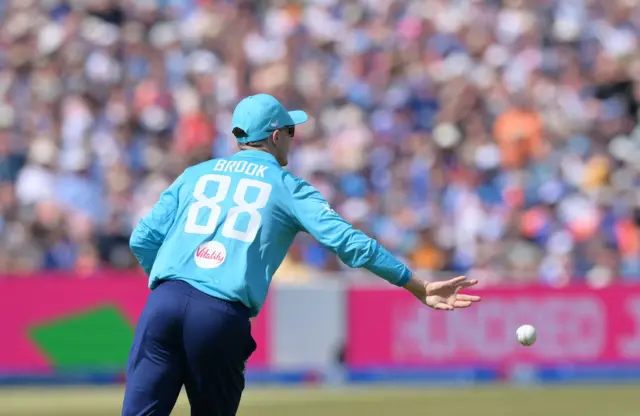
Malan fell for 38, trapped lbw by Kuldeep Yadav, but that only brought in the in-form Harry Brook. Brook and Salt forged a threatening stand, taking the score past 120 before Salt was dismissed for a lively 67. Stokes joined Brook, and the duo looked to accelerate, but Stokes’ stay was short-lived when he edged one to the keeper off Mohammed Siraj. At 165 for three, the game was still balanced on a knife-edge.
It was here that England’s middle order showed its mettle. Brook continued his rich vein of form, reaching his century with a lofted six over long-on that sent the home fans into delirium. He found able support from Liam Livingstone, who smashed 48 off 32 balls, including three massive sixes that shifted the momentum decisively. Livingstone’s aggressive approach put India under immense pressure, forcing Rohit to rotate his bowlers frequently.
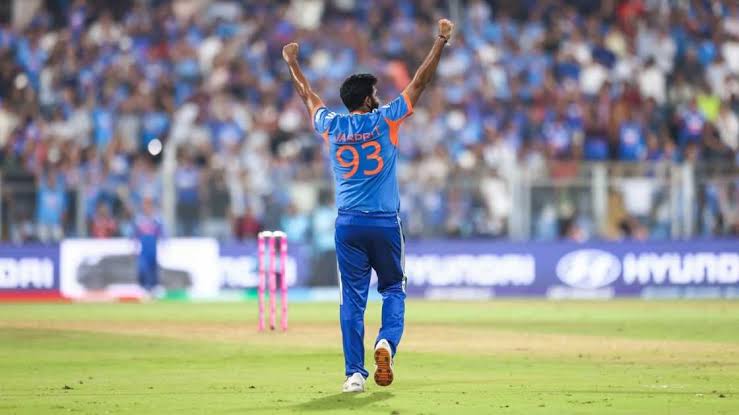
India’s bowling attack had its moments. Siraj bowled with fire, claiming two wickets including the dangerous Brook for 112. Kuldeep Yadav was economical and picked up a couple, but the lack of a fifth bowler who could bowl full quota hurt them. Hardik Pandya, returning from a niggle, tried to lead from the front but leaked runs at a critical stage.
With the required rate climbing but wickets in hand, England navigated the death overs expertly. Buttler himself came in and played a captain’s knock, remaining not out on 45 as he guided his team home. The winning runs came via a boundary from Chris Woakes, sparking wild celebrations in the England dugout and among the supporters.
This victory was not just about the result; it was a statement of England’s resurgence in limited-overs cricket. After a disappointing start to the series where India had edged the first ODI in a rain-affected thriller, the hosts bounced back with character. Their batting depth, from top to bottom, proved decisive. Brook’s century will rightly grab the headlines, but the contributions from Salt, Livingstone, and the bowlers were equally vital.
For India, there are plenty of lessons to take forward. The batting collapse in the latter half of their innings exposed vulnerabilities that England exploited ruthlessly. While Kohli’s 68 and Gill’s 52 provided a foundation, the inability of the middle order to convert starts into substantial scores was glaring. Rohit will need to find ways to inject more dynamism without compromising stability. The bowling, though improved from the first game, lacked the penetration needed to restrict a strong England chase on a good batting track.
Post-match, Buttler was all smiles at the presentation. “It was a complete performance from the boys,” he said. “Chasing under lights can be tricky, but we had belief in our lineup. Harry played an outstanding innings, and the way the lower order finished it off was pleasing. We are looking forward to the decider now.”
Rohit, gracious in defeat, acknowledged the better team on the day. “England deserved the win. They batted with intent and bowled smartly. We need to step up in all departments for the next match. The series is alive, and we will come back stronger.”
Looking at the bigger picture, this match underscores the evolution of both teams. England, under Buttler’s leadership, are blending youth with experience seamlessly. Players like Brook and Livingstone represent the future, capable of turning games on their head with power hitting. Archer’s return to form is another positive, adding bite to their attack.
India, on the other hand, are in a rebuilding phase post several senior players’ transitions. The tour offers valuable exposure for emerging talents, but the pressure of expectations in bilateral series against strong opponents like England remains high. The upcoming games will test their adaptability, especially in handling different conditions across venues.
Statistically, England’s chase of 279 in 44.1 overs was clinical. They maintained a healthy run rate throughout, losing wickets at regular intervals but never letting the momentum slip entirely. India’s total of 278 was built around partnerships, yet the final overs yielded only 45 runs for the loss of five wickets, a phase that ultimately cost them the game.
The crowd in Cardiff played their part too, creating an unforgettable backdrop. From the pre-match buzz to the post-victory fireworks, it was a night that reminded everyone why cricket thrives in such settings. Sophia Gardens, with its intimate atmosphere and picturesque setting, lived up to its reputation as one of the gems in English cricket.
As the teams prepare for the third and final ODI, the series hangs in the balance. England will fancy their chances at home, especially with the momentum now in their favor. India, known for their fighting spirit, will be plotting a comeback, focusing on tightening their death bowling and ensuring their batters fire in unison.
This encounter will be remembered for Brook’s heroics, England’s composure under pressure, and the relentless rivalry that continues to captivate fans worldwide. In the end, it was a night when England rose to the occasion, proving once again that in cricket, as in life, resilience and teamwork can overcome even the toughest challenges.
Delving deeper into the technical aspects, England’s strategy revolved around early containment and then explosive batting. Their bowlers varied their lengths effectively, denying India easy boundaries in the middle overs. Rashid’s googly was particularly effective against the right-handers, creating doubt and forcing errors. On the batting front, the promotion of Livingstone up the order paid rich dividends, adding firepower when it was most needed.
India’s spinners, Kuldeep and Axar Patel, did restrict the flow of runs for a while, but the absence of a genuine all-rounder in the lower order hurt their total. Pandya’s contributions were there, but he seemed a touch rusty, perhaps indicating the need for more match practice.
Individual performances aside, the match highlighted broader trends in modern ODI cricket. The emphasis on aggressive starts, data-driven bowling changes, and the importance of finishing skills were all on display. Teams that adapt quickest to these demands are the ones that succeed.
For the fans back home in India, the defeat stings but serves as a reminder of the competitive nature of the sport. Supporters in England, meanwhile, will be dreaming of a series triumph, especially after recent challenges in other formats.
As the sun set over Cardiff and the lights took over, the game provided moments of sheer brilliance that will be replayed for years. From Gill’s elegant drives to Brook’s towering sixes, it was cricket at its finest. England emerged victorious, but the story of this tour is far from over. The decider promises to be another epic, with both sides leaving everything on the field.
In summary, this second ODI was a masterclass in chasing and a lesson in finishing for India. England’s four-wicket win with plenty to spare cements their status as serious contenders and sets up a mouth-watering finale. Cricket lovers around the globe will be tuning in, eager to see how this fascinating battle unfolds next.
