

Starboy’s Lightning Strike: How Manel Kape Turned a Masterclass into a Statement at UFC Vegas 119
Las Vegas in late June always feels a little different. The desert heat sticks to everything, the APEX sits tucked away like a high-tech bunker, and the fighters who walk into that cage know the cameras are tighter and the margins thinner than on the big PPV stages. On the night of June 20, 2026, that cage hosted a rematch eight and a half years in the making. Manel Kape, the Angolan flash with the star-boy swagger, against Kyoji Horiguchi, the Japanese technician who once made him tap. By the time Herb Dean stepped in at 2:42 of the third round, the flyweight division had a new clear number-one contender and a highlight that will live on highlight reels for years.
This is the full story of that night—the buildup, the chess match that nearly went Horiguchi’s way, the one punch that flipped everything, and what it means going forward.
The Long Road Back to Each Other
You have to go all the way back to New Year’s Eve 2017 in Japan to understand the weight of this fight. Rizin’s World Grand Prix. Bantamweight tournament. Semi-finals. A young Manel Kape, still finding his footing after leaving Angola and building a name in Europe and Asia, ran into Kyoji Horiguchi at the peak of his first UFC run. Horiguchi was already a former title challenger, the guy who went five rounds with Demetrious Johnson and nearly made it interesting. That night in Saitama he locked up an arm-triangle in the third and forced the tap. Kape was competitive, dangerous even, but the veteran closed the show.
Fast-forward nearly a decade. Kape reinvented himself in the UFC. The early losses to Tagir Ulanbekov and Muhammad Mokaev stung, but the power never left. He started finishing people. Bruno Silva. Asu Almabayev. Brandon Royval in a first-round knockout that made the entire division sit up. Suddenly the kid who used to talk a big game was walking the walk, and the ranking climbed to number two.
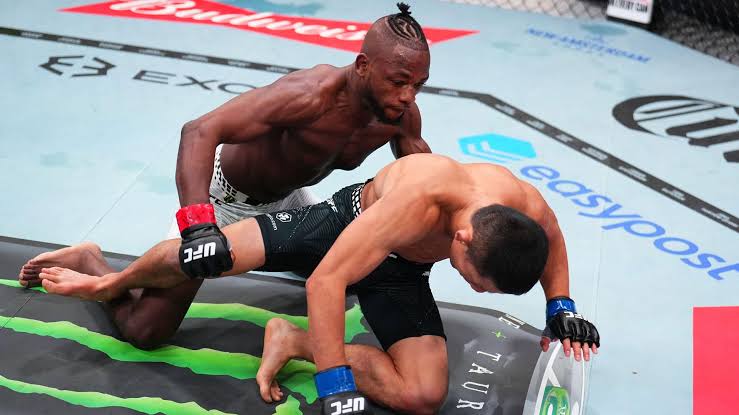
Horiguchi, meanwhile, had left the UFC after a three-fight win streak, collected titles in Rizin and Bellator, bounced between 125 and 135, and returned in late 2025 like he’d never been gone. Wins over Tagir Ulanbekov and Amir Albazi put him right back in the conversation at number five. At 35 he still moved like the Karate Kid nickname suggested—quick, precise, impossible to pin down for long stretches.
The matchup made perfect sense. Kape needed a statement win against a proven veteran to force the issue with champion Joshua Van. Horiguchi needed one more big scalp to prove the second UFC stint wasn’t just nostalgia. Title implications hung over every press conference sound bite. Both men made weight without drama. The odds settled around Kape as a mild favorite, somewhere in the -150 to -170 range depending on the book. Reach favored Kape by five full inches. Experience and craft favored Horiguchi. Power was the big unknown.
Preview in Hindsight: What Everyone Thought Would Happen
Going into the week, the smart money split in interesting ways. The technical crowd loved Horiguchi’s body-kick game and his ability to chain wrestling off strikes. Kape’s takedown defense sat at a stout 81 percent career, but Horiguchi had always been slippery enough to find openings against bigger, stronger guys. The power punchers and highlight hunters leaned Kape. One clean right hand from the southpaw stance and the fight could end in a blink. History said Horiguchi had already solved the puzzle once. Age said the Japanese veteran might not have the same gas tank or chin he’d carried at 27.
The undercard at the Meta Apex moved fast that night. Quick finishes and solid decisions filled the prelims. By the time the main card rolled, the crowd inside the building—never massive at the APEX but always loud—was primed for something special. Horiguchi walked out under the Japanese flag, calm as ever. Kape came out bouncing, double flags waving, that trademark confidence radiating. Herb Dean took the center. The referee instructions were short. Then the cage door locked and the feeling-out process began.
Round One: Chess at High Speed
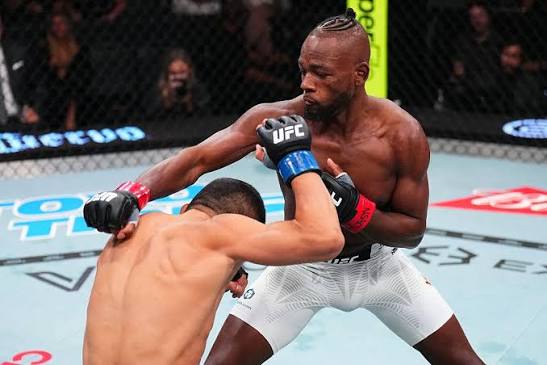
Horiguchi came out orthodox, bouncing on the outside. Kape planted in southpaw, controlling the center the way longer fighters like to. Early body kicks from Horiguchi landed clean—sharp, thudding shots to the open side. Kape answered with calf kicks and feints, refusing to overcommit. For the first ninety seconds it felt like two veterans measuring distance rather than two contenders desperate for a title shot.
Then the first real exchange. Horiguchi dipped in with a right hand that connected. Kape stood his ground and fired back, a short hook that made the Japanese fighter reset. The power difference was already visible. Horiguchi’s shots were crisp and accurate. Kape’s carried the kind of snap that makes people hold their breath.
Two early takedown attempts from Horiguchi got stuffed. Kape’s defense looked sharp. Body kicks continued to land for the veteran. Late in the round Horiguchi finally timed a double-leg, turned the corner, and finished on top as the horn sounded. It wasn’t dominant control, but it was enough. Most scorecards had it 10-9 Horiguchi. The pattern was set: Horiguchi dictating the range and tempo, Kape waiting for the opening that might never come.
Round Two: The Masterclass
If the first round was a feeling-out process, the second was Horiguchi putting on a clinic. Another heavy body kick early. A left hook that visibly stunned Kape and forced him to back up for the first time. Then the knee-tap takedown into half-guard. From there the Japanese fighter did what veterans do—he made the position ugly. Short punches, elbows, constant pressure. Kape worked elbows from the bottom and eventually recovered full guard, but the control time piled up. Nearly four minutes of the round belonged to Horiguchi on top.
Kape’s offense in the round was almost nonexistent at distance. The few times he tried to create chaos, Horiguchi either slipped or answered with counters. By the time the horn sounded, the score sat 20-18 on most unofficial cards. Horiguchi’s corner had even told him mid-fight to ease off the body kicks because they were landing too hard and risking injury to his own shin. That’s how dominant the striking had been.
Watching it live, you could feel the air leave the building a little. Kape looked dangerous every time he threw, but he wasn’t throwing enough. Horiguchi was solving the puzzle in real time the same way he had in 2017.
Round Three: The Lightning Bolt
Fighters who win fights they are losing do two things. They stay calm, and they stay dangerous. Kape did both.
He came out of the corner with urgency, pressing forward, throwing combinations. Horiguchi answered immediately—ducked under a shot, nearly secured another takedown, then cracked Kape with a clean right hand that put real heat on the Angolan. Kape’s legs wobbled. He backed up, ate another shot, and for a brief stretch looked like a man trying to clear cobwebs. Horiguchi, to his credit or detriment, didn’t pour it on the way a younger fighter might have. He stayed measured.
Kape reset. He threw a low kick that Horiguchi checked hard; Kape’s balance broke for a second and he looked momentarily compromised. Then the moment that changed the entire night.
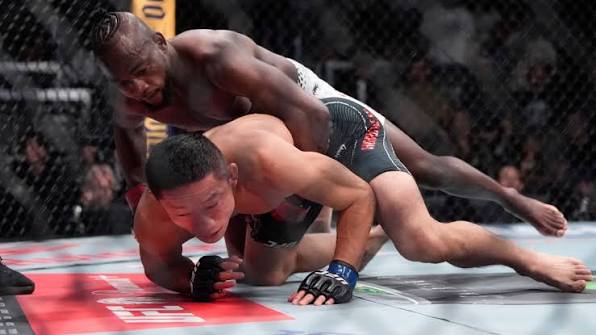
Horiguchi came forward again. Kape met him with a short, perfectly timed right hand—call it a check hook, call it a counter cross, call it whatever you want. It landed flush on the button. Horiguchi’s legs betrayed him instantly. He stumbled forward like the floor had turned to ice. Kape didn’t hesitate. He jumped on the back, forced him to the canvas, and started firing. From the turtle position came the shot that will be replayed forever: a nasty uppercut from underneath the armpit that crashed into the jaw the same way Dan Henderson once finished Fedor Emelianenko. Horiguchi face-planted. Herb Dean had seen enough.
2:42 of round three. TKO via punches. The building erupted.
Horiguchi was up quickly, protesting the stoppage the way fighters often do when the lights come back on. Replays showed the second shot had gone limp for a moment. Dean’s decision was clean. The fight was over.
Top Highlights That Will Stick
- The body-kick barrage from Horiguchi in the first two rounds. Those shots were loud even on television. They controlled the distance and forced Kape to respect the kicking game in a way few opponents have managed.
- The second-round takedown and subsequent control. Pure veteran work. Horiguchi didn’t need flashy submissions; he just made the position miserable and banked the minutes.
- The counter right that dropped Horiguchi. One punch. Perfect timing. The kind of shot that makes power look unfair at 125 pounds.
- The follow-up uppercut from the back. The Henderson-Fedor parallel is almost too perfect. Same angle, same sudden finality.
- Kape’s post-fight interview. No chest-beating. Just genuine respect. “Kyoji is an amazing fighter, the best fighter I’ve ever fought in my life. What I’ve become is because of him. In 2017, I wanted to be like him. If I’m here in this position, it’s because of Kyoji.” That quote alone elevated the night beyond just another knockout.
The Numbers Behind the Drama
Official stats told the story of a fight that was being won until it wasn’t. Horiguchi out-landed Kape in significant strikes 27-19 and controlled the fight for four full minutes. He secured two of five takedown attempts. Kape’s accuracy sat at 33 percent to Horiguchi’s 50. Yet the only knockdown of the night belonged to Starboy, and it was the only one that mattered. Power remains the great equalizer in mixed martial arts, and at flyweight Kape’s power is starting to look historic. Four straight knockouts. A growing claim on the all-time KO lead at 125.
What It Means Now
Manel Kape walked into the Meta Apex ranked number two and walked out looking like the clearest challenger to Joshua Van. Whether the UFC runs the Van-Pantoja rematch first or goes straight to Kape is a matchmaking decision still being sorted, but the conversation has shifted. Kape has the finishes, the aura, and now the signature win over a legitimate veteran who was winning the fight for ten solid minutes.
For Horiguchi the loss stings, but it doesn’t erase the body of work. At 35 he still looked like one of the slickest technicians in the division. The chin held up until it didn’t. The wrestling still worked. The body kicks still landed. He’ll be back, and the division is better for having him in it. His post-fight statement carried the same quiet resolve he always shows: the dream isn’t over.
The rematch finally delivered the drama people hoped for in 2017. One man controlled the fight with craft and timing. The other ended it with a single perfectly placed punch and the follow-up pressure that never lets a hurt opponent recover. That is the essence of this sport at its best—hours of preparation, years of history, and then three minutes of chaos that rewrite the narrative.
Starboy is real. The flyweight division just got a whole lot more interesting. And somewhere in the desert outside Las Vegas, a short right hand is still echoing.