
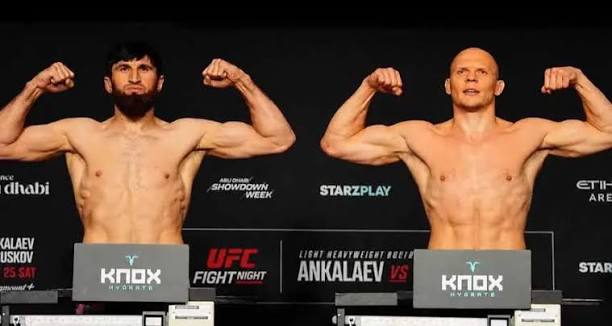
Magomed Ankalaev Grinds Out a Fifth-Round TKO of Bogdan Guskov in Abu Dhabi: A Workmanlike Return That Solves Little and Raises Questions
Abu Dhabi has hosted its share of memorable nights under the UFC banner. Etihad Arena has seen title changes, highlight-reel knockouts, and the kind of electric atmospheres that make Fight Island feel like the center of the combat sports universe. On Saturday, July 25, 2026, the promotion returned for its 23rd visit to the UAE with UFC Fight Night: Ankalaev vs. Guskov. What the main event delivered was something closer to a long, grinding clinic than a barnburner. Magomed Ankalaev, the former light heavyweight champion still searching for the path back to the top, stopped short-notice replacement Bogdan Guskov by TKO via punches at 2:41 of the fifth round.
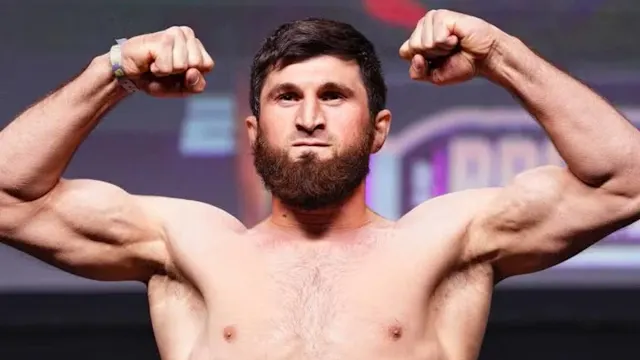
The finish itself was decisive enough. The path there was not. For three rounds the crowd voiced its displeasure with boos as both men circled, measured, and largely declined to force the issue. Ankalaev eventually switched gears, took the fight to the mat in the championship rounds, and methodically broke Guskov down until referee Marc Goddard intervened. The result put Ankalaev back in the win column after the first-round knockout loss to Alex Pereira at UFC 320 in October 2025. Whether it moved him any closer to another title shot remains an open and uncomfortable question for the former champion.
The Buildup: From Rountree to Guskov on Short Notice
The original main event was supposed to pit Ankalaev against Khalil Rountree Jr. That matchup carried real intrigue. Rountree, a former title challenger with power and athleticism, represented a different stylistic test than the wrestler-strikers Ankalaev had often faced. Less than two weeks before the event, Rountree withdrew with an injury. The UFC turned to Bogdan Guskov, who had been scheduled to face Jan Błachowicz the following week in Belgrade. Błachowicz was reportedly approached first but declined, citing concerns about making weight on that timeline. Guskov accepted and stepped into the biggest opportunity of his UFC career.
Ankalaev entered the night with a record of roughly 20-2-1 (sources varied slightly on the exact pre-fight ledger depending on how the NC and earlier results were counted), coming off that devastating 80-second loss to Pereira. Before the Pereira rematch he had been riding a long unbeaten stretch that included wins over quality light heavyweights and the brief reign as champion. The loss was his first since 2018. At 34, the Russian needed a statement performance to reassert himself in a division that had continued moving without him. Carlos Ulberg held the vacant title after Pereira’s move toward heavyweight, and the contender picture was messy.
Guskov, the Uzbek power puncher with a strong finishing rate, arrived with momentum of his own. He had gone unbeaten in his previous five outings (including a majority draw with Błachowicz) and brought the kind of one-shot knockout threat that can change a fight in an instant. On short notice against a former champion in a five-round main event, the assignment was enormous. Oddsmakers made Ankalaev a heavy favorite, reflecting the consensus that experience, well-rounded skill, and cage control would outweigh Guskov’s power if the fight stayed competitive for any length of time.
Expectations were straightforward. Ankalaev would likely use his range, kicks, and wrestling to neutralize Guskov’s striking. Guskov needed to keep the fight standing, land heavy shots early, and avoid the mat at all costs. What few predicted was how passive the underdog would become once the octagon door closed.
Analysis: Control Without Fire, Opportunity Without Urgency
Ankalaev’s game has always been about patience and accumulation more than fireworks. He is a long, rangy southpaw who mixes kicks, straight punches, and opportunistic wrestling. When he is on, he can make opponents look lost. When he is content to coast, the fights can turn into the kind of contests that test the patience of even dedicated fans. Saturday night leaned heavily toward the latter for the first 15 minutes.
Guskov’s approach compounded the problem. Known for aggressive finishes, he spent large stretches of the early rounds circling, feinting, and declining to close distance. Whether it was respect for Ankalaev’s power, the short-notice preparation, or simple freeze under the main-event lights is hard to know from the outside. The result was a fight that looked more like a sparring session than a title-eliminator. Ankalaev chipped away with leg kicks, body kicks, and occasional straight lefts. Guskov answered with sporadic high kicks and the occasional right hand that never developed into sustained combinations. The crowd’s frustration was audible and justified.
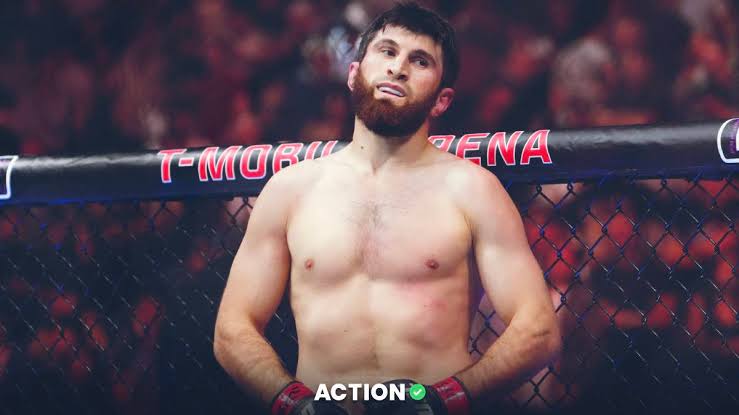
From a technical standpoint, Ankalaev controlled the range and the pace. He dictated when exchanges happened and when they did not. His takedown defense and ability to force the clinch when needed kept Guskov from ever finding rhythm. The decision to wait until the fourth round to really lean into the wrestling was the most debated element of the performance. Some observers argued he could have finished the fight earlier by forcing the grappling. Others noted that Guskov’s passive striking made the standing game safe enough that Ankalaev felt no urgency. Either way, once the takedowns started landing cleanly, the fight was effectively over as a competitive contest.
Guskov’s corner had little to work with. Their fighter was not engaging, not threatening, and not creating the chaos that might have given him a path to an upset. By the time the championship rounds arrived, fatigue and accumulated damage left him vulnerable on the mat. Ankalaev’s top control, positional transitions, and steady ground-and-pound were textbook. Guskov’s late attempt at a neck tie or anaconda-style grip in the fifth was more desperation than threat, and Ankalaev calmly extracted himself before resuming the punishment that forced the stoppage.
The broader context matters. Ankalaev needed a dominant, impressive win to jump the line for a title shot. What he produced was competent and professional but not the kind of performance that forces the matchmakers’ hand. The light heavyweight division remains unsettled. Ulberg’s recovery timeline from injury, the lingering presence of other contenders, and the memory of how long it took Ankalaev to get his first title opportunity all suggest the path back will not be automatic. A win is a win, and Ankalaev is once again unbeaten in 15 of his last 16 fights, but the manner of victory left room for debate.
Top Highlights and Key Moments
The fight was not dense with highlight-reel sequences, but several moments defined the night:
- Early range control and kicks. Ankalaev established the distance with low kicks and teeps almost immediately. Guskov’s attempts to answer with high kicks and spinning attacks largely missed or were blocked. A clean straight left from Ankalaev and a combination near the end of the first round were the clearest scoring sequences of the opening stanza.
- The second-round clinch. After Guskov landed one of his better right hands of the night, Ankalaev immediately shot and pressed the action against the fence. The crowd’s boos intensified as the fighters pummeled without much output. The sequence underscored Ankalaev’s willingness to smother rather than trade when the moment suited him.
- Round 3 pressure and the cut. Ankalaev continued to land high kicks and a notable left hand that backed Guskov up. A cut opened near Guskov’s right eye. The boos grew louder as the pace stayed measured. Ankalaev was clearly ahead on the scorecards, but neither man looked eager to force a finish.
- The fourth-round takedown and control. Ankalaev finally committed fully to the wrestling. He secured an early takedown, rode top position, transitioned toward the back, and threatened rear-naked chokes and face cranks. Guskov defended the submissions but absorbed consistent damage and spent the round in a defensive shell. Ankalaev finished the frame in full mount. The shift from stand-up stagnation to grappling dominance changed the entire complexion of the fight.
- The fifth-round finish. Ankalaev shot again early. Guskov locked up a brief neck attack that generated a momentary reaction from the crowd, but Ankalaev escaped cleanly. From there it was positional control and accumulating punches. Guskov turtled and offered little defense. Goddard, who had been patient, stepped in at 2:41. The stoppage was described by some as merciful given the one-sided nature of the action.
Other notable results from the card provided more of the action the main event lacked. Ramazan Temirov’s first-round knockout of Steve Erceg in the co-main stood out, as did several other finishes that kept the night from feeling entirely flat. The main event, however, remained the story.
Summary: A Necessary Win That Leaves the Bigger Picture Unchanged
Ankalaev left Etihad Arena with a TKO victory, a restored sense of momentum, and the knowledge that he had done the professional job required of him. In the post-fight interview he thanked Guskov for accepting the short-notice opportunity and made clear that the hunt for the title he lost was back on. “I was out for a long time. I had to come back. Now I’m back and I’m going to start my hunt for that thing I lost,” he said through a translator.
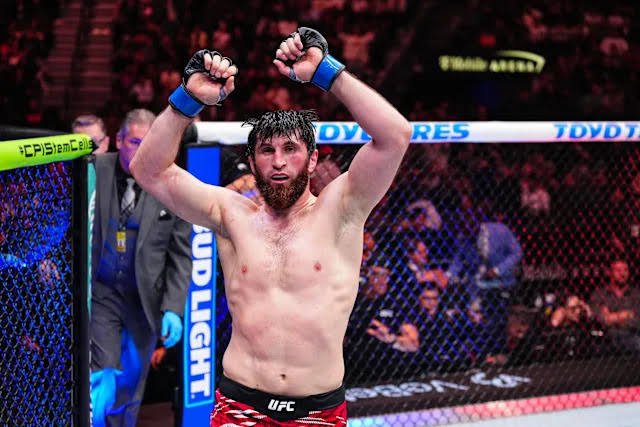
The performance itself will not be remembered as one of his best. It was efficient more than inspiring, controlling more than explosive. Guskov, for his part, saw a five-fight unbeaten run end in disappointing fashion. The short-notice circumstances offer some mitigation, but the passivity in the early rounds will be hard to explain away. At 33, opportunities like this do not come often.
Looking ahead, Ankalaev sits near the top of the light heavyweight rankings again. Whether that translates into a title fight in 2026 or early 2027 depends on factors outside his control: Ulberg’s recovery, the results of other contenders, and the UFC’s booking priorities. A more emphatic performance might have forced the issue. This one keeps him in the conversation without settling it.
For the fans who paid to watch or tuned in on Paramount+, the night was a mixed bag. The undercard delivered finishes and moments. The main event delivered a result and little else until the final ten minutes. Ankalaev is a proven elite fighter who has already climbed the mountain once. On this night he showed he still belongs near the summit. He also reminded everyone that belonging and thrilling are not always the same thing.
In the end, the former champion did what he needed to do. He won. The light heavyweight division, as it so often does, continues to wait for the next compelling chapter. Ankalaev will be part of it. Whether Saturday’s grind becomes a stepping stone or simply a footnote is something only the next fights will decide.