
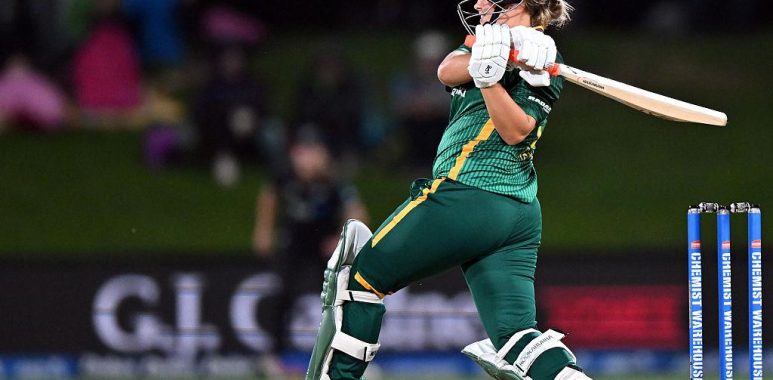
Debutant Reyneke’s Last-Ball Six Seals Thriller South Africa Women edge New Zealand by two wickets in Christchurch classic
South Africa Women staged one of the most dramatic finishes seen in recent women’s one-day international cricket, chasing down 269 with two wickets and zero balls remaining to defeat New Zealand Women in the first ODI of their tour at Hagley Oval in Christchurch on Sunday. Debutant Kayla Reyneke sealed the victory with a towering six off the final delivery, leaving the home side stunned and handing the visitors a 1-0 lead in the three-match series.
The day-night contest had everything a neutral spectator could want. There were steady partnerships, a six-wicket haul from a seasoned campaigner, a composed half-century from a young all-rounder, and a nervous late collapse that somehow resolved itself into pure elation for one team and quiet despair for the other. When Reyneke connected cleanly with Suzie Bates’s last ball and watched it sail over the long-on boundary, the South African contingent in the stands erupted while the New Zealand players stood frozen for a moment before offering handshakes.
New Zealand captain Amelia Kerr won the toss nowhere; South Africa skipper Laura Wolvaardt called correctly and chose to field first under the Christchurch lights. The decision looked shrewd early as Ayabonga Khaka and the rest of the attack found movement and bounce on a surface that offered something to the bowlers throughout. New Zealand began steadily enough through openers Suzie Bates and Georgia Plimmer. Bates played with her usual calm authority, while Plimmer looked fluent until Nadine de Klerk found a way through her defence. The scoreboard showed 71 for two when Plimmer departed, and the middle order was called upon sooner than ideal.
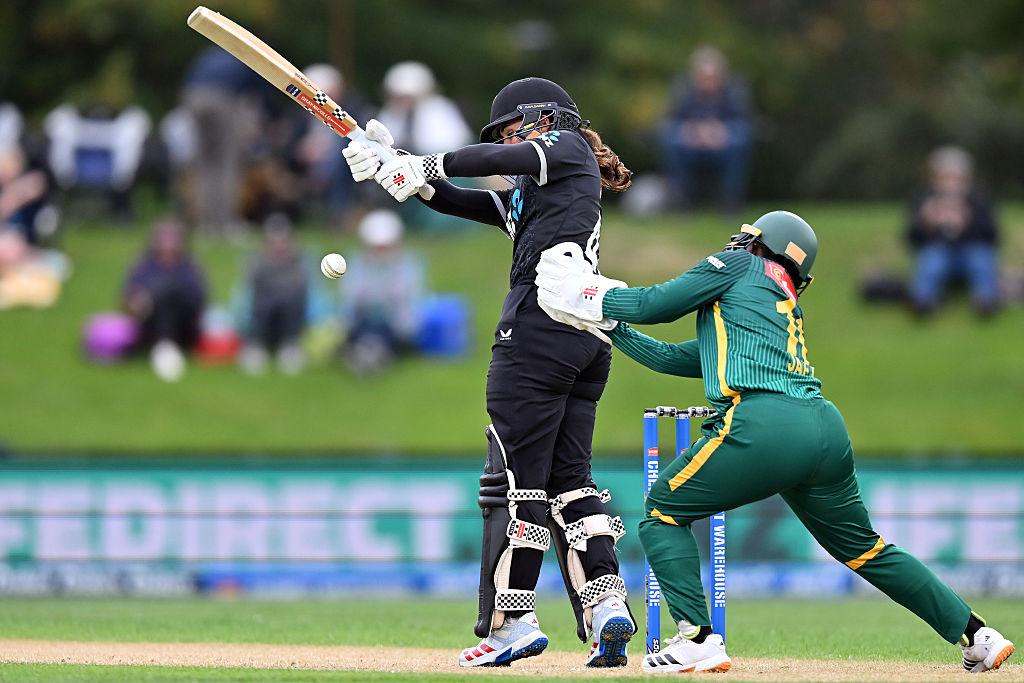
Amelia Kerr tried to steady the innings with a measured 36, but Khaka was relentless. The experienced seamer mixed pace and length expertly, eventually dismissing Kerr and then trapping Maddy Green lbw for a well-constructed 85. Green’s innings was the backbone of the New Zealand total. She struck nine boundaries and rotated the strike intelligently, taking the score past 150 and then past 200 with support from wicketkeeper Isabella Gaze. Gaze contributed a useful 37, the pair adding valuable runs in the middle phase when the required rate began to climb for the batters.
Yet Khaka refused to relent. She finished with the remarkable figures of six for 56 from her ten overs, her best return in recent memory and a performance that deserved to win the match on its own. Chloe Tryon chipped in with two wickets, including Gaze, while Tumi Sekhukhune and de Klerk claimed one each. The lower order offered some late resistance, Jess Kerr smashing 24 from 14 balls, but New Zealand were eventually dismissed for 268 in the final over. It felt like a competitive total on a ground where chases can become tricky under lights, yet it was always going to demand a near-perfect response from South Africa.
The chase began poorly. Jess Kerr removed Tazmin Brits for a duck in the opening over, and Bree Illing soon accounted for Wolvaardt, who had looked threatening with three early boundaries. At 30 for two after 5.3 overs, South Africa needed a substantial partnership. It arrived in the form of Annerie Dercksen and Sune Luus. The pair absorbed the early pressure and then began to accumulate. Dercksen was particularly impressive, playing straight and finding the gaps with eight crisp fours. Her 72 from 93 balls provided the platform, while Luus contributed a patient 53 from 72 deliveries. Their third-wicket stand of 123 runs took the score past 150 and shifted the momentum firmly toward the visitors.
Just as South Africa appeared in control, the wickets began to tumble again. Suzie Bates bowled Dercksen, Amelia Kerr removed Luus and then Sinalo Jafta in quick succession, and the score slipped from 153 for two to 171 for five. Chloe Tryon struggled to get going and fell for nine, leaving Nadine de Klerk and the debutant Reyneke with a sizeable task. De Klerk responded with a brisk 39 from 39 balls, striking five boundaries and keeping the required rate within reach. When she departed at 238 for seven in the 46th over, 31 runs were still needed from the final four overs with only three wickets remaining.
Reyneke, playing her first one-day international, showed remarkable composure. She farmed the strike where possible and found the boundary when required. Ayabonga Khaka came and went cheaply, but Tumi Sekhukhune arrived at the crease and held her end. The equation tightened: 22 needed from the last two overs, then 14 from the final six balls with two wickets still intact. Bates was entrusted with the last over. Reyneke took a single, Sekhukhune managed another, and then Reyneke cleared the ropes once. Two more singles followed. With six needed from the final delivery, Reyneke stepped forward and launched Bates high and long over the boundary. The ball disappeared into the night sky and the South African players poured onto the field in celebration.
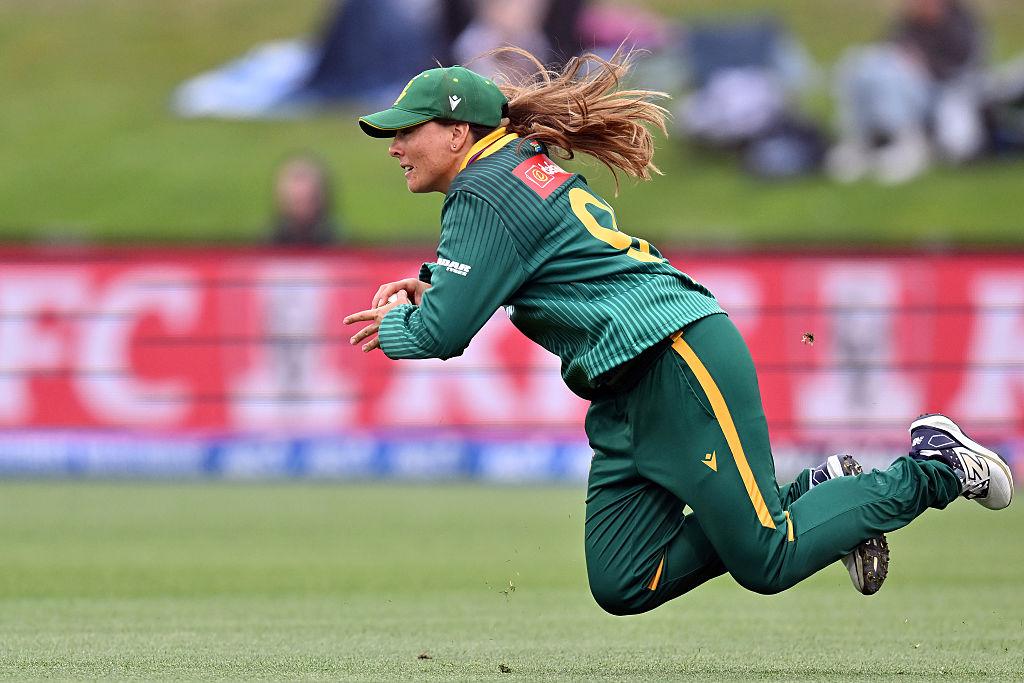
Reyneke finished unbeaten on 42 from 32 balls, including three fours and those two crucial sixes. Her innings earned her the player of the match award on debut, a fairytale beginning to her international career. Sekhukhune remained not out on six. For New Zealand the bowling effort was solid rather than spectacular. Amelia Kerr returned the best figures with two for 31, while Jess Kerr and Rosemary Mair also claimed two wickets each. Bates’s final over cost 14 runs and ultimately the match, yet her contribution with the ball earlier had been tidy.
The result leaves South Africa with an early advantage in the series, though New Zealand will take heart from the competitiveness of the contest. Both sides produced moments of high quality. Khaka’s six-wicket haul was a masterclass in controlled seam bowling, Green’s 85 was an innings of real substance, and the Dercksen-Luus partnership demonstrated the value of patience in a chase. Yet it was the nerve of a debutant that decided the outcome. Reyneke later described the final moment as a blur, saying she simply trusted her instincts and swung through the line. Wolvaardt praised the character shown by the middle and lower order after the early setbacks. Kerr, for her part, acknowledged that her side had been in the contest until the very last ball and would look to respond in the remaining matches.
Hagley Oval has witnessed many memorable finishes over the years, but few will match the tension of this particular evening. The crowd, a healthy mix of local supporters and travelling South African fans, stayed until the end and rose as one when the winning six was struck. For South Africa the victory provides valuable points in the Women’s Championship and a psychological edge heading into the second ODI. For New Zealand the defeat stings, particularly given how close they came to defending a total that looked defendable for most of the evening.
Looking ahead, both teams will assess their performances carefully. New Zealand may seek greater consistency from the top order and tighter death bowling. South Africa will hope their middle order continues to deliver and that Khaka maintains her current form. Reyneke has announced herself as a player of genuine promise, and her calmness under pressure will not be forgotten quickly by those who watched.
The match itself served as a reminder of why the 50-over format retains its appeal. There were periods of consolidation, sudden bursts of acceleration, and a climax that could not have been scripted more perfectly. From the early breakthroughs to the late drama, every phase contributed to a contest that will be discussed for some time. South Africa Women had chased 269 and won by two wickets with no balls remaining. In the end, that simple scoreline told only part of a far richer story.
