
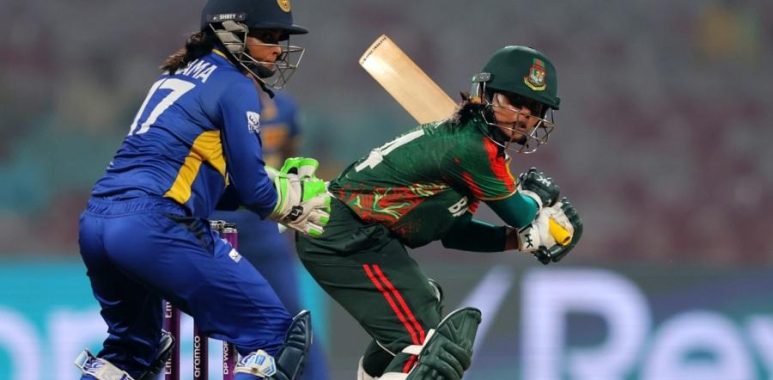
Sri Lanka Women level series with clinical four-wicket victory in Rajshahi
The second One Day International between Bangladesh Women and Sri Lanka Women at the Shahid Kamruzzaman Stadium in Rajshahi on Wednesday, 22 April 2026, delivered a result that swung the three-match series back into balance. Sri Lanka Women chased down a modest target of 166 with four wickets in hand and a full 70 balls remaining, completing the task in just 38.2 overs. The victory, built on disciplined bowling followed by a composed batting effort, leveled the series at 1-1 after Bangladesh had taken the opening match two days earlier.
Bangladesh captain Nigar Sultana won the toss and chose to bat first under clear skies on a dry surface that offered early assistance to the seamers. The decision looked reasonable at the time, yet the home side’s innings never gained the momentum required on a ground where totals closer to 220 or more often prove competitive. Sri Lanka’s attack, led by the returning Chamari Athapaththu, kept the pressure tight from the outset and never allowed Bangladesh to settle into any meaningful partnerships.
The early damage came from the new-ball pair. Malki Madara struck in the third over, removing Juairiya Ferdous for just 2 when the opener edged to Imesha Dulani at slip. Four overs later Madara claimed a second scalp, this time Sharmin Akhter, who fell for a duck after nicking behind to wicketkeeper Kaushini Nuthyangana. At 4 for 2 inside five overs, Bangladesh were already in trouble. Sarmin Sultana and Nigar Sultana attempted to repair the innings, adding 45 runs for the third wicket, but progress remained cautious. Sarmin managed 25 off 39 balls with three boundaries before Athapaththu trapped her leg-before in the 16th over. The Sri Lankan captain, back after missing the first ODI with a finger injury, immediately made her presence felt.
Sobhana Mostary lasted only 11 balls for 5 before Athapaththu induced a catch to Inoka Ranaweera. Shorna Akter produced a brief counter-attack, striking two fours in her 16 off 22, yet Kavisha Dilhari ended that resistance with another leg-before decision. Ritu Moni showed positive intent, scoring 17 off 18 with three boundaries, but Athapaththu claimed her third wicket of the innings when Moni picked out Nilakshika Silva. At 111 for 6, Bangladesh’s hopes rested almost entirely on their captain.
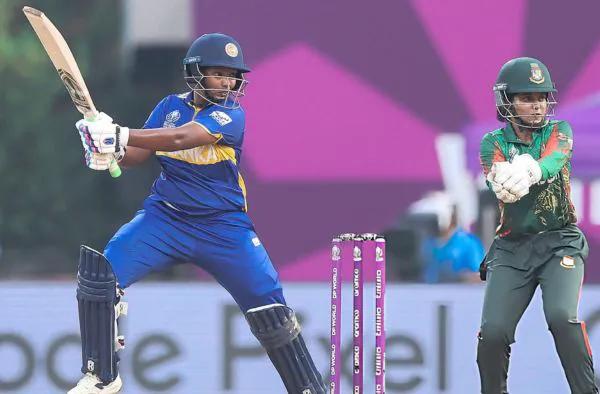
Nigar Sultana fought a lone battle, occupying the crease for 101 deliveries and compiling a determined 58 that included four boundaries. She received limited support from the lower order. Rabeya Khan contributed a useful 15, but Nimasha Meepage removed both Nigar and Rabeya in successive spells. Inoka Ranaweera and Meepage then wrapped up the tail, dismissing Nahida Akter and Marufa Akter as Bangladesh folded for 165 in 45.5 overs. The total represented a clear under-performance given the conditions and the experience available in the middle order.
Athapaththu finished with figures of 3 for 36 from eight overs, the standout bowling performance of the innings. Madara and Meepage each took two wickets, Ranaweera claimed two as well, and Dilhari chipped in with one. The Sri Lankan bowlers maintained control throughout, conceding only five extras and rarely allowing the run rate to climb above four an over. Bangladesh’s inability to accelerate in the middle overs proved decisive; once the top order had been dismantled, the remaining batters struggled to find gaps against a well-set field.
The chase began with a degree of caution. Hasini Perera fell early for 5, bowled by Sultana Khatun in the sixth over. Athapaththu, however, came out intent on imposing herself. The Sri Lankan captain raced to 40 off just 39 balls, striking eight crisp boundaries and putting the required rate under immediate pressure. Her aggressive approach forced Bangladesh to spread the field and created scoring opportunities for the batters who followed. Imesha Dulani contributed a steady 8 before Ritu Moni had her caught by Nahida Akter, but by then the foundation had been laid.
The middle order then took over with a display of measured batting that gradually extinguished any hope of a Bangladesh fightback. Harshitha Samarawickrama and Hansima Karunaratne added 79 runs for the fourth wicket, rotating the strike intelligently and punishing the occasional loose delivery. Samarawickrama reached her half-century off 76 balls with seven fours, an innings built on solid defence and selective aggression. Karunaratne matched her partner’s application, scoring 40 off 64 deliveries with six boundaries of her own. Their partnership carried Sri Lanka from a potentially awkward 79 for 3 to the brink of victory.
Nahida Akter, the Bangladesh vice-captain, produced the best bowling figures of the match with 4 for 21 from 7.2 overs. She removed Athapaththu, then later dismissed both Samarawickrama and Karunaratne in successive overs, and completed her haul by having Kaushini Nuthyangana caught. Yet the damage had already been done. With only a handful of runs required, Kavisha Dilhari and Nilakshika Silva guided the side home without further alarm. The winning runs came with 70 balls still available, underlining the comfort of the chase.
The result leveled the series and handed Sri Lanka two crucial points in the ICC Women’s Championship. For Bangladesh the defeat raised questions about batting consistency. After posting a competitive total and defending it successfully in the first ODI, the home side were unable to adapt when conditions demanded a more patient approach. Nigar Sultana’s 58 remained the only half-century of the innings, and the early collapses left too much work for the middle and lower order.
Athapaththu’s all-round contribution earned her the Player of the Match award. Her three wickets had restricted Bangladesh to a below-par total, and her rapid 40 set the tone for the successful chase. The Sri Lankan captain later spoke of the satisfaction of returning to the side and contributing immediately. “We knew 165 was chaseable if we stayed patient,” she said. “The bowlers did their job first, and then the batters finished it off. Harshitha and Hansima showed great maturity in the middle.”
Samarawickrama’s composed fifty provided the backbone of the innings. In conditions that still offered some movement and variable bounce, she played the ball late and used the crease effectively. Karunaratne’s supporting role was equally important; the pair never allowed the required rate to climb above comfortable levels. Bangladesh’s bowlers, led by Nahida Akter’s four-wicket haul, kept fighting until the end, yet the target simply was not large enough to create sustained pressure.
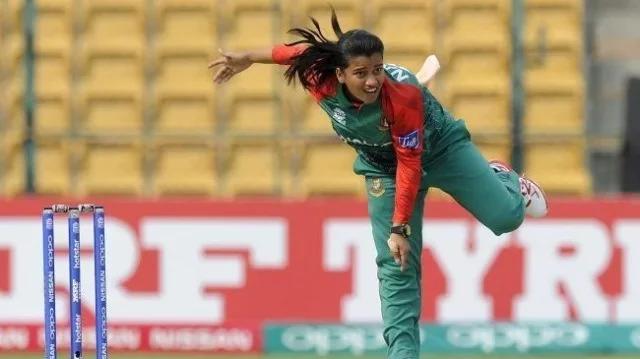
The Shahid Kamruzzaman Stadium has hosted several competitive women’s matches in recent seasons, and the surface on this occasion rewarded accurate bowling more than expansive stroke-play. Both captains acknowledged after the match that the pitch demanded discipline. Nigar Sultana admitted her side had not adapted quickly enough after the early losses. “We lost too many wickets in the powerplay and never recovered the momentum,” she said. “Nigar batted well, but we needed more partnerships. Credit to Sri Lanka for the way they bowled and then chased.”
The series now heads to a decider on 25 April, again in Rajshahi. Bangladesh will look to regain the batting form that brought them victory in the opening match, while Sri Lanka will aim to maintain the balance between attack and control that served them so well in the second contest. Athapaththu’s return has clearly lifted the visitors, and the presence of experienced campaigners such as Samarawickrama and Ranaweera gives them a settled core. Bangladesh, for their part, possess enough talent in both departments to respond strongly if they can avoid another top-order collapse.
Beyond the immediate series, the points on offer carry significance in the broader ICC Women’s Championship cycle. Every win matters in the long qualification path toward the next World Cup, and both sides will treat the final ODI with the intensity it deserves. For the players who performed on Wednesday, the memory of a clinical team performance will provide confidence. Athapaththu’s dual contribution, Samarawickrama’s anchoring knock, Karunaratne’s supporting hand, and the collective bowling effort combined to produce a complete display.
The match also highlighted the growing depth in both squads. Younger players such as Madara and Meepage for Sri Lanka, and the continued development of batters like Mostary and Shorna Akter for Bangladesh, suggest the rivalry will remain competitive for years ahead. Crowds in Rajshahi have responded positively to women’s cricket, and the attendance on Wednesday reflected genuine local interest. The atmosphere, though not as charged as a men’s international, still carried the sense of occasion that accompanies a tightly contested bilateral series.
As the teams prepare for the third and final ODI, the narrative has shifted. Bangladesh can no longer rely on home advantage alone; they must find ways to post larger totals and then defend them with the same discipline Sri Lanka showed. Sri Lanka, buoyed by the leveling victory, will seek to close out the series and take the Championship points that come with it. Whatever the outcome on Saturday, the second ODI will be remembered as the day Chamari Athapaththu announced her return with both bat and ball, and the day Sri Lanka Women demonstrated the composure required to chase a modest target without fuss.
In the end the margin of victory, four wickets with more than eleven overs to spare, told the story accurately. Bangladesh were restricted, Sri Lanka responded efficiently, and the series moved to a fitting climax. Women’s cricket in the subcontinent continues to produce matches of this character: hard-fought, tactical, and decided by the side that maintains its discipline for longer. On this occasion that side was Sri Lanka.
