
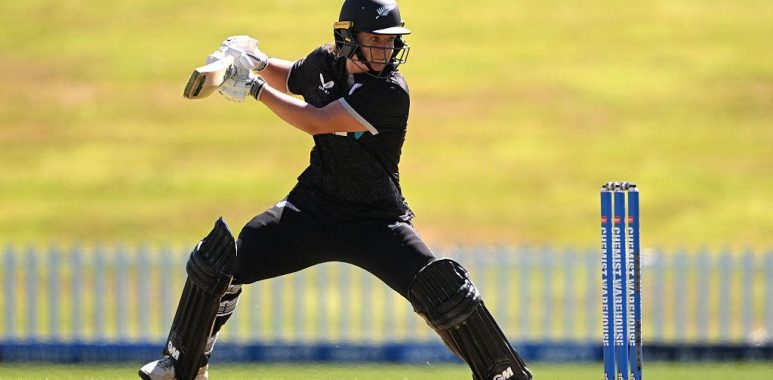
Halliday’s Maiden Century Powers New Zealand Women to 180-Run Rout of Zimbabwe in Dunedin
New Zealand Women produced a dominant display at the University of Otago Oval in Dunedin on Thursday, crushing Zimbabwe Women by 180 runs in the opening One-Day International of the series. Brooke Halliday led the charge with a sparkling unbeaten 157, her maiden century in the format, as the hosts posted a massive 354 for three before bowling out the visitors for 174 in 47.3 overs.
The result marked a continuation of New Zealand’s strong form after they had already swept the preceding T20I series. It also handed Zimbabwe their heaviest defeat by runs in women’s ODIs and delivered the highest total ever scored against them in the 50-over game. For Halliday, the innings was a personal breakthrough that announced her arrival as a force in the longer format.
Zimbabwe captain Nomvelo Sibanda won the toss and chose to field, hoping the early morning conditions in Dunedin might offer something for her bowlers. The decision looked reasonable when Amelia Kerr, the New Zealand captain, was dismissed for 15 in the seventh over, caught behind off Christabel Chatonzwa. Emma McLeod then fell for 35, caught by Modester Mupachikwa off Precious Marange, leaving the hosts at 81 for two in the 16th over.
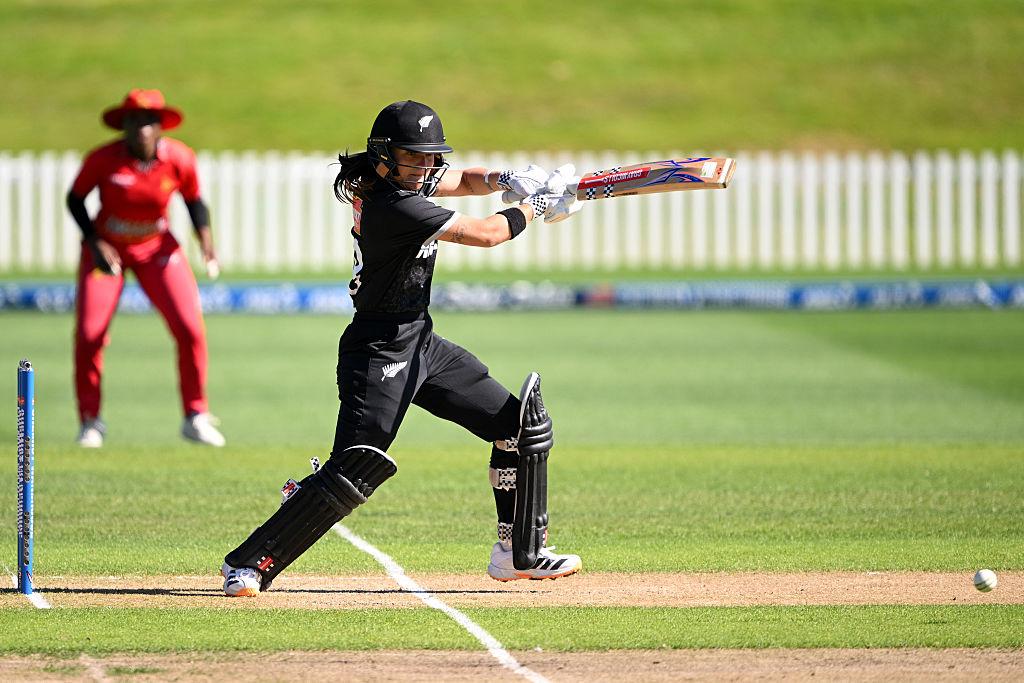
That was as good as it got for the visitors. Maddy Green and Halliday settled in and built a substantial partnership of 122 runs for the third wicket. Green played with composure, rotating the strike and finding the boundary seven times in her 67 from 80 balls. Halliday, meanwhile, began carefully before accelerating. She reached her fifty and then her hundred from 93 deliveries, the landmark coming with a mixture of crisp drives and powerful pulls.
Once the century was secured, Halliday shifted gears completely. She raced from 100 to 150 in just 21 balls, punishing anything short or wide. Adel Zimunu and Chatonzwa felt the full force of her late assault. In the 46th over Halliday struck four successive boundaries off Chatonzwa. Isabella Gaze provided perfect support at the other end, finishing unbeaten on 59 from only 42 balls with ten fours. Their unbroken stand of 151 from 97 deliveries lifted New Zealand past 350. The final ten overs alone produced 117 runs.
Halliday’s 157 not out from 118 balls included 24 fours and a solitary six. It equalled the third-highest individual score by a New Zealand batter in women’s ODIs. The total of 354 for three stood as a record against Zimbabwe and left the visitors facing a mountain they never looked like climbing.
Zimbabwe’s reply began poorly. Modester Mupachikwa was trapped leg-before by Jess Kerr for 8 in the third over. Kelis Ndhlovu and Chipo Mugeri-Tiripano then attempted to rebuild, adding 71 runs for the second wicket. Ndhlovu showed patience in compiling 52 from 109 balls, while Mugeri-Tiripano contributed a solid 38 from 70. The partnership offered temporary hope, but the required rate climbed steadily and the New Zealand bowlers maintained pressure.
Amelia Kerr broke the stand when she had Mugeri-Tiripano caught behind by Gaze. From there the innings unravelled. Nensi Patel, making her ODI debut, removed Ndhlovu, who was caught by Halliday. Molly Penfold claimed two wickets, including Beloved Biza for 29. Amelia Kerr returned to pick up three more scalps, finishing with figures of four for 35 from her ten overs. Jess Kerr completed the demolition with three for 28, including the final two wickets in consecutive deliveries to seal the victory in the 48th over.
The margin of 180 runs underlined the gulf between the sides on the day. New Zealand’s batting depth and all-round quality shone through, while Zimbabwe struggled to contain the scoring or build meaningful partnerships under pressure. Debutants Nensi Patel and Izzy Sharp both gained valuable experience, with Patel contributing a key wicket and Sharp remaining unused with the bat.
Halliday was the obvious choice for player of the match. Speaking after the game, she described the innings as a special moment. “It was nice to get the first hundred out of the way,” she said. “The wicket was good and once I got in I just tried to keep the momentum going. Izzy was brilliant at the end and the whole group played with freedom.”
Amelia Kerr praised the collective effort. “Brooke set the tone with that knock and the bowlers backed it up really well. We wanted to start the series strongly and that is exactly what we did. There are still two games left and we will look to keep improving.”
For Zimbabwe the defeat was a harsh introduction to conditions in New Zealand. Sibanda acknowledged the challenge. “We knew New Zealand would be tough at home. We had our moments with the ball early but could not capitalise. With the bat we need to be more positive and find ways to rotate the strike better. The series is not over and we will learn from this.”
The match formed part of the ICC Women’s Championship, with New Zealand collecting two valuable points. The series continues with the second ODI at the same venue on 8 March, followed by the third on 11 March. Both sides will now turn their attention to recovery and preparation for the next contest.
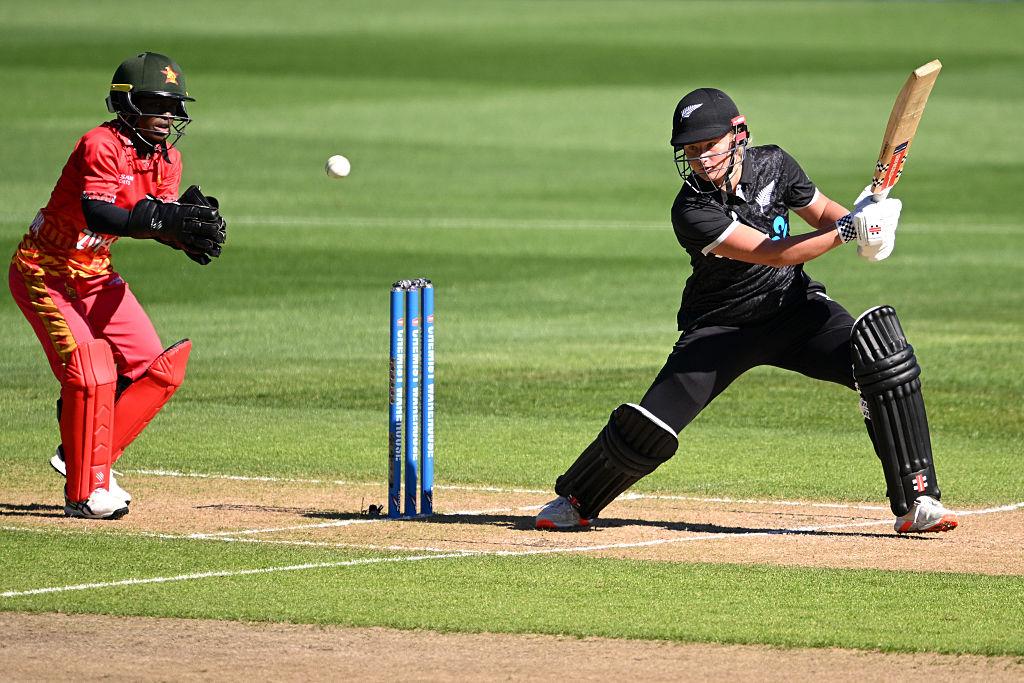
University Oval provided a picturesque backdrop for the contest, with clear skies and a true surface that favoured stroke play. The crowd, though modest, enjoyed a full day of entertainment as New Zealand’s batters filled the boundary boards. Halliday’s innings in particular will be remembered as one of the standout individual performances of the southern summer.
New Zealand’s path to this dominant position has been built on consistent selection and clear roles. Green’s reliability in the middle order, Gaze’s finishing ability, and the Kerr sisters’ all-round contributions give the side balance. The inclusion of younger players such as Patel and Sharp shows a willingness to blood talent without sacrificing competitiveness.
Zimbabwe, still developing as a side on the international stage, faced a steep learning curve. Their bowling attack worked hard but lacked the variety and consistency to restrict a well-set New Zealand line-up. In the field they were tidy for periods yet unable to create enough pressure once the partnership between Green and Halliday took hold. With the bat, the top order showed grit but the middle and lower order collapsed once the set batters were removed.
The 180-run margin ranks among the more emphatic results in recent women’s ODIs and highlights the disparity that can exist when one side is in full flow. Yet cricket’s beauty lies in its capacity for recovery. Zimbabwe will look to the remaining matches as opportunities to adapt and improve. New Zealand, meanwhile, will aim to maintain standards and avoid any complacency.
Halliday’s century was the centrepiece of the day. From a measured start she progressed through the gears with increasing confidence. Her pull shot brought particular success, yielding 42 runs according to match statistics. She controlled 87 percent of the balls she faced, a remarkable figure given the late acceleration. Gaze’s contribution should not be overlooked either. Her fifty came at better than a run a ball and provided the perfect platform for the final onslaught.
On the bowling side, the Kerr sisters shared seven wickets between them. Amelia’s four-wicket haul demonstrated her ability to extract turn and variation on a surface that offered little natural assistance. Jess’s accuracy and late movement proved decisive in the closing stages. Penfold’s two wickets added further depth, while the support bowling from Illing and others kept the run rate in check.
Looking ahead, New Zealand will be confident of extending their lead in the series. Their batting has already produced a record total against this opposition, and the bowling unit possesses the tools to exploit any early uncertainty. Zimbabwe must find ways to score more freely in the middle overs and apply pressure with the new ball if they are to trouble the hosts.
The broader context of the tour is significant. This is the first bilateral series between the two sides, and the ODIs carry Championship points that could influence qualification pathways. For New Zealand, consistent results at home strengthen their standing. For Zimbabwe, exposure against higher-ranked opposition remains an essential part of their development.
As the sun set over Dunedin, the New Zealand players celebrated a comprehensive win while Zimbabwe reflected on a difficult day. Halliday’s name will feature prominently in the match reports, and rightly so. An unbeaten 157 that propelled her team to 354 and ultimately a 180-run victory is the stuff of memorable performances. The series has only just begun, yet already one player has announced herself with authority.
The second ODI offers Zimbabwe a chance to respond. Whether they can regroup and produce a stronger showing remains to be seen. New Zealand will arrive at the ground with the same intent that served them so well on Thursday. For now, the scoreboard tells a clear story: New Zealand Women 354 for three, Zimbabwe Women 174, New Zealand won by 180 runs. It was a day that belonged entirely to the hosts, and to Brooke Halliday in particular.
