
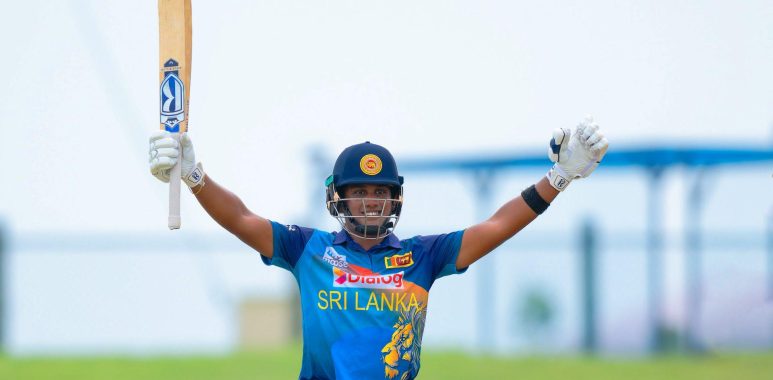
Sri Lanka Women Clinch Series with Narrow 14-Run Victory Over West Indies in Grenada Thriller
Sri Lanka Women edged out West Indies Women by 14 runs in a tense second one-day international at the National Cricket Stadium in St Georges, Grenada, on Sunday, February 22, 2026, to take an unassailable 2-0 lead in the three-match series. The visitors posted 208 all out in 47.1 overs before restricting the hosts to 194 in 48 overs, sealing a hard-fought victory that showcased disciplined bowling, sharp fielding, and a match-defining half-century from Vishmi Gunaratne.
West Indies captain Hayley Matthews won the toss and chose to field first on a surface that offered something for both batters and bowlers under clear Caribbean skies. Sri Lanka’s innings began steadily but not without early caution. Openers Hasini Perera and Chamari Athapaththu negotiated the new ball with care. Perera contributed 14 off 29 balls with a couple of crisp boundaries before falling in the ninth over, caught by Deandra Dottin off Matthews. The score stood at 39 for one.
Athapaththu, the experienced Sri Lankan skipper, looked purposeful. She struck six fours in her 32 off 41 deliveries, rotating the strike well and punishing anything loose. Her partnership with Harshitha Samarawickrama added useful runs in the middle of the powerplay and beyond. Athapaththu was eventually dismissed in the 18th over, caught behind by Shemaine Campbelle off the bowling of Karishma Ramharack, leaving Sri Lanka at 65 for two.
Samarawickrama and Gunaratne then set about rebuilding. Samarawickrama played a measured knock of 35 from 64 balls, including two boundaries, before being bowled by Afy Fletcher in the 27th over with the total on 107. Gunaratne, however, was just finding her rhythm. The young batter grew in confidence, working the ball into gaps and occasionally launching into attacking strokes. Kavisha Dilhari came and went for six, caught behind off Aaliyah Alleyne, but Nilakshika Silva provided the acceleration Sri Lanka needed.
Silva smashed 29 off just 22 balls, including two fours and two sixes, helping push the score past 150. Her partnership with Gunaratne was worth 40 runs and lifted the tempo at a crucial stage. Silva was bowled by Matthews for 29 with the score on 166 for five in the 36th over. From there, Sri Lanka’s lower order struggled to add substantial runs. Kaushini Nuthyangana was run out for two, Dewmi Vihanga fell lbw to Fletcher for five, and the tail managed only modest contributions.
Gunaratne remained the anchor throughout. She reached her half-century off 57 balls and finished with a well-crafted 58 from 66 deliveries, featuring five boundaries. Her dismissal, caught by Chinelle Henry off Ramharack in the 44th over, triggered a late collapse. Sri Lanka lost their last six wickets for just 42 runs. Ramharack finished with excellent figures of three for 26 from 9.1 overs, while Fletcher took two for 40 and Matthews two for 44. The total of 208 looked competitive but far from impregnable on a ground where chaseable targets had been overhauled before.
West Indies began their pursuit of 209 with Matthews and Qiana Joseph at the crease. The powerplay proved costly. Matthews managed only 13 off 33 balls before being caught by Dilhari off Vihanga in the tenth over. Joseph followed almost immediately, caught by Malki Madara off Sugandika Kumari for 16, leaving the hosts reeling at 30 for two.
Shemaine Campbelle and Stafanie Taylor attempted to steady the innings. Campbelle looked fluent in her 30 off 35 balls with three boundaries, while Taylor contributed a solid 27 from 45 deliveries. Their partnership took the score to 74 before Taylor was caught behind by Nuthyangana off Inoka Ranaweera in the 22nd over. Chinelle Henry managed just four before falling to a sharp catch by Perera at slip off Kumari.
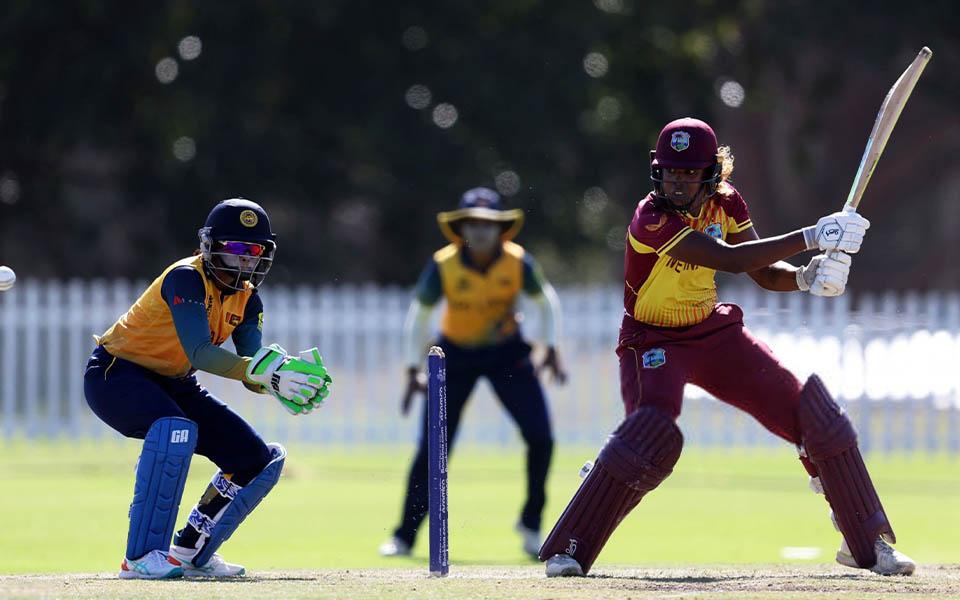
The pivotal moment arrived in the 30th over. Deandra Dottin, who had scored 13 off 15 balls with two boundaries, was given out obstructing the field. Facing Athapaththu, Dottin attempted a sweep. The ball went down the leg side and was called wide, but it ballooned off the pads of wicketkeeper Nuthyangana back towards the batter. Dottin tapped it away with her bat and then caught the ball. Umpires Candace la Borde and Vrinda Rathi conferred before ruling her out. The decision left West Indies at 116 for six and shifted the momentum firmly towards Sri Lanka.
Aaliyah Alleyne departed soon after for one, and the hosts slipped further to 146 for eight when Shawnisha Hector was caught by Silva at long-off off Kumari for 11. At that stage, a Sri Lankan victory seemed inevitable. Yet Jannillea Glasgow refused to give in. The young all-rounder produced a fighting half-century, her second successive fifty of the series. She scored 50 off 69 balls with five boundaries, showing maturity beyond her years and keeping West Indies hopes alive.
Glasgow found a willing partner in Afy Fletcher. The pair added 45 crucial runs for the ninth wicket. Fletcher contributed a brisk 20 off 23 balls with two fours. The partnership took the total to 191 before Fletcher was caught by substitute Imesha Dulani off Ranaweera in the 47th over. With 18 runs still needed and only one wicket remaining, Glasgow continued to fight. She was the last to fall, caught brilliantly on the rebound at cover by Dilhari off Athapaththu in the final over, ending the innings at 194.
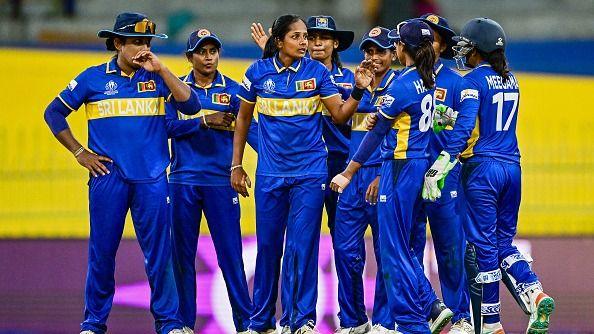
Sri Lanka’s bowlers shared the wickets effectively. Sugandika Kumari returned three for 38 from her 10 overs, Inoka Ranaweera claimed three for 44 including the key scalps of Taylor and Campbelle, and Dewmi Vihanga took two for 33. Athapaththu chipped in with one for 35 and the vital final wicket. The fielding was outstanding throughout, with Perera’s slip catch and Silva’s long-off effort standing out as examples of the intensity Sri Lanka brought to the contest.
Gunaratne was named player of the match for her composed 58 that formed the backbone of Sri Lanka’s total. Her ability to occupy the crease and accelerate when required proved the difference in a low-scoring thriller. For West Indies, Glasgow’s resilient knock offered a silver lining, while Ramharack’s bowling performance was of the highest quality. The hosts will reflect on the Dottin dismissal and the early powerplay collapses as moments that cost them dearly.
This result continued Sri Lanka’s strong start to the tour. They had won the first ODI by 10 runs just two days earlier, and this second victory ensured they could not be overhauled in the series with one match still to play. The series forms part of the ICC Women’s Championship, adding further significance to the points earned. Sri Lanka collected two more points to strengthen their position, while West Indies were left searching for answers ahead of the final ODI.
The match itself was a classic example of limited-overs cricket at its most competitive. Neither side dominated for long periods. Sri Lanka’s top order provided a platform, Gunaratne converted it into a defendable total, and the bowlers, supported by alert fielders, applied pressure at every stage of the chase. West Indies showed fight through Campbelle, Taylor, and especially Glasgow, but the early losses and the unusual dismissal of Dottin proved too much to overcome.
Conditions in Grenada favoured a balanced contest. The pitch offered enough assistance for the spinners, who dominated the middle and later stages of both innings. Pace bowlers had their moments with the new ball, but it was the slower bowlers who controlled the flow of runs. Sri Lanka used their spin resources cleverly, rotating Kumari, Ranaweera, Vihanga, Dilhari, and Athapaththu to keep the West Indian batters guessing.
Athapaththu’s leadership was quietly effective. Beyond her batting contribution, she managed her bowlers with precision and contributed a useful spell herself. Her decision to bowl herself at key moments, including the over that removed Dottin and the final over that sealed the win, underlined her tactical awareness. For Matthews, the West Indies captain, the day was more frustrating. Her own batting contribution was modest, and while she took two wickets, the inability of the middle order to build substantial partnerships after the early setbacks proved costly.
The crowd at the National Cricket Stadium witnessed a gripping contest that went down to the final overs. Glasgow’s determination kept them engaged until the end, and the applause for her half-century was well deserved. Sri Lanka’s players celebrated with visible relief and joy at the conclusion, knowing they had sealed the series on foreign soil against a competitive home side.
Looking ahead, the third ODI offers West Indies a chance to salvage pride and secure a consolation victory. They will need better starts with the bat and greater consistency in the middle order if they are to challenge Sri Lanka successfully. For the visitors, the focus will be on maintaining intensity and avoiding complacency. Gunaratne’s form is a major positive, as is the bowling depth that has delivered in both matches so far.
This victory also highlighted the growing strength of Sri Lankan women’s cricket. Players like Gunaratne, Samarawickrama, and the experienced Ranaweera and Athapaththu are forming a core capable of competing against stronger opposition on the international stage. Their ability to grind out results in tight contests speaks to improved mental toughness and game awareness.
West Indies, meanwhile, possess talent in abundance. Matthews remains one of the finest all-rounders in the game, Dottin brings explosive potential, and younger players like Glasgow are beginning to make their mark. The challenge lies in converting promising positions into winning ones more consistently. The obstructing the field dismissal will be discussed at length, but it was one moment in a match full of them. Cricket’s laws are clear on such incidents, and the umpires applied them after consultation.
In the end, Sri Lanka’s 14-run margin reflected a contest that could have gone either way until the final stages. The difference was composure under pressure and the ability to take wickets at regular intervals. Gunaratne’s innings provided the foundation, the bowlers executed their plans, and the fielders backed them up with energy and skill. It was a complete team performance in a match that demanded exactly that.
As the series moves to its conclusion, both teams will take lessons from this encounter. For Sri Lanka, it is confirmation that their methods are working. For West Indies, it is a reminder of the fine margins that separate victory from defeat in modern women’s cricket. Fans of the game were treated to an absorbing day’s play, full of twists, quality individual performances, and a result that hung in the balance until late. Sri Lanka deservedly take the series lead, but the competitiveness shown by West Indies suggests the final match will be another closely fought affair.
The result also adds another chapter to the growing history of women’s cricket in the Caribbean. Matches of this quality help raise the profile of the sport and inspire the next generation of players. Gunaratne’s half-century and Glasgow’s response will be remembered as the standout batting efforts, while the bowling of Ramharack, Kumari, and Ranaweera provided the control that ultimately decided the outcome.
Sri Lanka Women now sit firmly in control of the series. Their second consecutive narrow victory demonstrates resilience and the capacity to close out tight games. West Indies Women will regroup and look to finish the ODI leg on a high note before the focus shifts to the T20I portion of the tour. For now, the visitors can savour a job well done in Grenada, where they produced the better cricket when it mattered most and secured a memorable 14-run win.
