
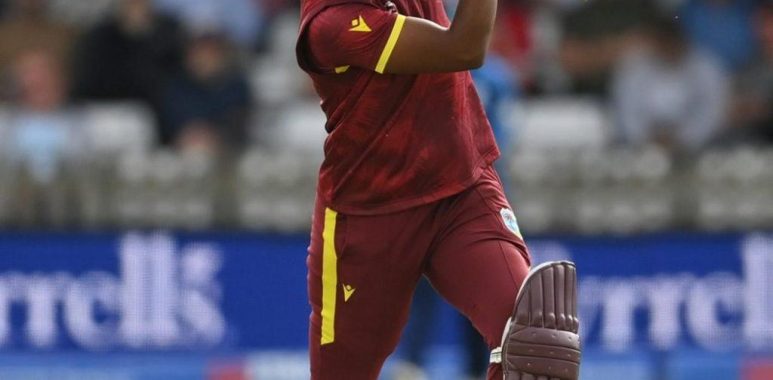
West Indies Women sealed a hard-earned consolation victory in the final one-day international of their series against Sri Lanka Women
Chasing down 218 with six wickets and 24 balls to spare at the National Cricket Stadium in St George’s, Grenada. The result on Wednesday, 25 February 2026, ensured the home side avoided a clean sweep after Sri Lanka had already wrapped up the three-match series with wins in the first two encounters. Yet the manner of the win, built around a commanding century from captain Hayley Matthews, offered West Indies a significant boost as they collected their first points in the latest cycle of the ICC Women’s Championship.
Matthews produced a complete all-round performance that defined the contest. She began the day by removing Sri Lanka captain Chamari Athapaththu in the very first over, trapping her leg before wicket for a duck. Later she returned to the crease and constructed a patient yet authoritative hundred, finishing with 100 runs from 119 balls that included 13 fours and one six. Her innings provided the backbone of the chase after West Indies had slipped to 12 for two early on. When she finally departed, the target was within reach, and Chinelle Henry and Deandra Dottin guided the side home without further alarm.
Sri Lanka, electing to bat first after winning the toss, never quite found the fluency they had shown in the previous matches. Their total of 217 for seven from 50 overs looked competitive on a surface that offered something for the spinners, but it ultimately proved insufficient against a determined West Indies batting effort. Harshitha Samarawickrama top-scored with a measured 70 from 112 deliveries, while Kavisha Dilhari remained unbeaten on 45 from 58 balls. The pair provided the main resistance after early setbacks, yet the visitors struggled to accelerate in the middle and closing stages as West Indies’ bowlers maintained steady pressure.
The Sri Lankan innings began in dramatic fashion. Matthews struck with her fourth delivery, trapping Athapaththu in front as the experienced left-hander offered no shot. Hasini Perera and Samarawickrama then steadied the ship, adding 43 runs for the second wicket. Perera looked fluent in her 27 from 34 balls, striking five boundaries, before Matthews claimed her second wicket, having Perera caught by Stafanie Taylor. At 44 for two after 11 overs, Sri Lanka needed a substantial partnership to rebuild.
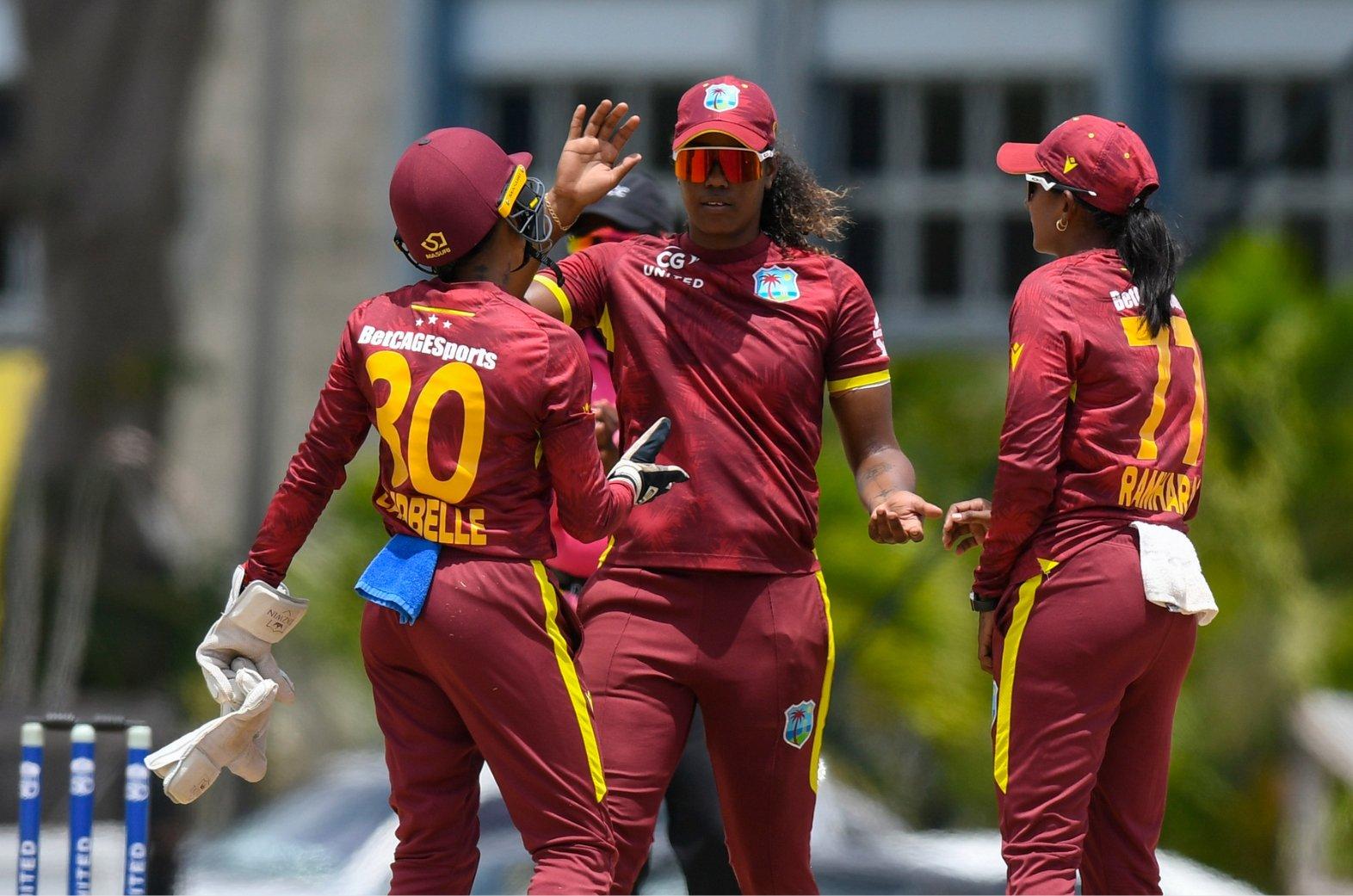
Samarawickrama and Vishmi Gunaratne provided exactly that, putting on 78 runs for the third wicket. Samarawickrama played with characteristic calm, rotating the strike and finding the boundary seven times. Gunaratne contributed a solid 26 from 46 balls. The stand was broken when Karishma Ramharack removed Gunaratne, caught by Matthews, in the 31st over. Four overs later Ramharack struck again, dismissing Samarawickrama for 70 as she attempted to force the pace and was caught by Dottin. Those two wickets left Sri Lanka at 133 for four and shifted the momentum firmly towards the home side.
Dilhari and Nilakshi de Silva tried to inject some urgency. De Silva made 14 before falling leg before to Ashmini Munisar. Kaushini Nuthyangana managed only five before Afy Fletcher had her caught. Dewmi Vihanga was run out for 12 in the later stages, and Sugandika Kumari added a quick nine not out as the innings closed on 217 for seven. The total included nine extras. Matthews finished with the impressive figures of two for 33 from her ten overs. Ramharack claimed two for 39, while Fletcher and Munisar took one each.
West Indies’ reply began poorly. Malki Madara removed Qiana Joseph for two in the third over, caught by Athapaththu. Two overs later the same bowler dismissed Shemaine Campbelle for a duck, leaving the scoreboard reading 12 for two. The early breakthroughs raised hopes of a Sri Lankan whitewash, especially with the series already decided in their favour. What followed, however, was a masterclass in measured aggression from Matthews and the experienced Taylor.
Matthews took 12 balls to find her first boundary but thereafter dominated proceedings. She and Taylor added 124 runs for the third wicket in a partnership that steadily dismantled the Sri Lankan bowling attack. Taylor, who moved into second place on the all-time list of ODI run-scorers during the innings and also reached the landmark of 6,000 career ODI runs, played the perfect supporting role. She scored 38 from 70 balls with just one boundary, content to rotate the strike and allow Matthews the freedom to dictate terms. The pair took the score past 100 and then past 130 before Inoka Ranaweera broke through, having Taylor caught by Gunaratne in the 30th over.
At 136 for three, West Indies still needed 82 runs with plenty of overs remaining. Matthews continued unabated, reaching her century with a flourish. It was her tenth ODI hundred and a timely reminder of her quality as both batter and leader. She was eventually dismissed for exactly 100, caught by Samarawickrama off the bowling of Athapaththu, with the score on 169 for four in the 37th over. By then the required rate was under control and the home dressing room could breathe more easily.
Henry and Dottin ensured there would be no late drama. Henry finished unbeaten on 32 from 48 balls, while Dottin contributed a lively 24 not out from 29 deliveries that included a four and a six. The pair added an unbroken 49 runs for the fifth wicket, taking West Indies to 218 for four in the 46th over. Madara finished with two for 33, the only Sri Lankan bowler to claim more than one wicket in the chase. Ranaweera and Athapaththu took one each, but the rest of the attack struggled to create consistent pressure once the early wickets had been negotiated.
The victory carried extra significance beyond simply avoiding a series whitewash. It handed West Indies two valuable points in the Women’s Championship, their first of the new cycle. For Matthews it was a personal triumph that underlined her status as one of the leading all-rounders in the women’s game. Her early wickets set the tone with the ball, and her century with the bat provided the platform for the successful chase. Taylor’s contribution, both in terms of runs and experience, was equally important in steadying the innings at a critical juncture.
Sri Lanka will reflect on a series in which they showed greater consistency across the three matches. Their batting had produced competitive totals in the first two games, and the bowling, particularly the spin of Ranaweera and Dilhari, had restricted West Indies effectively. In this final contest they were unable to build a total beyond 220 or maintain control once Matthews settled. Samarawickrama continued her strong form with another half-century, finishing as the series’ leading run-scorer, while Dilhari’s unbeaten knock offered further evidence of her growing maturity.
The National Cricket Stadium in St George’s provided an ideal setting for the contest. The surface offered enough assistance for the spinners to remain relevant throughout both innings, yet it was true enough for batters willing to apply themselves. Crowds turned out in decent numbers for the midweek fixture, creating an atmosphere that lifted the home side after their earlier disappointments. Umpires Jacqueline Williams and Vrinda Rathi oversaw proceedings efficiently, with Candace la Borde serving as the television umpire.
Looking ahead, both teams will turn their attention to the T20I series that follows. Sri Lanka arrive with momentum from the ODI contests, while West Indies will draw confidence from the manner of their final-day fightback. Matthews will be central to their hopes in the shorter format, just as she was in this ODI. For Taylor, the milestone of 6,000 ODI runs adds another chapter to a distinguished career that continues to inspire the next generation of West Indian players.
The match itself served as a reminder of the competitive balance that exists in women’s cricket. Sri Lanka had dominated the first two games through superior execution and clinical finishing. West Indies responded when it mattered most, led by a captain who refused to accept a series whitewash. Matthews’ ability to influence the game with both bat and ball set her apart on this occasion. Her early breakthrough with the new ball removed the opposition’s most dangerous batter. Her subsequent century neutralised the pressure that came with early wickets in the chase. Few players in the modern game can match that combination of skill and temperament.
The partnership between Matthews and Taylor will live long in the memory of those who watched. It was not a flamboyant stand filled with constant boundaries, but rather a controlled accumulation of runs that gradually shifted the balance of power. Taylor’s calm presence allowed Matthews the freedom to play her natural game. When the century came, it was greeted with warm applause from the Grenada crowd, recognition of a performance that had lifted an entire team.
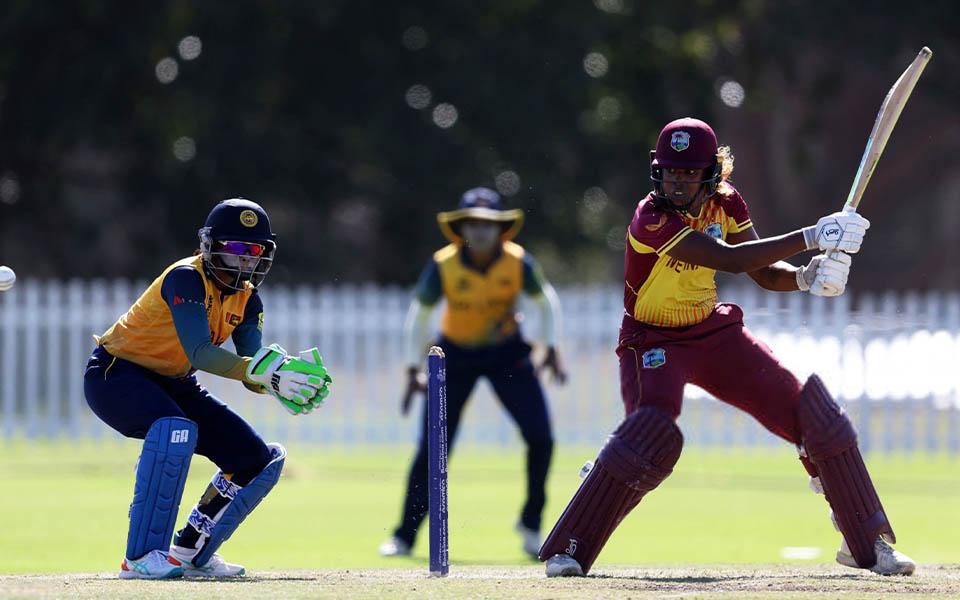
In the end West Indies required only 46 overs to complete the chase. The 24 balls remaining reflected both the quality of the batting and the inability of Sri Lanka to create enough chances once the third-wicket partnership took hold. Henry and Dottin completed the formalities with composure, ensuring the home side finished the series on a high note.
For Sri Lanka the series victory remains the primary achievement. Winning two of the three matches against a strong West Indies side on their own soil is no small feat. Their batting depth and bowling variety proved decisive in the first two contests. The failure to defend 217 in the third match will provide useful lessons ahead of future assignments. Coach and captain will no doubt review the middle-order acceleration and the execution of plans against Matthews in particular.
West Indies, meanwhile, can take heart from the character shown in this final outing. After consecutive losses they regrouped, delivered a disciplined bowling performance, and then chased with authority. Matthews’ leadership was central to that response. Her ability to inspire those around her, combined with her own individual excellence, made the difference on the day.
As the players left the field, the scoreboard told a clear story: Sri Lanka Women 217 for seven, West Indies Women 218 for four. A six-wicket victory with 24 balls to spare. A century for the captain. A series that ended 2-1 in favour of the visitors. And a reminder that in international cricket, no contest is decided until the final ball is bowled. The National Cricket Stadium in St George’s witnessed a fine contest, one that will be remembered for Matthews’ masterful contribution and for the resilience of a West Indies side determined to finish their home series with pride intact.
