
Gunaratne and Samarawickrama’s Record Stand Powers Sri Lanka Women to Series-Levelling Win
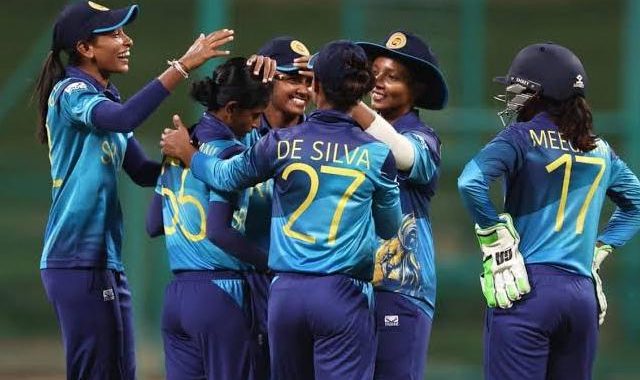
Sri Lanka Women produced a commanding display in the second One Day International against Pakistan Women at the Mahinda Rajapaksa International Cricket Stadium in Hambantota on Saturday, July 25, 2026, chasing down a competitive total of 274 with remarkable ease to level the three-match series at 1-1. The home side reached 275 for the loss of just two wickets in 46.5 overs, sealing victory by eight wickets with 19 balls still remaining. Centuries from young opener Vishmi Gunaratne and experienced middle-order batter Harshitha Samarawickrama formed the backbone of the chase, their unbroken second-wicket stand of 203 runs rewriting the Sri Lankan record books and leaving the Pakistan bowlers with few answers.
The match began under clear skies in Hambantota, with Sri Lanka captain Chamari Athapaththu winning the toss and deciding to field first. It was a shrewd call on a surface that offered some early assistance to the seamers but gradually flattened out into a good batting track. Pakistan’s openers Sadaf Shamas and Gull Feroza made a cautious start. Shamas managed 12 before a mix-up led to her run-out, with Athapaththu and wicketkeeper Anushka Sanjeewani combining smartly. Feroza looked more fluent, striking four boundaries in her 27, but she fell to Chethana Vimukthi, caught by Dewmi Vihanga, leaving Pakistan at 47 for two after the powerplay.
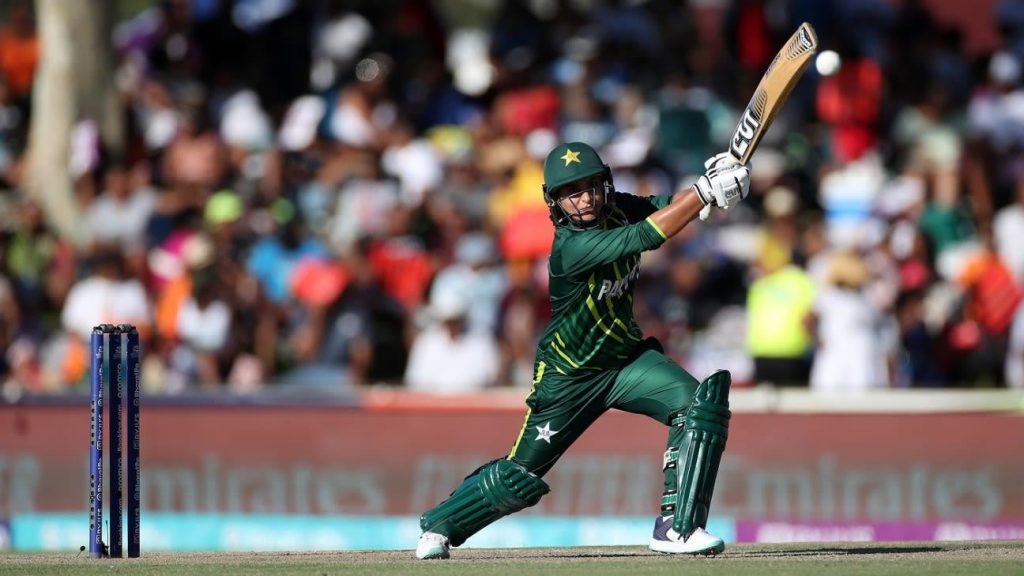
That brought Sidra Amin and Ayesha Zafar together. The pair rebuilt steadily at first before accelerating. Zafar, in particular, played with intent. She struck five fours and two sixes in a brisk 49 off 45 balls, injecting much-needed momentum into the innings. Their 78-run partnership for the third wicket put Pakistan firmly back in control. Kavisha Dilhari eventually broke the stand when she bowled Zafar, but by then the visitors had crossed 100 and looked set for a substantial total.
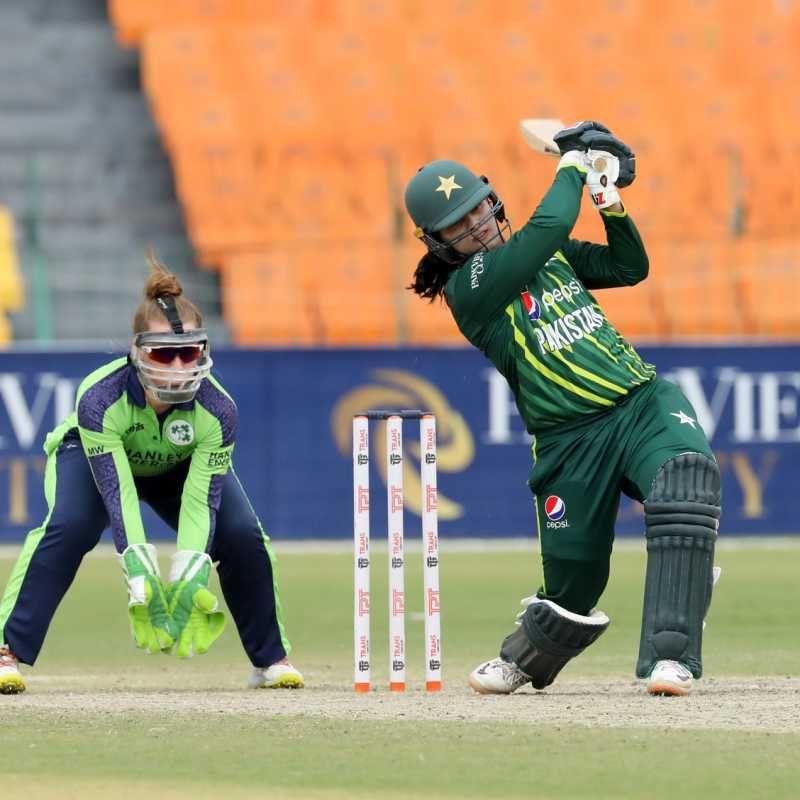
Amin continued her excellent form, anchoring the innings with characteristic patience and precision. She found a reliable partner in Muneeba Ali, and the two added 88 runs for the fourth wicket. Ali contributed a solid 45 off 62 deliveries before being stumped by Sanjeewani off the experienced left-arm spinner Inoka Ranaweera. Captain Fatima Sana then arrived and immediately went on the attack. Her 25 off just 18 balls, including four boundaries, ensured Pakistan finished strongly. Amin remained unbeaten on exactly 100 from 120 deliveries, her seventh ODI century, guiding the side to 273 for five. Najiha Alvi was not out on 8 at the other end.
It was a competitive total, and at the halfway mark many felt Pakistan had done enough to put Sri Lanka under pressure. Yet the home side’s batting unit had other ideas. The chase began with a minor setback when Athapaththu was dismissed for 18, caught by Najiha Alvi off Fatima Sana’s bowling. At that stage Sri Lanka were 20 for one, and the required rate hovered around five and a half runs per over. What followed was a masterclass in controlled aggression and partnership batting.
Gunaratne and Samarawickrama came together and simply refused to be separated. Gunaratne, still only in the early stages of her international career, played with remarkable composure and fluency. She struck the ball cleanly through the off side and used her feet effectively against the spinners. Her century, scored off 123 balls and featuring 11 fours and one six, was her first in ODIs and a statement of intent. Samarawickrama, already one of Sri Lanka’s most reliable batters, matched her stroke for stroke. The left-hander rotated the strike intelligently and punished anything loose, finishing unbeaten on 100 from 119 deliveries with nine boundaries.
Their 203-run alliance was the highest partnership for any wicket in women’s ODIs for Sri Lanka, surpassing previous records and becoming the defining feature of the match. The pair never allowed the required rate to climb beyond comfortable levels. They reached the 100-run mark for the partnership in good time, then accelerated further in the middle overs. Pakistan’s bowlers, including the usually reliable Nashra Sandhu and Umm-e-Hani, struggled to find any consistent line or length that could disrupt the flow. Sandhu eventually claimed Gunaratne’s wicket when the opener was stumped by Alvi for 123, but by then Sri Lanka needed only 52 more runs with plenty of overs remaining and eight wickets still in hand.
Kavisha Dilhari walked in and ensured there would be no late drama. She scored at better than a run a ball, keeping the scoreboard ticking while Samarawickrama completed her own century with a boundary. Dilhari then struck the winning four off Ayesha Zafar in the 47th over, sparking celebrations among the home players and the modest crowd that had gathered in Hambantota. The victory was emphatic, and it was also Sri Lanka’s third-highest successful chase in women’s ODIs.
Player of the Match honours went deservedly to Vishmi Gunaratne. Her hundred set the tone for the chase and allowed Samarawickrama the freedom to play her natural game. For Pakistan, Sidra Amin’s unbeaten century was a lone bright spot in an otherwise disappointing bowling performance. The visitors managed only two wickets across the entire innings and leaked runs at critical moments. Their fielding also lacked the sharpness required when defending a total of this magnitude.
The result leveled the series at 1-1 after Pakistan had won the opening match three days earlier by five wickets. That first contest had seen Sri Lanka post 210 for nine and Pakistan chase it down comfortably. The second ODI, however, highlighted the depth in Sri Lanka’s batting and the growing confidence of their younger players. Rashmika Sewwandi made her ODI debut for the hosts and bowled with discipline, even if she went wicketless. The presence of experienced campaigners such as Ranaweera and Athapaththu around the younger talent has clearly created a balanced side capable of competing with stronger opposition.
Looking ahead, the third and final ODI was scheduled for July 28 at the same venue, offering both teams a chance to claim the series. For Sri Lanka, the priority would be to maintain the batting form shown by Gunaratne and Samarawickrama while tightening their bowling in the powerplay and middle overs. Pakistan, meanwhile, would need to find ways to break long partnerships and ensure their total is defended more aggressively. Sidra Amin’s consistency at the top of the order remains a major positive, but the middle order must contribute more consistently if the side is to challenge effectively in the longer format.
Beyond the immediate series, both teams are using these matches as preparation for the broader ICC Women’s Championship cycle. Points from these encounters carry significant weight in the race for qualification to major tournaments. Sri Lanka’s ability to chase large totals successfully will boost their confidence, while Pakistan will reflect on the areas where they let the game slip away after posting a competitive score.
The conditions in Hambantota once again proved favourable for batting once the new ball had lost its shine. The outfield was fast, and the boundaries were inviting for well-timed strokes. Gunaratne’s cut shots and Samarawickrama’s drives both found the ropes regularly, underlining how well the pair judged the pace of the pitch. Pakistan’s decision to bowl full lengths early was understandable, but as the ball softened they struggled to adapt, allowing the Sri Lankan batters to settle into a rhythm that proved almost impossible to disrupt.
In the broader context of women’s cricket in Asia, this series continues to highlight the progress being made by both nations. Sri Lanka have invested heavily in domestic structures and youth development, and the emergence of players like Gunaratne is evidence that the strategy is bearing fruit. Pakistan, traditionally strong in the shorter formats, continue to produce technically sound batters such as Amin who can occupy the crease for long periods. The challenge for them remains converting solid starts into match-winning performances with both bat and ball.
As the players left the field in Hambantota, the mood in the Sri Lankan camp was understandably buoyant. A series that had begun with a loss was now finely balanced, and the home side carried the momentum. For the fans who made the journey to the southern tip of the island, the afternoon provided memorable entertainment. Two high-quality centuries, a record partnership, and a clinical chase combined to produce one of the more complete team performances Sri Lanka have delivered in recent years.
The match also served as a reminder of how quickly the game can shift. Pakistan had looked in control for large parts of their innings, only to watch the target dissolve under the weight of an exceptional partnership. Gunaratne’s ability to play both the anchor and the aggressor in the same innings marked her out as a special talent, while Samarawickrama’s experience ensured that no unnecessary risks were taken once the foundation had been laid.
With the series now level, attention turned quickly to the decider. Both captains spoke of the need for consistency and the importance of adapting to conditions. Athapaththu praised her batters for their application and expressed satisfaction at the way the younger players had stepped up. Fatima Sana acknowledged that her side had posted a good total but conceded that the bowling lacked the penetration required on the day. She pointed to the need for better plans against set batters and more disciplined lines in the middle overs.
In the end, the second ODI belonged to Sri Lanka. Their batters rose to the challenge of a 274-run chase with composure and skill, rewriting a piece of national history along the way. Vishmi Gunaratne’s maiden ODI hundred and Harshitha Samarawickrama’s supporting century provided the perfect platform, and the supporting cast ensured the job was finished with time and wickets to spare. For Pakistan, there were individual bright spots but collective disappointment. The series remained alive heading into the final match, yet the home side had clearly seized the initiative.
The crowds in Hambantota may not have been as large as those seen in more traditional cricket centres, but the quality of cricket on display was high. A well-contested contest ultimately produced a convincing winner, and Sri Lanka’s players will take considerable confidence from the manner of their victory into the remaining fixtures of the tour. For neutral observers, the match offered further evidence that women’s cricket in the region continues to grow in both competitiveness and entertainment value.
As the sun set over the stadium, the scoreboard told the story clearly: Sri Lanka Women 275 for two, Pakistan Women 273 for five. A victory by eight wickets with 19 balls remaining. A series leveled. And two centuries that will be remembered for some time by those who witnessed them.
