
Rayo Vallecano 1-1 Alavés: Exile in Leganés, Camello’s Brilliance, and Mariano’s Late Sting
It was never supposed to feel like this. Thursday night, 20 August 2026, the second matchday of the new La Liga season, and Rayo Vallecano were playing their first “home” game of the campaign not in Vallecas but fifteen kilometres south in Butarque, the home of CD Leganés. The Comunidad de Madrid had shut the Estadio de Vallecas over safety and maintenance failures. What should have been a raucous night under the lights in the neighbourhood turned into something thinner, stranger, almost mournful. Only 4,280 people turned up. The fans who did come spent part of the evening directing their anger at the presidential box rather than the opposition. Alavés, for their part, arrived without a proper allocation of tickets for their own supporters and with their board deciding to snub the VIP seats in protest. The whole evening carried the taste of administrative mess and unfinished business.
Yet once the whistle blew, the football itself refused to stay quiet.
The Preview That Never Quite Happened
Going into the fixture the storylines stacked up neatly on paper. Rayo had opened the season with a late, painful 2-1 defeat away at Sevilla. A 97th-minute penalty had left them with nothing and a sense that the new campaign under Beñat San José needed an immediate response. Alavés, managed by Quique Sánchez Flores, had begun with a convincing 3-0 home win over Getafe. Mariano Díaz had already announced himself as a threat. The Basque side sat near the top of the early table; Rayo were still searching for their first point.
Historically the fixture favoured the Madrid side. Rayo had taken points and clean sheets from Alavés with some regularity in recent seasons. Home advantage, even a borrowed one, was supposed to count. Previews talked about Rayo’s intensity, their ability to press high and force mistakes, and Alavés’ more measured, organised approach. Few predicted fireworks. Most expected a tight, low-scoring affair. What no one could fully prepare for was the atmosphere—or the lack of it—and the way the stadium itself became part of the narrative.
Isi Palazón was fit enough to start for Rayo. Sergio Camello led the line. Augusto Batalla was in goal. Alavés went with Toni Martínez and Lucas Boyé up front, with Mariano waiting on the bench. The referee was José Luis Munuera Montero. The stage was set, even if the stage itself felt wrong.
First Half: Tension Without Release
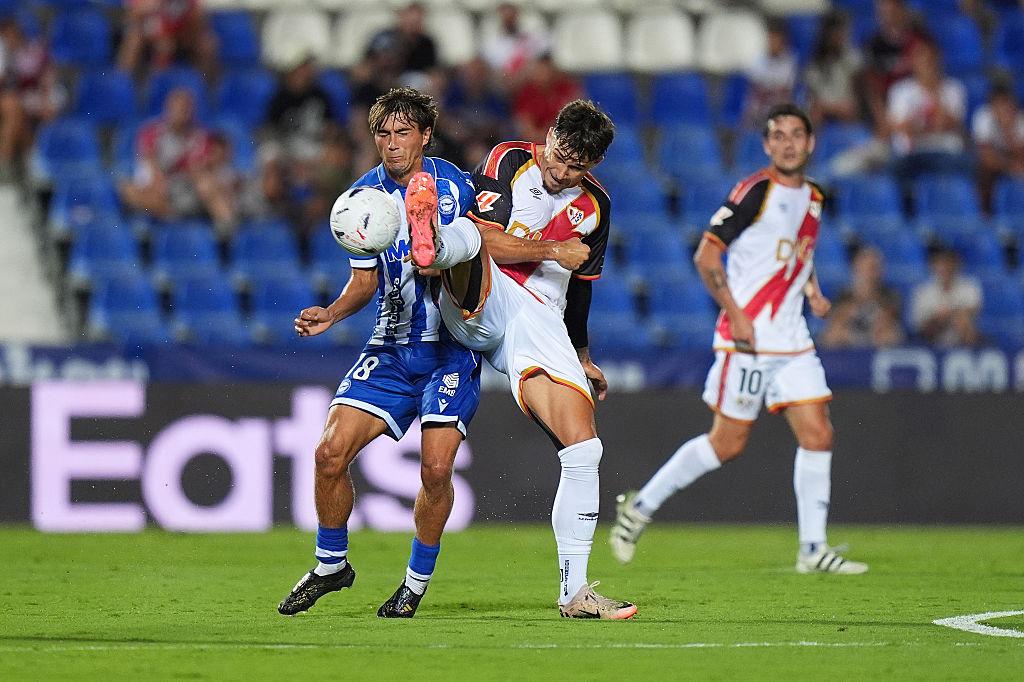
The opening 45 minutes were the kind of contest that frustrates and fascinates in equal measure. Rayo tried to impose themselves. Unai López tested Antonio Sivera early. Andrei Rațiu rose for a header that brushed the post. The home side (in name only) looked sharper in possession for stretches, yet the final ball kept going astray. Alavés sat deeper, absorbed pressure, and looked for transitions. Toni Martínez had a decent chance from close range after good work down the right; the finish was just wide.
Then came the moment that should have changed everything. Around the 36th minute Pelayo Fernández put the ball in the net. The celebrations began. Then the VAR check. Handball in the build-up. Goal disallowed. The small crowd groaned. You could feel the energy drain a little further. Rayo had been the more proactive side, but the score stayed 0-0 at the break. Alavés had been efficient without being spectacular. Both teams had created half-chances. Neither had converted.
Injuries started to bite early. Isi Palazón, one of Rayo’s most creative outlets, was forced off after only 16 minutes. Randy Nteka came on. The loss of Isi removed a player who can unlock defences with a single touch or a clever run. It forced Rayo into adjustments sooner than they wanted.
Second Half: Camello’s Spark and the Long Wait
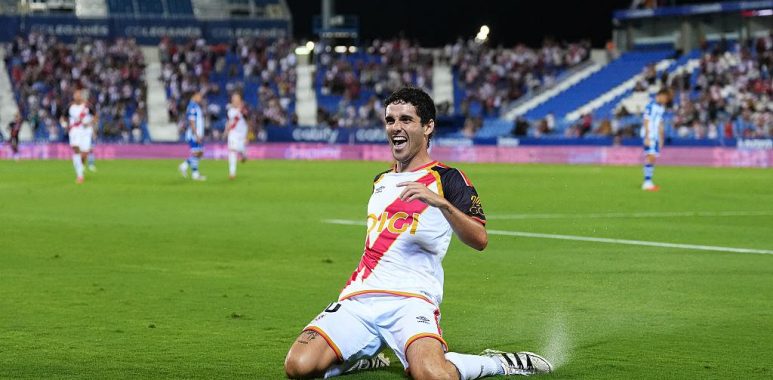
The second half needed something. It arrived almost immediately. Two minutes after the restart Sergio Camello produced a moment of individual quality that cut through the flat atmosphere. He received the ball on the edge of the area, shifted past a couple of challenges with a low centre of gravity and quick feet, then struck a clean, precise shot past Sivera. 1-0 to Rayo. The small contingent of fans found their voice for the first time with real volume. Camello had given them something to hold onto.
For a while it looked as though that goal might be enough. Rayo sat a little deeper, protected the lead, and tried to manage the game. But the evening had more complications in store. Augusto Batalla, the goalkeeper, picked up an injury and had to be replaced by Dani Cárdenas around the hour mark. Rayo were already short of substitutes after the earlier changes. The defensive shape became more fragile.
Alavés, to their credit, kept probing. Quique Sánchez Flores made his own changes. Mariano Díaz entered the fray. Denis Suárez came on. The visitors began to control more of the ball and push Rayo back. The expected goals numbers would later show Alavés creating the clearer chances overall. Toni Martínez had another opportunity and put it over. The pressure was building.
Then, in the 84th minute, the equaliser arrived in messy, painful fashion for the home side. Andrei Rațiu played a careless pass backwards. The ball never reached its intended target. Mariano Díaz pounced, drove forward, and finished low into the corner past Cárdenas. 1-1. The Dominican striker had done it again—another late contribution, another goal that changed the result. The Alavés players celebrated with the relief of a side that had refused to accept the defeat. Rayo’s players looked drained.
There was still time for more drama. Toni Martínez had a golden chance to win it and skied the shot. Mariano nearly added a second. Cárdenas made a save. Eight minutes of added time felt endless. In the end the referee blew for full time with the score locked at 1-1.
Top Highlights
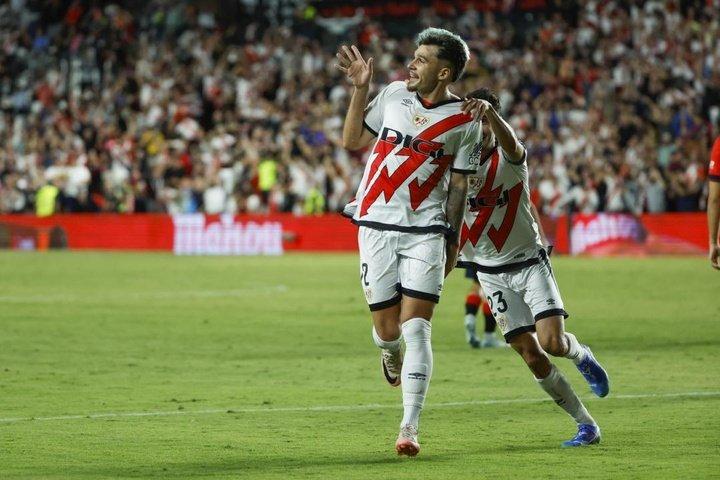
The night produced several moments that will live in the match reports and the memory of those who were there.
First, Camello’s goal. It was pure individual quality in a match that had been short of it. Receiving, turning, beating men, and finishing with composure. In a stadium that felt half-empty and distracted, that strike briefly made everything feel normal again.
Second, the disallowed goal for Pelayo Fernández. The VAR intervention was correct according to the letter of the law—handball in the sequence—but it removed the one clear chance Rayo had created in the first half and left a sense of injustice hanging over the contest.
Third, Mariano’s equaliser. Clinical, opportunistic, and perfectly timed. He had come off the bench and needed only a defensive mistake to punish it. The finish itself was excellent—placed, not blasted, into the far corner.
Fourth, the atmosphere (or the protest). The chants directed at Raúl Martín Presa before kick-off, the sparse attendance, the empty seats, the knowledge that this was not Vallecas. Football rarely happens in isolation from the politics around it. On this night the politics were loud even when the crowd was not.
Fifth, the injuries. Losing Isi so early and Batalla later forced Rayo into a reactive shape. Those absences mattered as much as any tactical decision.
Analysis: What the Result Actually Means
A point each feels fair on the balance of play, yet it leaves both sides with different emotions. Alavés will take it as a solid away result against a side that has traditionally made life difficult for them. They created more chances, recovered from going behind, and showed the character Quique Sánchez Flores demands. Four points from two games is an excellent start. Mariano already looks like a difference-maker again.
For Rayo the result is more complicated. They led, they controlled periods of the game, and they still dropped two points from a winning position. The defensive error that led to the equaliser was avoidable. The injury list is already lengthening. Playing “home” games in exile is not sustainable for momentum or for the connection with supporters. Beñat San José has a squad that can compete, but the off-field noise is becoming a constant distraction. Camello’s goal was a reminder of the quality available; the late collapse was a reminder of the fragility.
Statistically the numbers told a clear story. Possession was almost even. Alavés had more shots and more big chances. Rayo’s expected goals were lower. The visitors were the better side in the final half-hour once the game opened up. That does not mean Rayo did not deserve a share of the points—they scored a good goal and defended for long stretches—but it does mean Alavés left feeling they could have taken all three.
The broader context cannot be ignored. The stadium situation is a mess. Fans boycotting or turning up only to protest the president creates a toxic environment for the players. Alavés were right to complain about the ticket allocation. The whole evening felt like a temporary arrangement that has already lasted too long. Until Vallecas is fixed and the relationship between club, region and supporters is repaired, every home fixture will carry this extra weight.
Summary
In the end it finished Rayo Vallecano 1 Alavés 1. Sergio Camello scored early in the second half. Mariano Díaz equalised late. A disallowed goal, two significant injuries, a sparse and angry crowd, and a stadium that was never meant to host this fixture all formed the backdrop. Alavés leave with four points and a sense of momentum. Rayo leave with one point, growing injury concerns, and the knowledge that their real problems still sit outside the pitch.
Football at this level is rarely just about the ninety minutes. On a Thursday night in Leganés it was about politics, protest, borrowed grounds, and the thin line between a hard-earned win and a late, painful draw. Camello gave Rayo hope. Mariano took it away. The season is only two matches old and already feels heavy with unfinished business. Both sides will move on. Rayo will hope the next time they play “at home” it actually feels like home. Alavés will hope Mariano keeps finding the net. And the rest of us will keep watching to see whether the football can ever fully escape the noise that surrounds it.
