
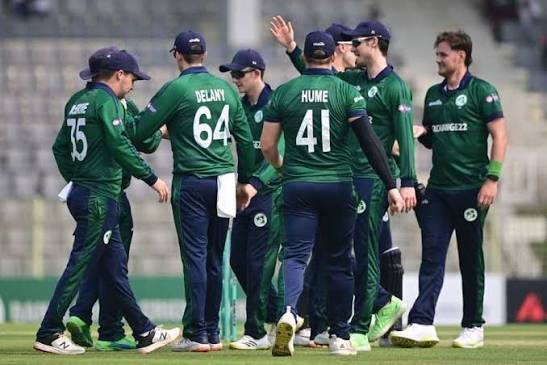
Dockers snatch last-ball thriller to beat Cosmic by five wickets in The Hague
In the golden evening light that bathed the picturesque ground in The Hague, the European T20 Premier League delivered one of its most gripping contests of the young season. On the first day of September 2026, Glasgow Cosmic and Rotterdam Dockers produced a thriller that will linger long in the memory of those who packed into the venue and the many more who followed every ball from afar. When the final reckoning came, Rotterdam Dockers had prevailed by five wickets with a solitary delivery remaining, completing a chase that swung one way and then the other before settling in their favour at the death.
The match, billed as the ninth of the competition, carried the usual weight of early-season significance. Both sides arrived with something to prove. Glasgow Cosmic had shown flashes of quality in their previous outings yet had struggled to convert promising positions into victories. Rotterdam Dockers, meanwhile, had looked solid without quite hitting the heights their supporters expected. A midweek fixture in the Netherlands offered the perfect stage for one of them to seize the initiative.
The toss went the way of Glasgow Cosmic captain Rory MacLeod, who elected to bat first on a surface that looked true and offered the promise of runs if the batters were prepared to work for them. The early overs justified that decision. Opening pair Hamish Calder and young left-hander Finn Brodie negotiated the new ball with calm authority. Calder, in particular, looked in fine touch, driving through the covers with the clean timing that has become his trademark. Brodie was more cautious, content to rotate the strike and wait for anything loose.
Rotterdam Dockers’ new-ball pair of Dutch international Lars Van Dijk and the experienced South African import Theo Maree kept things honest. Van Dijk found a hint of movement through the air and beat the bat on more than one occasion. Maree, operating from the other end, mixed lengths cleverly and forced the Glasgow openers to respect the conditions. Still, the scoreboard ticked along at a healthy rate. By the end of the powerplay Glasgow Cosmic had reached 48 without loss, a platform that suggested a total well beyond 160 was within reach.
The introduction of spin changed the complexion of the innings. Rotterdam’s left-arm spinner Arjun Patel, a canny operator who has made the Netherlands his home in recent seasons, found immediate grip and turn. He dismissed Brodie with a delivery that drifted in and then spun sharply past the outside edge, the ball clipping the off stump. The breakthrough brought a roar from the Dockers supporters clustered behind the bowler’s arm. Calder continued to score freely, but the arrival of middle-order batter Callum Fraser did little to stem the growing pressure. Fraser lasted only eight balls before chipping a soft return catch back to Patel.
At 67 for two after ten overs, Glasgow Cosmic needed a period of consolidation. MacLeod himself strode to the crease and immediately looked to impose himself. He and Calder added 41 runs in a partnership that restored momentum. Calder reached his half-century from 38 balls, raising his bat to polite applause from the Glasgow contingent and warmer appreciation from the neutral crowd who recognised quality when they saw it. Yet just as the pair seemed set to accelerate, Maree returned for a second spell and produced a yorker that crashed into Calder’s middle stump. The opener departed for 61, a fine innings that had given his side the platform they desired.
What followed was a familiar tale of middle-order stuttering. MacLeod was run out in a mix-up with the incoming batter, a moment of hesitation that cost Glasgow dearly. The lower order scrambled for runs as the Dockers bowlers tightened their lines. Van Dijk returned to claim two late wickets, while the medium pace of local favourite Stefan de Groot proved difficult to get away in the death overs. Glasgow Cosmic closed their innings on 154 for eight from their full allotment of twenty overs. It was a competitive total on a ground where successful chases have historically required composure more than pure power, yet it felt a touch short of what the early promise had suggested.
Rotterdam Dockers’ reply began under lights that cast long shadows across the outfield. Their opening pair of Marcus Jensen and the explosive Belgian-born talent Lucas Vermeer set about the chase with clear intent. Jensen, solid and organised, took the bulk of the strike early while Vermeer looked to free his arms. The Glasgow new-ball attack of left-armer Ewan Scott and the bustling right-armer Jamie Kerr bowled with discipline, but the Dockers openers refused to be bogged down. By the end of the powerplay the home side had reached 52 without loss, almost exactly matching Glasgow’s early progress.
The first breakthrough came against the run of play. Vermeer, who had just deposited Scott over long-on for six, attempted a repeat and only succeeded in picking out the fielder stationed precisely for the shot. The catch was well held by Brodie, who had earlier contributed with the bat and now showed his value in the field. Jensen continued to accumulate, bringing up his own half-century with a crisp cover drive that raced to the boundary. Around him, however, the middle order began to fray.
Glasgow Cosmic’s spin options, led by the off-spinner Rory MacLeod himself and the wrist-spin of young talent Ethan Reid, applied the squeeze. MacLeod trapped Jensen in front with a delivery that skidded on, the umpire’s finger rising after a lengthy consideration. At 89 for two in the twelfth over, the required rate had climbed above eight an over. The introduction of all-rounder Fraser into the attack brought further success as he removed the dangerous number four, Dutch international Pieter Bakker, with a slower ball that was mistimed to midwicket.
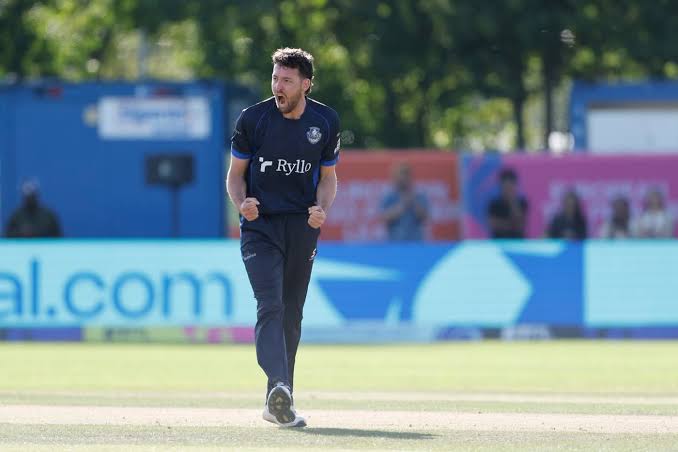
Rotterdam Dockers now needed 66 from the final eight overs with six wickets still intact. The equation was manageable, yet the pressure of a chase in front of a passionate home crowd can do strange things to even the most experienced players. Captain for the night, the veteran Englishman David Harwood, walked out and immediately signalled his intentions. He drove the first ball he faced through extra cover for four and followed it with a sweep that bisected the fielders on the leg side. Alongside him, the hard-hitting lower-order batter Tomasz Kowalski began to find the middle of the bat.
The partnership between Harwood and Kowalski proved decisive. They added 47 runs in just under five overs, mixing calculated risk with intelligent placement. Glasgow Cosmic’s fielders remained alert, and a couple of half-chances went begging, most notably a tough diving effort at deep square leg that would have removed Kowalski when he had only just reached double figures. Those moments, small in isolation, loomed large as the innings progressed.
With three overs remaining, Rotterdam Dockers required 28 runs. The tension inside the ground was palpable. Every dot ball drew groans from the home supporters and hopeful cheers from the Glasgow travelling contingent. Scott returned for the eighteenth over and conceded only seven, including a sharp single that nearly resulted in a run-out. The nineteenth over, bowled by Kerr, went for eleven as Harwood cleared the front foot and launched a length ball over long-on. Suddenly the equation had simplified to ten needed from the final over.
MacLeod took responsibility himself for the last set of six. The first ball was a well-directed yorker that Harwood could only dig out for a single. Kowalski faced the second and swung hard, connecting well enough to pick up two runs into the deep. Eight needed from four. The third ball was full and straight; Kowalski drilled it back past the bowler for four. Four required from three. The crowd rose as one. MacLeod responded with a slower ball that gripped and turned, forcing Kowalski to adjust his shot and settle for a single. Three needed from two. Harwood, calmness personified, waited for the fifth delivery, a full toss that he simply helped on its way to the vacant fine-leg boundary. The scores were level with one ball remaining.
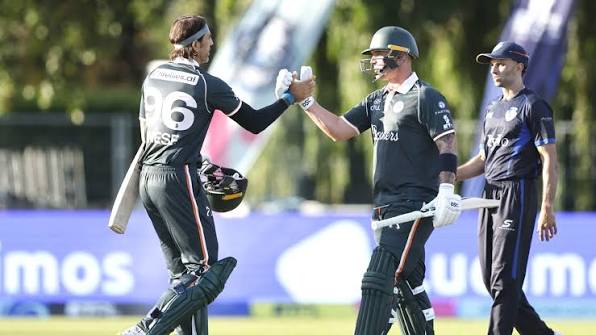
What followed was pure theatre. MacLeod, under the most intense pressure of the night, ran in and delivered a ball that was full and aimed at the base of off stump. Harwood stepped forward and pushed it into the covers. The batters set off. The fielder gathered cleanly and threw, but the throw was slightly off target. Kowalski, diving full length, made his ground as the ball ricocheted away. Rotterdam Dockers had won by five wickets with one ball to spare.
The celebrations that erupted around the ground spoke of relief as much as joy. Players in orange shirts converged on the middle, while the Glasgow Cosmic contingent offered handshakes and quiet words of congratulation. In the space of a few hours the match had swung back and forth, each side holding the advantage at different stages, until the final moments tilted irrevocably toward the home team.
Harwood, named player of the match for his composed 38 not out from 22 balls, later spoke of the importance of keeping a clear head. He emphasised that the group had trusted their processes even when the required rate climbed. Kowalski, whose late hitting proved equally vital, credited the work done in the nets on finishing under pressure. For Glasgow Cosmic, MacLeod was gracious in defeat, acknowledging that his side had been competitive for long periods yet had allowed the game to slip in the decisive phases. He pointed to the early batting platform as a positive and insisted that the lessons from such a narrow loss would serve them well in the matches still to come.
Beyond the immediate result, the contest offered several broader talking points for observers of the European T20 Premier League. The standard of fielding on both sides was high, with only a handful of opportunities missed across the evening. The pitches in The Hague continue to offer a fair contest between bat and ball, rewarding those who adapt rather than those who simply look to overpower the attack. The presence of a healthy mix of local talent and overseas professionals once again underlined the league’s growing appeal as a destination for players seeking competitive cricket outside the traditional strongholds.
For Rotterdam Dockers the victory provides a timely boost. Momentum in a T20 competition can shift quickly, and a win achieved in such dramatic circumstances often carries extra emotional weight within a dressing room. Their bowling unit, spearheaded by Van Dijk and Patel, showed the ability to drag a game back even after an opponent had posted a competitive total. The batting group demonstrated the depth required to absorb early losses and still find a way home.
Glasgow Cosmic, though disappointed, can take encouragement from several individual performances. Calder’s half-century was a reminder of his class, while the new-ball bowling of Scott and Kerr kept them in the contest for long periods. Their challenge now is to convert such competitive displays into victories. In a league where margins are often fine, the ability to close out tight games will determine which sides progress deep into the later stages.
As the players left the field and the crowd began to disperse into the mild September night, the sense of having witnessed something special lingered. T20 cricket at its best delivers moments of high drama compressed into a short space of time, and this encounter in The Hague had provided them in abundance. From the measured accumulation of the Glasgow openers to the late charge of the Dockers middle order, the match contained almost every ingredient that makes the format compelling.
The European T20 Premier League continues its journey through the early weeks of the season with both these sides still very much in the mix. Rotterdam Dockers will head into their next fixture with renewed confidence, while Glasgow Cosmic will look to respond with the resilience that has defined their better performances. For those who were present, or who followed every twist through the various broadcast platforms, the memory of that final over, and the single that sealed the result, will remain vivid long after the details of the scorecard have faded.
In the end it was Rotterdam Dockers who found a way when it mattered most. They absorbed the pressure, trusted their methods, and emerged with a five-wicket victory that was completed with the narrowest of margins. Cricket matches are decided by the smallest of details, and on this occasion those details favoured the home side. The Hague had hosted a contest worthy of the occasion, and the European T20 Premier League had another chapter to add to its growing collection of memorable evenings.
