
Belfast Wolves Crush Dublin Guardians by 52 Runs in European T20 Premier League Opener
The Hague delivered a crisp late-summer evening for the second match of the European T20 Premier League, and the Belfast Wolves made full use of the conditions to claim a comprehensive 52-run victory over the Dublin Guardians. What unfolded at the ground was less a contest of equals and more a demonstration of clinical execution from one side and a series of mounting frustrations for the other. By the time the final ball was bowled, the Wolves had established themselves as early contenders while the Guardians were left searching for answers.
The match began under clear skies with a gentle breeze off the North Sea. The pitch at The Hague offered a true surface with a hint of carry, the kind that rewards clean striking and punishes hesitation. Dublin Guardians won the toss and elected to field, a decision that looked reasonable at the time given the early movement expected under lights later, but one that would quickly appear optimistic once the Wolves openers walked out.
Belfast’s opening pair of Liam Gallagher and Ryan McAllister set about their work with quiet authority. Gallagher, the left-hander, was particularly fluent through the off side, punching anything short or wide with disdain. McAllister preferred the leg side, using the pace of the new ball to pick gaps between midwicket and square leg. The first six overs yielded 58 runs without alarm, and the Guardians’ seamers, despite varying their lengths, found little assistance. By the end of the powerplay the Wolves sat on 64 for no loss, a platform that allowed the middle order to play with freedom.
The introduction of spin brought the first breakthrough. Off-spinner Connor Byrne floated one up outside off stump and Gallagher, looking to clear the infield, mistimed a drive that ballooned to cover. The departure of Gallagher for 41 from 28 balls slowed the scoring only momentarily. Incoming batsman Sean Donovan joined McAllister and the pair rebuilt with measured aggression. Donovan’s strength lay in his ability to clear the ropes down the ground, while McAllister continued to rotate the strike with soft hands and clever placement. Their fifty partnership came up in just 31 balls, and by the midpoint of the innings the Wolves had raced to 112 for one.

The Guardians’ bowling unit began to fray under pressure. Full tosses crept in, lengths became inconsistent, and the fielding, which had started brightly, grew ragged. McAllister reached his half-century with a lofted drive over extra cover that sailed into the stands, drawing warm applause from the travelling Belfast support. He eventually fell for 67 from 41 balls, caught on the boundary attempting another big hit. At that stage the Wolves were 147 for two in the fifteenth over, and the stage was set for the finishers.
What followed was a calculated acceleration. Donovan and the hard-hitting Patrick Quinn took the attack to the remaining bowlers. Quinn, known for his clean striking, deposited three sixes in the space of eight deliveries, two of them disappearing over the longer boundary on the leg side. Donovan continued to find the gaps, and the pair added 61 runs in just 29 balls before Donovan was run out for 48 attempting a risky second. Quinn remained unbeaten on 39 from 18 balls as the Wolves closed their innings on 208 for four. The total looked imposing on a ground that historically favours chases only when the chasing side starts with real intent.
The Guardians’ reply began with purpose. Openers Eoin Fitzgerald and James O’Rourke attacked the new ball, taking 18 runs from the first over. Fitzgerald in particular looked dangerous, driving and cutting with authority. For a brief period it seemed the target might come under genuine pressure. The Wolves’ seamers, however, adjusted quickly. Captain and medium-pacer Michael Byrne extracted just enough seam movement to trouble the right-handers, while left-armer Tom Hughes varied his pace cleverly. The breakthrough came in the fifth over when Fitzgerald, attempting to clear mid-off, was well held by Gallagher running in from the boundary. O’Rourke followed soon after, trapped in front by a full delivery that straightened enough to beat the bat.
At 47 for two after six overs the Guardians still had batting depth, but the required rate was already climbing past ten an over. Middle-order batsmen Niall Byrne and Ciaran Walsh tried to rebuild, yet the Wolves’ fielding tightened and the bowling remained disciplined. Byrne was dismissed for 22, caught behind attempting a late cut, and Walsh followed for 18, miscuing a pull to deep midwicket. The innings began to unravel. Each new batsman arrived with the scoreboard pressure already heavy, and the Wolves’ spinners, introduced after the powerplay, applied further squeeze. Leg-spinner Alex Reid flighted the ball cleverly and claimed two wickets in successive overs, both batsmen holing out while looking for big hits.
By the fifteenth over the Guardians were 112 for six and the asking rate had ballooned beyond fifteen. The lower order swung hard in an attempt to keep the chase alive, but the Wolves’ fielders held their catches and the bowlers stuck to their plans. A late flurry of boundaries from the tail added some respectability, yet the result was never in doubt. The Guardians were eventually dismissed for 156 in the nineteenth over, well short of the target. The winning margin of 52 runs accurately reflected the difference in control and execution between the two sides.
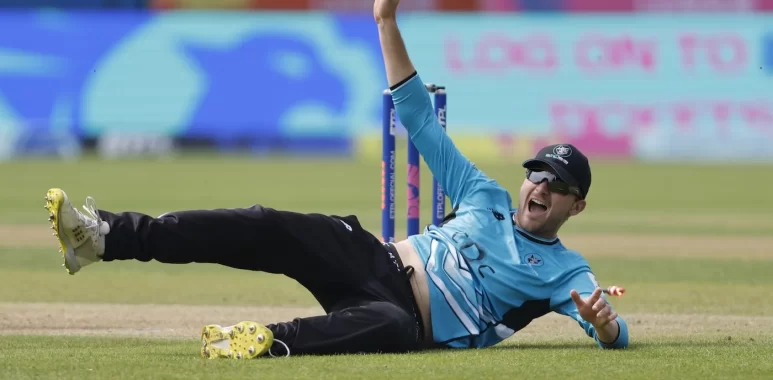
Several individual performances stood out. For the Wolves, Ryan McAllister’s 67 provided the backbone of the innings, while Patrick Quinn’s late cameo injected the necessary momentum. In the field, Michael Byrne’s leadership was measured and effective; he rotated his bowlers intelligently and maintained intensity throughout. The collective fielding effort also deserved mention. Catches were held, run-outs were effected, and misfields were rare. On the Guardians’ side, Eoin Fitzgerald’s early aggression offered a glimpse of what might have been, but the middle order’s inability to build partnerships proved costly. The bowling, too, lacked the consistency required to contain a strong batting unit on a true surface.
After the match, Wolves captain Michael Byrne spoke with quiet satisfaction. He praised the way his side had adapted after losing the toss and highlighted the importance of building a total that put pressure on the opposition from the outset. He noted that the middle-order acceleration had been planned rather than opportunistic, and that the bowling group had executed the plans discussed in the dressing room. Gallagher, the opening batsman, added that the pitch had played better than expected and that the side had simply taken the chances that came their way.
Dublin Guardians captain Niall Byrne was more reflective. He acknowledged that the total of 208 had been above par and that his bowlers had leaked too many boundary balls in the middle overs. He felt the batting had started positively but that the loss of early wickets had forced the middle order into a difficult situation. He stressed that the side would learn from the defeat and look to tighten their execution in the coming fixtures. Both captains agreed that the European T20 Premier League was still in its infancy and that early results would not define the season, yet both also recognised that momentum can be hard to regain once lost.
The victory lifts the Belfast Wolves to the top of the early standings and gives them valuable points and confidence. For a franchise still establishing its identity in a new competition, the result offers proof that their preparation and recruitment have been sound. The combination of experienced campaigners and hungry younger players appears well balanced. The Guardians, meanwhile, face a period of honest assessment. Their squad contains talent, yet the gap between potential and performance was evident on this occasion. They will need to address the consistency of their bowling lengths and the ability of their middle order to absorb pressure if they are to challenge for a place in the latter stages.

Beyond the immediate result, the match offered several broader observations about the tournament. The Hague ground continues to produce surfaces that encourage positive batting while still offering something for the bowlers who hit the right areas. Crowds remain modest but enthusiastic, and the travelling support for both sides added colour and noise. The standard of fielding across both teams was high, a reflection of the professional approach being taken by the franchises. Umpiring decisions were largely uncontroversial, and the use of technology for close calls worked smoothly.
Looking ahead, the Wolves will carry confidence into their next assignment, while the Guardians must find a way to reset quickly. In a short tournament every match carries weight, and early defeats can leave sides chasing the game for the remainder of the campaign. The Wolves showed they can set a large total and then defend it with discipline. The Guardians showed they can start brightly but still need to find a method for sustaining pressure across the full twenty overs.
The evening ended with the Wolves players gathering in a huddle near the boundary, acknowledging the support that had travelled from Belfast. The Guardians players walked off more quietly, already turning their thoughts to the next challenge. Cricket at this level is unforgiving. One side executed its plans almost perfectly; the other was left counting the cost of small errors that accumulated into a decisive margin. For those who watched, the match provided entertainment and a clear reminder of the standards required to succeed in the European T20 Premier League.
As the lights dimmed over The Hague and the ground staff began their work, the result stood as a statement. Belfast Wolves had announced themselves with authority. Dublin Guardians had been given a tough lesson. The tournament continues, and both sides will be judged on how they respond in the matches that follow. For now, though, the night belonged to the Wolves and to a performance that combined power, control and collective purpose. The 52-run margin was no fluke. It was the product of better batting, tighter bowling and sharper fielding across the full length of the contest.
