
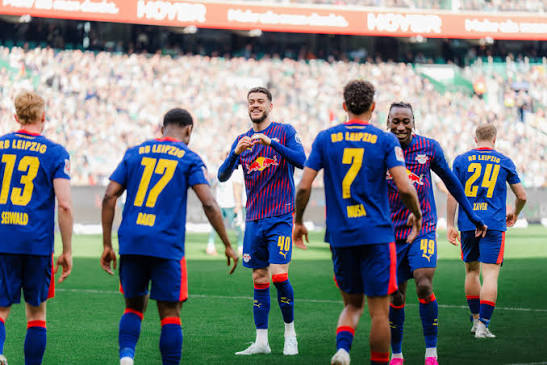
Werder Bremen 3-1 RB Leipzig: Romance, Resilience and a Statement at the Weser
There are afternoons in football that feel scripted by someone with a soft spot for underdogs and second chances. Saturday 5 September 2026 at the Weserstadion was one of them. Werder Bremen, still licking their wounds from a heavy opening-day defeat, welcomed a confident RB Leipzig side and somehow turned the whole afternoon into a celebration of old-fashioned footballing romance. Final score: 3-1. Eren Dinkçi after four minutes, Niclas Füllkrug in the 68th, Marco Grüll in the 80th, and a late Ridle Baku header that felt more like a footnote than a threat.
The numbers will tell you Leipzig had 71 percent possession, more shots, more touches in the box. The eye test and the scoreboard told a different story. Bremen were sharper, hungrier, better organised and, when it mattered, clinical. For a club that had spent the previous week under a cloud of injury news, transfer criticism and general gloom, this was the perfect answer.
The Preview: Gloom, Returnees and a Difficult Task
Going into the match the mood around Werder was fragile. Seven days earlier they had been dismantled 4-1 at Freiburg. Jens Stage, their midfield engine, suffered a serious thigh injury in the final training session before that game and was ruled out for months. Justin Njinmah joined the long-term list during the Freiburg match itself. The squad already looked patched together after a busy summer of arrivals and departures. Suddenly it needed more emergency work.
Then there was the Füllkrug factor. Niclas had returned on a season-long loan from West Ham in mid-August, the emotional homecoming every Bremen fan had quietly hoped for. He left as a Bundesliga top scorer and Germany regular; the years since had been mixed. At 33 he was never going to be the all-action forward of three seasons earlier, but the club and the player both believed there was still plenty left. His first Bundesliga outing back had been the Freiburg defeat, where he barely featured before being substituted. The home debut against Leipzig carried extra weight.
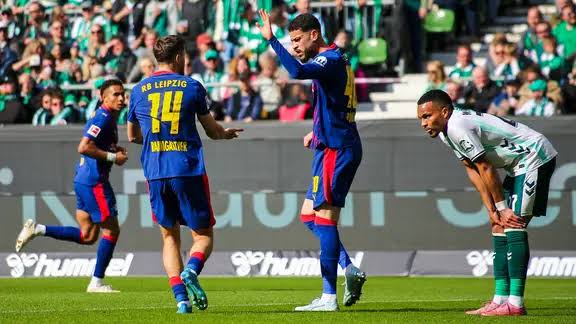
Leipzig arrived in better shape. Martín Demichelis’s side had opened with a comfortable 3-0 win over Borussia Mönchengladbach. Christopher Nkunku was back in the starting XI. Antonio Nusa and others offered pace and creativity. Most bookmakers and pundits expected a Leipzig win, or at least a controlled away performance. Bremen’s recent home record against the Red Bulls was poor. The visitors had not lost at the Weser in years. On paper it looked straightforward.
Thioune’s team news reflected the chaos. Several regulars were missing. The starting XI contained a heavy dose of recent arrivals and returning faces. The shape was a familiar 4-2-3-1: Karl Hein in goal; a back four of Olivier Deman, Marco Friedl, Amos Pieper and Arthur; Youri Regeer and Ludovit Reis in the middle; Marco Grüll, Chuki (Iván San José) and Eren Dinkçi supporting Füllkrug up top. Leipzig lined up in a 4-3-3 with Maarten Vandevoordt in goal, David Raum and Ridle Baku at full-back, Willi Orbán and Maxime Estève central, Nicolas Seiwald anchoring, and an attacking trio featuring Nusa, Nkunku and Johan Bakayoko.
The Weserstadion was close to full – just under 40,000 – and the atmosphere had that first-home-game edge mixed with anxiety. Nobody in the green half of the ground expected an easy afternoon.
Top Highlights: Four Moments That Defined the Day
The first goal arrived almost before anyone had settled. In the fourth minute Chuki produced a clever through ball that split the Leipzig defence. Dinkçi, back at the club where he came through the ranks, took one touch and finished low into the far corner. The celebration was pure emotion – badge kiss, arms wide, teammates piling on. Four minutes in and the underdogs were ahead. The stadium erupted.
Leipzig responded with territorial dominance but little cutting edge. They forced corners, they kept the ball, they probed. Around the 23rd minute Chuki picked up a yellow card for a robust challenge. Shortly after, a potential penalty for a foul on Nkunku was checked by VAR and correctly overturned. Karl Hein made a sharp save when Nkunku did get a sight of goal. Bremen stayed compact, won their duels, and waited for transitions.
Half-time arrived with the score still 1-0. Leipzig had more of the ball; Bremen had the only goal and the cleaner chances. The second half began in similar fashion until the 68th minute. Grüll swung in a corner with precision. Füllkrug, free in the middle of the box about twelve yards out, rose and powered a header into the corner. It was the classic Füllkrug finish – timing, power, placement. The Ostkurve exploded. The striker who had come home had scored in his first home league game back. He later admitted he “knew” it was going in the moment the ball left Grüll’s foot. Emotional barely covers it.
Twelve minutes later the game was effectively over. Bremen broke again. Grüll, who had been excellent all afternoon, found himself in the right place at the right time and finished calmly with his right foot to make it 3-0. The Austrian had been a steady if unspectacular presence in previous seasons; on this day he looked transformed – driving, creating, scoring.
Injury time brought the only real scare. Andrija Maksimović, on as a substitute, delivered a wicked cross and Baku rose to head home. 3-1. Too little, too late. The final whistle brought pure relief and joy around the stadium. Bremen had their first three points of the season. Leipzig headed home with questions.
Analysis: Why Bremen Won and Why Leipzig Lost
This was not a game of total domination by the home side. Leipzig controlled large spells of possession and created more volume of chances. Their xG was higher. On another day a couple of those opportunities might have gone in and the narrative would be different. But football is decided by moments and by mentality as much as by territorial statistics.
Bremen’s defensive organisation was outstanding. After the Freiburg shambles they looked like a different side. Friedl and Pieper were solid centrally. The full-backs stayed disciplined. Reis and Regeer screened intelligently and won the majority of their duels (the overall duel count favoured Bremen significantly). When Leipzig did break the first line, Hein was reliable. The visitors repeatedly ran into a compact, aggressive block that refused to open up.
In attack Bremen were ruthlessly efficient. Three shots on target essentially became three goals. Dinkçi’s early strike set the tone and forced Leipzig to chase the game. Füllkrug’s presence alone changed the dynamic – he occupied centre-backs, won aerial battles, and offered a focal point that allowed the wide players and the number ten to operate. Grüll’s all-round performance was the surprise package; he created, he scored, he pressed. The returnees and the newer faces combined for a display full of purpose.
Leipzig’s issues were more subtle but real. Possession without penetration is a familiar problem for sides that dominate the ball against organised opponents. Nkunku showed flashes but never fully imposed himself. Nusa’s pace was largely nullified. Bakayoko was withdrawn. The midfield three struggled to find the killer pass between the lines. Demichelis’s side looked one-paced at times and short of ideas once the early shock had worn off. A cancelled penalty and a couple of half-chances were the sum of their first-half threat. After Füllkrug’s goal the belief seemed to drain. The late consolation was pure damage limitation.
Tactically Thioune got the big decisions right. The compact shape, the willingness to sit deep and spring forward, the use of set-pieces (Füllkrug’s goal came from a well-worked corner routine), and the substitutions that kept energy levels high all helped. Leipzig, for all their technical quality, looked flat – perhaps with one eye on the Champions League midweek fixture that followed.
There was also the intangible. Bremen played with the freedom of a side that had already hit rock bottom the previous weekend. Leipzig carried the burden of expectation. On days like this the side that wants it more often finds a way.
Summary and What It Means
Werder Bremen 3 RB Leipzig 1. First points of the season secured in emphatic fashion. The three goalscorers – Dinkçi, Füllkrug and Grüll – embodied the afternoon. Two returning sons and a player finding a new level. The performance answered critics of the summer transfer business and gave the squad belief after a traumatic opening week.
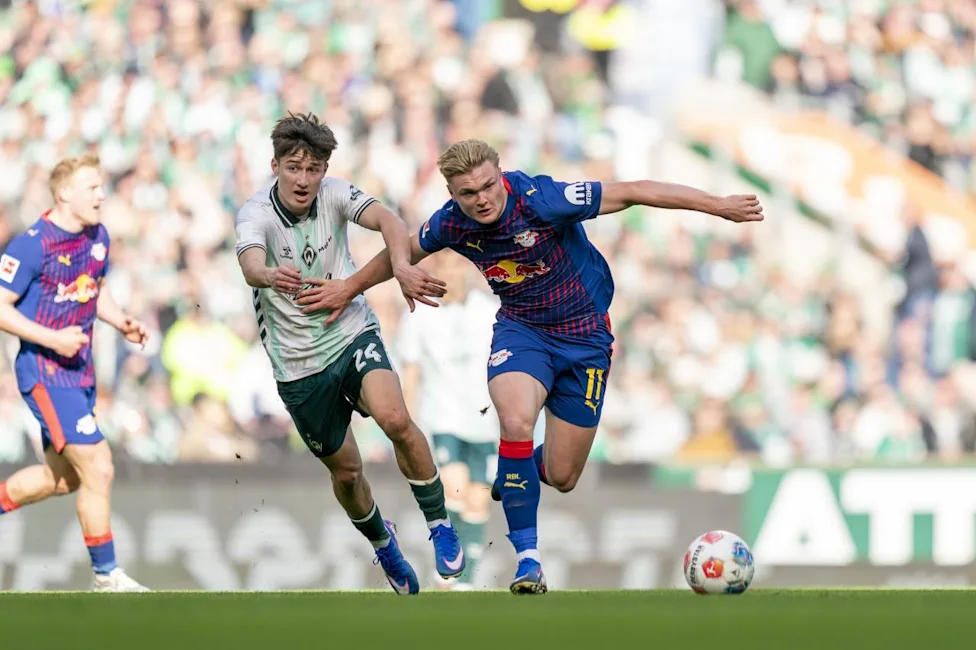
For Leipzig it was a reality check. Three points from two games is still respectable, but the manner of the defeat raised questions about intensity and creativity away from home against organised opposition. With Champions League football coming thick and fast, Demichelis will need answers quickly.
For Bremen the win does not solve every problem. The injury list remains long. The squad is still a work in progress. Consistency will be the next test. But on a sunny September afternoon by the Weser they reminded everyone what this club can look like when the timing is right and the emotion is high. Footballing romance is a dangerous phrase – it often ends in disappointment – yet for ninety-plus minutes it felt real.
The fans left singing. Füllkrug spoke afterwards about how the goal felt more emotional here than anywhere else. Dinkçi kissed the badge. Grüll ran to the corner flag. Thioune allowed himself a rare smile. And somewhere in the stands a few thousand supporters who had turned up expecting the worst walked home believing again.
That is what a result like this can do. It does not guarantee a successful season. It does, however, create the kind of memory that keeps people coming back. On 5 September 2026 at the Weserstadion, Werder Bremen produced one of those memories. Three goals, one statement, and a reminder that sometimes the script really does write itself.
