
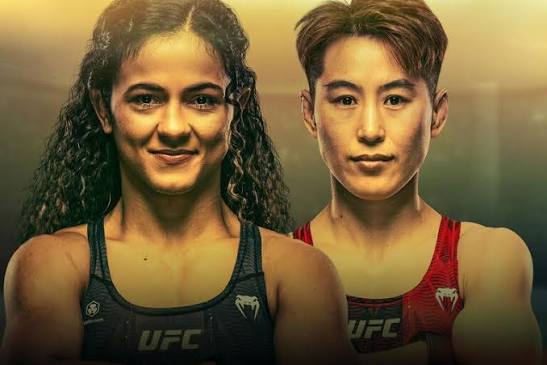
Natalia Silva Crowned New Flyweight Queen as UFC 332 Delivers Record Knockouts and a Tactical Title Fight in Salt Lake City
Salt Lake City has hosted some memorable UFC nights over the years, but October 3, 2026, at the Delta Center felt different from the jump. The crowd filed in under cool autumn mountain air, the arena lit up for the promotion’s fifth visit to Utah and first numbered event there since UFC 307 two years earlier. For the first time, the entire main card of a numbered UFC event aired live on CBS alongside Paramount+, a broadcasting milestone that put the action in front of a broader audience than usual. By the time the main event rolled around, the building had already witnessed a night of pure violence—UFC history rewritten with a record 11 knockouts, nine of them in the first round—but the headliner itself was a different animal entirely.
Natalia Silva and Wang Cong stepped into the Octagon for the vacant women’s flyweight championship. Valentina Shevchenko, the longtime queen of the division and two-time champion, had vacated the belt due to lingering injuries just as a matchup with Silva was taking shape. What was supposed to be a crowning moment against the greatest flyweight of all time became an opportunity for two fighters on the rise to claim the throne themselves. Silva, the Brazilian southpaw with the dizzying movement and endless feints, entered as the clear No. 1 contender. Wang, the Chinese striker with a kickboxing résumé that once included a win over Shevchenko herself in 2015, arrived as the dangerous underdog with four straight UFC wins and serious power in her hands.
The result, after five rounds of tactical chess mixed with sudden violence, was a unanimous decision for Silva: 48-47, 48-47, and 49-46. She became the fifth champion in women’s flyweight history and the fourth woman to hold the undisputed belt. For a fighter who had stacked wins over former champions Rose Namajunas, Alexa Grasso, and Jessica Andrade on her way here, the gold finally rested around her waist. Wang pushed her hard in the later rounds and left the cage with her head held high, but the early work and that second-round head-kick knockdown proved decisive.
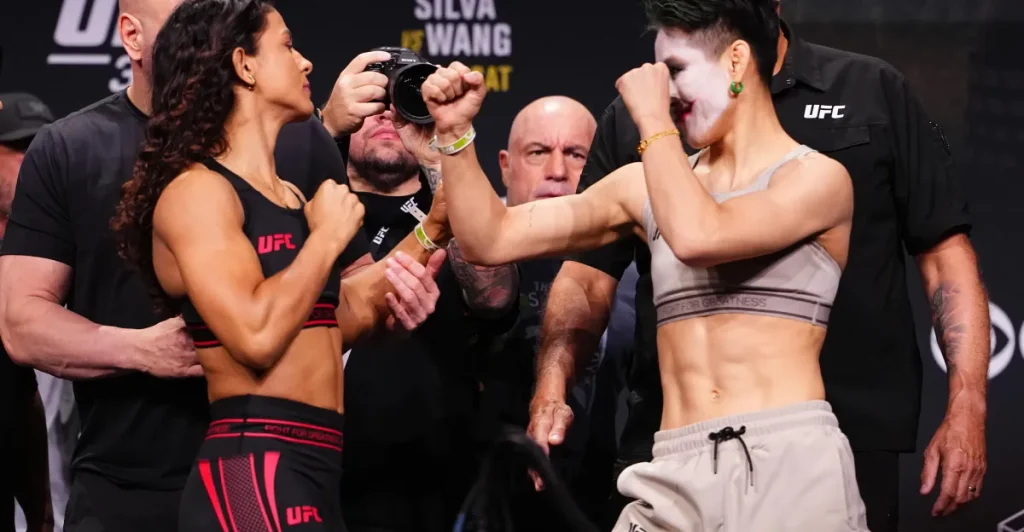
The Road to the Vacant Throne
To understand what made this fight matter, you have to rewind a bit. Silva’s rise had been steady and impressive. By the time UFC 332 rolled around she sat on a 14-fight winning streak overall and an unblemished 8-0 (soon to be 9-0) inside the Octagon. Her style is the kind that frustrates opponents: constant lateral movement, feints that look like actual attacks, sharp counters, and the ability to mix in takedowns when the striking exchanges slow. She had already proven she could outpoint elite competition over three and five rounds. The only thing missing was the belt, and Shevchenko’s injury handed it to her on a slightly different plate.
Wang Cong’s path was flashier in some ways. A decorated kickboxer who transitioned to MMA with real fanfare, she brought power and experience against high-level strikers. Her UFC run included a setback early on, but the four-fight streak that followed—capped by a solid win over Tracy Cortez—convinced the matchmakers she belonged in the conversation. At 34 she was older than Silva’s 29, and her reach and striking pedigree made her a stylistic threat. Pre-fight talk centered on whether Wang’s power and timing could cut through Silva’s constant motion, or whether Silva’s volume, angles, and grappling threat would wear the Chinese fighter down.
Odds opened with Silva a solid favorite, hovering around -200. The betting public largely agreed that her well-rounded game and recent resume against higher-caliber opposition gave her the edge. Still, nobody was calling it a lock. Title fights have a way of revealing new layers, and Wang’s kickboxing background against Shevchenko years earlier gave her an interesting narrative thread.
The Delta Center itself added atmosphere. Utah crowds can be loud when the action heats up, and the undercard gave them plenty to cheer. By the time the main event walkouts began, the energy was high even if some fans and media had grumbled beforehand that the card lacked star power at the very top. History would show the supporting fights more than made up for any perceived shortcomings.
Round-by-Round: A Fight of Momentum Swings and Missed Opportunities
Referee Marc Goddard oversaw the action as the two women touched gloves and got to work. Round 1 set the tone for much of what followed. Silva immediately began feinting and circling, making Wang miss early. Wang scored first with a jab and an occasional overhand, but Silva’s check left hook kept finding a home. The Brazilian mixed in leg kicks and used the cage to her advantage, pinning Wang briefly and testing her takedown defense. There wasn’t a ton of damage, but Silva controlled the distance and the pace. Most observers scored it clearly for the Brazilian.
Round 2 delivered the fight’s biggest highlight. Wang continued working the legs, her best early weapon, but Silva answered with her own kicks and combinations. Then came the moment that shifted the scorecards: a beautiful combination capped by a high kick that dropped Wang. The Chinese fighter recovered quickly and scrambled to her feet, but the knockdown was clean and visible. Silva followed with persistent grappling pressure, dragging Wang down into half guard and landing some ground-and-pound before Wang scrambled up. Even when the fight returned to the feet, Silva stayed a step ahead with a spin kick that Wang only partially blocked. By the end of the round the momentum was firmly with Silva, and the crowd had woken up.
Round 3 stayed competitive but still leaned Silva’s way for many. She opened with combinations and that same high-kick threat, forcing Wang to react rather than initiate. Wang landed a solid 1-2 and some power shots, showing the heavy hands that made her dangerous, but Silva’s push kicks and counters kept her honest. Low kicks continued to pile up for both women. Wang swung big late, but Silva largely avoided the clean power and closed the round with a counter combination. It was closer than the first two, yet still a Silva round on most cards.
The championship rounds brought Wang’s best work. In Round 4 she found better timing and angles. Left hooks and hard rights started connecting more cleanly. She pressed Silva against the fence at times and mixed in body kicks and a spinning elbow. Silva still landed her share—sharp elbows in the clinch, a late takedown off a spinning attempt by Wang, and a spin kick to the body—but the round belonged more to the challenger. Fatigue was becoming a factor for both, yet Wang’s pressure looked more effective.
Round 5 was pure desperation mixed with resilience. Wang came out aggressive, landing hard low kicks and right hands, pressing the action and forcing Silva to work. A left hook appeared to hurt Silva momentarily, but Wang didn’t fully capitalize. Silva smiled through some of the exchanges, a trademark of hers even under fire, and still landed counters and tied Wang up when needed. The final minute saw both women trading, with Wang appearing busier in the pocket. Many ringside observers gave the round to Wang, making the fight closer on the scorecards than the early dominance suggested.
When the decision was read, the scores reflected that early control. Two judges had it 48-47 for Silva, the third a wider 49-46. Official stats showed Silva with the edge in significant strikes (109 of 216 to Wang’s 98 of 206), a knockdown, three takedowns out of five attempts, and more control time (4:12 to 2:39). Wang actually threw and landed more total strikes overall, a testament to her volume in the later rounds, but the quality and the knockdown carried the day.
Analysis: Styles, Adjustments, and What the Fight Revealed
Silva’s performance was classic her. The constant motion, the feints that make opponents hesitate, the ability to mix levels—all of it was on display. That second-round head kick was the kind of highlight that will live in her highlight reel for years. More importantly, she showed the composure of a champion. Even when Wang found success later and the crowd grew restless during quieter stretches, Silva stuck to her game plan and refused to force exchanges that favored the harder hitter. Her grappling threat, even if not always resulting in dominant positions, forced Wang to respect the takedown and limited some of the pure striking exchanges Wang preferred.
Wang’s night was a study in what almost was. She absorbed the early pressure, recovered from the knockdown, and clearly adjusted as the fight wore on. Her leg kicks remained a consistent weapon, and in Rounds 4 and 5 she found the pocket more effectively. Power was there; several of those right hands and left hooks had Silva’s attention. The issue was consistency and the inability to fully capitalize when she had Silva hurt or backed up. Against a fighter as elusive as Silva, windows close quickly. Wang’s experience as a kickboxer served her well in pure exchanges, but the MMA elements—the cage work, the takedown defense under fatigue, the need to mix levels—still showed the difference between elite kickboxing and five-round title MMA.
Tactically, the fight highlighted why Silva had been such a difficult puzzle. Opponents have to deal with the volume of feints, the changing angles, and the constant threat of a sudden level change. Wang did better than most in the later rounds by simply pressing forward and accepting some damage to land her own, but the early deficit was too much. For Silva, the win validated the long climb and the decision wins over former champions. She is now the champion, and the division has a new face at the top for the first time in years.
The broader card context mattered too. While the main event was more tactical than explosive, the undercard and co-main delivered pure chaos. Payton Talbott’s first-round TKO of former flyweight champion Deiveson Figueiredo in the co-main was emphatic and set up bigger opportunities for the young American. Esteban Ribovics stopped King Green in Round 1 as well. The night as a whole produced an absurd number of finishes, rewriting UFC records for first-round stoppages and total knockouts on a single card. That energy carried into the building even as the title fight settled into its methodical rhythm.
Top Highlights and Lasting Images
The single biggest moment remains Silva’s high kick in Round 2. The combination that set it up was sharp, the kick itself landed clean, and the knockdown was undeniable. Wang’s recovery and the subsequent scramble added drama, but the visual of the kick connecting and Wang hitting the canvas is the one that will be replayed.
Other highlights include Silva’s persistent cage work and ground-and-pound after the knockdown, Wang’s late-round pressure and those clean power shots that had Silva smiling through the punishment, and the final-minute exchanges where both women refused to coast. Post-fight, Silva’s celebration and her words through a translator—“This is the beginning of the time of Natalia Silva. I’m the new queen”—captured the emotion of the moment. She also spoke about perseverance, telling fans not to give up in dark times, a message that resonated after years of grinding toward this opportunity.
The crowd’s mixed reaction during quieter stretches of the title fight and the explosion of noise during the undercard finishes painted a full picture of the night. Records broken, a new champion crowned, and a division that suddenly looks wide open again.
What Comes Next and the Larger Picture
Silva leaves Salt Lake City as champion with a perfect UFC record and a 15-fight winning streak overall. Potential challengers already loom. Alexa Grasso, a former champion herself, sits high in the rankings after recent wins. Erin Blanchfield remains a dangerous name. And of course Shevchenko’s eventual return will hang over the division like a shadow—whenever that may be. A Silva-Shevchenko fight would carry massive intrigue given the history and the styles.
For Wang, the loss stings but does not define her. She showed she belongs at this level and that her power and durability can trouble even the best. A bounce-back win against another ranked contender should keep her firmly in the title picture.
UFC 332 will be remembered as the night the women’s flyweight division turned the page and the promotion smashed knockout records in the process. The main event may not have been the most explosive five rounds of the year, but it was a legitimate title fight decided by skill, adjustments, and that one clean high kick that changed the trajectory. Natalia Silva is the new champion. The queen has a new name, and the division has a new era beginning in the mountains of Utah.
The night proved once again that championship gold has a way of elevating everything around it—even when the path to it is more tactical than explosive. Silva earned every bit of it. Wang made her work for every minute. And Salt Lake City got a night of fights it won’t soon forget.