

AEK Athens 4-0 Levski Sofia: A Night of Dominance That Sent the Yellow-Blacks Back to Europe’s Elite
On a warm evening in Athens, AEK Athens dismantled Levski Sofia 4-0 in the second leg of their UEFA Champions League play-off tie. The result, following a goalless first leg in Bulgaria, sealed a 4-0 aggregate victory and booked AEK’s place in the league phase of the competition for the first time in the new format. Luka Jović opened the scoring early, Barnabás Varga struck twice before the break, and Răzvan Marin converted a second-half penalty to complete a comprehensive win in front of 30,500 supporters at the Allwyn Arena (also known as OPAP Arena or Agia Sophia Stadium).
The date on the calendar was late August 2026 rather than the October date sometimes recalled in later conversation, but the performance remains vivid in the memory of anyone who watched it: clinical, high-tempo, and ruthlessly efficient from the home side.
Preview: A Tense Tie Waiting to Explode
The first leg in Sofia had been a cagey, cautious affair. Levski, under Spanish coach Julio Velázquez, set up compact and frustrated AEK for long stretches. A 0-0 draw left everything to play for in the return. AEK, managed by Marko Nikolić, returned home knowing that a single goal would put them in the driving seat, but also aware that Levski possessed enough quality on the counter and from set pieces to cause problems.
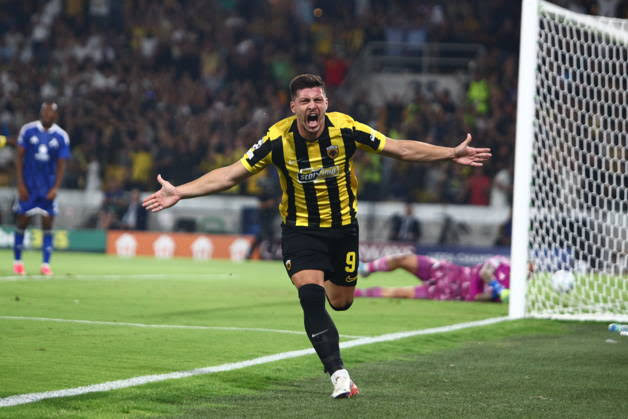
Expectations around Nea Filadelfeia were high but not complacent. AEK had already shown strong domestic form, and the addition of experienced heads such as Jović and the energetic Varga gave them genuine cutting edge. Levski arrived with a solid defensive record in the earlier qualifying rounds and a belief that they could frustrate the hosts again and force the issue late or on away goals (though the aggregate would still need to be settled). The atmosphere was expected to be electric; AEK’s supporters have a reputation for turning the stadium into a fortress on European nights, and this was one of those nights that felt significant.
Tactically, most observers anticipated AEK would dominate possession and territory while Levski sat deep in a mid-to-low block, looking to spring transitions through their wide players and the physical presence up front. The referee, French official Clément Turpin, was a familiar face at this level and known for allowing a physical contest while keeping control. Everything pointed to a night where AEK’s quality in the final third would decide the outcome if they could break down the Bulgarian resistance early.
Top Highlights: Four Goals That Changed Everything
The match exploded into life almost immediately. In the 7th minute Lazaros Rota delivered a dangerous cross from the right and Luka Jović rose highest to power a header past Svetoslav Vutsov. 1-0. The stadium erupted. AEK had the lead they needed and, more importantly, the psychological advantage.
Five minutes later it was 2-0. Filipe Relvas played a clever ball into the box; Barnabás Varga controlled it and finished with his left foot. The Hungarian forward was already looking sharp, and the double-blow left Levski reeling. The visitors had barely settled and were suddenly staring at a mountain.
Varga was not finished. In the 29th minute Lovro Majer swung in a corner, Varga attacked it with intent, and his header made it 3-0. Half-time arrived with AEK completely in control. Three goals, three different types of finish, and a scoreline that effectively ended the contest as a competitive tie. Levski had offered little in the way of coherent attacks; their possession was sterile and their defensive shape had been repeatedly punctured by AEK’s movement and delivery.
The second half began with AEK content to manage the game while still looking dangerous. In the 51st minute Răzvan Marin picked up a yellow card, but four minutes later he was the hero from the spot. Jović was brought down by Aldair Neves inside the area; Turpin pointed to the penalty spot after a check. Marin stepped up and converted coolly to make it 4-0. The result was beyond doubt. From that moment the game became an exercise in game management for the hosts and damage limitation for the visitors.
Substitutions followed as Nikolić rotated his squad. Petros Mantalos, Oleksandr Zubkov, Zini, Mijat Gaćinović and Kervin Arriaga all entered. Levski made their own changes, introducing fresh legs in an attempt to find any kind of response, but Thomas Strakosha in the AEK goal remained largely untroubled. Late yellow cards for Stavros Pilios and Zini were the only minor blemishes on an otherwise dominant evening. Full-time confirmed what had been obvious for more than an hour: AEK Athens 4, Levski Sofia 0.
Analysis: Why AEK Were Simply Too Good
This was a performance built on intensity, quality in the final third, and collective understanding. AEK’s shape (broadly a 4-4-2 or flexible 4-2-3-1 depending on the phase) allowed them to press high when opportunities arose and then drop into a solid mid-block when Levski had the ball. The midfield trio of Majer, Marin and Kaan Kairinen controlled the tempo. Majer in particular was influential, delivering the corner for Varga’s second and linking play effectively.
Up front the partnership of Jović and Varga caused constant problems. Jović’s movement and aerial ability created the first goal and the penalty; Varga’s sharp finishing and willingness to attack the box produced two more. The wide areas were also productive. Rota’s delivery for the opener was excellent, and the full-backs provided consistent width without leaving the defence exposed. Harold Moukoudi and Filipe Relvas formed a reliable central defensive partnership that limited Levski to very few clear chances.
Levski’s approach was understandable but ultimately insufficient. They tried to stay compact and absorb pressure, yet once the first goal went in their structure began to fray. They struggled to deal with AEK’s set-piece delivery and the second balls that followed. Velázquez’s side managed slightly more possession in some statistical counts (around 52 percent), but it was largely sterile. Their shots on target were limited, and the majority of their attacks broke down before becoming truly dangerous. The visitors simply lacked the quality or the cohesion to trouble a well-drilled AEK side that sensed blood early.
Statistically the numbers backed up the eye test. AEK generated more shots, more shots on target, more corners, and far more dangerous attacks. Their expected goals figure reflected a dominant performance. Defensively they were disciplined; Strakosha was rarely called upon to make difficult saves. The three yellow cards AEK collected were the product of controlled aggression rather than desperation.
Nikolić’s game management after the fourth goal was sensible. He protected key players for the domestic campaign while still maintaining intensity. The home crowd played its part, creating an intimidating atmosphere that made it difficult for Levski to settle or build any sustained pressure. In European ties the home advantage at this level can be decisive, and AEK used it ruthlessly.
Summary and What It Means
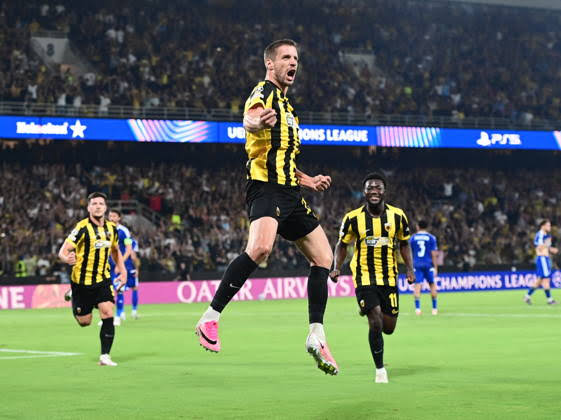
AEK Athens produced a near-perfect European night. From the early goal that settled nerves to the clinical finishing that killed the tie before half-time, everything clicked. The 4-0 scoreline was no fluke; it was the product of superior quality, better organisation, and sharper decision-making in the key moments. Levski were never allowed to impose their preferred style and left Athens with a heavy defeat and the knowledge that they had been second-best in almost every department.
For AEK the result represented more than just progression. Qualification for the Champions League league phase brings significant financial rewards, elevated status, and the chance to test themselves against Europe’s strongest clubs on a regular basis. It also validates the project under owner Marios Iliopoulos and coach Marko Nikolić. The squad showed it can perform when the stakes are highest.
In the days that followed, attention turned to the league-phase draw in Monaco and the domestic fixtures that would follow. But for one night in late August the focus remained on a clinical, high-energy display that will be remembered fondly by AEK supporters for years. Four goals, a clean sheet, and a place among Europe’s elite. Sometimes football delivers exactly the kind of statement performance a club and its fans have been waiting for. This was one of those nights.
The final scoreline told the story cleanly: AEK Athens 4, Levski Sofia 0. Aggregate 4-0. Job done.
