
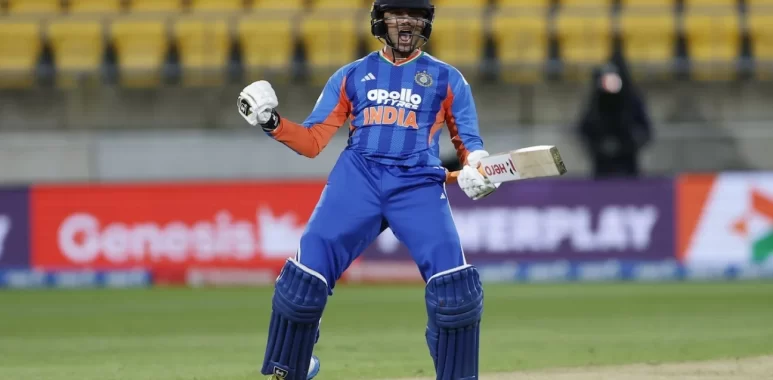
India Turn Chase into Carnival as Abhishek Sharma Unleashes Fury in Wellington
Wellington woke up to a different kind of noise on the evening of 27 October 2026. The wind that usually howls around the ground known as Hnry Stadium carried instead the sound of bat meeting ball with rare violence, the roar of a travelling Indian contingent, and the quiet disbelief of a home crowd that had just watched their side dismantled in the most clinical fashion imaginable. By the time Naman Dhir edged Kyle Jamieson to the third-man boundary in the 14th over, India had completed a six-wicket victory with a staggering 40 balls still unused. The target of 199, posted with some pride by New Zealand, had been reduced to an afterthought. The five-match T20I series was already India’s, sealed at 3-0 with two matches still to play.
It was not supposed to look this easy. New Zealand had fought hard through their 20 overs. Daryl Mitchell, the steadying influence who has become so central to this side, walked off unbeaten on 89 from 52 deliveries. Finn Allen had provided the early fireworks with 40 off 25, including five sixes. Bevon Jacobs finished with a bright 39 not out. Together they constructed a total that, on most nights, would have given the bowling attack something substantial to defend. On this night the total simply became the stage for one of the most memorable batting displays in recent T20 history.
India won the toss and, true to their recent pattern, chose to chase. The decision looked routine until Abhishek Sharma and Vaibhav Sooryavanshi walked out. What followed was less a partnership than a sustained assault. The pair put on 133 runs in only 7.1 overs. The powerplay alone produced 118 without loss, a record for matches between full-member nations. India’s fifty arrived in just 2.2 overs, the fastest by any team in men’s T20 internationals. The scoreboard operators barely had time to keep up.
Sooryavanshi played with the fearless freedom of a young man who has nothing to lose and everything to prove. His 45 from 19 balls contained four fours and four sixes. He was eventually caught by Mitchell off Matthew Fisher, but by then the damage was irreversible. The platform had been laid, and Abhishek Sharma was only just beginning to enjoy himself.
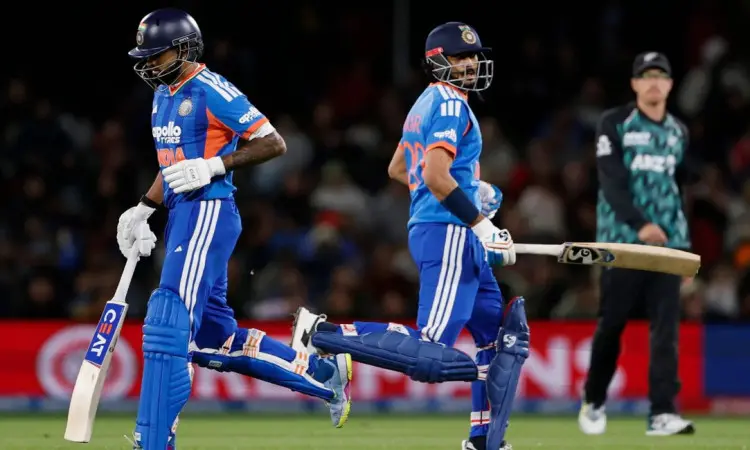
What Abhishek produced over the next few overs will be replayed for years. He reached his half-century in 15 balls. His hundred arrived in 35, the joint-second-fastest by an Indian in T20Is. By the time he finally mistimed a pull to Glenn Phillips off Jamieson, he had 113 from 38 deliveries. Nine fours, eleven sixes. A boundary every 1.9 balls. The strike rate sat at an absurd 297. The numbers barely capture the theatre of it. Full tosses disappeared into the stands. Length balls were deposited over midwicket with a flick of the wrists. Short balls were pulled with disdain. New Zealand’s bowlers, experienced campaigners among them, looked as though they were operating on a different pitch.
The innings was Abhishek’s fourth century in T20 internationals and his eleventh in the format overall, moving him past Virat Kohli on the all-time list of most T20 hundreds by an Indian. More than the records, it was the manner of the innings that left the deeper impression. There was no sense of caution once the required rate dipped into single figures. He simply kept hitting. Even after Sooryavanshi’s departure he continued as if the partnership had never ended. Sanju Samson joined him and contributed a useful 18, but the night belonged entirely to the left-hander from Amritsar.
When Abhishek finally fell, India needed only 21 more runs. A brief stutter followed. Shreyas Iyer, the captain, managed just 5 before holing out to Phillips off Mitchell Santner. Samson was bowled by Jamieson. Tilak Varma and Naman Dhir then finished the formalities. Dhir’s edged four off Jamieson brought the winning runs, an anticlimactic end to an otherwise explosive contest. The Indian players poured onto the field. Abhishek, already off the ground, was quickly surrounded by teammates. The series was won. The statement had been made.
New Zealand’s innings earlier in the evening had offered little indication of the collapse that would follow. Tim Seifert fell early, caught by Axar Patel off Arshdeep Singh for 2. Allen and Mitchell then steadied the ship. Allen’s five sixes kept the scoreboard moving at a healthy rate. When he departed for 40, caught by Dhir off Nitish Kumar Reddy, Mitchell took over the primary responsibility. Glenn Phillips made a brisk 17 before being caught and bowled by Axar. Jacobs provided late acceleration. The final total of 198 for 3 looked competitive. In the dressing room the New Zealand players would have felt they had a chance.
They did not. India’s bowling had been disciplined rather than spectacular. Arshdeep’s 1 for 33 and Axar’s 1 for 36 were the standout figures. Bhuvneshwar Kumar, back in the side after a long absence from the T20 setup, went wicketless but kept things tidy. The real work, however, was always going to be done with the bat, and India had arrived in New Zealand with a clear intent to attack from the first ball.
The broader context of the series made the victory even more significant. India had already taken the first two matches. A third consecutive win locked up the series with room to spare. New Zealand, still searching for their first victory of the tour, now face the difficult task of salvaging pride in the remaining two games. Their last T20I series win against India on home soil came in 2019. Since then the visitors have held the upper hand both in New Zealand and back home. This latest result only reinforces the gap that currently exists between the two sides in the shortest format.
For Abhishek Sharma the night represented further confirmation of his place among the elite T20 batters in the world. His ability to clear the ropes at will has become a hallmark of India’s white-ball approach. The supporting cast around him continues to evolve. Sooryavanshi’s fearless opening partnership with him offers a glimpse of the future. Samson’s presence in the middle order provides experience and finishing power. The bowling unit, while still finding its ideal combinations, has enough variety to restrict sides on most surfaces.
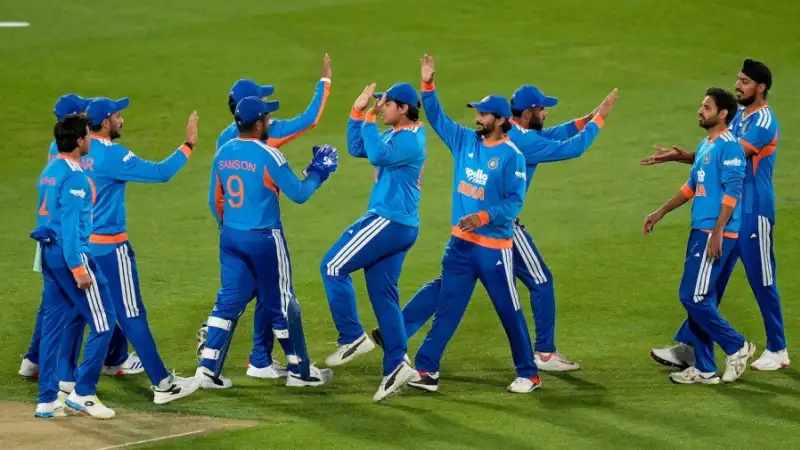
The crowd in Wellington, a mix of local supporters and a large number of Indian fans who had made the trip, left the ground knowing they had witnessed something special. Nights like this do not come around often. A target that should have produced tension was instead transformed into an exhibition. The margin of victory, 40 balls remaining, spoke volumes about the gulf on the night.
As the players shook hands and the presentations began, Abhishek was named Player of the Match, an obvious choice. He spoke briefly about the importance of backing himself and trusting the process. The words were measured. The bat had already said everything that needed saying.
India now turn their attention to the remaining two T20Is with the series already secured. New Zealand must regroup and find answers to a batting line-up that has looked almost unstoppable. The series may be decided, but the cricket still has stories left to tell. On this particular Wellington night, however, the story belonged entirely to one left-handed opener who decided that 199 was not a target at all, merely a starting point for something far more memorable.
The images will linger. Abhishek raising his bat after the hundred. The ball disappearing into the night sky again and again. The Indian dressing room erupting as the winning runs were scored. And the quiet realisation among the home supporters that they had just watched one of the finest T20 innings played on their soil. In the end, that is what great cricket nights produce: moments that refuse to fade, even after the lights go down and the stadium empties.
India’s dominance in this series has been built on aggression, clarity of purpose, and an unshakeable belief that any total is chaseable. On 27 October in Wellington that belief was given its most emphatic expression yet. Abhishek Sharma did not just win a match. He redefined what a chase can look like when a batter is in the purest form of his life. The record books will note the numbers. Those who were there will remember the feeling.
