
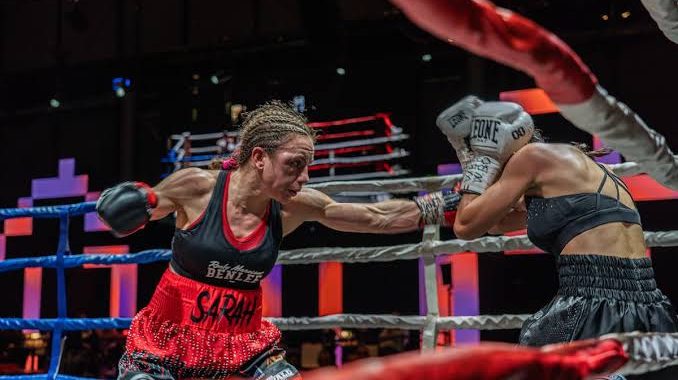
Sarah Bormann Holds On: A Night of Scrappy Chaos and Split Cards in Karlsruhe
There’s something about a hometown title defense that always feels a little different. The crowd leans in harder. The champion walks to the ring knowing every cheer is personal. And on the last night of October 2026, inside Messe Karlsruhe, Sarah “Babyface” Bormann felt all of it. She walked out still the unified WBA and WBO minimumweight champion of the world. She left the same way. Just. Barely.
The final scores read 97-92 and 95-94 for Bormann, with one judge seeing it 95-94 the other way for Spain’s Chaima Bounouar. Split decision. Ten rounds of swinging, clinching, headbutts, a disputed knockdown that wasn’t, and a point deduction that mattered. Bormann improved to 22-1 with 7 knockouts. Bounouar suffered her first professional loss and fell to 7-1 with 1 KO. The 36-year-old German made the first successful defense of both belts and the third of her WBO title. The 27-year-old Spaniard left convinced she had done enough to become champion. Plenty of people watching agreed with her.
That is the story of this fight in a nutshell. It was close. It was messy. It was competitive from the opening bell to the final one. And it left the kind of lingering arguments that keep a division interesting.
The Build-Up: Experience Versus Ambition
Going into the night, the matchup had a clean narrative. Bormann was the seasoned champion who had already been through the wars of the 105-pound division. She won the WBO title in late 2024 against Jennifer Meza, defended it, then added the WBA belt by beating Japan’s Yuko Kuroki. She was the local favorite, the fighter with the higher work rate and the better understanding of distance. She controlled fights behind a steady jab and straight combinations, managing rounds with the calm of someone who had done this many times before.
Bounouar arrived as the hungry challenger with the perfect record. She had climbed the rankings quickly, earned the WBA mandatory spot with a dominant win over Italy’s Vittoria Parigi Bini, and carried the confidence of a young fighter who had never tasted defeat. Her style was different. She wanted to close the gap, lean on the body, and force the champion into uncomfortable exchanges. The WBA preview framed it neatly as experience and precision against speed, pressure, and fearless aggression. That is exactly what the fight delivered.

Both women made weight without drama, hitting 47.5 kilograms at the official weigh-in. The cards were sold. The atmosphere in Karlsruhe was expectant. Promoter Ruhe Boxing had a solid undercard, but everyone knew the main event carried the real weight. For Bormann it was a mandatory that had to be handled before bigger plans could be discussed. For Bounouar it was the biggest night of her career, a chance to leave Germany with two belts and a new life.
How the Fight Unfolded
From the opening round the contrast was obvious. Bormann tried to establish the jab and keep the fight at a range where her straights could land clean. Bounouar came forward immediately, looking to cut off the ring and throw overhand rights. Those overhands became a theme. They were the punch that made Bormann respect her, the one that forced the champion to stay honest even when she wanted to box.
The early rounds were competitive and a little chaotic. Both women swung freely. Their arms tangled often. Referee Diana Milani had to step in more than once to break them up. It was the kind of fight where clean scoring moments were mixed with messy ones, and the judges would later show they saw those moments differently.
In the third round an accidental clash of heads opened a cut near Bounouar’s right eye. Blood appeared. It was not a fight-ending cut, but it was visible and it added another layer of difficulty for the challenger. She still kept coming.
Then came the fourth. Bormann went down. The referee counted it as a knockdown. The crowd reacted. At the start of the fifth round, however, Milani reversed the call and ruled it a slip. That decision became one of the talking points afterward. Bounouar’s camp and many observers felt the original ruling should have stood. Bormann’s side accepted the correction. Either way, the official record no longer showed a knockdown, and the scorecards reflected that.
The middle rounds continued in the same vein. Bormann used lateral movement and the jab to try to keep Bounouar off her. Bounouar kept walking forward, digging to the body when she could and throwing the overhand right when the openings appeared. Neither woman dominated for long stretches. It was a fight of small edges, of who landed the cleaner shots in the final thirty seconds of a round, of who controlled the clinches.
By the later rounds the fatigue was real. Both had put in the work. In the ninth, Bounouar was deducted a point for repeatedly leading with her head. That deduction almost certainly mattered on the cards. One judge still saw the fight for her. The other two did not. When the scores were read, the home crowd cheered, Bormann’s hand was raised, and Bounouar looked like a fighter who believed the wrong woman was celebrating.
Top Highlights and Key Moments
Several sequences will stick with people who watched closely.
The early pressure from Bounouar and those dangerous overhand rights set the tone. You could see Bormann adjusting, realizing she could not simply box on the outside without paying a price.
The clash of heads in round three and the resulting cut. Blood changes the way a fighter moves and the way a referee watches the action. Bounouar had to deal with that while still trying to force the fight.
The disputed knockdown in the fourth and its reversal. Moments like that can swing a close fight on the scorecards and in the public conversation. The fact that it was corrected before the next round began shows the referee was paying attention, even if not everyone agreed with the final call.
The constant clinching and the referee’s interventions. This was not a pure boxing exhibition. It was a physical, sometimes ugly fight where both women were willing to get dirty to land their shots.
The point deduction in the ninth for leading with the head. In a fight this tight, one point is enormous. It is reasonable to wonder whether that single deduction decided which name the majority of judges wrote down.
And finally the final bell itself. Both fighters still throwing. Both still believing. The kind of ending that makes a split decision feel honest even when half the room disagrees with it.
Analysis: What the Fight Told Us
Bormann won because she did enough of the things champions are supposed to do. She controlled distance better over the course of the ten rounds. She landed the straighter, cleaner punches in enough of the rounds to convince two judges. Her experience showed in the way she managed the later stages when the exchanges got more desperate. She is not a spectacular fighter, but she is a durable and professional one. At 36 she is still good enough to hold two major titles in a competitive division.
Bounouar lost on the cards but won a lot of respect. She took the fight to the champion on the road. She never stopped coming forward. She made Bormann work every minute. Her post-fight comments made clear she felt she had done enough, calling herself a “winner without the title” and immediately asking for a rematch. That is the reaction of a fighter who believes in what she showed. Many neutral observers shared the sense that the decision could have gone either way.
The styles created the closeness. Bormann’s jab-and-move approach against Bounouar’s pressure and overhand rights produced a fight with few clear rounds and many that could be scored either direction depending on what a judge valued more. Clean punching versus effective aggression. That is the classic tension in boxing scoring, and this fight lived right in the middle of it.
The cut, the disputed knockdown, and the point deduction all added noise. In a more decisive fight those things get forgotten. In a split decision they become the story.

Looking Forward
Bormann remains the unified champion. Her promoter has already spoken about wanting bigger names, including a possible meeting with WBC champion Yokasta Valle. That fight would be significant for the division. Whether it happens soon depends on negotiations, rankings, and Bormann’s willingness to travel or Valle’s willingness to come to Europe. For now the German champion has done her job. She got through the mandatory and kept both belts.
Bounouar will almost certainly stay in the mix. A first loss at this level does not end a career, especially when the performance was competitive. She has already made it clear she wants the rematch. If the scores stay this close in public memory, the demand for a second fight will not disappear. In the meantime she will look to rebuild with wins and keep her ranking high enough that the next opportunity comes relatively soon.
The minimumweight division remains one of the more interesting in women’s boxing. Multiple champions, competitive fights, and fighters who are willing to travel and take risks. Bormann versus Bounouar added another chapter. It was not a classic in the pure boxing sense. It was better than that in some ways. It was a real fight, with real stakes, real controversy, and a result that left room for argument.
In Karlsruhe on the last night of October, Sarah Bormann kept her titles the hard way. Chaima Bounouar left knowing she had pushed a champion to the edge. Both will be back. The next chapter is already being written in the conversations that followed the split decision. That is how boxing works when the night is close enough to argue about for weeks.