
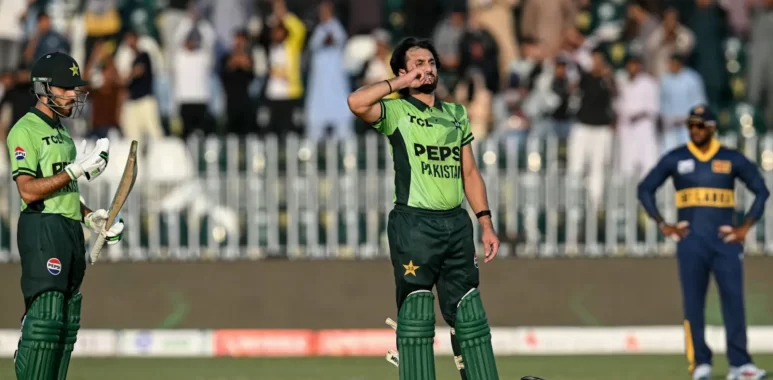
Pakistan Clinch ODI Tri-Series Title After Thrilling Three-Wicket Victory Over Sri Lanka in Lahore
The atmosphere at Lahore’s historic Gaddafi Stadium was electric on Saturday night, October 31, 2026, as Pakistan and Sri Lanka faced each other in the much-anticipated final of the Pakistan ODI Tri-Series. With the trophy at stake, both teams entered the contest determined to finish their campaign on a winning note. What followed was a memorable evening of aggressive batting, important partnerships, impressive individual performances and a thrilling run chase that kept spectators on the edge of their seats until the final moments.
Pakistan eventually emerged victorious, defeating Sri Lanka by three wickets with nine balls remaining. Chasing a challenging target of 326 runs, the hosts finished at 331 for seven in 48.3 overs, completing one of the most memorable successful run chases in an ODI final. Fakhar Zaman was the standout performer, producing a magnificent century that laid the foundation for Pakistan’s victory. However, valuable contributions from Saad Baig, Arafat Minhas and Hasan Nawaz ensured that Pakistan crossed the finish line despite facing several difficult moments during the chase.
For Sri Lanka, the defeat was undoubtedly disappointing, particularly after posting an impressive total of 325 for eight in their allotted 50 overs. Kamindu Mendis delivered a remarkable batting performance, scoring his maiden ODI century, while Pavan Rathnayake provided excellent support with a fluent half-century. Unfortunately for the visitors, their impressive batting effort was not enough to prevent Pakistan from lifting the trophy in front of their home supporters.
The final was not simply about the result. It was a contest that demonstrated Pakistan’s batting depth, Sri Lanka’s fighting spirit and the importance of maintaining composure under pressure.
Pakistan Win the Toss and Choose to Field
Before the first ball was bowled, Pakistan captain Shaheen Shah Afridi won the toss and elected to field first. The decision suggested that Pakistan wanted to make use of the conditions early in the evening and then approach the target with a clear understanding of the required run rate.
Sri Lanka, meanwhile, were aware that a strong batting performance would be essential in a final against the hosts. Their batting lineup had shown considerable potential throughout the competition, and they looked determined to put Pakistan under pressure by setting a competitive target.
The Gaddafi Stadium provided a wonderful setting for the occasion. With thousands of supporters filling the stands, the atmosphere reflected the importance of the final. Pakistan supporters were eager to witness their team lift the trophy, while Sri Lankan fans hoped their side could produce another memorable performance.
Both teams had experienced positive and challenging moments during the tournament. Pakistan had demonstrated their ability to win difficult matches, while Sri Lanka had also produced some impressive performances. Their previous meeting in the competition had gone Sri Lanka’s way, making the final an opportunity for Pakistan to settle the score.
Sri Lanka Make a Positive Start
Sri Lanka began their innings with Avishka Fernando and Kamindu Mendis at the crease. The opening pair understood the importance of providing a stable start, particularly against Pakistan’s experienced fast-bowling attack.
Pakistan had Shaheen Shah Afridi, Naseem Shah and Haris Rauf available to challenge the Sri Lankan batters. Their pace and ability to generate movement made the opening overs particularly important.
However, Fernando and Mendis handled the early challenge with confidence. Rather than allowing the Pakistani bowlers to dominate, the pair rotated the strike effectively and punished loose deliveries whenever opportunities appeared.
Fernando looked comfortable at the crease and contributed 38 runs from 49 deliveries, including three boundaries and a six. His innings provided Sri Lanka with a useful platform and allowed Mendis to settle into his rhythm.
The opening partnership produced 87 runs, giving Sri Lanka the start they wanted.
Pakistan eventually found a breakthrough when Salman Ali Agha dismissed Fernando leg before wicket. The wicket was important because Pakistan needed to prevent Sri Lanka from building an excessively large opening partnership.
Despite losing his opening partner, Mendis continued batting with remarkable composure. He appeared increasingly confident and began controlling the pace of the innings.
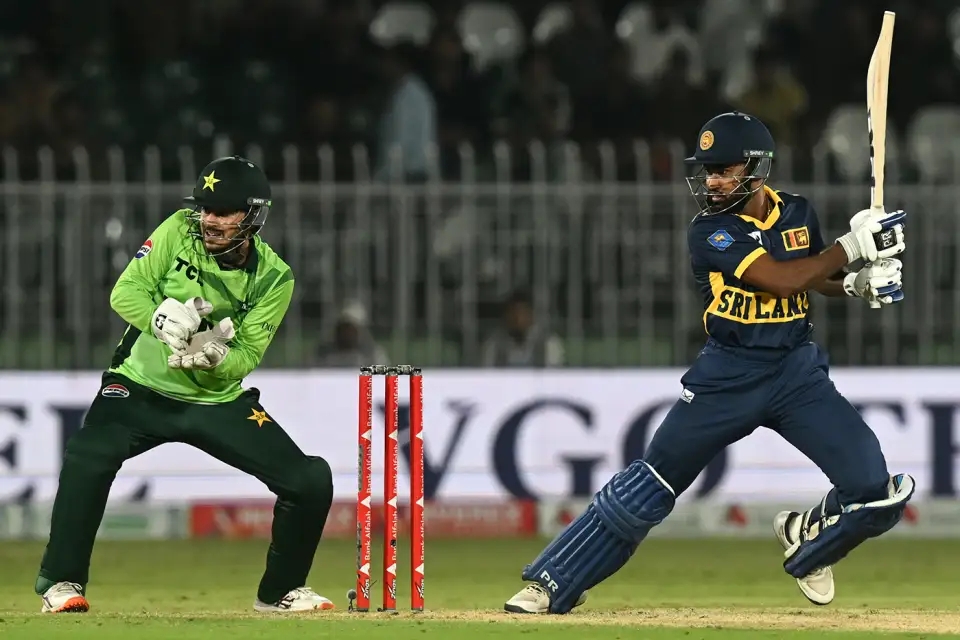
Kamindu Mendis Produces a Magnificent Century
The biggest highlight of Sri Lanka’s innings was undoubtedly Kamindu Mendis’s outstanding performance.
The left-handed batter demonstrated exceptional concentration, timing and shot selection throughout his stay at the crease. Against a bowling attack containing some of Pakistan’s most dangerous fast bowlers, Mendis displayed the maturity of an experienced international batter.
He combined defensive discipline with attacking intent, ensuring that the scoreboard continued moving without taking unnecessary risks.
Mendis reached his century in the 33rd over, bringing up his maiden ODI hundred in a memorable final. It was a special achievement for the Sri Lankan batter, particularly considering the occasion and the quality of the opposition.
His innings eventually ended at 131 runs from 128 deliveries. It included 12 fours and two sixes, reflecting a well-balanced performance built around consistency and calculated aggression.
Mendis was particularly effective at finding gaps in the field. He did not depend entirely on powerful hitting but demonstrated an excellent understanding of how to construct an ODI innings.
Pakistan eventually dismissed him through Shaheen Shah Afridi, who trapped him leg before wicket.
Although Mendis returned to the dressing room, his contribution had already placed Sri Lanka in a strong position.
His century was the backbone of Sri Lanka’s innings and gave the visitors a realistic opportunity to post a total well beyond 300.
Pavan Rathnayake Adds Another Valuable Contribution
While Mendis controlled the innings, Pavan Rathnayake provided another important batting performance.
Rathnayake joined the middle order and quickly demonstrated that he was prepared to maintain the attacking approach established by his teammates.
The partnership between Mendis and Rathnayake became one of the most important phases of Sri Lanka’s innings.
The two batters complemented each other effectively. Mendis continued building his century, while Rathnayake played with greater freedom and looked for opportunities to accelerate the scoring.
Rathnayake scored 77 runs from 65 deliveries, striking eight boundaries.
Their partnership was worth 146 runs and helped Sri Lanka move into an excellent position. At the end of 40 overs, the visitors were comfortably placed at 238 for two.
At that stage, a total approaching 350 appeared possible.
However, Pakistan understood that allowing Sri Lanka to dominate the final ten overs could make the chase considerably more difficult.
The home side needed wickets, and its bowlers responded at an important moment.
Pakistan Bowlers Fight Back in the Final Overs
Sri Lanka appeared set for a massive total when the innings entered its final ten overs. However, Pakistan’s bowling attack managed to prevent the visitors from enjoying the explosive finish they would have wanted.
Shaheen Shah Afridi delivered important breakthroughs, dismissing both Mendis and Dasun Shanaka.
Shanaka had briefly threatened to accelerate the scoring, contributing 17 runs from just nine deliveries, including two fours and a six. His dismissal prevented Sri Lanka from building further momentum.
Naseem Shah also played an important role, removing Janith Liyanage and Sahan Arachchige.
Haris Rauf contributed two wickets, including the important dismissal of Rathnayake. Salman Ali Agha had earlier taken two wickets and provided Pakistan with valuable control during the middle overs.
Sri Lanka lost six wickets for 87 runs in the final ten overs, a period that significantly influenced the final total.
Despite the late wickets, the visitors managed to complete their innings at an impressive 325 for eight in 50 overs.
The total was certainly competitive, and Pakistan’s batters knew they would need an outstanding performance to secure the trophy.
Sri Lanka had given their bowlers something substantial to defend.
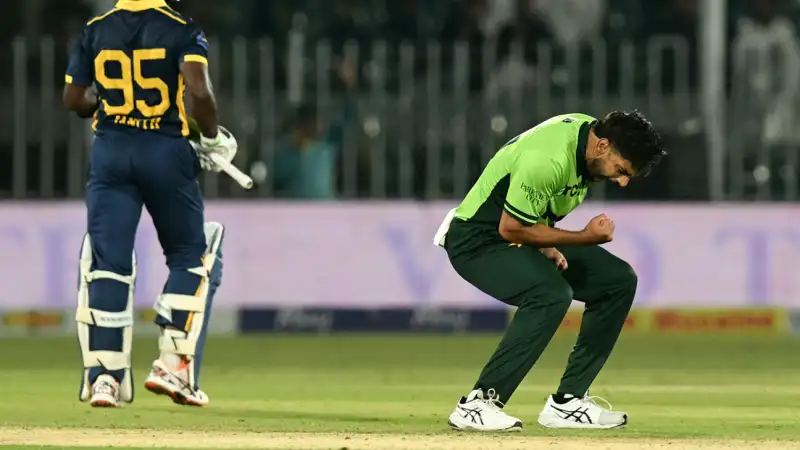
Fakhar Zaman Changes the Direction of the Match
Fakhar Zaman produced the defining innings of the final.
The experienced opener displayed excellent awareness and attacking ability, gradually turning a difficult situation into an opportunity for Pakistan.
His approach was a mixture of patience and aggression. He respected good deliveries, rotated the strike and punished anything that allowed him to play his natural attacking shots.
Fakhar’s ability to find boundaries helped Pakistan recover after the early dismissals.
He was particularly effective against deliveries that allowed him to free his arms. His powerful strokes through the off side and controlled hitting over the field demonstrated why he remains such an important member of Pakistan’s ODI batting lineup.
At the other end, Saad Baig provided excellent support.
The partnership between the two batters became the turning point of Pakistan’s innings.
Saad played with impressive maturity, understanding that his role was not simply to attack but also to ensure that Fakhar had the freedom to build his innings.
The pair added 149 runs together, completely changing the momentum of the contest.
Fakhar continued scoring freely and eventually reached his 12th ODI century.
His hundred was particularly special because it came in the final of a major tournament. He became only the second Pakistani batter to score two centuries in ODI finals.
He eventually departed after scoring 127 runs from 99 deliveries, an innings featuring 11 fours and six sixes.
It was a performance worthy of a championship final.
Fakhar had transformed Pakistan’s position and brought the hosts firmly into contention for the trophy.
Saad Baig Announces Himself on the International Stage
While Fakhar Zaman naturally attracted much of the attention, Saad Baig’s contribution deserves equal appreciation.
The young wicketkeeper-batter demonstrated impressive composure during a high-pressure final.
Scoring a maiden ODI half-century for Pakistan in such an important match was a significant personal achievement.
Saad scored 74 runs from 75 deliveries, displaying an excellent combination of patience and attacking ability.
His partnership with Fakhar was particularly valuable because Pakistan needed someone who could remain at the crease while the experienced batter played his natural game.
Saad did exactly that.
He avoided unnecessary risks, maintained a healthy scoring rate and ensured that the required run rate did not become overwhelming.
His dismissal, however, created another challenge for Pakistan.
Fakhar was already back in the dressing room, and Pakistan needed further contributions from their middle and lower order.
Sri Lanka were not ready to surrender the contest.
Sri Lanka Fight Back as the Match Enters Its Crucial Stage
After the departure of Fakhar Zaman and Saad Baig, Sri Lanka began to believe that they could still defend their total.
The visitors managed to pick up important wickets and briefly threatened to turn the final in their favour.
Pakistan had already lost five wickets for 230 runs after 36.5 overs.
Although the required run rate remained manageable, the loss of established batters meant that the responsibility shifted towards the remaining players.
Sri Lanka’s bowlers continued attacking the stumps and attempted to force mistakes.
Dilshan Madushanka was among the most effective performers, finishing with three wickets for 63 runs.
Asitha Fernando also contributed two wickets, providing Sri Lanka with important breakthroughs.
The visitors understood that one more quick wicket could completely change the situation.
However, Pakistan still had enough batting depth to recover.
The next partnership would ultimately decide the destination of the trophy.
Arafat Minhas and Hasan Nawaz Deliver Under Pressure
When Pakistan needed someone to take responsibility, Arafat Minhas and Hasan Nawaz stepped forward.
Their partnership became one of the most decisive moments of the entire final.
With the match entering its final stages, the two batters displayed tremendous confidence and refused to allow Sri Lanka’s bowlers to dominate.
Arafat Minhas played an aggressive innings, combining clean striking with excellent awareness of the match situation.
He scored 61 runs from only 31 deliveries, including three fours and four sixes.
His innings was exactly what Pakistan required.
Rather than allowing the asking rate to climb, Arafat attacked the bowling and brought Pakistan closer to the target.
Hasan Nawaz played an equally important role at the other end.
He scored an unbeaten 37 runs from 45 deliveries, providing stability while Arafat played the more aggressive role.
The partnership was worth 94 runs and proved decisive.
Arafat’s ability to accelerate during the closing stages demonstrated his growing importance in Pakistan’s limited-overs setup.
His contribution was not simply about scoring quickly. It was about understanding the pressure of a final and delivering when the team needed him most.
For Hasan, remaining unbeaten was another significant contribution. He ensured that Pakistan did not lose control during the final phase of the chase.
Together, they turned a tense situation into a winning opportunity.
Shaheen Afridi Finishes the Contest in Style
As Pakistan moved closer to victory, the excitement inside Gaddafi Stadium reached another level.
The hosts were within touching distance of the target, but Sri Lanka continued fighting.
With wickets still falling, the pressure was not entirely over.
Shaheen Shah Afridi eventually joined Hasan Nawaz at the crease, and the Pakistan captain had the opportunity to finish the job himself.
The decisive moment arrived in the 49th over.
With Pakistan needing just one more run, Hasan Nawaz took a single from the first delivery of the over.
Shaheen then faced Dilshan Madushanka.
Rather than allowing the contest to continue, the Pakistan captain produced a memorable finish.
He connected with a delivery and sent the ball over the boundary for six.
The stadium erupted.
Pakistan had reached 331 for seven in 48.3 overs, completing the chase with nine balls remaining.
The players celebrated as the home supporters erupted with joy.
It was a fitting finish to an exciting final, with Pakistan winning the match by three wickets and securing the ODI Tri-Series trophy.
Fakhar Zaman Named Player of the Match
Fakhar Zaman was deservedly named Player of the Match for his outstanding contribution.
His 127-run innings was the foundation of Pakistan’s successful chase. Without his century, the hosts could have found themselves in a much more difficult position following the early dismissals.
Fakhar demonstrated the qualities required from an experienced batter in a major final.
He remained composed when the team was under pressure, built a substantial partnership and then accelerated when the situation demanded it.
His performance also reinforced his reputation as a dangerous ODI batter capable of producing match-winning innings on important occasions.
Arafat Minhas received the Player of the Series award for his impressive overall contribution throughout the competition.
His 61-run innings in the final provided another example of the talent emerging within Pakistan cricket.
A Memorable Final for Pakistan Cricket
Pakistan’s victory was significant for several reasons.
The team successfully chased 326 runs in an ODI final, matching the joint-highest successful run chase in the history of ODI finals.
It was also Pakistan’s sixth-highest successful ODI chase and their third-highest successful chase at Gaddafi Stadium.
The result marked an important achievement for the hosts, who had not won the tri-series title since 2008.
The victory was also particularly meaningful because Pakistan had suffered an eight-wicket defeat against Sri Lanka earlier in the competition.
Winning the final against the same opponent demonstrated the team’s ability to learn from previous mistakes and respond positively under pressure.
For Sri Lanka, the final offered several encouraging signs despite the disappointing result.
Kamindu Mendis’s maiden ODI century was a major personal milestone, while Pavan Rathnayake continued to demonstrate his batting potential.
The team’s bowling attack also showed that it could challenge Pakistan during important stages of the chase.
However, the inability to contain Fakhar Zaman and the powerful partnership between Arafat Minhas and Hasan Nawaz ultimately proved costly.
