

Bangladesh Pull Off Historic Victory Over Pakistan in Mirpur Test Thriller
MIRPUR, Bangladesh – In a contest that will be remembered for generations in Bangladeshi cricket lore, the home side secured a commanding 104-run victory against Pakistan in the first Test of the series at the Shere Bangla National Stadium. This triumph marks Bangladesh’s first-ever Test win over Pakistan on home soil and signals a bold new chapter for a team that has long battled to establish itself among the elite.
The match, played from May 8 to May 12, 2026, unfolded under fluctuating conditions typical of Mirpur’s unpredictable weather. Early morning mists gave way to bright sunshine on most days, but a crucial rain interruption on day three and a wearing pitch by the final session played pivotal roles. Bangladesh captain Najmul Hossain Shanto won the toss and elected to bat first, a decision that initially drew criticism but ultimately proved masterful as his side built substantial totals in both innings while exploiting Pakistan’s vulnerabilities in spin-friendly conditions.
From the outset, Bangladesh’s batting lineup showed remarkable resolve. Openers Tanzid Hasan and Mahmudul Hasan Joy forged a solid 87-run partnership before Joy edged one to the slips off Pakistan’s Naseem Shah. Tanzid continued aggressively, reaching his half-century with a series of crisp drives through the covers. However, it was the middle order that truly shone. Shakib Al Hasan, returning to the Test arena with renewed vigor after a period of limited international cricket, stitched together a patient 78 that stabilized the innings. Mushfiqur Rahim, ever the dependable anchor, contributed a gritty 65, navigating the spin of Abrar Ahmed with deft footwork and precise sweeps.

By the close of day one, Bangladesh had posted 312 for 7, with young all-rounder Mehidy Hasan Miraz unbeaten on 42. The crowd, numbering over 25,000 on the opening day, roared with approval as the hosts defied early expectations of a Pakistan-dominated contest. Pakistan’s bowling attack, led by the fiery Naseem and the experienced Shaheen Afridi, looked threatening at times but lacked consistency in line and length, particularly against the turning deliveries from Bangladesh’s spinners later in the match.
Day two dawned with Pakistan needing to wrap up the Bangladesh tail quickly. Miraz and the lower order added another 48 runs, setting a formidable first-innings target of 360. Pakistan’s response was cautious yet determined. Imam-ul-Haq and Abdullah Shafique started steadily, but Bangladesh’s pace bowler Taskin Ahmed struck early, removing Shafique with a sharp delivery that seamed away. Babar Azam, Pakistan’s talisman, looked in sublime touch, compiling a fluent 112 that included several elegant cover drives and flicks off his pads. His partnership with Saud Shakeel yielded 145 runs and kept Pakistan in contention.
Yet Bangladesh’s bowling unit, marshaled brilliantly by Shakib, refused to yield. Miraz, operating from one end with his off-spin, induced a crucial edge from Babar just after lunch. The introduction of left-arm spinner Nasum Ahmed proved decisive in the middle session, as he claimed three wickets including those of Mohammad Rizwan and Shakeel in quick succession. Pakistan folded to 278 all out by the end of the day, trailing by 82 runs. The bowling figures told a story of dominance: Shakib with 4 for 62 and Miraz with 3 for 71.
The third day saw Bangladesh push for a substantial lead. Shanto promoted himself up the order and scored a brisk 55, while Litton Das played with characteristic flair for his 48. Rain washed out nearly two hours of play in the afternoon, but upon resumption, Bangladesh accelerated. They declared their second innings at 295 for 8 late on day three, setting Pakistan a daunting target of 378 runs to win. This aggressive declaration reflected Shanto’s confidence in his bowlers and the deteriorating pitch, which was beginning to offer sharp turn and variable bounce.
Pakistan began their chase on day four with renewed purpose. Shafique and Imam provided a solid foundation, but the pressure mounted as Miraz and Shakib tightened the noose. A key moment came when Taskin produced a searing yorker to dismiss Imam for 34. Babar once again shouldered the burden, scoring 89 in a valiant effort, but he found little support from the middle order. Rizwan battled to 41 before falling to a brilliant catch by Joy at short leg. By stumps on day four, Pakistan were precariously placed at 185 for 6, still needing 193 more runs with just four wickets remaining.
The final day was one of high drama and inevitable decline for the visitors. Pakistan’s lower order showed some fight, with Salman Ali Agha and Abrar Ahmed adding 52 runs for the seventh wicket. Naseem Shah even entertained the sparse morning crowd with a couple of lusty sixes. However, Bangladesh’s spinners were relentless. Miraz claimed the crucial wicket of Salman with a flighted delivery that turned sharply, and Shakib wrapped up the tail with two more scalps in the space of four overs. Pakistan were eventually bowled out for 273, falling 104 runs short.
The celebrations in the Bangladeshi camp were euphoric. Players mobbed each other on the field as fireworks lit up the Mirpur sky. Shanto was named player of the match for his all-round contribution, including scores of 32 and 55 plus a couple of catches. In the post-match presentation, he reflected on the significance of the win. “This is for the entire nation,” Shanto said. “We have worked so hard for moments like this. The boys showed incredible character throughout. Beating Pakistan in a Test match like this will give us tremendous belief going forward.”
Pakistan captain Babar Azam, gracious in defeat, acknowledged the home side’s superiority. “Credit to Bangladesh. They outplayed us in all departments, especially with the ball on a turning track. We will learn from this and come back stronger in the next Test. Our batting collapses in the second innings have been a concern, and we need to address that quickly.”
This victory comes at a pivotal time for Bangladesh cricket. Having invested heavily in domestic structures and player development over the past decade, the team has now translated that progress into a landmark result against a traditional powerhouse. Pakistan, on the other hand, arrive at a crossroads. Their pace bowling remains potent, but the spin department and middle-order fragility were glaring weaknesses in Mirpur.
Looking back at the match statistics, Bangladesh’s collective effort stands out. Their total of 655 runs across both innings showcased depth, while Pakistan managed 551 but struggled with consistency. Shakib’s match haul of 6 wickets and Miraz’s 7 underscored the hosts’ spin dominance. Taskin Ahmed’s pace variations added an extra dimension, troubling even the best of Pakistan’s batsmen.
The crowd played a massive role too. Local supporters turned out in large numbers despite the five-day duration, creating an electric atmosphere that visibly lifted the home players. Chants of “Bangladesh, Bangladesh” echoed around the stadium, particularly during Pakistan’s second innings collapse. For many fans, this win erased memories of past close defeats and near-misses against stronger opponents.
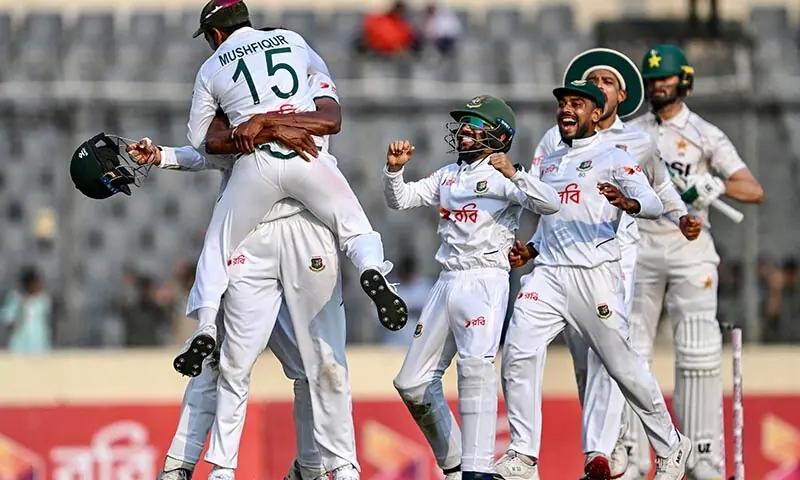
Analysts point to several tactical masterstrokes by the Bangladesh coaching staff. The decision to include two specialist spinners alongside Shakib paid rich dividends on a pitch that assisted turn from day two onward. Fitness levels were also superior, with Bangladesh’s fielding remaining sharp throughout, highlighted by several athletic efforts in the slips and outfield. In contrast, Pakistan appeared somewhat jaded, possibly affected by their recent travel schedule and the humid conditions.
This result also carries broader implications for the World Test Championship cycle. Bangladesh, often considered underdogs, have now positioned themselves as serious contenders in their home conditions. A series win here could propel them up the rankings and boost confidence ahead of tougher away tours. For Pakistan, the loss highlights ongoing transition challenges following the retirement of several senior players in recent years. Their reliance on Babar and a few key performers is becoming a vulnerability that opposition teams are increasingly exploiting.
Individual performances deserve deeper appreciation. Tanzid Hasan’s opening contributions set the tone, while Mushfiqur Rahim’s experience was invaluable in building partnerships. For Pakistan, Babar’s century was a masterpiece of concentration, but it lacked the support needed to turn the game. Young talents like Abrar Ahmed showed promise with the ball, taking 4 wickets across both innings, yet the team as a whole failed to fire in unison.
As the teams prepare for the second Test in Chattogram starting May 16, the narrative has shifted dramatically. What was billed as a closely contested series now looks like Bangladesh hold the upper hand, especially with home advantage. Pakistan will need to regroup swiftly, perhaps by adjusting their batting order or introducing fresh faces to inject energy.
Beyond the scoreboard, this match exemplified the growth of Test cricket in Bangladesh. The Shere Bangla National Stadium, once a modest venue, now hosts matches with world-class facilities and passionate audiences. The Bangladesh Cricket Board has worked tirelessly to elevate the standard, and results like this validate their vision.
In the dressing room, emotions ran high. Veteran campaigners like Shakib, who has been part of Bangladesh’s Test journey since its inception, shed tears of joy. “I have waited many years for this,” he remarked later. “To beat Pakistan by such a margin in our backyard is special. The younger players stepped up, and that is the biggest positive.”
Coaches and support staff also played understated but crucial roles. Fitness trainer and bowling coach inputs helped tailor strategies to the local conditions, emphasizing variations in pace and spin. Data analysts provided insights into Pakistan’s weaknesses against left-arm spin, which Bangladesh exploited masterfully.
For neutral observers, the game offered a masterclass in adapting to conditions. Early pace and seam movement transitioned seamlessly into spin dominance, testing both teams’ skills across formats. Umpires and match officials maintained high standards, with no major controversies disrupting play.
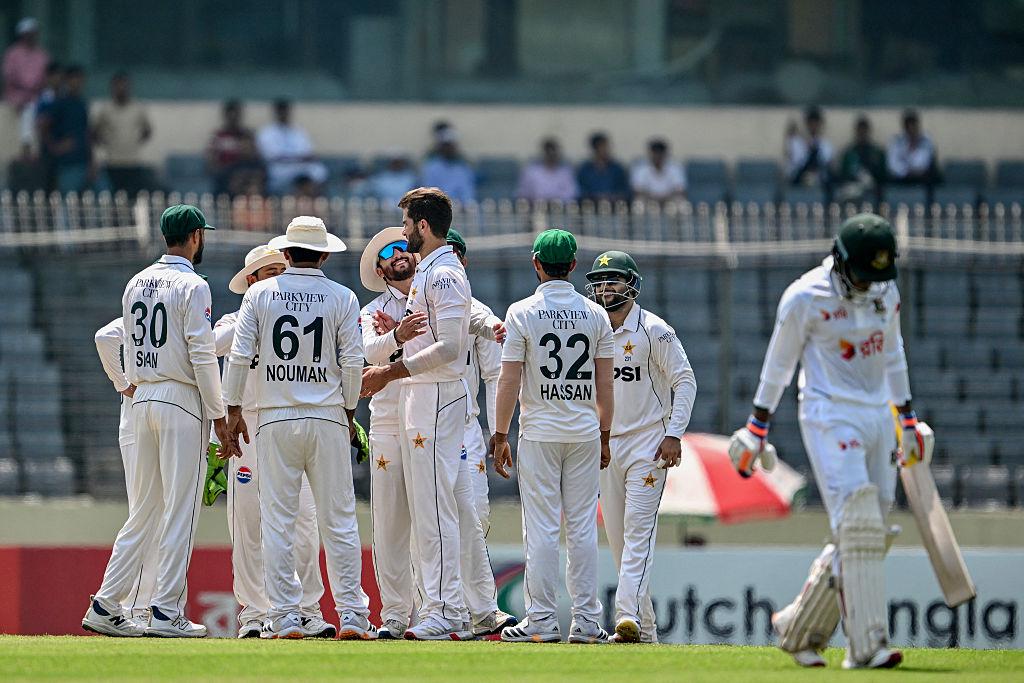
As the sun set on the fifth day, Bangladesh players took a victory lap around the ground, waving to cheering fans. This was more than just a cricket match; it was a statement of arrival. Pakistan’s tour, which continues with two more Tests and limited-overs fixtures, now carries added pressure. The visitors must find answers quickly or risk a series defeat that could dent their reputation further.
In summary, Bangladesh’s 104-run triumph in Mirpur was built on resilience, tactical acumen, and collective brilliance. It will inspire a new generation of cricketers in the country and force global audiences to take notice of a rising force in world cricket. The 2026 Pakistan tour has started with a bang – for the home side. As the caravan moves to the next venue, anticipation builds for whether Bangladesh can sustain this momentum or if Pakistan can mount a comeback. For now, the hosts bask in the glory of a hard-earned and thoroughly deserved victory.
