
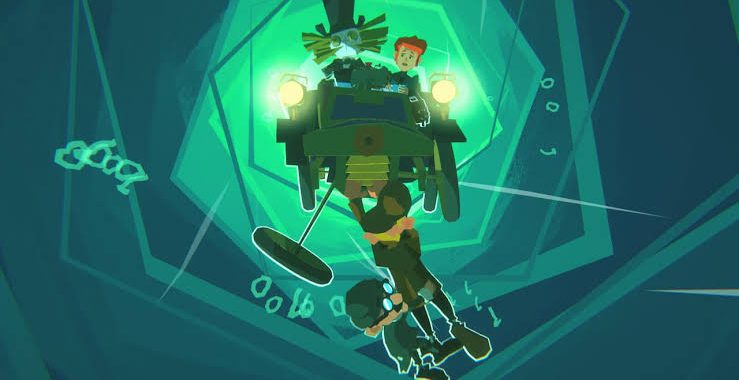
Crushed in Time: A Stretchy, Hilarious Meta-Masterpiece That Bends the Rules of Adventure Games
I’ll be honest—I went into Crushed in Time expecting a fun little indie curiosity, another quirky spin-off from the folks behind There Is No Game: Wrong Dimension. What I got instead was one of the most inventive, laugh-out-loud entertaining point-and-click adventures I’ve played in years. Released on June 10, 2026, by Draw Me a Pixel, this elastic adventure starring Sherlock Holmes and Dr. Watson doesn’t just pay homage to the classics—it yanks them into the modern era, stretches them like taffy, and flings them through time, game development hell, and fourth-wall-shattering chaos. At around 4-7 hours for a full playthrough (depending on how much you poke and prod everything in sight), it’s not the longest game, but it packs more charm, creativity, and replay value per minute than most triple-A titles manage in twice the runtime.
Let me set the scene without spoiling too much. The game opens in classic Baker Street fashion: Sherlock lounging with his newspaper, Watson knocking at the door. But nothing works quite right. Doors don’t open with a simple click. Objects have weight, bounce, and glorious stretchiness. Your mouse cursor becomes a virtual hand that grabs, pulls, rotates, and releases the world itself. It’s immediately clear this isn’t your grandma’s Day of the Tentacle (though it wears that influence proudly on its sleeve, with a heavy dose of Monkey Island wit).
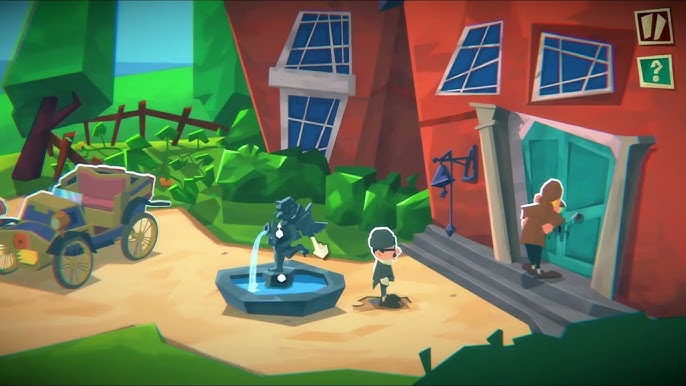
The Elastic Gameplay: Pinching Reality Itself
The core mechanic is what makes Crushed in Time special. Instead of verb coins or dialogue trees dictating actions, you physically manipulate the environment. Click and hold on almost anything—furniture, characters, keys, even the scenery—and drag it. Release, and physics (or cartoonish elasticity) takes over. Need to wake Sherlock? Tug the phone cord, fling a doorknob across the room to serve as a drawer handle, plug in a cord, slap the phone to make it ring. It’s tactile, satisfying, and often hilarious when things go wrong.
Early puzzles feel like a physics playground crossed with a slapstick comedy routine. You’ll stretch rubber-band-like ropes, wind up objects like slingshots, rotate pieces to aim them just right, and sometimes just aggressively poke characters until they move. Holmes and Watson react with perfect deadpan British exasperation—“Elementary, my dear Watson… or perhaps not”—as you manhandle them around the screen. Watson gets flung like a ragdoll more than once, and it never gets old.
What elevates this beyond a gimmick is how seamlessly it integrates with puzzle design. Puzzles scale beautifully. Simple ones teach the physics: fling this to hit that. Later chapters layer in timing, multi-step chains, and environmental interactions that feel genuinely clever. One mid-game sequence involving a malfunctioning time portal had me experimenting for a solid 20 minutes, trying different angles and stretches until the “aha!” moment hit like a perfectly aimed rubber band. There’s a generous hint system that never feels like cheating, and the game is forgiving enough that you can brute-force some solutions through sheer persistence and creativity.
Critics have called it “delightful” and “charming,” and I agree. It modernizes the point-and-click genre without losing its soul. Mouse controls feel perfect on PC (the primary launch platform), and I can’t wait to see how it translates to Switch or mobile later this year.
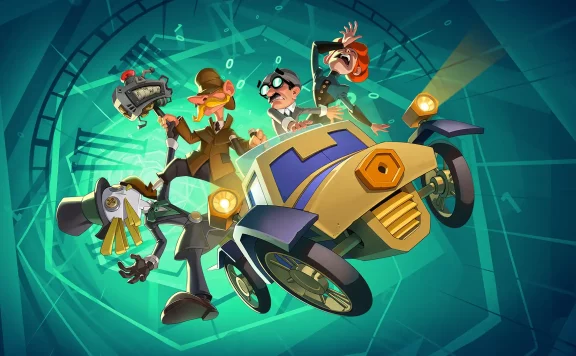
Story: Meta Done Right
The narrative is where Crushed in Time truly shines. Following their memorable cameo in There Is No Game, Holmes and Watson return for a standalone tale that starts as a missing-persons mystery (a character has vanished from their own video game right after launch) and spirals into a meta-exploration of game development itself. You’ll journey through various “stages” of the game’s creation—concept art realms, buggy alpha versions, polished beta worlds, and even the developer’s frantic office as negative reviews pour in.
It’s self-aware without being smug. The game pokes fun at crunch culture, bad Steam reviews, scope creep, and the absurdity of trying to make art on deadline. One sequence where Holmes deduces “plot holes” in the very game you’re playing is brilliant. Voice acting is fully performed by real humans (as the devs proudly note), with spot-on British accents that sell the humor. Holmes is pompous yet endearing, Watson the long-suffering everyman, and the new supporting cast—glitchy NPCs, exasperated devs, historical figures warped by time travel—adds layers of charm.
The meta elements never overwhelm the core detective story. There are genuine emotional beats toward the end, a surprising amount of heart wrapped in the absurdity. The writing crackles with wit: sharp one-liners, running gags that pay off beautifully, and fourth-wall breaks that feel earned rather than forced. It reminded me of the best parts of The Stanley Parable or Portal, but in a cozy adventure wrapper.
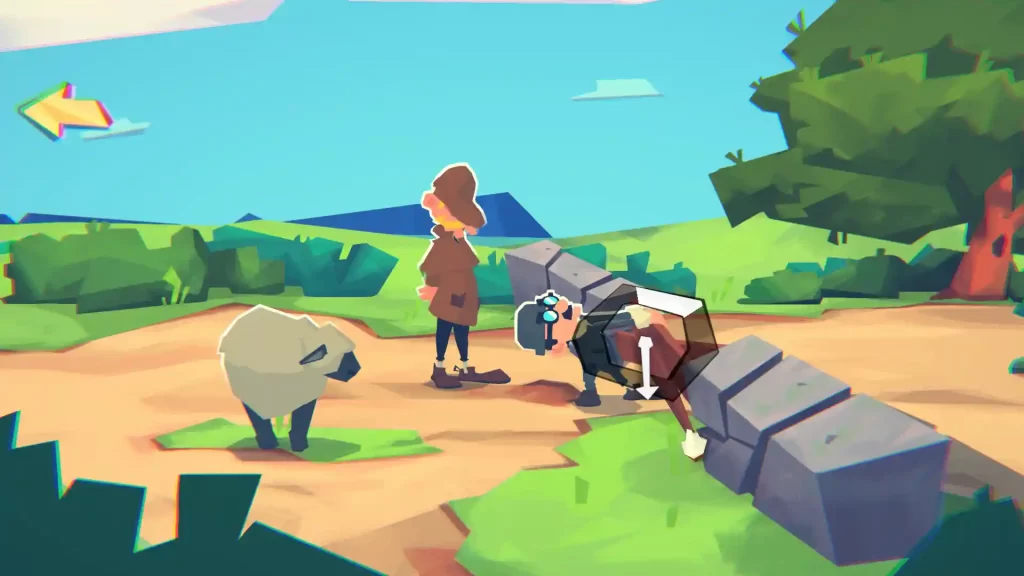
Visuals, Audio, and Polish
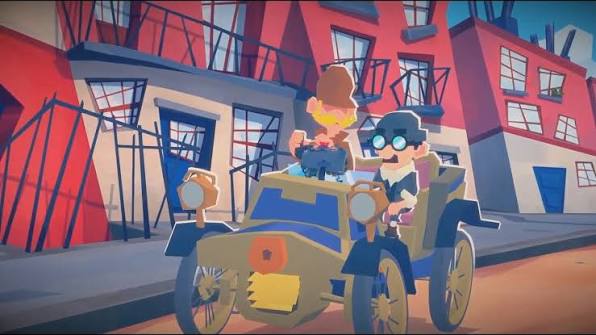
Draw Me a Pixel’s art style is vibrant and cartoonish, with beautiful 2D/3D hybrid backgrounds that pop. Characters have expressive animations, especially when stretched or slapped. Environments react dynamically—stretch a painting and the frame warps; pull a rug and everything on it shifts. It’s the kind of game where you’ll spend extra time just messing around because everything feels alive.
Sound design is excellent. Boings, squelches, and satisfying thuds accompany your manipulations. The orchestral-ish score shifts from whimsical mystery to frantic chaos as the plot escalates. No jarring bugs in my playthrough (a few minor physics quirks, but nothing game-breaking—fitting for a game about buggy development).
Strengths and a Few Nitpicks
Pros:
- Incredibly fun, unique core mechanic that never gets stale.
- Hilarious, heartfelt writing with strong voice acting.
- Clever, well-paced puzzles that reward experimentation.
- Charming meta-narrative that respects the player’s intelligence.
- Short but dense—perfect for multiple playthroughs hunting achievements or just replaying favorite bits.
Cons:
- The runtime might feel short for some (though I loved the tight pacing).
- A couple of later puzzles lean heavily on trial-and-error with the physics, which could frustrate perfectionists.
- Console/mobile ports aren’t out yet, so PC is the way to go for now.
These are minor quibbles. On Metacritic, it’s sitting comfortably in the “Generally Favorable” range with scores around 80 from outlets like Hardcore Gamer and TheSixthAxis. Steam reviews are “Very Positive.” It deserves every bit of that praise.
Who Should Play It?
If you love classic adventures, physics puzzles, meta-humor, or just want something fresh and joyful, buy this immediately. Fans of There Is No Game will feel right at home but don’t need prior knowledge. It’s accessible enough for newcomers yet deep enough for genre veterans. At its current Steam price (with a launch discount), it’s an absolute steal.
Crushed in Time isn’t just a game about stretching objects—it stretches the boundaries of what a point-and-click can be in 2026. It’s funny, clever, touching, and endlessly playful. Draw Me a Pixel has delivered a gem that reminds us why we fell in love with these games in the first place. Elementary? Far from it. This one’s a masterpiece of mischievous design.
I finished it in one glorious weekend sitting and immediately wanted to start over. If that’s not the highest praise, I don’t know what is. Highly recommended—go grab, pull, and release your way through it before the timelines shift again.
