
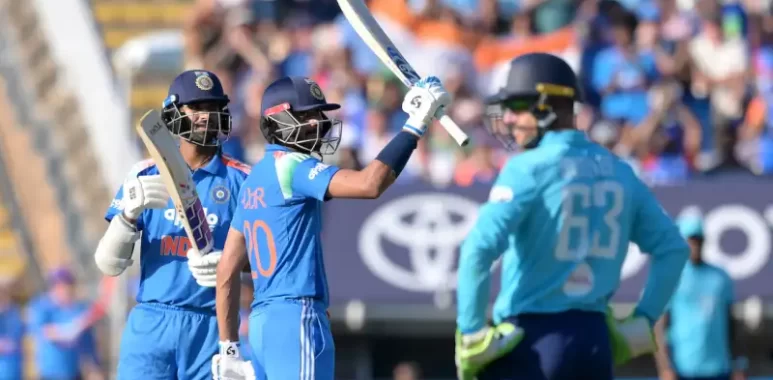
India Seal Commanding Six-Wicket Win Over England in First ODI at Edgbaston
India secured a commanding victory in the first One Day International against England at Edgbaston in Birmingham on Tuesday, July 14, 2026, chasing down the target with six wickets in hand and 28 balls to spare. The tourists announced their intentions early in the series, blending disciplined bowling with a clinical chase that left the hosts reeling. This result not only gave India a 1-0 lead in the three-match series but also highlighted the depth and adaptability of their squad in conditions that traditionally favor English seamers.
The atmosphere at Edgbaston was electric from the outset. A capacity crowd turned up under partly cloudy skies, eager to witness the renewal of one of cricket’s fiercest rivalries. England, coming off a mixed T20 series, were looking to assert dominance on home soil, while India arrived with momentum from recent bilateral successes. Captains Jos Buttler and Rohit Sharma exchanged pleasantries at the toss, where Buttler called correctly and elected to bat first, hoping to set a challenging total on a pitch that offered early movement but promised to ease out later.
England’s innings began cautiously. Openers Phil Salt and Ben Duckett navigated the new ball from Jasprit Bumrah and Mohammed Siraj with care. Salt found some early boundaries, but Siraj’s accuracy soon paid dividends when he induced an edge from Duckett, caught smartly at second slip by Shubman Gill. The score read 28 for one in the sixth over, setting a tone of containment that India maintained throughout.
Joe Root and Salt steadied the ship, adding 82 runs for the second wicket. Root, ever the technician, played with characteristic patience, flicking Siraj off his pads and driving Bumrah through the covers. Salt, more aggressive by nature, reached his half-century with a lofted six over midwicket off Kuldeep Yadav. However, the introduction of spin proved pivotal. Kuldeep, operating from the Pavilion End, extracted sharp turn and deceived Salt with a googly that trapped him leg before wicket for 67. England were 142 for three in the 28th over.
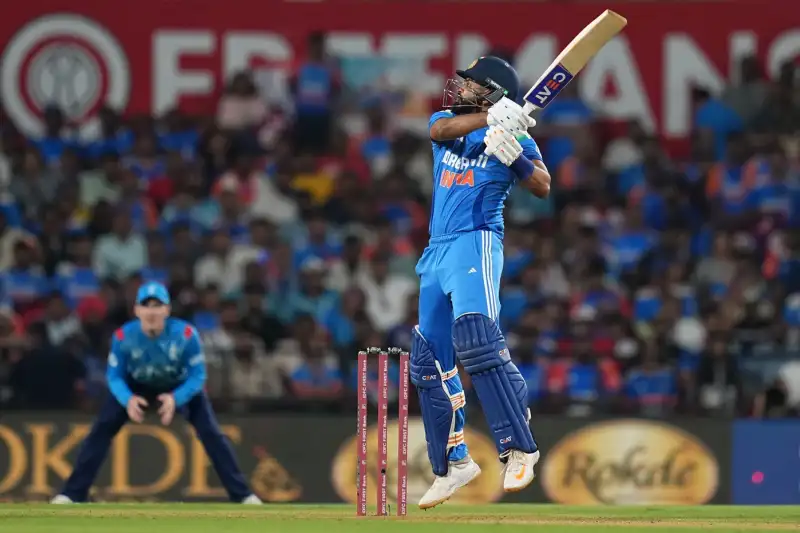
At this juncture, Buttler joined Root, and the pair looked to accelerate. Buttler unleashed some trademark shots, including a reverse sweep off Axar Patel that sailed to the boundary. Root brought up his own fifty shortly after, but India’s fielding remained sharp. A brilliant direct hit from Virat Kohli at cover sent Harry Brook back to the pavilion without scoring, triggering a mini-collapse. England lost three wickets for just 19 runs in quick succession.
Liam Livingstone provided some late fireworks, smashing 38 off 24 balls, including two massive sixes off Hardik Pandya. Yet Bumrah returned for his final spell to clean up the tail, finishing with figures of three for 42. England were eventually bowled out for 278 in 48.3 overs. Root top-scored with 78, but the inability to build substantial partnerships exposed vulnerabilities in the middle order.
India’s bowling attack was well-coordinated. Bumrah led the way with his trademark precision, mixing yorkers and slower balls effectively. Siraj complemented him with swing and aggression, claiming two wickets. Kuldeep’s variations troubled the batsmen throughout, while Axar Patel and Pandya provided crucial containment in the middle overs. The fielding effort, highlighted by Kohli’s athleticism and Gill’s safe hands, restricted England’s scoring rate to under six runs per over for large periods.
After a short break, India began their chase of 279 with clear intent. Gill and Kohli opened, and the duo immediately took the game to England. Gill, in sublime touch, dispatched Jofra Archer for three boundaries in the first over. The right-hander played with freedom, using his wrists to whip length balls through midwicket. Kohli, returning to form after a quiet T20 phase, anchored the innings with composed defense and occasional drives.
England’s bowlers struggled to contain the pair. Archer, despite his pace, leaked runs as Gill reached fifty in just 42 balls. The breakthrough came when Reece Topley, bowling with good rhythm, had Kohli caught behind for 42. At 98 for one in the 15th over, India were cruising. Shreyas Iyer joined Gill, and the two consolidated before Gill fell to a brilliant catch by Root at mid-off for 76.
Iyer and Suryakumar Yadav then took charge. Suryakumar, known for his innovative strokeplay, delighted the crowd with a series of ramps and scoops off Adil Rashid. He brought up his half-century in style, but Rashid claimed revenge by dismissing him for 58. India were 210 for three at that point, still well on track.
Virat Kohli’s absence from the crease earlier had shifted focus to the middle order, but KL Rahul and Hardik Pandya ensured there were no further hiccups. Rahul played a mature knock, rotating the strike and punishing loose deliveries. Pandya, batting at number six, provided the finishing touches with powerful hitting. He remained not out on 45 off 38 balls, including three sixes.
The winning moment came when Rahul flicked Topley to the square leg boundary with 28 balls left, sparking celebrations in the Indian dressing room. Rohit Sharma’s men had chased 279 with relative ease, losing only four wickets. It was a performance that underscored their status as pre-series favorites.
This victory was not just about the result but the manner in which it was achieved. India’s batting depth allowed them to recover from the loss of key wickets without panic. The bowlers set a platform by restricting England below 300, a total that looked defendable on paper but proved insufficient against India’s firepower.
Looking back at the buildup to this match, both teams had prepared extensively. India held training sessions at a nearby venue, focusing on adapting to English conditions. Their squad featured a mix of experience and youth, with rising talents like Yashasvi Jaiswal waiting in the wings. England, under Buttler’s leadership, emphasized aggressive intent but were let down by inconsistent batting.
Player of the match honors went to Shubman Gill for his fluent 76 that set the tone for the chase. In post-match interviews, Gill credited the bowlers for their effort and expressed confidence in the team’s ability to continue the momentum. Rohit Sharma praised the all-round performance, noting the importance of starting the series strongly. Jos Buttler, gracious in defeat, acknowledged India’s superior execution and vowed to bounce back in the second ODI.
The series context adds intrigue. With the World Cup cycle approaching, both sides are experimenting with combinations. England’s reliance on power hitters like Livingstone and Brook is clear, but their bowling attack needs better coordination. India, meanwhile, seem to have found the right balance between attack and control.
Delving deeper into the England innings, the early loss of Duckett disrupted their plans. Salt played well but could not convert his start into a century. Root’s 78 was a fighting effort, showcasing why he remains a cornerstone of their batting. However, the lower order failed to capitalize on the platform, a recurring issue in recent ODIs.
India’s bowling strategies were noteworthy. Bumrah’s use of the crease and variations kept batsmen guessing. Siraj’s short-pitched deliveries rattled the English lineup. The spinners, Kuldeep and Axar, exploited the wearing pitch effectively, slowing down the run rate during crucial phases.
In the chase, Gill and Kohli’s opening stand of 98 runs was the foundation. Their understanding and complementary styles put England under immediate pressure. Suryakumar’s cameo injected momentum, while Rahul’s calmness ensured the target was never in doubt. Pandya’s late hitting not only sealed the win but also boosted his confidence ahead of tougher challenges.
Tactical decisions played a significant role. Buttler’s choice to bat first was understandable given the conditions, but the pitch offered enough for India’s pacers initially. Sharma’s field placements were proactive, with close catchers and boundary riders positioned smartly.
Beyond the on-field action, the match carried cultural significance. The India-England rivalry transcends cricket, drawing massive viewership in both nations. Edgbaston, with its passionate support, lived up to its reputation as a cauldron of noise and energy. Indian fans in the stands waved tricolor flags, creating a vibrant spectacle.
Statistically, this was India’s seventh consecutive ODI win against England at neutral or away venues in recent years. It highlighted their dominance in white-ball cricket. For England, it served as a wake-up call to refine their strategies before the next encounter at Lord’s.
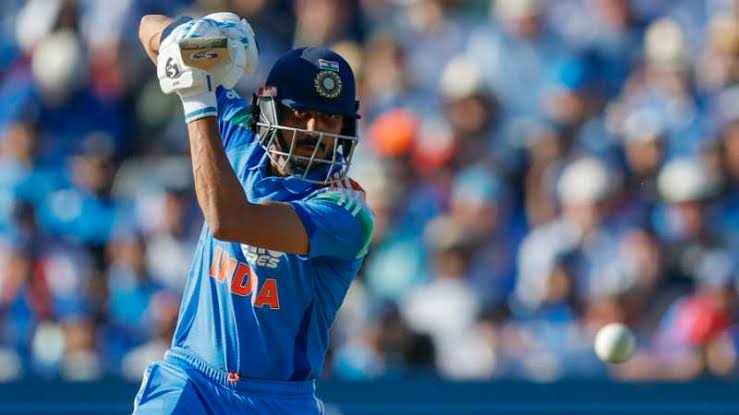
Individual performances merit further mention. Bumrah’s three wickets included key scalps of Livingstone and the tail, proving his value as the leader of the attack. Kuldeep’s two for 45 demonstrated his growing maturity. For England, Topley bowled with heart, taking two wickets, but lacked support. Rashid’s spell was economical but could not stem the flow of boundaries.
Youngsters on both sides gained valuable experience. England’s Jacob Bethell showed promise in the lower order, while India’s Washington Sundar contributed with the ball. Such exposures are vital for long-term development.
As the series progresses, expectations will rise. The second ODI promises to be another thriller, with England seeking to level the scores and India aiming to clinch the series early. Weather forecasts suggest similar conditions, which could favor seam bowling once again.
In summary, India’s triumph in Birmingham was a masterclass in all departments. From restricting England to a below-par total to executing the chase flawlessly, they left little room for criticism. This win boosts their confidence immensely and sets a high benchmark for the remaining matches. Cricket fans worldwide will eagerly anticipate what unfolds next in this fascinating contest between two proud cricketing nations.
The post-match analysis from experts echoed this sentiment. Former captains and commentators lauded India’s composure under pressure. One noted how the tourists adapted better to the slowish outfield and variable bounce. Another highlighted the significance of having multiple match-winners in the lineup, something England currently lacks.
Training and preparation details revealed India’s edge. Their support staff emphasized fitness and mental conditioning, which paid dividends in the closing stages. England’s injury concerns around key pacers might have impacted their bowling depth, though they refused to use it as an excuse.
Fan reactions poured in across social media and at the ground. Indian supporters celebrated wildly, chanting for their heroes. English fans, though disappointed, appreciated the competitive spirit and looked forward to better days.
Historically, ODIs between these teams have produced memorable encounters, from World Cup thrillers to bilateral dominance shifts. This match adds another chapter, reinforcing India’s current supremacy in the format.
To expand on the bowling analysis, Bumrah’s economy rate of under five runs per over in the death phase was crucial. His ability to bowl yorkers at will remains unmatched. Siraj’s aggression complemented it perfectly, targeting the body and creating discomfort. The spinners’ combined 12 overs yielded only 65 runs and three wickets, a testament to their control.
Batting-wise, Gill’s technique against pace and spin alike stood out. His footwork and timing suggested a long innings was possible had he stayed longer. Kohli’s 42, though not his highest, was valuable for stabilizing the innings. Iyer’s contribution, though brief, kept the momentum.
The middle and lower order’s resilience cannot be overstated. In chases, partnerships matter, and India formed several crucial ones that frustrated English bowlers. Pandya’s all-round display, including a couple of overs with the ball, rounded off a complete performance.
Fielding drills before the match evidently helped. Catches were taken cleanly, and run-outs avoided through smart calling. Such small margins often decide close games, though this one was relatively comfortable.
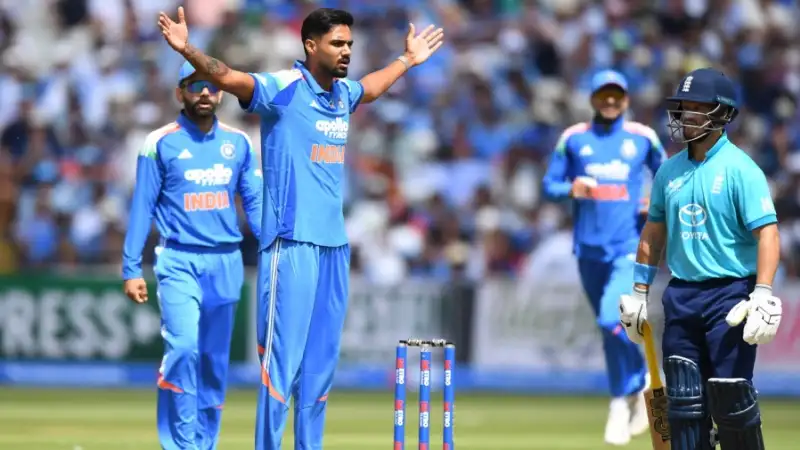
Series implications are broad. A 2-0 lead would put India in a strong position to dominate, while England need to win the next to keep hopes alive. Squad rotations are likely, with rested players possibly returning.
Coaching perspectives add layers. India’s head coach stressed process over results, a philosophy evident in their approach. England’s setup focuses on data-driven strategies, yet execution faltered on the day.
Youth integration remains a theme. Both teams feature emerging stars who will shape the future of their respective boards. This match provided a platform for them to shine or learn.
In closing, the 1st ODI served as a reminder of cricket’s unpredictability and beauty. India’s victory by six wickets with plenty to spare was comprehensive, yet it leaves room for England to respond. The series is far from over, and fans can expect more drama, skill, and passion in the games ahead. For now, the visitors savor the moment, having started their tour on a high note in front of a global audience.
