

Halo: Campaign Evolved Review: Returning to the Ring That Started It All
Twenty-five years is a long time in gaming. Long enough for a genre to reinvent itself half a dozen times, for an entire console generation to rise and fall, and for a character in green armor to go from mysterious supersoldier to cultural icon and back again. On July 28, 2026, Halo Studios released Halo: Campaign Evolved, a full ground-up remake of the original Halo: Combat Evolved campaign, and for the first time the series is available day-and-date on PlayStation 5 alongside Xbox Series X|S and PC. It is both a love letter and a careful experiment, and after spending the better part of a week living on Installation 04 again, I keep coming back to the same quiet realization: the old magic still works.
I was there in 2001. Not as a critic with early access codes, but as a teenager who bought an Xbox primarily because the reviews for this weird green guy with a purple AI companion were off the charts. The first time the Warthog hit the beach on The Silent Cartographer, the first time the Flood poured out of the walls in The Library, the first time Marty O’Donnell’s score swelled as the Pillar of Autumn made its final run — those moments burned themselves into the memory of a generation. Campaign Evolved does not try to recreate that exact feeling. It cannot. What it does instead is something smarter and, in the long run, more valuable. It takes the bones of that original experience, rebuilds them in Unreal Engine 5 with modern fidelity, and then carefully adds the tools and options that the series itself invented over the next two decades.
The result is a game that feels both deeply familiar and quietly transformed.
The Look of the Ring
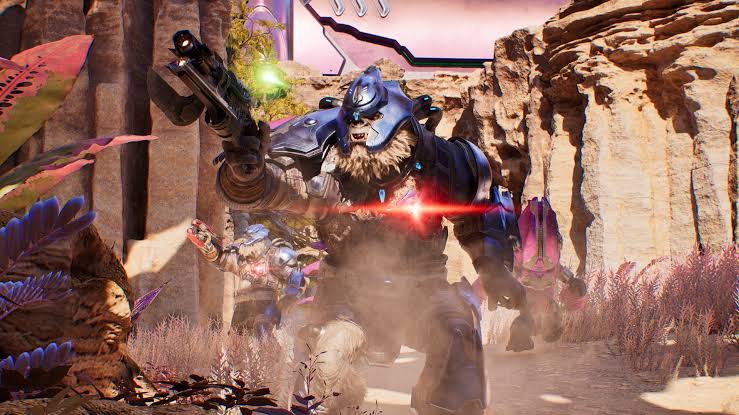
Let’s start with the obvious. Campaign Evolved is gorgeous. Not in the cold, sterile way some modern remakes chase photorealism, but in a way that feels like the original art direction finally got the technical budget it always deserved. The grassy plains of the Silent Cartographer are no longer a brown-green smudge; individual blades of grass catch the light, smoke rises realistically from burning trees, and the water actually looks like water. The snowy approaches to the Control Room have real weight now — tire tracks in the snow, ice crystals clinging to Forerunner architecture, the sense of scale that the original hardware could only imply.
There are choices I quibble with. The Forerunner structures lean a little harder into chrome and reflective surfaces than I remember, and occasionally the lighting feels a touch too theatrical. But those are minor notes against a visual overhaul that consistently made me stop mid-firefight just to look around. The cinematics have been completely rebuilt as well, with re-recorded performances from much of the original cast. Steve Downes still sounds like Master Chief. Jen Taylor still sounds like Cortana. The delivery is sharper, the emotional beats clearer, and the production values higher, yet it never feels like they are trying to rewrite history. It just feels like the same story told with better tools.
How It Plays
The core loop is still pure Halo. Dual-wielding is gone (it never belonged in the first game), but the two-weapon system remains. Grenades still bounce in that satisfying, slightly unpredictable way. Enemies still have distinct personalities — Grunts panic and flee, Elites charge with energy swords, Hunters demand your full attention. The difference is that the toolkit has expanded.
You can now sprint. You can aim down sights on almost every weapon (taking damage still kicks you out of it, preserving the mobility-focused design). You can pick up an Energy Sword, a Battle Rifle, a Needle Rifle, or an SMG — weapons that did not exist in the 2001 game but feel completely natural here. You can hijack a Wraith. These are not radical reinventions; they are the logical extensions of systems the series later perfected, brought backward so the first game no longer feels artificially limited by the original Xbox’s constraints.
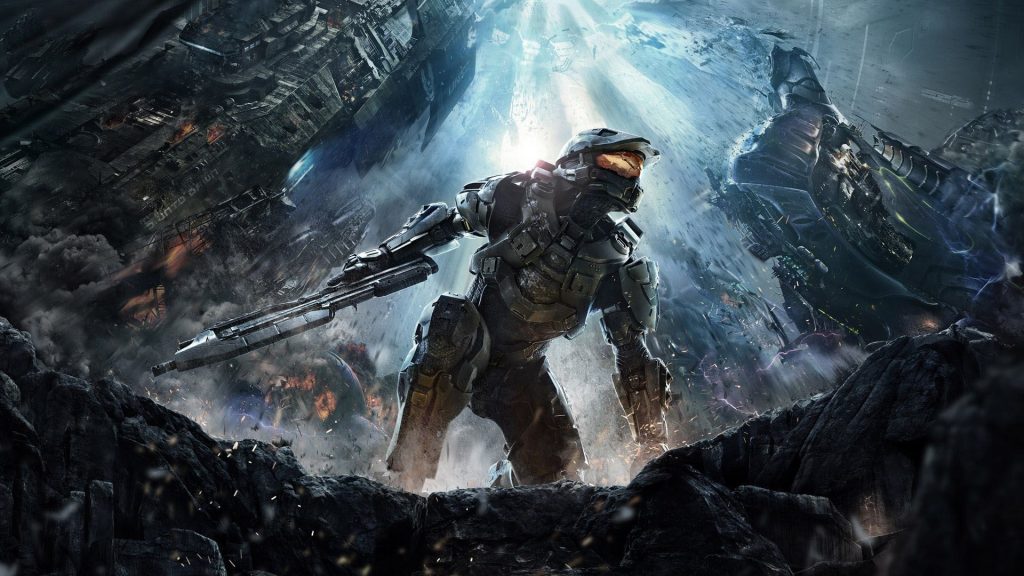
Levels have been subtly adjusted to accommodate four-player co-op without breaking the original flow. Some encounters have been rebalanced. The later Flood missions, which in the original could become repetitive slogs, have more variety and better pacing. Wayfinding is a little more generous in the labyrinthine sections, which some purists will hate and everyone else will quietly appreciate. The game never stops feeling like Halo: Combat Evolved, but it no longer feels like you are fighting the hardware and design limitations of 2001 while you play it.
The new Campaign Remix mode and the expanded roster of 42 Skulls give the whole thing serious replay legs. Want third-person? There’s a Skull for that. Want enemy and weapon placements completely randomized? There’s a mode for that. Want the classic 2001 Mark V armor and Assault Rifle skins? They’re unlockable. These systems do not change the fundamental experience; they just let you keep coming back without it feeling like homework.
Operation: Meteorite
The biggest pure addition is Operation: Meteorite, three new missions set roughly a year before the events of the main campaign. Master Chief and Sergeant Avery Johnson infiltrate a Covenant research vessel to rescue captured UNSC personnel. These missions introduce Brutes earlier than the original timeline, give you more time with Johnson (always a welcome thing), and deliver a self-contained story that feels like classic Halo military sci-fi with a few modern narrative flourishes.
They are good. They look and play great. The final stretch in particular has real spectacle. But they also feel different in a way that reveals the philosophical gap between Bungie-era design and Halo Studios’ approach. The original campaign trusts the player to invent solutions inside relatively open combat sandboxes. Meteorite is more curated, more directed, more “here is the set piece we prepared for you.” That is not a flaw exactly — plenty of excellent modern shooters work this way — but it makes the contrast with the main campaign sharper. The new missions are the strongest argument that Halo Studios understands how to make a fun Halo game in 2026. They are also the clearest reminder that the original Combat Evolved was something rarer.
Co-op and the Missing Multiplayer
Four-player online co-op with full cross-play and cross-progression is excellent. Dropping into the campaign with friends, whether on Xbox, PlayStation, or PC, just works. Local two-player split-screen is still there for the purest nostalgia trip. Shared progression means you can hop between platforms without losing unlocks. This is the version of co-op the original game always deserved but never quite had the infrastructure to deliver cleanly.
What is missing, of course, is competitive multiplayer. Halo Studios made the deliberate decision to focus entirely on the campaign. For a remake celebrating the story that started everything, that makes sense. For players who primarily remember Halo as the place they spent hundreds of hours in Blood Gulch or on Lockout, it is a noticeable absence. The game is priced at $49.99, which feels fair for what is offered, especially with Game Pass availability on day one, but the lack of PvP will keep some veterans on the sidelines.
The Bigger Picture
Halo: Campaign Evolved arrives at a complicated moment for the franchise. After the uneven years that followed Halo 5 and the mixed reception of Infinite’s launch (even if the multiplayer eventually found its footing), the series needed a clean statement of intent. Returning to the beginning in a full remake, on multiple platforms for the first time, built in Unreal Engine 5, is about as clear a statement as you can make. This is both a celebration of the past and a test bed for the future.
It largely succeeds. The campaign still stands as one of the strongest single-player FPS experiences ever made. The visual and systemic updates make it more approachable for new players without sanding off the edges that made it special. The new missions and expanded arsenal give returning fans enough fresh material to feel like more than pure nostalgia bait. And the co-op implementation is strong enough that playing it with friends feels like the way the game was always meant to be experienced.
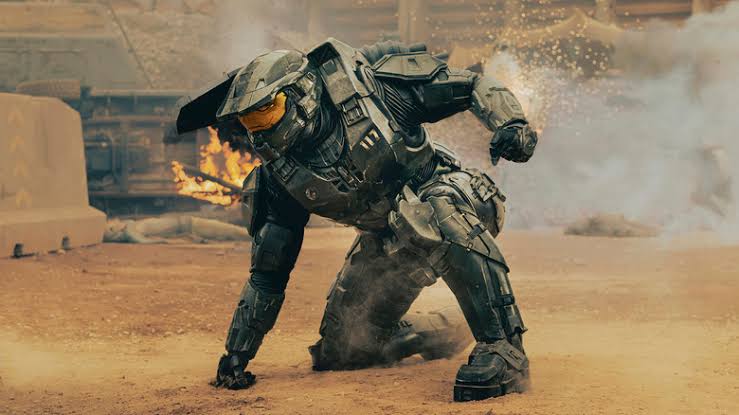
It is not perfect. Some of the later levels still carry the structural DNA of 2001 design in ways that can feel dated. The vehicle physics remain gloriously chaotic in the way only Halo vehicles can. A few technical hiccups (frame-time spikes in the busiest encounters, the occasional audio quirk) remind you that Unreal Engine 5 is still being bent to a design philosophy that was never built for it. And no amount of polish can fully recapture the pure shock of first discovering the Flood in 2001.
But perfection was never the point. The point was to take one of the most important games of its era, treat it with genuine respect, and make it feel alive again for both the people who were there and the people who were not. On that score, Halo: Campaign Evolved delivers.
I finished the final mission, sat through the credits, and immediately started a Legendary co-op run with a friend who had never played the original. Watching him experience the Silent Cartographer for the first time, hearing him swear when the first Elite energy-sworded him from behind, seeing the grin when the Warthog finally got some air — that is the real measure of success here. The ring still has power. Twenty-five years later, Master Chief’s first adventure still feels like the beginning of something bigger.
If you have never played Halo: Combat Evolved, this is the best possible way to do it. If you have, and the memory has faded into warm, slightly inaccurate nostalgia, this is a more than worthy reason to return. And if you are simply curious what all the fuss was about in 2001, Campaign Evolved makes an excellent case that the fuss was justified.
