

Avatar Legends: The Fighting Game
Avatar Legends: The Fighting Game feels like the game this franchise has been waiting for since Aang first woke up in that iceberg. Released on July 23, 2026, for PlayStation 5, PC (Steam), Nintendo Switch, and with Xbox Series X|S following on September 3, it arrives at a strange, perfect moment. The live-action series is still making waves, a new animated film is hovering on the horizon, and suddenly here is a proper fighting game that treats the source material with actual respect instead of turning it into another mediocre licensed cash-in.
I went in skeptical. Avatar’s track record with video games has been… let’s just say uneven. Most of them felt like they were made by people who had watched maybe two episodes and then decided “bending looks cool, let’s slap some buttons on it.” This one is different. Developed by Gameplay Group International (the studio that rescued the project after Maximum Entertainment shelved it) and published by PM Studios and Paramount Games, it lands at $29.99 for the standard edition. That price feels honest for what you’re getting, and it helps the whole package sit more comfortably in the mind.
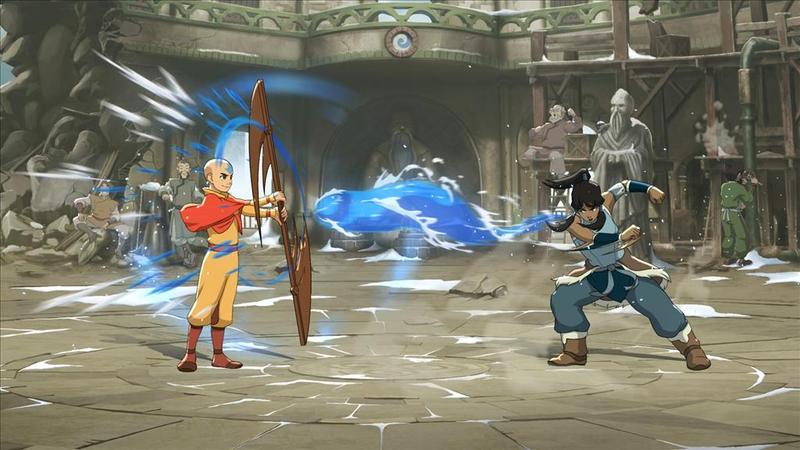
The Look and Feel of the World
The first thing that hits you is the animation. Everything is hand-drawn 2D, and it doesn’t just look like the show—it moves like the show. Characters have weight and flow that feel true to their elements. When Toph stomps the ground, the earth actually seems to answer. When Aang takes off on his glider, the way he cuts through the air has that same playful lightness you remember from the series. The team clearly studied the original animation frames. There are little details in the backgrounds, the stages, the way dust kicks up or water splashes that make you pause mid-match just to watch.
The roster at launch is twelve characters. That’s not huge by modern fighting game standards, but each one feels distinct. You’ve got Aang, Korra, Zuko, Katara, Toph, Sokka, Azula, Kyoshi, Zaheer, Ozai, plus special versions like Avatar State Aang and Nightmare Korra. The support system is clever: before a match you pick one of three supports that tweak your moveset, open new combo routes, or change how certain specials work. It makes the small roster feel bigger without turning the game into a tag fighter. Sokka with different supports can lean harder into sword work or boomerang pressure. Azula has her Focused form and her full Firelord meltdown form, and the difference is night and day.
How the Fighting Actually Works
This is a fast, mobility-heavy 1v1 fighter. Three attack buttons—light, medium, heavy—plus a special button and the Flow button that defines the whole experience. Flow is the star of the show. Holding or pressing it lets you dodge, dash, reposition, and cancel into movement options that are unique to each character. Aang can hop, glider, and change direction mid-air in ways that feel chaotic in the best sense. Katara can ride ice ramps and create awkward angles. Toph pulls the ground itself. Azula air-dashes like she’s late for an appointment with destiny.
You build an energy meter through smart play (one point per combo maximum, plus character-specific critical hits), and that fuels EX specials and supers. Drain your Flow meter completely and you go “unbalanced,” which is a nasty state that leaves you vulnerable until it recovers. It creates constant decision-making. Do you spend Flow to stay safe and reposition, or do you hold it for a big punish? The system rewards creativity without feeling like pure chaos. Auto-combos exist for people who just want to mash and still look decent, but the real depth lives in canceling Flow options into specials, finding those awkward approach angles, and learning the specific timing windows some characters demand.
The game is not easy. The skill ceiling is high. Some characters have tight just-frame extensions that feel punishing until they click, and then they feel incredible. Learning a new character is less about memorizing a fixed BnB and more about understanding how that character wants to move through space. That is both the biggest strength and the biggest barrier. Veterans will love the expression. Newcomers who just want to play as their favorite character and win some matches online will hit a wall faster than they expect.
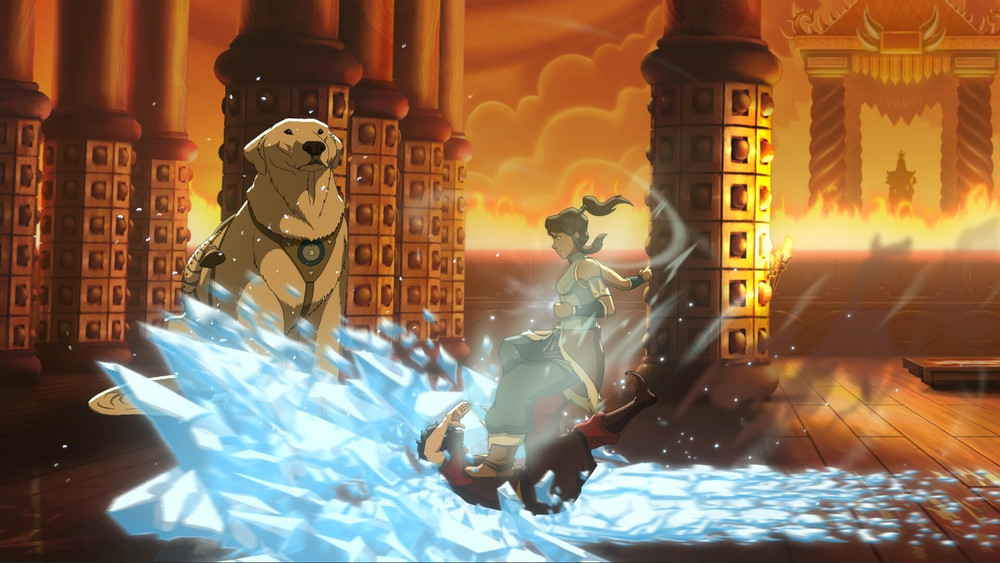
Story Mode and the Single-Player Experience
The story mode is an original tale outlined by Michael Dante DiMartino and written by Tim Hedrick. Multiple timelines collide. Three Avatars somehow exist in the same fractured reality. Personalities are flipped in ways that start off feeling like fanfiction and then slowly become more interesting as the characters start questioning who they really are. Voice work is solid even without most of the original cast. There are some genuinely funny and surprisingly thoughtful moments, especially when villains have to sit with their past actions.
That said, the mode is long—around 27 chapters—and the fights against AI are the weak link. The computer is either completely lost or suddenly reads your every throw attempt like it has a sixth sense. There is no difficulty setting. That is a baffling omission in 2026. Arcade mode exists, character-specific ladders exist, but without the ability to dial the AI up or down, a lot of the single-player value depends on how much you already enjoy the fighting system itself. Training mode has some excellent tools (frame data on by default, hitbox display, a step-by-step combo breakdown feature that freezes for each input), but it is also missing basic functions like random block or simple “jab after block” setups without fighting the UI. Character lessons that teach pressure and mix-ups are a nice idea and better than most games bother with, yet they still assume a certain baseline of fighting game literacy.
Online and the Competitive Side
Online is where the game wants to live. Proprietary rollback netcode, full cross-play, ranked and casual queues, spectator mode. Matches feel snappy. Load times are short. Rematches are quick. When it works, it feels great. Lobbies that only support two players at launch is another odd choice that the team has said will be fixed later, but it is noticeable right now if you want to hang out with a group of friends. Replay tools are limited compared to the bigger fighting games. Still, the core netcode experience is strong enough that the competitive scene already has people grinding matchups and theory-crafting support combinations.
At $30, the value proposition is reasonable. The Deluxe Edition at $49.99 adds the Year 1 Pass (five more characters plus colors), digital art book, soundtrack, and unique HUDs. Physical copies are coming later in October. The team has already shown they are listening—DLC characters were teased, and at least one was put up for fan vote. That kind of engagement matters for a smaller fighter trying to stay alive past launch.
The Bigger Picture
What I keep coming back to is how well the combat captures the spirit of the show. Bending in Avatar was never just about throwing elements at people. It was about movement, timing, reading the opponent, using the environment, and finding flow. This game understands that. When a match clicks, it feels like two people having an actual Agni Kai or a bending duel rather than two sprites trading strings. The animations sell every hit. The sound design sells every elemental impact. Even the small stage details and the way certain supers call back to specific moments from the series show a level of care that licensed games almost never reach.
There are rough edges. The roster is small. Single-player content is serviceable but not deep enough to carry someone who never wants to play online. Training and tutorial systems could be more welcoming. Some characters still feel like they have unfinished edges that future patches will probably smooth out. Xbox players have to wait until September. None of those things erase the fact that the fighting itself is excellent.

I have spent more hours than I planned in training mode just trying to figure out new ways to approach with Aang’s glider or to make Toph’s earth control feel inescapable. That is the sign of a fighting game that has real legs. It is not trying to be Street Fighter 6 or Tekken 8. It is doing its own thing, and that thing happens to fit the Avatar universe almost perfectly.
If you are a longtime fan who has always wanted to actually fight as these characters instead of watching them do it, this is the closest you are going to get. If you are a fighting game player looking for something with strong movement, high expression, and a roster that rewards learning every character’s quirks, this is one of the more interesting releases of 2026. It will not hold the hand of complete beginners as carefully as some bigger titles, and it will not give solo players an endless campaign. What it does give is a fighting system that feels alive, characters that feel true to who they are, and a presentation that treats the source material like something worth caring about.
For once, an Avatar game doesn’t feel like a compromise. It feels like someone finally sat down, watched the shows carefully, and asked what a real fight between these people would look and feel like. The answer, it turns out, is pretty damn good.
Score-wise I’m landing around an 8 out of 10—high enough that I keep coming back, with enough caveats that I wouldn’t tell every single Avatar fan to drop everything and buy it immediately. If the idea of mastering elemental movement and finding those beautiful, ridiculous combos sounds fun to you, though, this is the one. Water. Earth. Fire. Air. And for the first time in a video game, they all feel like they belong.
