
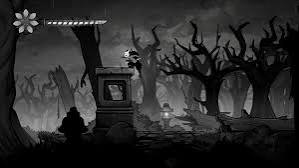
Gurei is a mean, beautiful little bastard of a game, and I kind of love it for that.
Released on July 23, 2026 (or the 22nd if you were in the right timezone when the clocks hit 00:00 GMT+8), Gurei comes from Brazilian indie outfit Lobo Sagaz Studio and publisher Astrolabe Games. It’s a hand-drawn 2D action game that lives almost entirely on boss fights. You play as Rei, a human spirit wearing a kitsune mask, stuck in a crumbling, gray Japanese-style castle that sits somewhere between the living world and the spirit one. Your job is to hunt down the Kami—ten powerful nature spirits drawn from Japanese mythology, each with animal forms and distinct personalities—and take their power. That’s pretty much the pitch. No sprawling map full of side quests to pad the runtime. No elaborate skill trees. Just you, a sword, and a series of increasingly vicious one-on-one brawls that you get to order yourself.
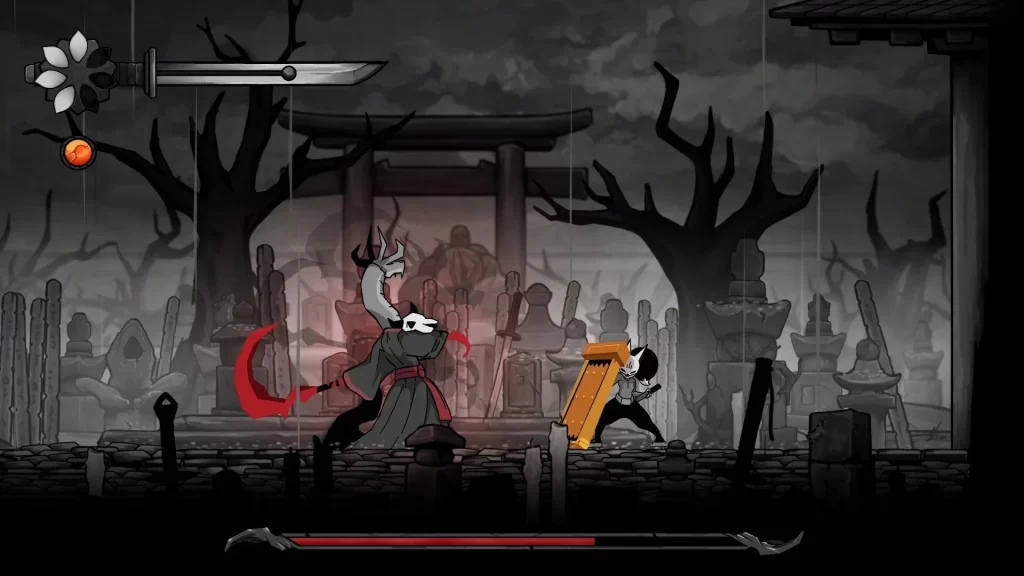
I went in expecting another stylish but familiar boss-rush experience. What I got instead was something sharper and more deliberate than most games in this space are willing to be.
The core idea that actually works
The big hook is the non-linear structure paired with dynamic difficulty. You can challenge the ten Kami in any order you like. Every time you beat one, two things happen: you absorb a new ability from them, and every remaining Kami gets stronger. More health. More damage. Extra moves. Sometimes entirely new patterns or environmental interactions. The same boss that felt like a tutorial fight if you took it first can turn into a nightmare final boss if you leave it for last.
This isn’t just a gimmick. It forces actual decisions. Do you go after the ability you really want early, even if it means fighting a tougher version of something else later? Or do you clear the ones that scare you while they’re still weak, knowing you’ll be carrying weaker tools into the late game? Different players will settle on different routes, and the game is designed so that no single “correct” order exists. The same Kami can function as an early, mid, or endgame fight, which is an impressive bit of design for a small team.
You also have a limited number of lives. Beating a Kami gives you an extra one. Run out completely and the run ends. You start over from the beginning of that attempt. The world itself remembers some of the NPCs and secrets you’ve interacted with, but your abilities and boss progress do not. It’s closer to a pure knowledge-based roguelike than the meta-progression-heavy ones that dominate the genre right now. Failure actually costs something. That tension is the point.
A successful run can be done in 20 to 40 minutes once you know what you’re doing. My early attempts were longer and uglier. One of them died on the second-to-last boss after nearly an hour. That sting is real. The game is short in the traditional sense, but the replay value comes from trying new orders, chasing better times, unlocking harder modes, and hunting the secrets and true ending path that require specific sequences and sacrifices.
Combat that stays readable even when it’s cruel
Rei starts with a basic three-hit sword combo, a dodge, wall-jumps, and the ability to stomp on heads. Controls are tight and responsive. The dodge has a little commitment to it, which some players will find frustrating at first, but once it clicks it feels fair. Every defeated Kami adds something meaningful: a temporary shield that can break, a healing move, a stronger dash or air mobility tool, a decoy, an execute-style attack, an extra miniature health bar on your last life, passive damage bonuses after a successful dodge, and more. The kit grows in ways that meaningfully change how you approach later fights rather than just giving you bigger numbers.
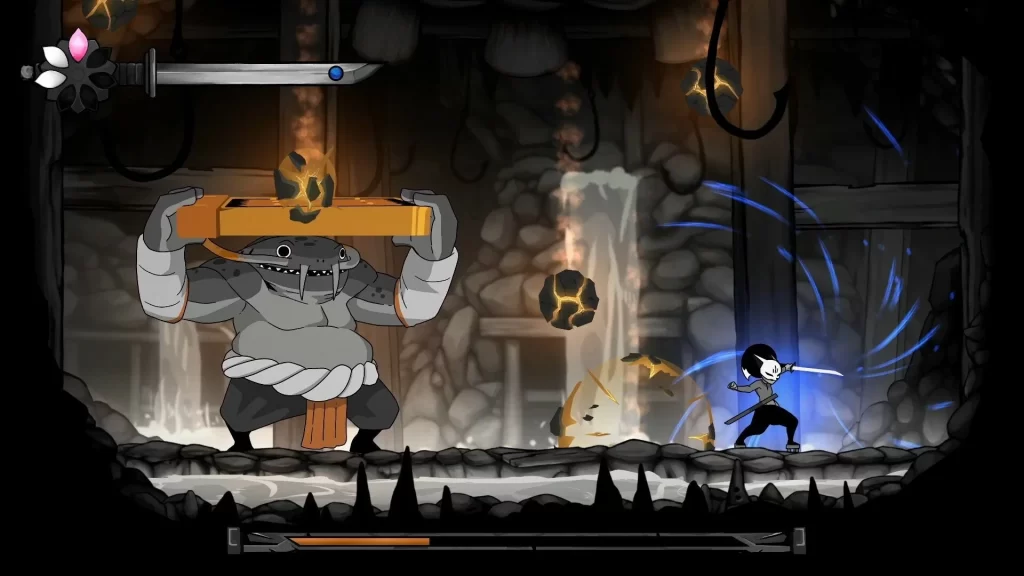
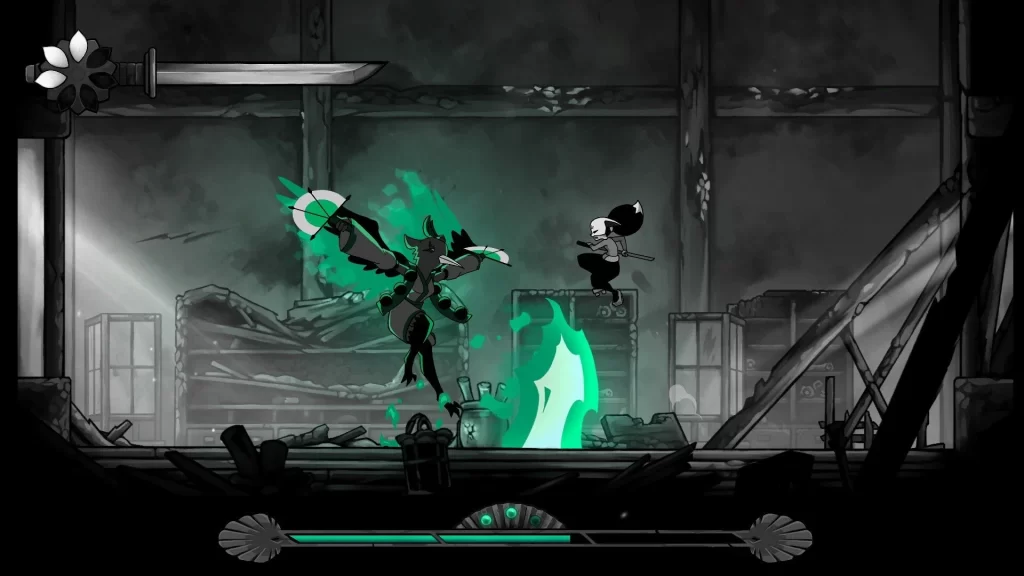
Boss design is the real star. Each Kami has a clear identity and readable telegraphs. The catfish can feel almost gentle early and then become a armored brick with an expanded moveset later. The snake starts simple and later adds layers. The cat is on a timer and gets more aggressive with projectiles the longer you leave her. The beetle can be staggered into a seppuku finish under the right conditions. The peacock/peafowl lets you choose weapons early and later forces you to deal with all of them. The monkey fight in its vertical mine-shaft arena is the one most people seem to either hate or prioritize early just to get it out of the way. There’s real variety here, and the way the fights evolve based on when you meet them keeps the encounters from feeling like carbon copies across runs.
The difficulty is unapologetic. There are no difficulty settings. The game expects you to learn patterns the hard way. If you bounce off precise action games or get tilted by permadeath-style resets, this one will test your patience. If you enjoy the feeling of finally nailing a fight that destroyed you five times before, Gurei delivers that rush cleanly.
The gray world and the voices in your head
Visually, the game commits hard to its monochrome look. The castle is all muted grays, crumbling architecture, and stark silhouettes. When the Kami abilities and attacks flash with color, they pop hard against that backdrop. The hand-drawn animation is fluid, especially in the combat and the little character moments. It has a strong atmosphere that sits somewhere between classic samurai cinema and a more surreal, folklore-tinged dream.
Story is light by design. Rei doesn’t talk much. The real flavor comes from the defeated Kami who stick around in her head and offer commentary, occasional advice, banter, or pure nonsense depending on the order you’ve collected them. The castle also fills with NPCs and spirits as you progress. Some want things from you. Some speak in riddles. Some are just weird. Exploring for these encounters and secrets gives the short runs a bit of texture beyond pure combat, though the backtracking between bosses can start to feel repetitive once you’ve memorized the layout. The world is compact enough that you learn it quickly, which is both a strength and a mild liability on long sessions of repeated attempts.
Sound design is solid. Combat has weighty sword swings and clear audio cues for incoming attacks. Each boss has its own musical personality that helps the fights feel distinct. The quieter moments in the castle lean into the eerie, sparse vibe.
The rough edges
It’s not perfect. The core loop is so focused on the bosses that everything between them can feel like necessary padding after a few runs. Some side content lands better than others. On Switch there were reports of frequent crashes around launch (the autosave helps, but it’s still annoying). The lack of any difficulty options or accessibility toggles will lock some players out entirely. And because the runs are short and the systems are transparent, once you’ve found a comfortable order the game can start to feel solved faster than something with deeper systems or longer individual campaigns.
None of that erases what works. Lobo Sagaz Studio (a small team) built something with a clear vision and stuck to it. They didn’t pad it with systems that would dilute the tension. They didn’t soft-pedal the challenge. They made a game that respects your ability to learn and adapt, and that is willing to punish you when you don’t.
Who this is for
If you liked the pure boss-focused intensity of games like Cuphead, the route-planning of classic Mega Man, the precise 2D combat of Hollow Knight or Nine Sols, or the high-stakes runs of tighter roguelikes, Gurei is worth your time. It’s especially good if you enjoy mastering something compact and then immediately trying to do it better or differently. Steam reviews have been very positive, and critic scores have landed in the solid-to-excellent range depending on how much the reviewer values focused design versus breadth.
If you need a long narrative, constant new environments, or the option to dial the challenge down, look elsewhere. This one is happy to leave you behind.
I finished my first full clear feeling equal parts exhausted and impressed. Then I immediately started another run with a completely different order just to see how the late-game versions of early bosses felt. That’s the best compliment I can give it. Gurei doesn’t overstay its welcome, and it leaves you wanting to go back into that gray castle one more time to try a different path. In a year full of bigger, louder releases, this sharp little Brazilian-made boss rush still managed to stick with me. Draw your katana. Face the Kami. Just don’t leave the one that scares you most for last.
