
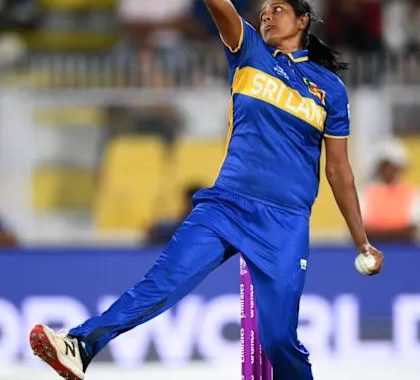
Ranaweera’s Four-For Seals Tense Ten-Run Win for Sri Lanka Women in Grenada Opener
Sri Lanka Women edged West Indies Women by ten runs in a tense opening One Day International of their tour, defending a total of 240 for six under the Caribbean sun at the National Cricket Stadium in St George’s, Grenada, on Friday, February 20, 2026. The visitors held their nerve in the final stages as the home side closed in on the target of 241, only to fall short at 230 all out in 49.4 overs. Inoka Ranaweera’s four wickets for 44 runs earned her the player of the match award and set the tone for a hard-fought contest that marked the start of a new cycle in the ICC Women’s Championship.
West Indies captain Hayley Matthews won the toss and chose to field first, a decision that reflected confidence in her bowling attack on a surface expected to offer something for the spinners later in the day. The National Cricket Stadium, hosting its first women’s ODI, presented a true pitch with a touch of early bounce. Sri Lanka’s openers, Hasini Perera and Chamari Athapaththu, began cautiously against the new ball. Matthews herself and the seamers kept the scoring rate in check during the powerplay, which ended with Sri Lanka on 45 without loss.
Athapaththu, the experienced captain and one of the most destructive batters in the women’s game, looked set for a significant contribution. She struck three boundaries in her 27 off 37 balls before falling in the twelfth over, caught off Matthews. The dismissal brought Harshitha Samarawickrama to the crease, and she immediately formed a steady partnership with Perera. The pair rebuilt patiently, rotating the strike and punishing the occasional loose delivery. Perera reached her half-century with controlled aggression, finishing with 61 off 86 balls that included six fours. Her innings provided the foundation Sri Lanka needed on a ground where chasing sides have historically enjoyed success.
Samarawickrama matched her partner’s composure. The left-hander occupied the crease for 105 deliveries, scoring 66 runs with five boundaries. Her ability to play late and use the pace of the ball kept the scoreboard moving without taking unnecessary risks. The second-wicket stand yielded 86 runs and pushed Sri Lanka past the 130-mark. When Perera eventually departed, caught off Aaliyah Alleyne, the total stood at a solid 135 for two in the thirty-second over.
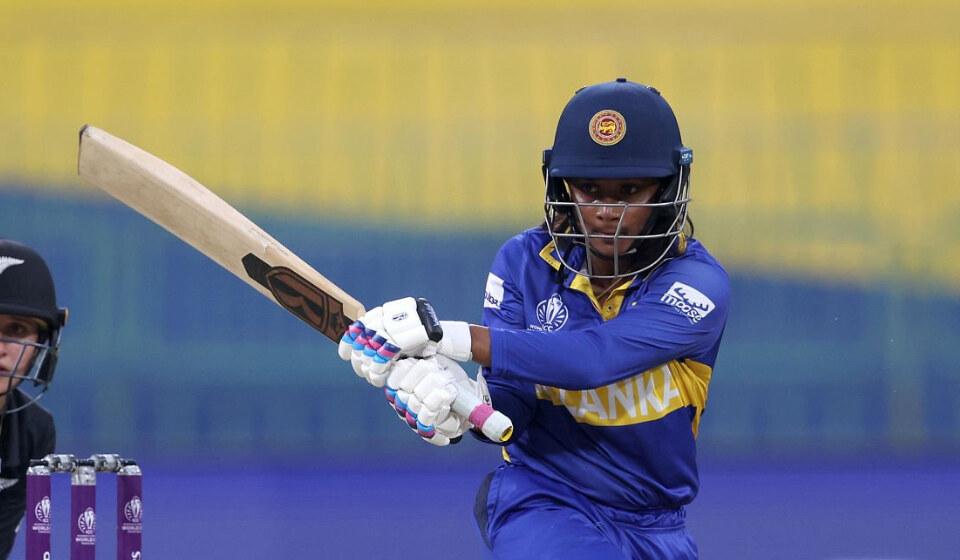
Nilakshika Silva and Samarawickrama continued the measured progress. Silva contributed a brisk 22 off 25 balls before falling leg-before to Matthews. Samarawickrama herself was stumped by Shemaine Campbelle off Karishma Ramharack for 66, leaving Sri Lanka at 185 for three. Kavisha Dilhari then injected some late impetus with 22 off 21 deliveries, including two fours, before being caught off Deandra Dottin. Dewmi Vihanga finished the innings with a lively 14 off six balls that included a six, helping Sri Lanka reach 240 for six from their full allocation of 50 overs. Vishmi Gunaratne remained unbeaten on 16. Extras contributed 12 runs to the total. Matthews finished with two wickets for 46 from her ten overs, while Ramharack also claimed two scalps.
The total looked competitive but by no means impregnable. West Indies had the batting depth to chase it down, and the presence of experienced campaigners such as Stafanie Taylor and Deandra Dottin gave the home crowd reason for optimism. The chase began poorly, however. Malki Madara removed Qiana Joseph for 13, and Dewmi Vihanga soon accounted for Matthews, also for 13. At 28 for two inside the eighth over, the pressure shifted firmly onto the middle order.
Shemaine Campbelle managed only 12 before Ranaweera struck, inducing a catch that left West Indies at 49 for three. Chinelle Henry followed almost immediately, caught for a single, and Ranaweera’s figures already looked impressive. Deandra Dottin, playing her 150th ODI, tried to stabilise the innings but fell for 14, caught off Dilhari. At 80 for five in the twenty-third over, the required rate was climbing and the home side needed a substantial partnership.
That partnership arrived through Taylor and Jannillea Glasgow. The pair added 89 runs for the sixth wicket and briefly threatened to turn the match. Taylor, ever the composed campaigner, scored 66 off 83 balls with five fours and a six. Her cover drives were particularly elegant, and she reached her half-century with characteristic calm. Glasgow provided the more aggressive foil, striking seven fours in a well-paced 50 off 67 deliveries. Together they took West Indies past 150 and into a position where the remaining required rate looked manageable.
Ranaweera returned to the attack at the critical moment. In the fortieth over she broke the stand, removing Taylor through a run-out involving Madara, and then dismissed Glasgow soon afterwards, caught behind. The collapse that followed was swift. Shawnisha Hector made 13 before being bowled, and the lower order found the going difficult against disciplined spin. Aaliyah Alleyne fought hard for an unbeaten 24 off 29 balls, but the required runs kept mounting. In the final over Dilhari claimed two wickets, first having Afy Fletcher caught behind for 12 and then stumping Karishma Ramharack for a duck. West Indies were all out for 230 with two balls remaining.
The ten-run margin reflected the fine margins of the contest. Sri Lanka’s spinners, led by Ranaweera’s four for 44 and supported by Dilhari’s three for 49, proved decisive. Vihanga’s economical spell of one for 28 from ten overs further restricted the scoring. The visitors defended well in the field and maintained composure when the chase gathered momentum. For West Indies the early loss of both openers and the inability of the middle order to convert starts into a match-winning total proved costly. Taylor and Glasgow’s efforts deserved a better outcome, yet the lack of partnerships around them left too much work for the lower order.
The match carried additional significance beyond the result. It formed part of the 2025-2029 ICC Women’s Championship and gave both sides valuable points early in the cycle. Sri Lanka claimed two points and took a 1-0 lead in the three-match series. The fixture also marked the ODI debuts of Nimasha Meepage and Kaushini Nuthyangana for Sri Lanka. Matthews reached her 100th ODI appearance, a milestone that underlined her longevity and importance to West Indies cricket. Dottin’s 150th ODI added further historical flavour to the occasion.
Conditions in St George’s were typical for the time of year. Scattered clouds offered some relief from the heat, humidity sat around 71 percent, and a moderate breeze assisted the bowlers at times. The pitch began with decent pace and bounce before slowing as the day progressed, favouring the spinners in the second innings. Crowds filled sections of the ground, creating an atmosphere that combined local support with appreciation for high-quality women’s cricket. The National Cricket Stadium, more familiar with men’s international matches, responded well to its first women’s ODI, and the facilities proved adequate for a competitive contest.
Sri Lanka’s approach with the bat was measured and professional. They avoided the early collapses that have sometimes undermined them in overseas conditions and built their total through consistent partnerships rather than explosive individual performances. Perera and Samarawickrama’s half-centuries were the cornerstones, while the lower order ensured the full fifty overs were utilised. In the field the visitors were sharp, taking their chances and applying pressure through accurate bowling. Ranaweera’s experience shone through. The left-arm spinner varied her pace and flight expertly, drawing batters into mistakes at key moments. Her two wickets in the middle of the innings and the later breakthroughs against the set partnership were the decisive interventions of the day.
West Indies will reflect on a chase that promised much yet fell short. The early wickets forced their middle order into a rebuilding role, and although Taylor and Glasgow responded admirably, the required acceleration never fully materialised until it was too late. The home side’s bowling was tidy without being penetrative enough to restrict Sri Lanka below 220. Matthews and Ramharack claimed two wickets each, but the seamers found less assistance than anticipated. Fielding remained committed throughout, yet a few missed opportunities in the middle overs allowed Sri Lanka to consolidate.
The result continues a recent trend of Sri Lanka enjoying success against West Indies in ODIs. Since 2017 the visitors have now won four of their last five encounters in the format. The series continues with the second ODI scheduled for Sunday at the same venue, giving West Indies an immediate chance to respond. Both sides will analyse the first match closely. Sri Lanka will look to maintain their disciplined approach with bat and ball, while West Indies must find ways to build stronger platforms in the chase and extract more from their bowling unit in the middle overs.
Beyond the immediate series, the contest offered a glimpse of the depth developing in both squads. Younger players such as Glasgow and Alleyne showed promise for the home side, while Sri Lanka’s balance of experience and emerging talent continues to grow under Athapaththu’s leadership. The presence of debutants on the Sri Lankan side also signalled a healthy pathway from domestic cricket into the international arena.
As the players left the field, the margin of victory felt both slender and hard-earned. Ten runs is a narrow gap in a fifty-over contest, yet it reflected the difference between a side that seized key moments and one that allowed them to slip. Ranaweera’s control of the middle and later stages of the chase proved the difference. Her ability to bowl tight lines while still taking wickets kept West Indies under constant pressure. Dilhari’s late strikes sealed the result and underlined the value of having multiple spin options in Caribbean conditions.
The wider context of the tour adds further interest. Sri Lanka arrived with ambitions of securing Championship points and building momentum ahead of future global events. West Indies, playing at home, aimed to use familiar conditions to their advantage and to give emerging players valuable experience against quality opposition. The first ODI delivered a competitive contest that lived up to expectations and set an engaging tone for the remainder of the series.
In the dressing rooms the emotions would have been contrasting. Sri Lanka celebrated a hard-fought win achieved through collective effort rather than individual brilliance alone. West Indies reflected on missed opportunities and the need for greater consistency across the batting order. Both captains will address their teams with measured messages: Athapaththu emphasising the importance of maintaining standards, Matthews focusing on the areas that require immediate improvement.
The National Cricket Stadium in St George’s provided a fitting stage. The ground’s history of hosting international cricket, combined with the novelty of its first women’s ODI, created a sense of occasion. Spectators witnessed a match that swung back and forth before Sri Lanka’s bowlers closed it out with clinical efficiency. The final moments, with Dilhari claiming the last two wickets in successive deliveries, produced the kind of tension that makes limited-overs cricket compelling.
Looking ahead, the second ODI on Sunday offers West Indies the chance to level the series and Sri Lanka the opportunity to extend their lead. Conditions are expected to remain similar, placing further emphasis on spin bowling and careful batting construction. Both sides will refine their plans based on the lessons of the first match. Sri Lanka will continue to trust their spinners and look for another solid batting platform. West Indies will seek earlier partnerships and greater penetration with the ball.
For the players involved, the match will live long in the memory. Ranaweera’s four-wicket haul stands as the standout individual performance, yet the contributions of Perera, Samarawickrama, Taylor and Glasgow ensured the contest remained evenly balanced for long periods. The ten-run margin accurately captured the closeness of the battle. In the end Sri Lanka’s ability to defend a modest total under pressure proved decisive, and they left Grenada with a valuable series lead and two Championship points secured.
The opening encounter of the tour delivered everything expected of high-level women’s international cricket: competitive cricket, individual milestones, emerging talent on display, and a result decided by fine margins. Sri Lanka Women begin their Caribbean campaign with a hard-earned victory. West Indies Women will regroup and return determined to respond. The series remains alive, and the cricket that follows promises further intrigue.
