
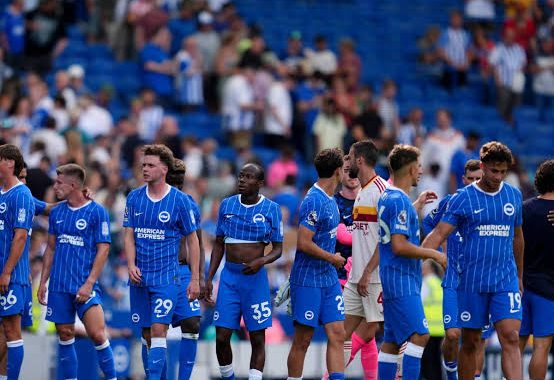
Brighton 1-1 Leeds United: Vuskovic’s Header Rescues a Point as Farke’s Side Pay for Wastefulness
Amex Stadium, Saturday 5 September 2026
There are days in the Premier League when the scoreline tells only a fraction of the story. Brighton & Hove Albion versus Leeds United on the first Saturday of September was one of those afternoons. A 1-1 draw at the Amex felt fair in the end, yet anyone who watched the opening hour would have struggled to believe the points would be shared. Leeds were rampant, clinical in approach if not in finishing, and somehow left East Sussex with only one point when three had looked theirs for the taking. Brighton, injury-hit and sluggish early on, found a way back through the head of their club-record signing and nearly pinched the lot late on. Football, as ever, refused to follow the script.
The Build-Up and Preview
Going into this one, both sides sat near the middle of the early table after three matches, but their paths had felt different. Leeds, under Daniel Farke, were unbeaten. A solid opening-day win at Nottingham Forest followed by a hard-fought draw with Brentford had given the Yorkshire club a sense of momentum and belief. Five points from six, and the feeling around Elland Road was that this squad—bolstered by smart recruitment and the return of some familiar faces—could be awkward for anyone on their day. Dominic Calvert-Lewin was starting to look sharp again. Ao Tanaka was dictating tempo. The back three looked organised. An away trip to Brighton is never straightforward, of course, but Leeds had every reason to travel with quiet confidence.
Brighton, managed by Fabian Hürzeler, were a point behind and carrying the usual early-season frustration that comes with a squad still bedding in new pieces while dealing with absences. The Seagulls had been entertaining if not always efficient. Their style remains possession-heavy, high-pressing, and ambitious, but the final ball and clinical edge had been missing in patches. Lewis Dunk was still the leader at the back. Pascal Groß continued to be the creative heartbeat. New faces, including the expensive Croatian centre-back Luka Vušković, were being integrated. A home game against a newly promoted or returning side like Leeds often brings expectation, and the Amex crowd would have been hoping for a statement performance.
Historically, this fixture had tilted Brighton’s way in recent years. Leeds had not won at the Amex in a long time—last success dated back more than a decade—and they had gone long stretches without even scoring on the south coast. That narrative hung over the build-up. Could Farke’s side finally break the curse? Would Brighton’s superior possession and home comfort prove decisive? The preview consensus leaned towards a tight contest with Brighton slight favourites, but anyone who has watched Leeds under Farke knows they can be dangerous on the counter and from set pieces when they get their shape right.
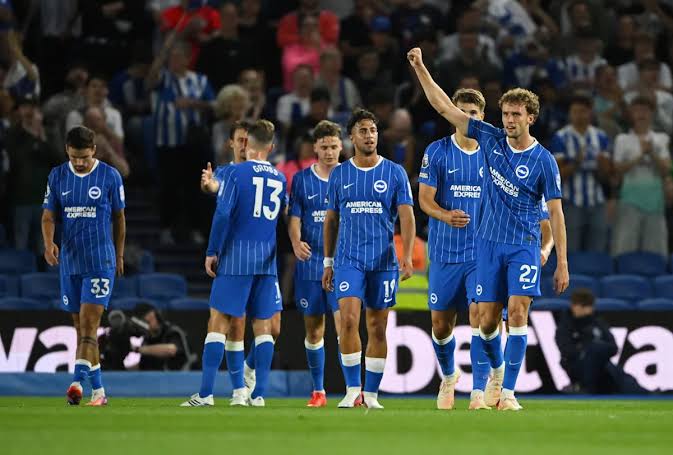
The teamsheets reflected the managers’ approaches. Brighton lined up in a familiar 4-2-3-1 shape with Bart Verbruggen in goal, a back four including Dunk and Vušković, midfield energy from the likes of Yasin Ayari and Diego Gómez, and Groß pulling strings. Leeds opted for a 3-5-2 or flat midfield variation, James Trafford between the posts, a solid defensive unit featuring Nico Elvedi and others, wing-backs including Jayden Bogle, and Calvert-Lewin leading the line with support from Tanaka and Noah Okafor. Stuart Attwell took charge of the referee’s duties in front of just over 31,600 supporters under the September sun.
How the Match Unfolded – Top Highlights
The first real moment of quality arrived early. Leeds forced the issue. A cross from the left or a set-piece delivery found Calvert-Lewin, whose header was well saved by Verbruggen. The rebound fell invitingly. Tanaka reacted first, pulling the ball back across the six-yard box, and Jayden Bogle, arriving at the far post, tapped home from close range. Fifteen minutes gone, 0-1 to the visitors. The Leeds end erupted. It was their first goal at this ground in something like 12 or 14 years, depending on how you count the barren runs. Suddenly the historical hoodoo felt breakable.
What followed was a period of Leeds dominance that should have produced a second or even a third. Calvert-Lewin had a one-on-one opportunity that he dragged wide. He rounded Verbruggen on another occasion only for Dunk to clear off the line. Tanaka rattled the crossbar with a fierce effort. A second Leeds goal was ruled out for offside against the Japanese midfielder. The xG numbers climbed rapidly—Leeds were north of 2.0 expected goals before the half-hour mark in some calculations, an absurd figure for an away side at Brighton. Anton Stach and others wasted half-chances. Brighton looked shell-shocked, struggling to string three passes together in the final third, their usual fluidity absent.
Brighton did create a couple of moments before the break. Malick Yalcouyé and Charalampos Kostoulas both went close, Trafford forced into saves or the ball flashing just wide. But the half-time whistle came with Leeds deservedly ahead and Brighton grateful it was only 0-1. The home crowd murmured rather than roared. Hürzeler would have had strong words in the dressing room.
The second half began with Leeds still looking the more dangerous side, yet Brighton gradually found their rhythm. Possession swung heavily their way—ending the afternoon at around 67 percent for the hosts. The equaliser arrived in the 71st minute and it was pure set-piece execution. Maxim De Cuyper swung in a dangerous corner from the right. Vušković, the big Croatian centre-back signed for a club-record fee from Tottenham, rose highest at the back post and powered a header past Trafford. 1-1. The Amex exploded. Vušković’s first goal in English football, and what a moment for the teenager to announce himself properly.
From that point the game opened up. Brighton smelled blood. Yalcouyé forced another save. Promise David, introduced from the bench, found space in the box but fired over. Then, deep into the closing stages, the biggest chance of all fell to Pascal Groß. On his 250th Premier League appearance, the German was presented with a gilt-edged opportunity inside the area—four yards out, the goal gaping. He somehow scooped it over the bar. The collective groan from the home stands was audible. Leeds, hanging on, nearly stole it themselves when substitute Lukas Nmecha went close in stoppage time. The final whistle blew on a 1-1 scoreline that felt like a point gained for Brighton and two dropped for Leeds.
Yellow cards were shared around—three apiece in the end—as the contest grew scrappy in the latter stages. No red cards, no major controversies beyond the disallowed Leeds effort and the usual soft fouls. The key talking points remained the finishing (or lack of it) and Vušković’s timely intervention.
Tactical Analysis and Deeper Thoughts
Strip away the emotion and the numbers paint a fascinating picture. Leeds generated the higher xG—somewhere in the region of 2.5 versus Brighton’s 2.2 depending on the model—yet both sides underperformed those figures significantly. Leeds in particular left a mountain of points on the table through profligacy. Calvert-Lewin’s first-half display will haunt him; he should have had at least one, possibly two. Tanaka’s energy and technical quality were excellent, and Bogle’s opportunistic finish was the reward for the wing-back’s willingness to get into the box. Farke’s side pressed high early, disrupted Brighton’s build-up, and exploited the spaces behind a slightly hesitant home defence. Their set-piece threat was real, and the structure allowed them to absorb pressure and transition quickly.
Yet once Brighton equalised, the game flipped. Hürzeler’s side started circulating the ball with more purpose. The midfield, featuring Ayari, Gómez and Groß, began to find pockets. De Cuyper’s delivery for the goal was excellent—an inswinging corner that asked serious questions. Vušković’s aerial ability, one of the reasons Brighton paid big money for him, paid immediate dividends. The Croatian looked comfortable defending and dangerous attacking. Dunk’s leadership and clearance off the line earlier in the match underlined his enduring value.
Brighton’s second-half improvement was marked by higher intensity and better decision-making in the final third, even if the finishing remained imperfect. Groß’s late miss was the kind of chance that decides titles in another context; on this day it simply meant a draw rather than a win. The possession stats flattered Brighton overall, but the quality of chances created told a more nuanced story. Leeds’ defensive organisation after the equaliser was tested but largely held, with Trafford making important interventions when called upon.
Injuries and squad depth played a background role. Brighton were missing some key creative options, which helped explain the flat first-half display. Leeds rotated slightly from previous weeks and looked fresher early on. Both managers will take different lessons. Farke will be frustrated that his side did not convert dominance into victory—an old Premier League lesson that clinical finishing separates the good from the very good. Hürzeler will be relieved at the character shown to come back and will push for more consistency across ninety minutes. The point keeps both teams in the early-season pack rather than either pulling clear or slipping.
Looking at the broader picture, this result fitted the early narrative of the 2026/27 season: competitive, open, and full of sides capable of controlling stretches of matches without quite putting them to bed. Leeds remain unbeaten and sit on five points. Brighton are on four. Neither will be satisfied, yet neither is in crisis. The fixture list will soon demand more.
Summary and What It Means
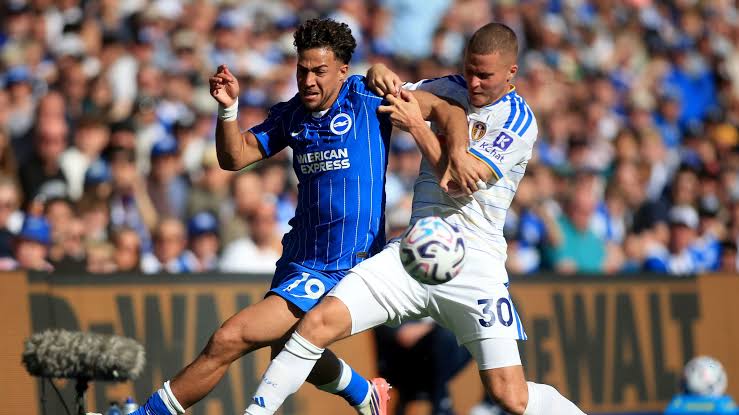
In the end, a 1-1 draw felt about right once the dust settled, even if the first hour suggested otherwise. Jayden Bogle’s early strike gave Leeds a deserved lead and ended a long scoring drought at the Amex. Luka Vušković’s header from Maxim De Cuyper’s corner restored parity and announced the young defender’s arrival in English football with a moment of real quality. Missed chances littered the afternoon—Calvert-Lewin’s in particular, Tanaka’s woodwork strike, the disallowed goal, and Groß’s late howler. Both teams created enough to win; neither took enough of those opportunities.
For Leeds, it was a case of what might have been. An away point at Brighton is never a disaster, especially given the historical context, but the performance levels in the first half deserved more. Farke’s side showed they can compete with established Premier League outfits and create high-quality chances. The challenge now is converting that into more consistent results and better finishing. For Brighton, the second-half response offered encouragement. Character was shown. Vušković looks a smart addition. The home support left the stadium knowing their team had fought back rather than folded.
The Premier League table after three matches remains tightly packed. These two points shared will not define either campaign, but the manner of the draw will linger in the memory. Leeds will rue the ones that got away. Brighton will take the point and look to build on the late momentum. Football at this level rarely hands out gifts, and on a bright September afternoon by the south coast, neither side was quite clinical enough to claim all three.
The season is young. Plenty more drama awaits. For ninety-odd minutes at the Amex, though, we got a proper contest—one that swung, frustrated, excited, and ultimately settled on a scoreline that somehow managed to feel both inevitable and slightly unsatisfactory at the same time. Classic Premier League, in other words.
