
Stellar Blade: Complete Edition Review – Eve Hits the Hybrid and Still Cuts Deep
Released November 5, 2026
Look, I wasn’t sure how this one was going to land. Stellar Blade first dropped on PS5 back in 2024 as this flashy, unapologetic action game from Shift Up—the same folks behind the gacha mobile hit Goddess of Victory: Nikke. It was pretty, it was stylish, the combat clicked in that perfect parry-and-punish way that makes you feel like a badass once it finally clicks, and the whole thing leaned hard into its protagonist’s design in a way that sparked endless internet arguments. Then it came to PC. Now, more than two years later, the Complete Edition lands on Nintendo Switch 2 on launch day with every bit of DLC, a bunch of extras, a free Bayonetta costume collab, and the entire game sitting on a real 32GB cartridge. No game-key card nonsense. That alone feels like a small victory in 2026.
I played a healthy chunk of the original on PS5, bounced off it for a while, came back for the DLC, and now I’ve spent a good amount of time with this Switch 2 version. The short version: the heart of the game survives the port in better shape than I expected. The long version is more complicated, and more interesting.
The Setup, Briefly
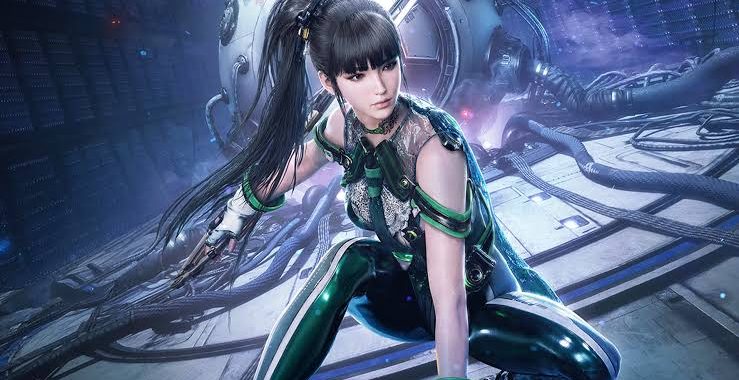
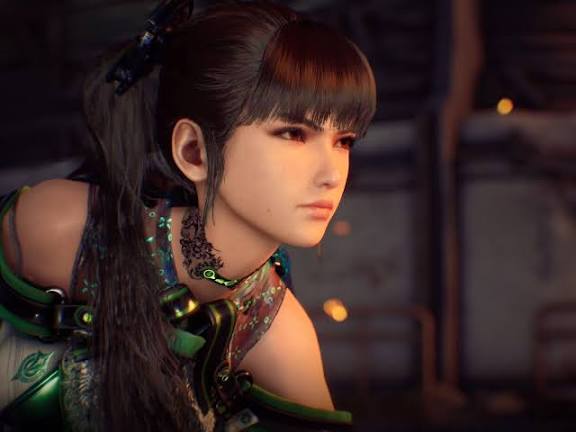
Earth got wrecked by these grotesque, bio-mechanical monsters called Naytiba. What’s left of humanity lives up in a space colony. Elite soldiers from the Airborne Squad get dropped down to try and take the planet back. You play as EVE, one of those soldiers. Her squad gets shredded almost immediately, she links up with a survivor named Adam and a sharp engineer named Lily, and the mission slowly turns into something messier and more personal than the clean “kill the big monster, save humanity” brief she started with.
The story is serviceable pulp sci-fi with some twists that land better than others. Characters can feel a bit thin—dialogue sometimes lands like people reading lines at each other rather than talking—and a few late reveals are visible from orbit. Still, the world has enough texture, the side stories in the hub town of Xion give the survivors some humanity, and the game occasionally pauses for quieter moments that help sell why any of this matters. It’s not rewriting the genre, but it doesn’t completely phone it in either. If you came for deep character drama, you might leave a little hungry. If you came to slice monsters while looking cool, you’re in the right place.
Where the Game Actually Lives: Combat
This is the part that still works. Stellar Blade’s combat is a hybrid of precise, timing-heavy defense (parries and dodges that feel closer to Sekiro or the better character-action games) and flashy, acrobatic offense. Light and heavy attacks chain into longer combos. Perfect parries open enemies up for counters. You build Beta Energy through successful offense and defense, then dump it into powerful skills that can break guards or clear space. There’s a gun for ranged pressure, throwables, and later systems like Exospines and gear that let you tune EVE toward the playstyle you prefer.
Bosses are the clear highlight. They force you to learn patterns, respect the timing windows, and feel genuinely rewarding when you finally dance through a phase without eating dirt. Regular enemy packs can still overwhelm you if you get greedy—crowd control is limited and stunlocks hurt—but the core loop of reading, reacting, and then exploding into stylish counters never really gets old. The game gives you room to get better. Skill points, collectible upgrades, and better gear all help, so even if a particular fight is kicking your teeth in, you’re still making measurable progress outside of pure mechanical improvement.
On Switch 2 the combat still sings. The input feel is mostly solid once you settle on your preferred settings. There is some noticeable lag if you leave frame generation on (the game targets 60 fps that way), and for a game this timing-dependent that lag is annoying. Turning frame generation off drops you closer to the 30-40 fps range but makes the controls feel much more responsive. I ended up preferring the lower frame rate for serious sessions. It’s not ideal, but it’s playable and the satisfaction of a clean parry-to-counter still hits.
Joy-Con 2s are… not great for this. They’re fine for lighter play, but extended sessions of precise timing feel better with a Pro Controller. The game lets you set different control profiles depending on what you’re using, which helps. Motion controls for some non-combat activities are a nice little extra, nothing more.
The Complete Package
This is the version to get if you never played it. Everything is here: the base game, the NieR: Automata collaboration content, the Goddess of Victory: Nikke stuff (including the fun minigame elements), all the previous cosmetic drops, and a pile of Complete Edition bonuses—Stargazer outfits for EVE, Adam, and Lily, extra drone skins, glasses, earrings, starting resources, the works. On top of that, four free Bayonetta-inspired Nano Suits drop at launch across platforms. The Bayonetta, Nun, and Jeanne looks are particularly well done; the attention to detail is obvious and they look fantastic in the game’s photo mode. The fourth outfit is still being kept under wraps a bit, but the collab as a whole feels like a genuine celebration rather than a half-hearted cash-in.
The physical cartridge having the full game on it is genuinely nice. No mandatory day-one download of the actual game data. That shouldn’t feel like a flex in 2026, but it does.
How It Looks and Runs
This is where the compromises show. On PS5 and high-end PC, Stellar Blade was a looker—sharp character models, detailed environments, those long, physics-heavy ponytails that somehow never clipped wrong. On Switch 2 you’re looking at lower internal resolution (around 720p handheld, upscaled to 1080p docked), shorter draw distances, some pop-in, and softer textures. Distant enemies can look a bit stiff until you get closer. Particle effects and hair take the biggest hits. In handheld the image is softer still.
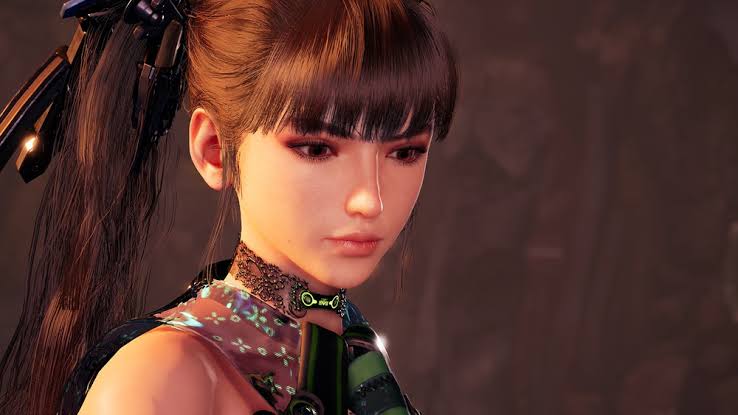
That said, it never falls apart. EVE still looks good up close. Cutscenes hold up better than I expected. The art direction carries a lot of the load—the ruined Earth still has atmosphere, the monster designs remain grotesque and memorable, and the overall presentation has enough style that the technical cuts don’t completely undercut the fantasy. Performance is consistent enough once you pick your frame-rate preference. There are occasional dips in busier open areas, but combat itself stays playable.
Is it the best-looking version? Not remotely. Is it a respectable handheld/hybrid version of a game that was never designed for this hardware? Yeah, it is. Shift Up clearly put in the work.
The Little Things That Add Up
Exploration is more rewarding than the story sometimes is. Early areas lean into tighter, interconnected level design with shortcuts and optional paths. Later you get larger open zones with side quests, collectibles, and some light platforming. The hub of Xion gives you a place to rest, talk to people, change outfits (and you will change outfits constantly), and take on bounties. There’s fishing. There’s photo mode. There’s an almost excessive amount of cosmetic customization. The game understands that part of the fantasy is looking the part while you carve through the apocalypse.
Soundtrack still slaps. Combat tracks hit hard, quieter areas get more atmospheric pieces, and the whole thing has that slightly cinematic, slightly anime energy that fits the tone.
Who This Is For
If you never played Stellar Blade and you like precise, stylish action games with a strong sense of physicality and spectacle—think a more grounded Bayonetta mixed with some Soulslike discipline—this is an easy recommendation, especially at the $59.99 price with everything included. The Switch 2 version makes it portable, which is a real plus for a game that can eat 25–40 hours depending on how much side content you chase.
If you already own it on PS5 or PC and have the DLC, the value proposition is thinner unless you specifically want the hybrid convenience or the physical cart. The Bayonetta outfits are free on the other platforms too.
The story won’t blow you away. Some of the open-world padding can drag. The visual hit is real, especially if you’ve seen the game at its best. And the Joy-Con experience is suboptimal for the precision the combat wants. None of those things kill the core loop, though. When the combat is flowing and you’re dancing around a boss you’ve finally learned, the compromises fade into the background.
Final Thoughts
Stellar Blade: Complete Edition on Switch 2 is a surprisingly solid port of a game that already knew exactly what it wanted to be. It prioritizes the feel of the sword in your hands and the satisfaction of a perfectly timed response over narrative depth or graphical purity. The Complete package makes it the definitive way to experience EVE’s story if you’re coming in fresh, and the fact that it runs acceptably on a hybrid system while keeping the full game on cart is more than a lot of ports manage these days.
It’s not perfect. It’s a little rough around the edges in ways the original wasn’t. But the parts that matter—the combat, the style, the sense of becoming better at the dance—still work. Two years later, EVE is still slicing her way through the end of the world, and now she can do it on the train. That’s worth something.
If you’ve been curious, this is a good time to jump in. Just bring a Pro Controller for the serious sessions, turn frame generation off if the lag bothers you, and accept that the hair physics aren’t quite what they used to be. The rest of the package holds up better than it has any right to.
