
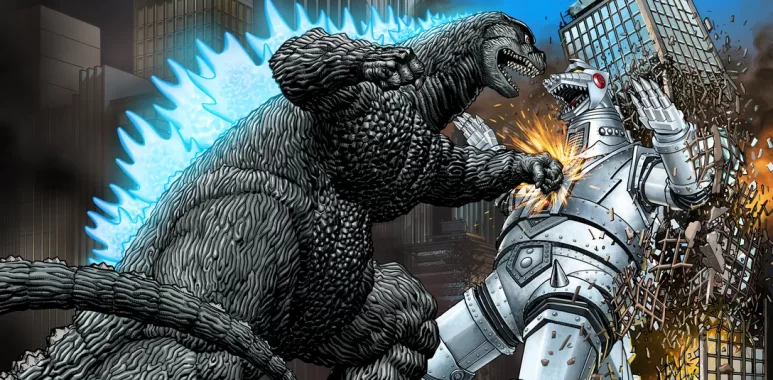
Still the King of Chaos: Godzilla Destroy All Monsters Melee Remastered Review
Godzilla: Destroy All Monsters Melee Remastered is the kind of game that makes you grin like an idiot the second a skyscraper collapses under a tail swipe. Released on November 3, 2026—Godzilla Day, of course—this Unreal Engine 5 rebuild from original developer Pipeworks and publisher Atari brings the 2002 GameCube/Xbox cult classic roaring back. It is not a reinvention. It is not trying to be a modern fighting game with frame data charts and competitive tiers. It is the same messy, joyful, rubber-suit brawler it always was, just prettier, smoother, and finally playable online with friends who do not have to sit on the same couch.
If you never played the original, the pitch is simple. You pick one of twelve kaiju, drop into a fully destructible city or Monster Island or an alien mothership, and beat the absolute hell out of each other until only one is left standing. Buildings become weapons. Cars and tanks get flung like toys. Atomic breath carves glowing scars through downtown Tokyo at dusk. It feels exactly like the childhood fantasy of smashing your plastic monsters together on the living room floor, only now the camera swoops and the debris flies with modern physics.
The Roster and the Feel of the Fights
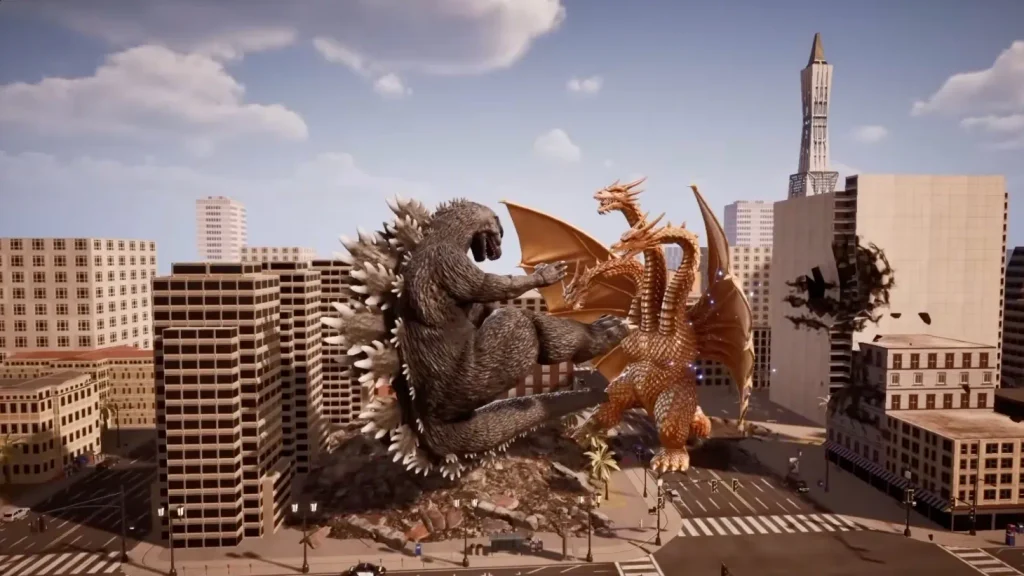
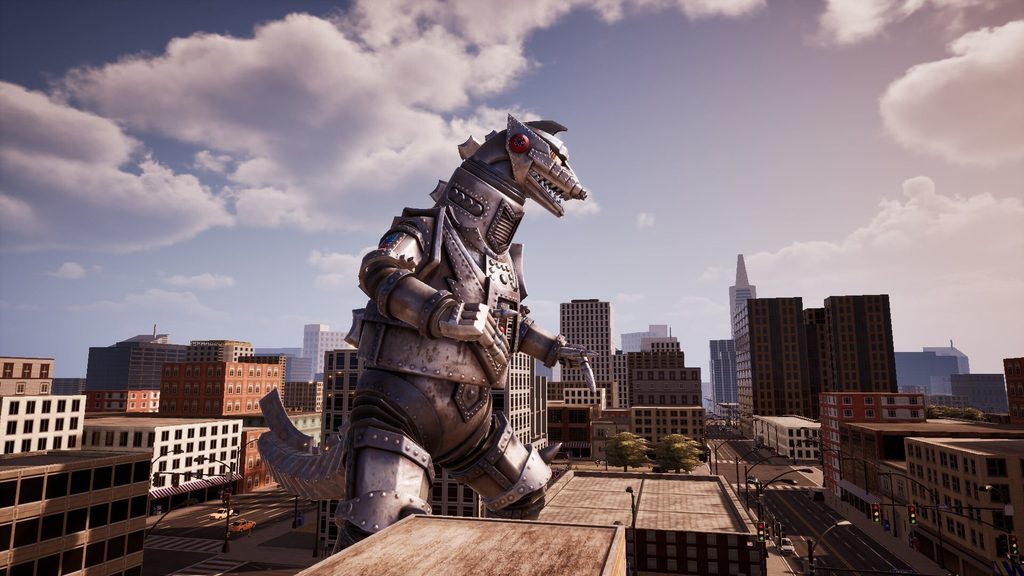
You start with four monsters: Heisei Godzilla (the big balanced tank), Gigan (teleporting scythe-handed menace), Megalon (the drill-handed burrower), and Anguirus (the spiky counter-attack specialist). The rest—Godzilla 2000, King Ghidorah, Mecha-King Ghidorah, Rodan, Destoroyah, Kiryu, Orga, and the classic Showa Mechagodzilla—unlock through play. The roster is almost identical to the old Xbox version, with the welcome swap of original Mechagodzilla in place of the later model. Every monster has its own personality. Some feel heavy and deliberate. Others zip around with surprising agility. Specials and Rage modes let you unload signature attacks that still look gloriously over-the-top.
Combat itself is straightforward in the best and worst ways. You have basic strikes, grabs, ranged beams, and environmental interactions. You can pick up chunks of building and hurl them, or send an opponent flying through a glass tower so the whole thing comes down on their head. The weight of the monsters is perfect. They move like guys in rubber suits should move—powerful, a little clumsy, full of momentum. When two of them collide and start trading blows while the city collapses around them, it is pure cinema. The new models keep that classic look while adding modern detail and lighting. Dorsal plates glow properly. Atomic breath feels thick and radioactive. Nighttime stages look especially dramatic.
That said, the depth is limited. Once you learn a few reliable strings and how to abuse the environment, matches can become repetitive. There is no deep combo system or intricate timing windows the way modern fighters have. It is more about reading your opponent, managing space, and knowing when to throw the nearby radio tower. For a party game or short sessions, that is a feature. For anyone expecting a ranked competitive scene, it is a limitation.
Modes and the Grind
Single-player has more structure than the original. Each monster gets its own Adventure mode—a short campaign of story-flavored matches that feels like an arcade run. Destruction mode is pure score-chasing chaos: trash a city as thoroughly as possible before the timer ends. Survival throws endless waves at you. Practice lets you mess around on a quiet island without pressure. These modes are solid for what they are, and the new per-monster progression (XP that improves stats) gives you a reason to stick with a favorite.
The unlock system is the biggest sticking point. Research Points, Projects, and Rumors form a multi-layered grind that feels designed to stretch playtime. You can unlock things in any order now, which is an improvement, but it still takes a while to get the full roster and every stage variation. Tournament Mode is oddly buried in the settings and unlocks everything if you find it, which feels like an accidental confession that the designers knew the grind could be too much. For a game this light, the gatekeeping can frustrate. You want to play as Rodan or Destoroyah right away. Instead you are completing objectives and farming points. It is not the worst system I have seen, but it is the one part that feels outdated in a bad way.
Multiplayer Is the Real Star
This game was always meant for friends. Local four-player is still pure chaos—controllers flying, people shouting, buildings falling in the background while someone tries to land a perfect atomic breath. The addition of online multiplayer is the biggest quality-of-life win. Matchmaking works, lag is usually manageable, and the ability to jump into quick fights or custom rooms with people who share the same weird love of kaiju is fantastic. Online is currently strongest in 1v1, but the foundation is solid. If the community sticks around, this could become the go-to “let’s just destroy a city for twenty minutes” game the same way the original was the go-to sleepover title.
Director Mode is a small but delightful addition. Pause any match, free-cam around, and set up the perfect screenshot of Godzilla mid-roar with half of San Francisco in ruins behind him. Expect the community to fill timelines with cinematic stills within a week.
Presentation and Technical Side
Pipeworks rebuilt the game rather than simply uprezzing the old assets. The cities feel larger and more alive. Day and night versions of each of the eight stages change the mood completely. Performance is strong across platforms. On current hardware it runs smooth, and the Switch 2 version holds up surprisingly well both docked and handheld. The sound design nails the classic Toho energy—roars, impacts, and that satisfying crunch of concrete. The soundtrack leans into the nostalgic vibe without feeling stuck in 2002.
At $29.99 digital (a bit more for the Switch 2 physical cartridge), the price is right. You are not paying full-price AAA money for a twenty-four-year-old game with a modest roster. You are paying for a polished, faithful revival of something that still has no real modern equivalent.
Who This Is For
If you grew up with the GameCube original or the Xbox version, this is pure comfort food with better graphics and online play. The jank is still there, but it is the charming kind. If you are a Godzilla fan who just wants to see the monsters smash each other and the cities around them, you will have a great time. If you want deep fighting-game systems, a huge roster of modern designs, or a single-player campaign with real narrative weight, look elsewhere. GigaBash does some of this fantasy better in certain ways. This one stays stubbornly true to its 2002 roots.
I put more hours into this than I expected. Some of those hours were spent grinding Research Points and muttering about unlocks. Most of them were spent laughing as Anguirus drop-kicked Godzilla through a hotel or as Ghidorah’s gravity beams turned a city block into a glowing crater. That feeling of pure, dumb, destructive joy is still intact. Pipeworks did not try to fix what was never broken. They just cleaned the rubber suit, added online play, and let the monsters loose again.
Is it perfect? No. The combat is shallow, the unlocks are tedious, and the content is finite. But when the dust settles and the last building falls, it still feels like the best version of a very specific fantasy: being a giant monster and wrecking everything in sight with your friends. In 2026 that fantasy still hits hard. Sometimes the old ways really are best. Go go Godzilla.
