
Paris Roars as Parnasse Announces Himself: How a Home Debut Turned Into a Statement Night at Accor Arena
There’s something different about a UFC card in Paris. The Accor Arena doesn’t just host fights—it swallows them, digests the noise, and spits it back louder. On the night of September 5, 2026, with the main card ticking over into the early hours for some time zones (that 12:30 a.m. GMT+5:30 slot the schedule listed), the place was electric before the first walkout. Sold out at 15,687. Gate north of $4.3 million, a record for the building. Five straight years of UFC in the French capital, and this one felt like the biggest yet because a local kid who’d spent years turning down the big leagues finally walked through the front door as the main-event headliner.
Salahdine Parnasse versus Dan Hooker. Lightweight. Five rounds on paper. One of those matchups that looked, on the surface, like a classic veteran-gatekeeper assignment: the tough, experienced New Zealander there to test the highly touted newcomer on the biggest stage. What actually happened was shorter, louder, and more definitive than almost anyone expected.
The Build-Up: Why This Fight Mattered
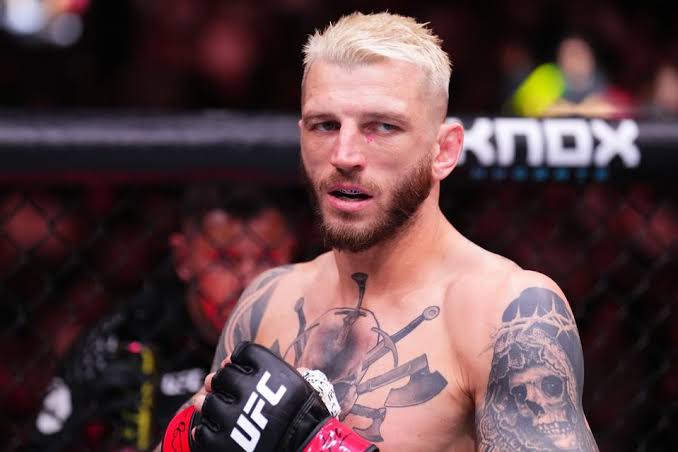
Dan Hooker had been around. “The Hangman” from Auckland, long-time City Kickboxing product, the guy who fought everyone and rarely made it look easy. By the time he got to Paris he was 36, carrying a professional record that sat at 24-14 heading in, and coming off consecutive stoppage losses to Arman Tsarukyan and Benoit Saint Denis. Those weren’t soft matchups. Tsarukyan was rising fast; Saint Denis was the French wrecking ball who made everything look personal. Hooker had still been ranked in the top ten at lightweight for stretches, still had that awkward, rangy, kicking style that could make life miserable for people who preferred clean boxing. He was the known quantity. The guy who’d been in deep waters with Dustin Poirier, Michael Chandler, Islam Makhachev, and more. Experience was supposed to be his edge.
Parnasse was the opposite kind of known. Born December 4, 1997, in Aubervilliers, just outside Paris, to a Guadeloupean father who’d served in the military and a Moroccan mother. Dual nationality, the “Lion of Atlas” nickname nodding to the Moroccan side. He’d started training around age 11 at Atch Academy in his hometown and never really left. Plumber for the local council for a stretch while he was climbing. Professional since 2015. By the time the UFC finally got him he was 23-2, a two-division champion in KSW—featherweight twice and lightweight once—with a pile of title defenses. He’d tried for a third belt at welterweight and come up short, then gone back down and kept finishing people. Six straight wins coming into Paris, most of them stoppages. The kind of résumé that made people wonder why he hadn’t been in the UFC years earlier. Turns out he’d said no more than once. Money, timing, loyalty to the European scene, whatever the mix was. When he finally signed, the promotion put him straight into a main event on home soil. No soft debut. No quiet undercard. Straight into the deep end against a ranked veteran in front of a French crowd that had been waiting for this exact night.
The pre-fight talk had the usual edges. Hooker leaned into the villain role a bit, talking about delivering a reality check to the fairytale debut. Parnasse stayed calm, the kind of quiet confidence that comes from having already been a double champion somewhere else. The weigh-ins were tense in the way these things get when one guy is local and the other is the road warrior. Face-offs looked legit. The arena was already buzzing.
Preview Angle: What the Styles Suggested
On paper it was intriguing. Hooker likes to keep people at the end of his long frame, kicks a lot—legs, body, the occasional high one—and has enough grappling to threaten if things hit the fence or the mat. He’s durable in the sense that he’s taken big shots and kept coming, though the recent finishes had people questioning whether the chin was still what it used to be. Parnasse is a southpaw with sharp hands, good kicks of his own, and a grappling base that had produced plenty of rear-naked chokes and other submissions over the years. He finishes fights. The last long stretch of his career had been almost all stoppages. The question was whether the step up in competition—UFC-level pacing, UFC-level pressure, a veteran who’d seen every trick—would slow him down or expose something.
Most people expected a longer fight. Hooker’s experience was supposed to force Parnasse to solve problems over three or five rounds. The Frenchman was the favorite, but not by a ridiculous margin. Hometown energy helps, but it doesn’t throw the kicks for you.
The Fight Itself: Short, Sharp, and Loud
What actually unfolded was pure chaos in the best way. Parnasse walked out to 2Pac’s “California Love” and looked completely at home. The crowd was already up. Hooker got the opposite treatment—the boos started early and never really stopped. That’s Paris when one of their own is in the main event.
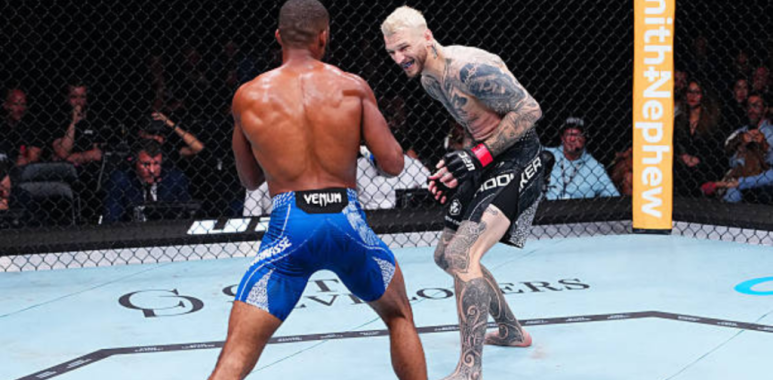
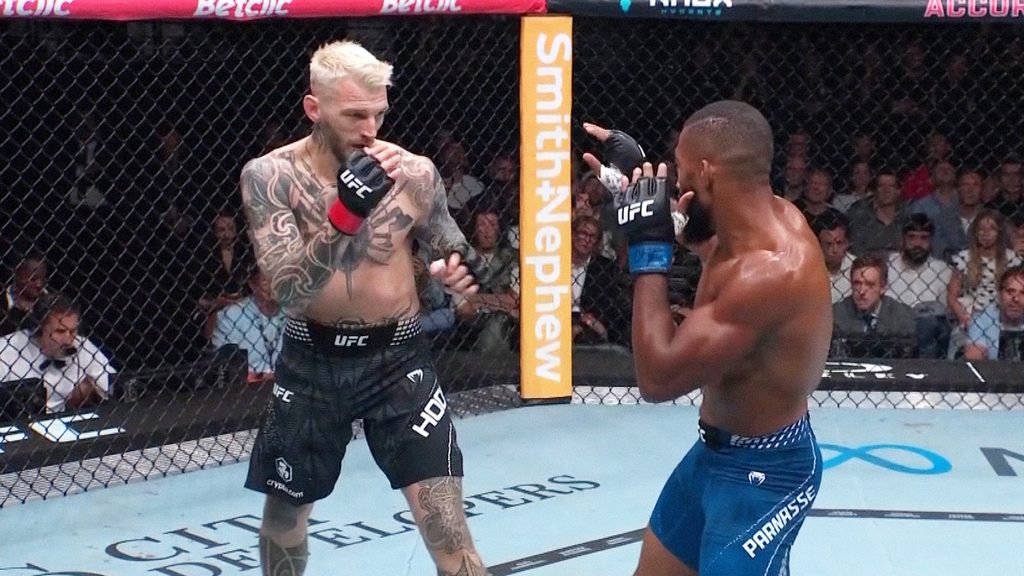
They touched gloves and it was immediately a kicking contest. Both men probing with low kicks, measuring distance. Hooker trying to establish that rangy game he’s always relied on. Parnasse answering, staying calm, not rushing. For a couple of minutes it looked like the careful start everyone expected. Then Parnasse found the body.
The liver kick landed clean. You could see it land. Hooker’s posture changed instantly—doubled over, hands coming down, the kind of shot that takes the wind and the will at the same time. He stayed on his feet, which might have been the worst option available. Parnasse closed the distance, threw a high kick that grazed, and then the left hook came. Heavy. Clean. Hooker went down against the fence. Parnasse followed with more, and referee Marc Goddard had seen enough. 2:35 of the first round. TKO via body kick and punches.
The Accor Arena detonated. It wasn’t just noise. It was the sound of a hometown fighter delivering exactly the kind of debut people dream about and almost never get. Parnasse didn’t look like a debutant. He looked like a guy who’d been waiting for this exact moment and knew precisely how to take it.
Post-fight he was blunt. “I’m the best fighter of the world,” he said, the kind of line that only works when you’ve just done something that dramatic. He called for Max Holloway next—the dream fight he’d been talking about in the lead-up. Big swing. The kind of call-out that tells you the confidence is real.
Analysis: What It Told Us
The finish itself was clean technique meeting opportunity. Body kicks at that level are high-risk, high-reward. Land one flush to the liver and the fight can end in seconds even if the recipient is still upright. Parnasse timed it, committed, and then finished the sequence without hesitation. That’s not luck. That’s the product of years of finishing people in KSW and elsewhere. The grappling background meant he wasn’t going to panic if Hooker tried to close or clinch, but he never needed it. He won the striking exchange against a guy who lives in the striking exchanges.
For Hooker, it was the third straight stoppage loss. At 36, with the mileage he carries, those start to pile up in a different way. He’d put in the camp, talked about improvements in consistency, and then never got to show any of it. The frustration was obvious afterward. He’s already booked a quick turnaround against Brian Ortega later in November, the kind of move a veteran makes when he wants to erase the last performance as fast as possible. Whether the chin and the recovery are still there is the open question. Hooker has always been tough. Lately the finishes have come.
For Parnasse the win does more than just put a W on the record. It validates the long wait. It puts him immediately into ranked conversations at lightweight. It gives the UFC a genuine French star who can actually sell tickets and deliver in the cage on the same night. The division is stacked—Islam Makhachev’s era, the contenders behind him, the constant turnover—but a 28-year-old with this kind of finishing ability and this kind of home support is a problem for a lot of people. The Holloway call-out is ambitious. Holloway is still a different animal. But the fact that Parnasse felt comfortable saying it after one UFC fight tells you where his head is.
The broader card helped the atmosphere. Axel Sola knocked out Farès Ziam in the co-main in the first round, another French win that sent the building higher. Michael Page got a decision. Several other finishes and home performances. French fighters went 5-4 on the night or thereabouts, depending how you count the edges. The place never cooled off.
Top Highlights and the Moments That Stuck
The liver kick is the obvious one. You can watch the replay a dozen times and it still looks nasty—the way Hooker’s body folded, the immediate change in his movement, Parnasse’s recognition and follow-up. The left hook that put him down was the exclamation point. Goddard’s stoppage was clean; there was no reason to let it continue.
The crowd reaction from the moment the body kick landed until well after the decision was announced belongs in the highlight package too. Accor Arena has been loud for UFC events before. This was different. This was personal.
Parnasse’s walkout and the post-fight interview sit right behind those. Walking out to California Love in Paris, looking completely unbothered by the weight of a main-event debut, then standing in the middle of the cage and claiming the top of the mountain. Whether you buy the “best in the world” line or not, the delivery sold it.
Hooker’s resilience in the first couple of minutes before the kick deserves a nod too. He wasn’t passive. He was trying to establish the range and the kicks. It just didn’t last long enough to matter.
The Summary That Matters
Salahdine Parnasse didn’t just win his UFC debut. He took a ranked veteran, a guy with years of Octagon time and tough losses on the résumé, and finished him in under three minutes in front of a sold-out French crowd that had been waiting for exactly this. Body kick to the liver, follow-up punches, night over. Attendance 15,687. Gate a building record. Performance of the Night bonus for Parnasse (and a few others). Call-out of Max Holloway. Instant relevance in the lightweight division.
Dan Hooker absorbs another stoppage and starts the process of bouncing back, already looking at Ortega. The Hangman has been in worse spots and found ways forward before. Whether this one sticks differently remains to be seen.
For the UFC, the Paris experiment continues to pay off in every way that matters—ticket sales, atmosphere, local stars who can actually perform. For French MMA, nights like this are the ones that expand the audience. Kids in Aubervilliers and beyond saw one of their own walk into the biggest promotion in the world and look like he belonged from the first bell.
It was a short fight. It was a loud night. And it was the kind of debut that changes the conversation around a fighter overnight. Parnasse is here now. The lightweight division just got a little more interesting, and the Accor Arena got another memory it won’t forget anytime soon.