
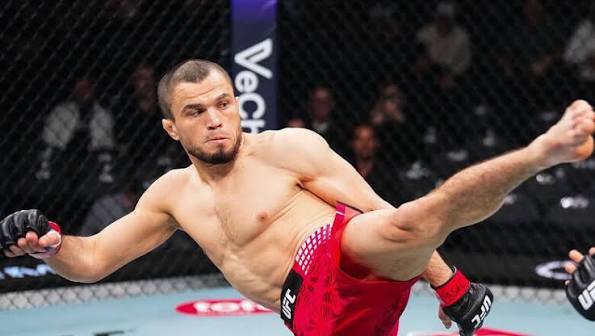
Shanghai Roars as Song Yadong Knocks Out Umar Nurmagomedov in Stunning Main Event Upset
There are nights in combat sports that feel bigger than the sum of their parts. Nights when the venue itself seems to lean in, when the air thickens with expectation, and when a hometown fighter steps into the cage carrying not just his own ambitions but the weight of a nation’s growing pride in mixed martial arts. August 29, 2026, at the SPD Bank Oriental Sports Center in Shanghai’s Pudong District was one of those nights.
UFC Fight Night: Nurmagomedov vs. Song drew a record 16,188 fans for a Fight Night event in Asia. The main card started in the early morning hours for North American viewers on Paramount+, but in Shanghai it was prime time, and the building was electric long before the main event. By the time the lights dimmed for Umar Nurmagomedov and Song Yadong, the crowd was ready to explode. What followed was a fight that delivered on every level of drama: a heavy favorite, a dangerous underdog, a measured first round that favored the grappler, and then a single, perfectly timed punch that changed everything.
Song Yadong, the “Kung Fu Kid,” stopped Umar Nurmagomedov by knockout at 1:48 of the second round. The finish was clean, sudden, and absolute. Nurmagomedov changed levels for a takedown. Song was waiting. A short right uppercut landed flush near the ear and jaw. Nurmagomedov’s lights went out before he hit the canvas. Follow-up shots were academic. Referee Marc Goddard waved it off. The arena detonated.
The Setup: A Contender’s Crossroads and a Homecoming Story
Heading into the bout, the narrative was clear. Umar Nurmagomedov, the No. 3 ranked bantamweight and a former title challenger, was the heavy favorite—somewhere around -600 in many books. The Dagestani product of the Nurmagomedov fighting dynasty had lost only once in his career, a decision to Merab Dvalishvili in a title fight. He had rebounded with wins, including a decision over former flyweight champion Deiveson Figueiredo. Another strong performance against Song was widely expected to put him back in line for a title shot, especially with Petr Yan and Merab Dvalishvili scheduled for a trilogy later in the year at UFC 333.
Song Yadong entered as the No. 6 or No. 7 contender depending on the ranking source, a longtime UFC veteran who had fought some of the best in the division but had yet to fully break through against elite competition in their primes. His recent win over Figueiredo via guillotine in Macau had been impressive, but many still viewed him as a gatekeeper rather than a true title threat. At home in China, though, the story shifted. Song was the local hero making a significant return to Shanghai. The crowd treated him like one from the moment he walked out.
The stylistic contrast was classic. Nurmagomedov brought elite wrestling, pressure, control time, and improving striking. He mixed levels well, used kicks to set up shots, and generally dictated where fights took place. Song brought sharp boxing, power in his hands, solid takedown defense when prepared, and that intangible “home energy” that can elevate a fighter. Analysts expected Nurmagomedov to drag the fight into deep waters, rack up control time, and either grind out a decision or find a late finish. Song’s path was narrower: keep it standing, time the level changes, and land something clean before the wrestling took over.
The card around them leaned heavily into the Chinese market and regional talent. Denise Gomes scored a first-round knockout over Yan Xiaonan in the co-main. Kai Asakura stopped Aori Qileng. Su Mudaerji took a decision over Alex Perez. Local and regional fighters filled out a deep lineup that kept the energy high throughout the night. By the time the main event arrived, the Oriental Sports Center was primed.
Round 1: Control and Caution
The first round played out largely as expected for the favorite. Nurmagomedov opened with leg kicks and began probing for entries. Song answered with his own kicks and looked to establish range. Early on, Nurmagomedov caught a kick and converted it into a takedown. Song threatened a guillotine as they hit the mat but could not secure it. Nurmagomedov worked from top position, controlling the action and bankable minutes of control time. Song eventually scrambled back to his feet in the later stages of the round, and the two exchanged on the feet. A clash of heads opened a cut over Song’s eye, but the Chinese fighter was otherwise largely unmarked. When the horn sounded, most observers had the round for Nurmagomedov on control and activity. Song had survived the wrestling pressure without taking major damage and had shown he could get back up. That mattered.
Round 2: The Moment Everything Changed
The second round began with Nurmagomedov still looking to mix levels. He threw kicks and shot early. Song stuffed the attempt cleanly to a roar from the crowd. The fight stayed standing. Both men exchanged more freely. Song started to find a rhythm and come forward with confidence. Then came the sequence that will be replayed for years.
Nurmagomedov dipped for another takedown attempt. Song did not sprawl and hold. He timed it. As Nurmagomedov changed levels, Song fired a short right uppercut that landed flush. The punch caught Nurmagomedov on the side of the jaw/ear area with perfect accuracy and timing. Nurmagomedov’s body went limp. He collapsed. Song followed with a few more shots on the ground, but they were unnecessary. Goddard stepped in at 1:48. The arena erupted in a way that only a hometown knockout of a highly ranked contender can produce. Song celebrated with the Chinese flag. The noise was sustained and visceral.
It was the kind of finish that looks inevitable in slow motion and impossible in real time. The uppercut was short, compact, and thrown with the exact timing required to catch a skilled wrestler mid-shot. Song had prepared for that exact scenario. In post-fight comments he credited his boxing coach for emphasizing the uppercut opportunity when Nurmagomedov dropped levels.
Immediate Aftermath and Title Picture Implications
In the octagon, Song made his intentions clear. “Who’s next? Who’s next?!” he called out. He later described the knockout as the best moment of his life and reiterated his desire for a title shot. The win moved him to 24-9-1 (1 NC). It was his second straight victory and the most significant of his UFC career. Performance of the Night honors followed, along with a substantial bonus.
For Nurmagomedov, the loss dropped him to 20-2. His two-fight win streak ended in the most definitive way possible—his first career knockout defeat. The path back to a title shot became longer and more complicated. He had been positioned as one of the clearest contenders. One perfectly timed punch altered that trajectory.
The broader bantamweight picture shifted. With Yan and Dvalishvili set for their trilogy, Song suddenly looked like a logical next challenger or a high-profile alternative. A Chinese fighter with a highlight-reel knockout of a top contender in front of a massive home crowd carries promotional value that the UFC has long sought in the Chinese market. Song’s win was both a personal breakthrough and a significant moment for the growth of the sport in the region.
What the Fight Revealed
Beyond the result, the bout offered several takeaways. First, elite wrestlers are never fully safe against sharp strikers who prepare specifically for level changes. Nurmagomedov’s wrestling is excellent, but the entries create brief windows. Song exploited one of them with precision. Second, experience and composure under pressure matter. Song had been in big fights before. He did not panic under early control and stayed ready for the opportunity. Third, the home crowd effect is real. The energy in the building when Song stuffed the early Round 2 takedown was palpable, and it seemed to fuel his confidence.
Stylistically, the fight was a reminder that matchups on paper do not always dictate outcomes. Favorites lose. Timing beats reputation. A fighter who has been viewed as “good but not quite elite” can, on the right night in the right place, produce a career-defining performance.
The undercard provided supporting drama. Gomes’ stoppage of Yan was another highlight-reel moment. Asakura’s quick work and the various finishes throughout the night kept the card lively. But everything circled back to the main event. When Song’s hand was raised, the story of the night was complete: a Chinese star had delivered the kind of moment the market had been waiting for.
Looking Ahead
In the weeks that followed, the conversation centered on Song’s place in the title picture and Nurmagomedov’s next steps. Song made it clear he felt ready for anyone. Nurmagomedov would need to rebuild, as fighters in this sport always must after a setback of this magnitude. The division remained deep and competitive. One fight does not crown a new order, but it can rearrange the furniture.
For those who were in the Oriental Sports Center that night, or watching from afar as the Shanghai crowd lost its collective mind, the memory is specific: the dip, the uppercut, the collapse, and the explosion of noise that followed. Combat sports live for those instants when preparation, timing, and opportunity collide. Song Yadong found that moment on August 29, 2026, and turned it into the biggest win of his career.
The UFC’s continued investment in China produced a night that will be remembered. A sold-out arena. A stacked regional card. And a main event that ended with a hometown hero standing tall over a fallen contender. In the end, that is what these events are built for—nights when the script is rewritten in real time by a single, perfectly placed punch. Song Yadong wrote his chapter in Shanghai. The rest of the division is still processing the ending.