
Jean Silva’s One-Arm Masterpiece: How “Lord” Turned Noche UFC Chaos into Title Contention
Desert Diamond Arena in Glendale, Arizona, pulsed with that unmistakable Noche UFC energy on September 12, 2026. Mexican Independence Day weekend always brings color, noise, and a crowd that treats the Octagon like family. Flags waved. The air smelled like popcorn, cerveza, and anticipation. Nearly 17,000 fans packed the place, generating a gate north of $4.4 million. This was the fourth annual Noche UFC card, the promotion’s first Glendale visit since UFC 263, and the main event carried extra weight: Jean “Lord” Silva against short-notice replacement Jose Miguel Delgado.
The original plan had been Silva versus former interim featherweight champion Yair Rodríguez. Rodríguez pulled out with an injury. In stepped Delgado, the 28-year-old Arizona native with Mexican roots, training out of The MMA Lab, fighting in front of the home crowd. What looked like a potential mismatch on paper—ranked contender versus a guy who’d been a solid but not elite 4-1 in the UFC before this—turned into a strange, gritty, and ultimately spectacular featherweight main event.
The Preview: Redemption, Home Cooking, and Short Notice
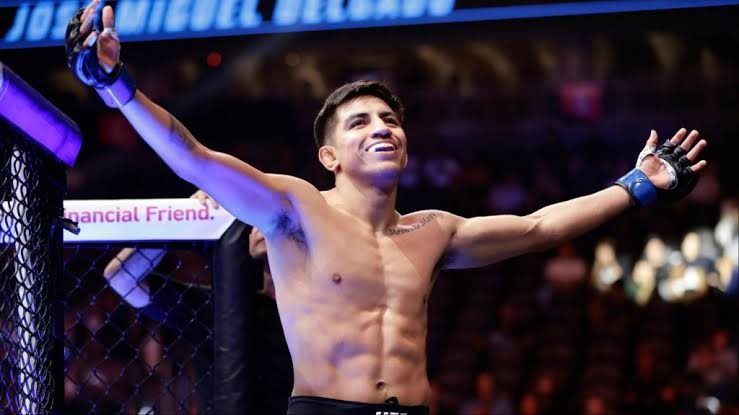
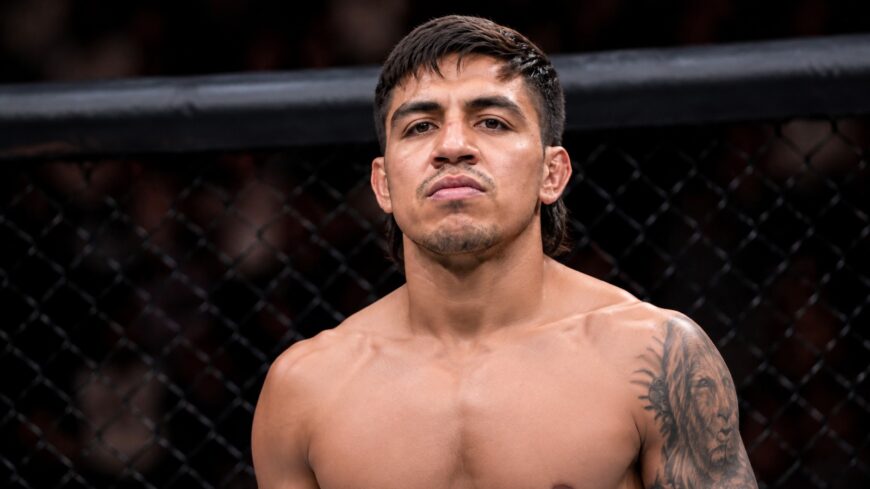
Jean Silva walked into this fight at 17-3 overall, 6-1 in the UFC, ranked around No. 5 or 6 at 145 pounds. Born Jackson Jean da Silva in Foz do Iguaçu, Brazil, the 5-foot-7 striker with the “LORD” tattoo across his chest and the padlock ink on his arm had built a reputation as a chaotic finisher. Twelve of his pro wins came by knockout. He’d punched his UFC ticket via Contender Series, then ripped off finishes against the likes of Westin Wilson, Charles Jourdain, Drew Dober (doctor stoppage), Melsik Baghdasaryan, and a slick ninja choke on Bryce Mitchell. His lone UFC loss had come the previous Noche UFC against Diego Lopes—a spinning elbow and punches that stopped him in Round 2 and derailed what had looked like a rocket-ship trajectory. He’d rebounded with a hard-fought unanimous decision over Arnold Allen in January 2026. Silva wanted the winner of the upcoming Alexander Volkanovski vs. Movsar Evloev title fight. This bout was supposed to keep the momentum rolling.
Delgado entered at 12-2 overall, 4-1 in the UFC. The youngest of seven kids from a hardworking immigrant family in Yuma, Arizona, he’d lost his father young and wore the man’s work jacket for walkouts as a reminder. He’d done every odd job imaginable—garbage collection, hospital work, bouncing—to keep training. Contender Series KO of Ernie Juarez got him the contract. Inside the UFC he scored early stoppages, including a 26-second demolition of Hyder Amil, then mixed in decisions over Andre Fili and Austin Bashi after a loss to Nathaniel Wood. At 5-foot-11 with a longer reach, Delgado brought height, power, and the kind of real-world toughness that short-notice opportunities reward. Fighting at home for Mexican Independence weekend against a higher-ranked Brazilian finisher? The narrative wrote itself.
Analysts mostly favored Silva. His finishing rate, pressure, and experience against better competition tipped the scales. But short notice is short notice. Delgado had three weeks. Silva had prepared for Rodríguez’s unorthodox, high-volume, kicking style. Now he faced a taller, rangier, power-punching prospect who could wrestle enough to force scrambles. The five-round main event on Paramount+ carried real stakes for both: title-path validation for Silva, career-defining upset potential for Delgado.
The rest of the card fit the Noche theme—Mexican and Latin American talent mixed with veterans and prospects. Co-main featured two-time flyweight champion Brandon Moreno against Joseph Morales. Unbeaten prospects Tommy McMillen and Marwan Rahiki collided. Alexa Grasso met Manon Fiorot. Curtis Blaydes took on Waldo Cortes-Acosta. It was a solid Fight Night with main-event drama.
Fight Night Atmosphere and Early Surprises
The arena felt electric. Silva’s walkout carried that eccentric “Fighting Nerds” energy—glasses, the whole persona. Delgado got the hometown roar. Bruce Buffer did his thing. Referee Dan Miragliotta stood between them. And then the fight started… weirdly.
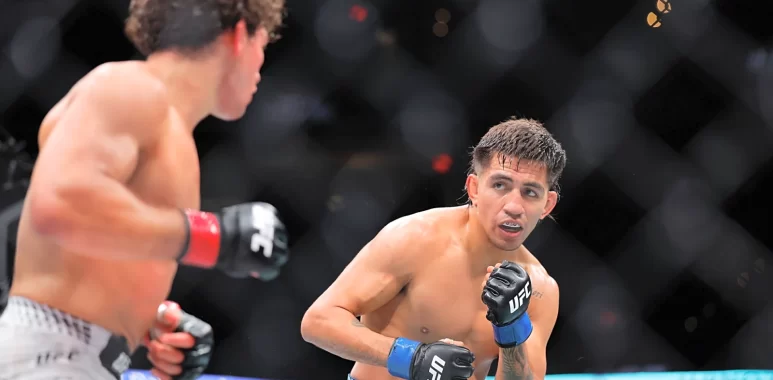
Round 1 belonged to Delgado, and not just on the scorecards. Silva came out strangely passive. For long stretches he barely threw, circling, reading, almost daring Delgado to come forward. Delgado obliged. He worked the calf kicks. He found the range with his longer limbs. Then, out of nowhere, a right hand—or a combination that included a straight and uppercut depending on the angle you watched—dropped Silva. The Brazilian hit the canvas. The crowd exploded. For a moment it looked like the short-notice miracle might be real.
Silva recovered. He got back to his feet, survived the follow-up, and started wrestling enough to slow the momentum. Still, the round was clear: Delgado had rocked the higher-ranked guy in his own main event. Silva’s left eye began swelling. The Brazilian who finishes people early had given away the first five minutes.
The Turnaround: Pressure, Precision, and the Club-and-Sub
Round 2 flipped the script. Silva woke up. The pressure that defines his best performances returned. He marched forward, mixed punches and kicks, and started finding the mark with that long right hand. Delgado’s early success forced him to respect the power, but Silva’s volume and forward movement began to take over. He secured a takedown, worked some ground-and-pound, and controlled more of the action. The height advantage mattered less once Silva closed distance and made it a phone-booth fight. By the end of the round the score was even or close, and the momentum had shifted hard.
Round 3 sealed it. Silva kept the pressure. He cut off the cage. Delgado was still dangerous—those calf kicks kept coming—but the Brazilian was landing cleaner and more often. Then the moment: a sharp right hand caught Delgado clean between exchanges. Delgado’s legs buckled. He went down. In the scramble that followed, Delgado shot for a single-leg out of desperation. Silva sprawled beautifully, circled to the back, and locked up the rear-naked choke.
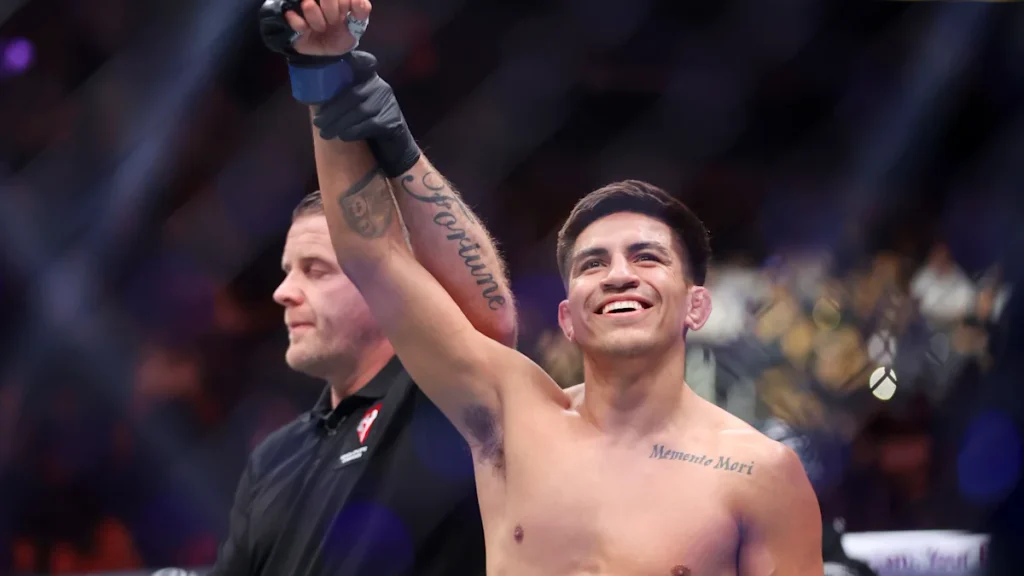
What made it special was the one-arm version. Silva trapped one of Delgado’s arms with his legs, wrapped his own arm under the chin, and squeezed while controlling the other arm. It was tight, nasty, and technical. Delgado tapped at 2:57 of Round 3. Official result: Jean Silva by submission (rear-naked choke).
The finish was pure Silva—power to create the opening, then opportunistic grappling to end it. Stats reflected a competitive fight: Delgado actually edged significant strikes 40-39 in some tallies, but Silva had the knockdown, the takedown, and far more control time (around 1:37 to Delgado’s 0:21). The Brazilian had survived the early scare and imposed his will.
Post-Fight Chaos and Clear Ambition
What happened after the tap might have been the most “Jean Silva” moment of the night. He got a little physical with Delgado while rising, then climbed the cage and went straight for UFC executive Hunter Campbell. He ripped the tape off his gloves, handed them over, and made his intentions unmistakable. In the post-fight interview he told the Arizona crowd the night was for them—acknowledging the Mexican Independence significance—then delivered the real message: whoever wins the Volkanovski-Evloev title fight at UFC 333, Silva is next. He even gifted Daniel Cormier a pair of Fighting Nerds glasses, naming him an honorary member of the crew. Classic Silva. Eccentric. Confident. Unapologetic.
Delgado had nothing to be ashamed of. Short notice against a ranked finisher in a five-round main event, and he dropped the guy in Round 1. He showed he belongs in these conversations. The loss drops him to 12-3, 4-2 in the UFC, but the performance should keep him in solid matchups.
The Broader Card and Night’s Takeaways
Elsewhere, Brandon Moreno snapped a skid with a split decision over Joseph Morales in the co-main—hard-fought, competitive, and a necessary win for the former champion. Tommy McMillen stayed undefeated with a unanimous decision over Marwan Rahiki. Alexa Grasso took a unanimous decision from Manon Fiorot. Curtis Blaydes ground out a decision over Waldo Cortes-Acosta. David Martinez decisioned Dan Ige. The prelims delivered finishes, including a slam KO and a reverse triangle. It was a typical solid Fight Night with the main event providing the signature moment.
For Silva, this was validation after the Lopes setback and the decision grind against Allen. At 18-3 overall and 7-1 in the UFC, with another Performance of the Night bonus in his pocket, the Brazilian has made his case. The featherweight division remains stacked—Volkanovski’s longevity, Evloev’s undefeated run, Lopes’ earlier win over Silva, and other contenders circling—but few finish fights the way Silva does. That one-arm choke will live in highlight reels for years.
For Delgado, the short-notice main-event experience is invaluable. Home crowd, big stage, early success, late adversity. Fighters grow from nights like this.
Noche UFC 4 delivered what these cards are supposed to deliver: cultural energy, competitive fights, and a main event that swung from potential upset to highlight-reel statement. Silva entered as the favorite chasing relevance. He left having survived a knockdown, imposed his pressure, and finished with technical flair while demanding the biggest fight available. In a division that rewards killers, “Lord” just reminded everyone he’s still very much in the conversation.
The Octagon in Glendale emptied eventually. The flags came down. But the image of Silva on the back, one arm choking, the other controlling, with the Arizona crowd roaring, stuck. That’s the night. That’s the sport. And for Jean Silva, it might just be the launchpad to the title shot he’s been chasing since the Lopes loss. The next chapter writes itself—if the UFC is listening.