
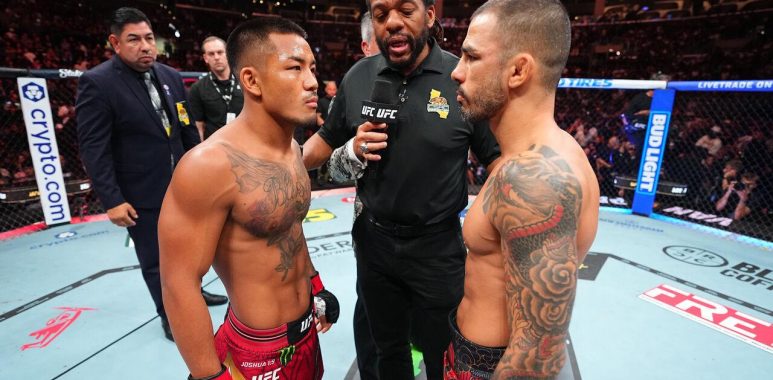
Joshua Van Erases All Doubt: How the Young Champ Owned Pantoja in Their UFC 331 Rematch
Los Angeles has seen some wild nights under the bright lights of Crypto.com Arena, but few felt quite like the one that went down on September 19, 2026. UFC 331 delivered a main event that had been building for months—Joshua Van versus Alexandre Pantoja, round two. The first meeting nine months earlier at UFC 323 lasted all of 26 seconds. Pantoja threw a high kick, Van caught it, the Brazilian lost his balance, planted his left arm to catch himself, and his elbow popped out of place. Just like that, the longtime flyweight king was done and a 23-year-old from Myanmar with a gold chain and a “Blessed” tattoo across his chest was the new champion.
That was the version of the story that never sat right with a big chunk of the MMA world. Accidental. Fluke. Not a real changing of the guard. Van heard every bit of it. He defended the belt once in the meantime, handling Tatsuro Taira, but the shadow of those 26 seconds stayed. So when the rematch was booked for a sold-out Crypto.com Arena—first UFC card there since 2018—it felt personal. Pantoja wanted his belt back. Van wanted the asterisk erased. Nearly 20,000 fans packed the place, the gate hit a record $8.3 million for the building, and the main event delivered five rounds of pure flyweight chaos.
What followed wasn’t clean or pretty the whole way. It was messy, bloody, and relentless. When the scorecards came in—49-46, 49-47, 50-45, all for Van—the young champion stood in the middle of the Octagon with the belt over his shoulder and a simple message: “A lot of people said that was an accidental win. Well, doubt me now.”
The Build-Up: Bad Blood and Unfinished Business
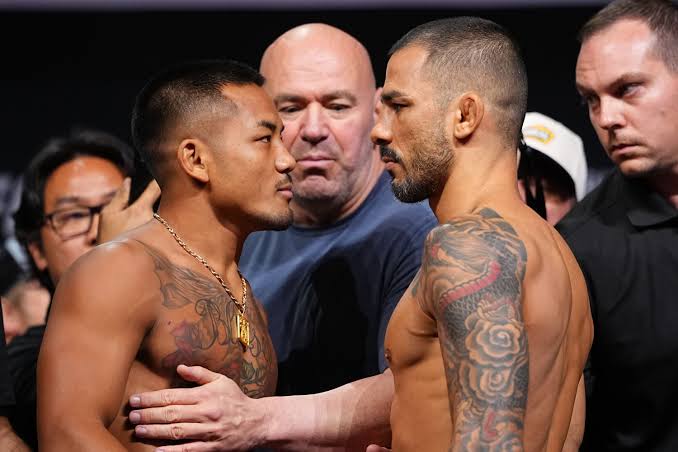
By the time fight week rolled around, the tension was thick. Pantoja, 36 years old and a veteran of the wars, had spent the better part of a year recovering from that elbow injury and training with the quiet intensity of a man who felt robbed. He’d held the flyweight title for over two years before the freak accident. Van, just 24, represented everything the old guard feared—speed, volume, youth, and an almost annoying level of confidence. The face-offs were icy. At the ceremonial weigh-ins they stood nose-to-nose, Van with that gold chain still on, Pantoja looking like he wanted to start the fight right there. No glove touch when the real thing started. Pantoja pulled his hand back. Message sent.
Van came in as the betting favorite, but plenty of smart money still leaned toward the Brazilian’s wrestling and experience over five rounds. Pantoja’s game had always been about pressure, takedowns, and grinding people out. Van’s was pure volume striking—crisp boxing, constant movement, and an output that could bury you if you couldn’t shut it down early. The preview conversation centered on one question: Could Pantoja get the fight to the ground early and keep it there long enough to drain the younger man’s legs and confidence? Or would Van’s speed and accuracy force the veteran to chase and get picked apart?
The undercard had already set a tone of violence. Arman Tsarukyan knocked out Mauricio Ruffy late in the first round of the co-main. Patricio Pitbull stopped Doo Ho Choi. Even the heavyweight bout between Sean Sharaf and Gable Steveson ended in 12 seconds. By the time the main event cage door closed, the building was ready to explode.
Round by Round: A Fight That Lived Up to the Hype
Round 1 set the tone immediately. No glove touch, and Pantoja shot in within the first ten seconds. He got the takedown, stayed heavy, and worked toward the back. The crowd started booing the control, classic Los Angeles impatience. Van stayed calm, exploded up, reversed the position, and ended up in Pantoja’s guard. They scrambled back to the feet and the striking exchanges turned wild—knees, elbows, heavy punches from both men. Pantoja landed a nasty Thai knee. Van answered with a slicing elbow that opened a cut. Late in the round Pantoja secured another takedown and briefly threatened from top position, but Van got back to his feet before the horn. Close round, but most scorecards went to the former champion for the early control and pressure. 10-9 Pantoja.
Round 2 started with more of the same intensity. They clashed heads early—accidental, according to the officials—and blood started streaming from above Pantoja’s left eye. The Brazilian was furious, demanding a point deduction that never came. After the doctor checked the cut, the fight resumed at the same frantic pace. Pantoja kept shooting. Van kept stuffing them or reversing. The champion’s jab started finding a home. Combinations flowed. Body kicks landed. Van was beginning to time the entries and counter cleanly. Pantoja still managed a late takedown and scrambled to the back, but time ran out before he could do real damage. The round belonged to Van’s cleaner striking. 10-9 Van. Even after two.
Round 3 was where the fight started tilting hard. Van’s volume ramped up. He was throwing combinations in bunches, ripping the body then going upstairs. Pantoja still came forward like a terminator, landing the occasional front kick or knee in the clinch, but he looked a half-step slower. The takedown attempts were more telegraphed. Van stuffed most of them, even briefly took the back standing at one point before wisely bailing to keep striking. Late in the round Van unloaded a beautiful combination that clearly hurt the Brazilian. Pantoja, ever the warrior, waved him on. Van obliged. The horn sounded with the champion clearly in control. 10-9 Van.
Round 4 was Pantoja’s last real push. He opened with a sharp low-high kick combination and finally secured a meaningful takedown. For nearly four minutes he controlled Van on the ground, moving between guard and half-guard, landing the occasional elbow, grinding away. The crowd grew restless again. Van threatened a heel hook from the bottom that never fully developed, then methodically worked back to his feet only to get dragged back down. It was the kind of round veterans win on control time. Pantoja needed it. He got it. 10-9 Pantoja on many cards. The fight was still very much alive heading into the fifth.
Round 5 belonged entirely to the champion. Van came out aggressive, pawing with the jab, landing straight punches that snapped Pantoja’s head back. The Brazilian’s takedown attempts dried up. Halfway through the round Van uncorked a massive overhand right that put Pantoja on the canvas. The champion followed him down, tried for a kimura, couldn’t finish it, and they scrambled back up. From there it was pure volume. Van walked him down, mixed punches and kicks, and kept the pressure high until the final seconds. Pantoja still threw back, still refused to wilt, but the damage was done. 10-9 Van, and the championship rounds sealed it.
The official totals told the story: Van landed 181 significant strikes to Pantoja’s 147, and 259 total strikes to 159. Pantoja completed five of 18 takedown attempts and piled up 9:11 of control time. On paper it looked competitive. In the cage it felt like the younger man had solved the puzzle.

Analysis: Volume, Adjustments, and the Changing of the Guard
This fight was a masterclass in why youth and output matter at the highest level. Pantoja did almost everything he set out to do early. He got the fight down, stayed heavy, mixed in strikes from top position. In a different era or against a different opponent that might have been enough. Against Van it wasn’t. The champion’s defensive wrestling improved noticeably from the first fight (what little there was of it). He didn’t panic on the bottom. He used the cage, scrambled intelligently, and made Pantoja work for every second of control. When the fight stayed standing—which it did for large stretches of rounds two, three, and five—Van’s boxing was simply better. The jab set everything up. The combinations came in fluid three- and four-punch packages. Body work mixed in to slow the older man down.
Pantoja’s chin remains legendary. He ate big shots throughout and kept coming. That willingness to engage is what made the fight special, but it also played into Van’s hands. Every time the Brazilian walked forward without a level change, he walked into volume. The cut over the eye from the accidental clash didn’t help, but it wasn’t the deciding factor. The real issue was the accumulation. By the championship rounds Pantoja’s takedowns weren’t landing as cleanly, and the ones that did produced less offense. Van, meanwhile, looked fresher in the fifth than he had in the first.
Age is real in this sport. At 36, Pantoja is still elite, still dangerous, still the kind of fighter who can beat almost anyone on a given night. But five rounds against a 24-year-old volume machine who has already figured out the wrestling equation is a different animal. Van’s ability to take the first round on the chin, adjust, and then pull away is the mark of a real champion. He didn’t just survive the early storm. He turned the tide and closed the show.
The scorecards reflected that reality. One judge saw it 50-45. The others had it closer but still clear. No controversy. No asterisk this time.
Top Highlights and Lasting Moments
The moments that will live on highlight reels for years:
- Pantoja’s immediate takedown in the opening seconds, the building erupting then quickly shifting to boos as the control dragged on.
- The accidental head clash in round two and the blood that followed, with Pantoja demanding a point that never came.
- Van’s clean combination late in round three that clearly stunned the former champ, only for Pantoja to wave him forward like a madman.
- The overhand right in round five that dropped Pantoja clean, the scramble for the kimura, and the subsequent onslaught.
- The final thirty seconds of pure phone-booth violence, both men swinging until the horn, Van still the sharper of the two.
- The post-fight interview where the young champion looked straight into the camera and told the doubters to doubt him now.
There were smaller technical gems too—the way Van consistently reversed position after being taken down, the body kicks that started landing cleaner as the fight wore on, the defensive wrestling that turned Pantoja’s best weapon into a high-effort, low-reward strategy.
The Summary: A Champion Confirmed
When the decision was read, the reaction inside Crypto.com Arena was pure celebration for the hometown-ish favorite (Van has lived in the U.S. since he was 12). Pantoja, for his part, showed the class of a longtime champion. He’d come to take his belt back and fallen short against a fighter who simply would not be denied over 25 minutes.
Joshua Van is now 18-2 overall, 11-1 in the UFC, with two successful title defenses. He is the first UFC champion born in the 2000s and the first from Myanmar. More importantly, after this night, he is the undisputed flyweight king. The 26-second win is history. The five-round war is the real story.
For Pantoja the road forward is less clear. Back-to-back losses for the first time in a long career sting, especially when one of them was the freak injury and the other a clear decision. He remains one of the toughest, most skilled fighters the division has ever seen. A step back, a carefully chosen opponent, and another title run is not out of the question. But the torch has been passed.
UFC 331 will be remembered for more than just the main event—the undercard was stacked with finishes—but the Van-Pantoja rematch was the reason people tuned in. It delivered everything a rematch should: resolution, violence, respect, and a clear answer to the only question that mattered. Joshua Van is the real deal. The doubters have been answered. The flyweight division belongs to him, and the rest of the 125-pound roster has been put on notice.
Five rounds. Nearly 20,000 fans. A sold-out arena and a record gate. Two warriors who refused to take a step back. And a young champion who walked out with the belt and zero remaining questions about whether he belonged. That is what championship fighting is supposed to look like.