
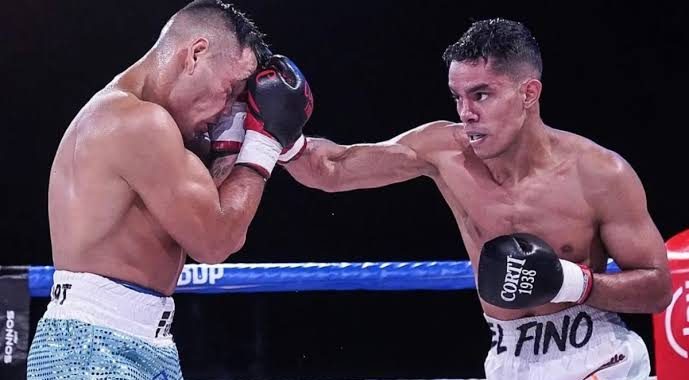
Chiquitín Makes His Statement: Joel Agustín Contreras Outworks Carlos “El Gallero” Rodríguez to Claim WBA Fedelatin Super Flyweight Title in Punta del Este
Punta del Este, Uruguay – October 31, 2026. The Centro de Convenciones sat under the cool spring night air of Uruguay’s Atlantic coast, the kind of venue that feels both intimate and important when the lights go down and two young fighters walk toward the ring for a regional title that can change the trajectory of a career. On this night the main event was billed as a WBA Fedelatin Super Flyweight championship fight (115 pounds). The vacant belt was on the line. In one corner stood Joel Agustín Contreras, the 23-year-old Argentine southpaw from La Rioja known as “Chiquitín.” In the other stood Carlos Rodríguez, the 27-year-old Panamanian called “El Gallero,” who had never been beaten in a professional decision or stoppage.
When the judges’ scorecards were read after ten rounds—98-91, 99-90, 99-90—the Argentine had the belt and the clear victory. Rodríguez’s unbeaten record in the win-loss column was gone. Contreras had taken another step on a path that already included South American titles and now included his first successful trip outside Argentina. The fight was not a war of attrition or a highlight-reel knockout fest from start to finish. It was a measured, often cautious contest of range, timing, and initiative, decided by the clearer work of the younger man and punctuated by one dramatic moment in the eighth round that tilted everything.
Preview: What the Matchup Looked Like on Paper

Going into the night the numbers told a story of contrasting paths. Contreras entered with a 12-1 record and four knockouts. He had been busy in the Argentine scene, collecting regional hardware and showing the kind of activity that keeps a young fighter sharp. A southpaw standing 5-foot-4, he fights with a compact frame and a preference for measured pressure. His only loss had not derailed him; he had reeled off wins since and arrived in Uruguay as the more experienced campaigner in terms of title fights at the regional level. This was his first professional appearance outside Argentina, a significant test of travel, different corners, and the pressure of performing on foreign soil for a belt that carries weight in the WBA’s Latin American structure.
Rodríguez came in at 8-0-2 with two knockouts. The Panamanian had stayed undefeated in the pure win-loss sense, though the two draws suggested nights when he had not fully imposed himself. At 27 he was the older fighter, with the physical advantages of height and an orthodox stance that traditionally creates awkward geometry against a southpaw. Panama has a proud boxing tradition, and “El Gallero” carried the expectation of a fighter looking to establish himself beyond the domestic circuit. He had traveled with his team, including familiar faces from the Panamanian boxing community, and the fight was being broadcast back home on RPC with the long-running program Lo Mejor del Boxeo. For Rodríguez this was a chance to seize a Fedelatin title and open doors toward higher rankings.
The weight class itself—super flyweight—sits in a busy part of the lower divisions. Regional titles like the Fedelatin still matter. They provide ranking points, television exposure across Latin America, and the psychological boost of walking out with a championship belt. The card itself was promoted as a “Noche de Campeones,” featuring other title fights, including women’s bouts that added depth to the evening. The atmosphere in Punta del Este mixed local Uruguayan fight fans with traveling supporters from Argentina and Panama. It was not a sold-out stadium spectacle, but it had the feel of a serious regional show: good lighting, competent officials, and the knowledge that both fighters had something real to gain or lose.
Pre-fight talk focused on styles. Would Contreras’s southpaw jab and body work neutralize Rodríguez’s length? Could the Panamanian use his height to keep the Argentine at the end of the jab and counter effectively? Both camps projected confidence. Contreras’s people pointed to his activity and recent form. Rodríguez’s side emphasized his unbeaten streak and the experience of fighting on the road. The consensus among observers was that it would be competitive, with Contreras perhaps the slight favorite because of volume and the southpaw angle, but nothing was guaranteed against a taller, longer opponent who had never been stopped or clearly outpointed.
Analysis: Why the Fight Unfolded the Way It Did
The actual contest was a study in caution meeting opportunity. From the opening bell both fighters spent the first couple of rounds feeling each other out. It was the classic early-round chess match: jabs thrown more for measurement than damage, feet moving to establish preferred distance, and neither man willing to over-commit. Rodríguez, taller and orthodox, tried to keep the fight on the outside where his reach could matter. Contreras, the shorter southpaw, looked to step in behind his lead hand and close the gap without walking into counters.
What became clear relatively early was that Contreras was the one more consistently trying to force the action. He did not rush. He did not throw wild combinations for the sake of activity. But he was the fighter advancing more often, looking for openings, and landing the cleaner single shots. Rodríguez’s defense was solid enough in the early going, but his offense lacked the aggression many expected from a fighter who needed to use his physical advantages more assertively. Commentators following the fight noted that the Panamanian seemed hesitant to press in the opening rounds, allowing Contreras to set a rhythm.
By the middle rounds the pattern had settled. The fight remained relatively low on sustained exchanges. Both men had moments of success, but Contreras’s punches carried more clarity. When he connected, the shots looked cleaner. Rodríguez would have stretches where he landed and moved well, particularly around the sixth round when some observers felt he was having his best work of the night. Even then, Contreras answered with accurate counters, including notable connections to the head that reminded everyone who was dictating the sharper moments.
The decisive sequence came in the eighth. Contreras found a right hand that hurt Rodríguez—first downstairs, then upstairs according to reports from those ringside. The Panamanian was forced to take a standing count from referee Christian Delgado. In that moment the Argentine pressed, looking for the finish. Rodríguez showed real toughness, recovering enough to survive the round and continue. That knockdown, however, changed the scorecards in a meaningful way. A 10-8 round on top of the work Contreras had already banked created a cushion that became almost impossible to overcome in the final two rounds.
The ninth and tenth rounds did not produce another knockdown, but they did not need to. Contreras continued to outwork and outland his opponent in the eyes of the three judges. Rodríguez never fully solved the southpaw puzzle or found a sustained second wind that could swing momentum. The final bell sounded with the Argentine having controlled the majority of the meaningful action.
Looking at the broader picture, several factors explain the result. First, the southpaw-orthodox dynamic favored Contreras when Rodríguez could not consistently keep him at bay. Second, initiative mattered. In a fight with limited high-volume exchanges, the man who more often forced the issue and landed the cleaner shots got the nod. Third, experience at the regional title level may have given Contreras an edge in composure. He had been in these kinds of fights before. Rodríguez was still building that résumé. Fourth, the travel and the stage did not appear to rattle the Argentine. He performed with the same measured aggression he had shown at home.

Critically, this was not a robbery or a controversial decision. The scores were wide for a reason. Even if some rounds were close, the cumulative effect of Contreras’s work and the eighth-round knockdown made the unanimous result logical. Rodríguez can take pride in his durability and the moments where he competed effectively, but he will need to address the passivity that allowed the fight to slip away.
Top Highlights
The night produced a handful of moments that stood out:
- The early feeling-out process in rounds one and two, where both fighters respected each other’s power and range. It set a tone of calculation rather than recklessness.
- Contreras’s clean connections in the third and fourth rounds that began to tilt the visual narrative. Even without huge combinations, the accuracy was noticeable.
- Rodríguez’s best stretch around the sixth, when he seemed to find a better rhythm and forced Contreras to work harder. It was a reminder that the Panamanian had the tools if he could sustain them.
- The eighth-round knockdown. Contreras’s right hand sequence, the referee’s count, and the Argentine’s attempt to finish. Rodríguez’s recovery and willingness to continue spoke to his toughness, but the damage was done on the scorecards.
- The closing rounds, where Contreras managed the lead without taking unnecessary risks, and Rodríguez could not manufacture the dramatic comeback needed.
- The official announcement of the scores and the subsequent celebration. Contreras, still young, raising his arms as the new Fedelatin champion while Rodríguez processed the first loss of his career.
There were also supporting notes from the undercard that added texture to the evening: Argentine women competing for related titles, local Uruguayan talent getting opportunities, and the overall sense of a well-run regional show that gave fighters from multiple countries a platform.
Summary: What It Means Going Forward
Joel Agustín Contreras leaves Punta del Este as a 13-1 fighter with a new international title on his résumé and growing momentum. At 23 he still has time on his side. The combination of South American hardware and now the WBA Fedelatin Super Flyweight belt positions him for higher-profile opportunities within the WBA rankings. His first fight abroad was a success. He handled the travel, the different environment, and a taller, previously undefeated opponent without looking overwhelmed. The performance was professional rather than spectacular, which may actually be a positive for a young fighter still climbing. Clean work, composure under pressure, and the ability to capitalize when the opening appeared are traits that travel well to bigger stages.
Carlos Rodríguez drops to 8-1-2. The loss ends the unbeaten run but does not erase the work he has put in. At 27 he remains a viable presence in the division if he can learn from the night. The key will be increasing offensive output and solving left-handed opponents more effectively. Panama continues to produce durable, skilled fighters, and Rodríguez showed he belongs at this level even in defeat. A rebound performance against solid opposition would keep him relevant.
For the division, the result reinforces that the Fedelatin titles still serve a purpose. They give emerging talents a measurable goal and a platform that reaches audiences across Latin America. The card in Punta del Este demonstrated that solid regional promotions can deliver competitive fights and new champions without needing the global machinery of the biggest promoters.
In the days after the fight the conversation has been straightforward. Contreras earned the win. He was the more effective fighter over ten rounds. The knockdown in the eighth provided the punctuation mark. Rodríguez competed with heart but could not dictate enough of the action. Boxing at this level is often decided by the accumulation of small advantages rather than one single dramatic sequence, and that is exactly what happened here.
Contreras now carries the belt and the expectation that comes with it. Whether he can turn this victory into a sustained climb toward world-level contention will depend on the matches that follow, the continued development of his game, and the inevitable tests against tougher, more experienced opposition. For one night in late October on the Uruguayan coast, though, the young man from La Rioja did what he came to do. He imposed his will, seized the title, and left with his hand raised. In the professional game, that is the only result that ultimately counts.
The images from the ring—Contreras celebrating, Rodríguez absorbing the first official loss of his career, the belt being strapped around the Argentine’s waist—will linger for both camps. One fighter takes the next step. The other begins the process of answering the questions a first defeat always raises. That is the rhythm of the sport, and on this night in Punta del Este it played out with clarity.