
Kusan: City of Wolves Review: Neon Blood, One Mistake, and the Best Hotline Miami Heir in Years
Released July 30, 2026 Developer: CIRCLEfromDOT Publisher: PQube Platforms: PC (Steam), PlayStation 5, Xbox Series X|S, Nintendo Switch Price: Around $15 / £13 with a 20% launch discount on Steam until mid-August
I finished Kusan: City of Wolves last night with my hands still twitching and Loptimist’s heavy 808s stuck in my head. It’s the kind of game that leaves residue. You close the game and still hear the wet impact of the War Hand, still feel the split-second calculation of whether to throw the Quantum Knife or risk closing distance. One day after launch, the critical consensus is already settling around the mid-to-high 80s, and for once the numbers feel honest. This is a hardcore top-down shooter that knows exactly what it wants to be and largely pulls it off.
The Setup: Rain, Neon, and a Girl Who Can End the City
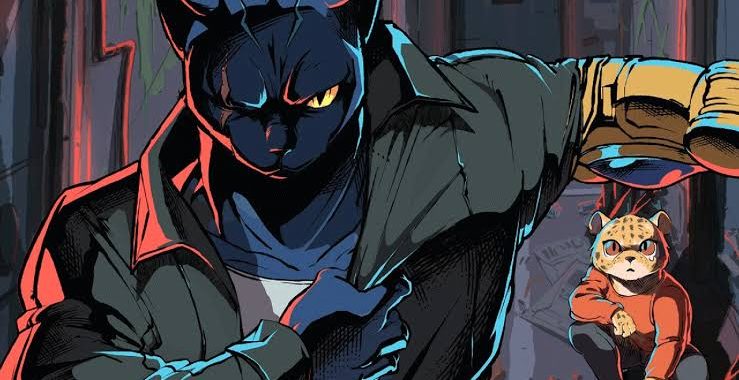
You play as Jin, an ex-soldier with a military-grade prosthetic arm called the War Hand and a past that keeps bleeding into the present. Kusan is a near-future port city that feels like Busan filtered through Hong Kong rain and Tokyo neon. The streets are full of anthropomorphic animals — wolves, dogs, other beasts — moving through a noir underworld of corruption, gunfire, and shifting power. The aesthetic sits somewhere between Blade Runner, Beastars, and the bloody, stylized animal chaos of Caravan Palace’s “Lone Digger” video. It works. The pixel art is sharp and atmospheric, the comic-book cutscenes punchy, and the whole thing drips with that specific late-night neon melancholy that makes every alley feel dangerous.
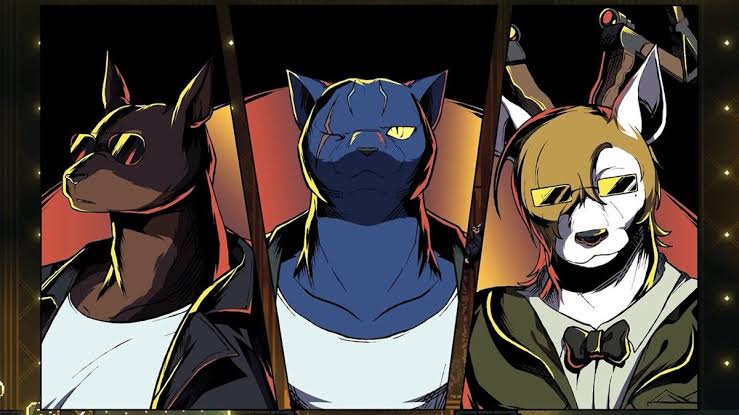
The plot kicks off when Jin takes what should have been a simple job and ends up responsible for Haru, a mysterious girl fitted with something that can level the city. Protecting her drags him into a conspiracy involving old comrades, the Diamond Wolves, and the kind of institutional rot that turns former soldiers into monsters. The story is told mostly through graphic-novel panels and short, stylish sequences. It is not the most original conspiracy yarn you’ll ever encounter, and some early stretches can feel a little muddy if you’re not paying close attention. Still, the presentation carries it. The direction is confident, the transitions between cutscene and gameplay are often excellent, and the central relationship between Jin and Haru gives the carnage a reason to keep escalating.
Combat: Hotline Miami Meets John Wick, and It Actually Lands
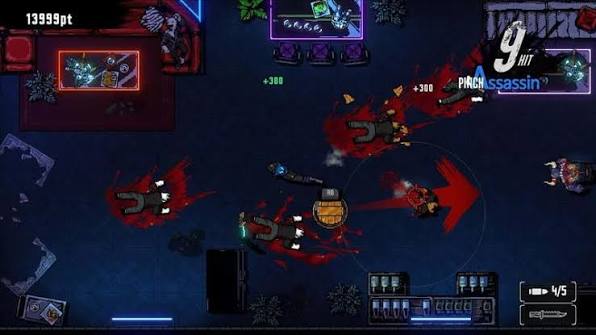
This is the part that matters. Kusan wears its Hotline Miami influence proudly. Top-down view. Tight arenas. One hit and you’re dead. Instant restarts. High ranks for style, speed, and efficiency. The developers have been open about the homage, and the DNA is unmistakable. But the feel is different enough that the comparison eventually starts to feel limiting.
Jin fights with three core tools: the War Hand (his prosthetic melee), the Quantum Knife (a throwable that auto-targets and then sits where it lands until you retrieve it), and one firearm at a time. The firearm choice is meaningful. Pistol for interruption and volume. Shotgun for clusters. Crossbow for piercing lines. Each stage becomes a small, violent puzzle. You scan the room, decide the order of elimination, decide when to risk retrieving the knife, decide whether to charge the War Hand for a big environmental smash or keep it for the next close threat. Hesitation kills. Overconfidence kills. A stray bullet from off-screen kills.
The best moments feel like action cinema. You throw the knife into a gunner across the room, War-Hand a closer enemy through a door you just kicked open, pivot, catch the knife on the rebound path, and clear the last two with a charged shot while the music spikes. When it clicks, it’s exhilarating. When it doesn’t, the restart is mercifully fast. The game wants you to fail, learn, and immediately try a better route.
Boss fights change the rules. Regular enemies die in one clean hit. Bosses do not. Jin still does. These encounters demand pattern reading, patience, and a different rhythm. They are the game’s purest tests of nerve, and most of them land.
Tech-trix: The Secret Weapon
What elevates Kusan above pure homage is the Tech-trix system. Bolts collected from enemies and environmental destruction buy abilities and weapon upgrades. Those abilities are physical puzzle pieces you place on a limited grid. Bigger, stronger pieces take more space. You are constantly making trade-offs: do I take the knife auto-return, the bullet parry, the bigger War Hand explosion, or the fully upgraded crossbow? The system rewards experimentation and personal style more than pure power creep. It feels closer to inventory Tetris than a traditional skill tree, and it keeps the combat feeling modular across the 54 hand-crafted stages.
You can lean into aggressive melee, careful ranged play, or high-risk counter-attack builds. The game never forces one “correct” approach. That flexibility is what makes the difficulty feel fair even when it is brutal.
Sound and Style
Loptimist’s soundtrack is pure Korean hip-hop energy — deep 808s, looping pressure, tracks that refuse to let the intensity drop. Some players will find it the perfect companion; a few reviews have noted it doesn’t always hit the pure adrenaline peak of the best Hotline Miami tracks. Personally, it worked. The music and the neon-soaked pixel art create a consistent, distinctive identity. The city feels alive and hostile at the same time.
Presentation overall is strong. Comic-book cutscenes, sharp animations, stylish violence. Occasional visual clutter can happen in the busiest rooms, but it’s rarely a serious problem.
The Rough Edges
No game this uncompromising arrives without friction. Parry timing can feel a little unclear at first, and the controls occasionally come across as stiff until your muscle memory catches up. The story, while stylishly told, is not always easy to follow in the early hours. The checkpointing within chapters is generous during a session, but leaving the game mid-chapter forces a restart of that section, which can feel punishing if you’re playing in shorter bursts. On PC, the menu navigation not fully supporting mouse feels like a small but noticeable oversight when you’re deep in Tech-trix management.
These are real issues, but they sit inside a package that is otherwise extremely focused. At a price point around fifteen dollars and a main campaign that lands in the 8–12 hour range (longer if you’re chasing SS ranks and full completion), the value is strong.
Who This Is For
If you bounced off Hotline Miami because of the difficulty or the specific flavor of its violence, Kusan will probably bounce you the same way. This is not a game that softens its edges. It demands attention, pattern recognition, and the willingness to die repeatedly while refining your approach. If that sounds like a good time — if the idea of a stylish, neon-noir top-down shooter with meaningful loadout customization and John Wick levels of kinetic violence appeals — then this is one of the better pure-action experiences of 2026 so far.
CIRCLEfromDOT did not invent the genre. They refined a beloved formula, gave it a distinct visual and musical identity, and built systems that reward mastery without making the first run feel completely hopeless. The result is a game that feels both familiar and fresh, brutal and stylish, short enough to recommend widely and deep enough to obsess over ranks.
I walked away from Kusan: City of Wolves with sore fingers, a playlist of Loptimist tracks, and that rare post-game high that only the best tight action games deliver. The city is mean, the wolves are hungry, and for a little while longer, I’m still hearing the War Hand connect.
