

S.T.A.L.K.E.R. 2: Heart of Chornobyl – Cost of Hope Review
Two years after Heart of Chornobyl staggered into the world, battered and incomplete but still somehow magnetic, GSC Game World has come back with its first proper expansion. Cost of Hope does not reinvent the Zone. It does something quieter and, in some ways, more satisfying: it fills in the blanks that always felt deliberate and yet frustrating. The Chornobyl Nuclear Power Plant is finally open. Duty and Freedom are no longer background noise. The Iron Forest exists as more than a name on an old map. And for the first time since launch, the game feels closer to the thing a lot of us were hoping for in November 2024.
It is not perfect. The faction war never quite ignites the way the marketing suggested. Some of the technical jank that has haunted the game since day one still pokes through, even with the massive free 2.0 update that arrived on the same day. But the atmosphere, the exploration, the moments of pure dread and sudden violence—those are stronger than ever. If you still have a soft spot for this grim, radioactive sandbox, Cost of Hope is worth the price of admission.
Coming Back to a Familiar Hell
Cost of Hope slots into the middle of the main campaign, somewhere between “Answers Come at a Price” and “Down Below.” A mysterious PDA signal pulls Skif into a side conflict that quickly becomes the main event. The fragile peace between Duty and Freedom is collapsing. Old grudges, half-truths, and a particularly nasty piece of experimental tech are about to make everything worse. You are not starting a new story so much as stepping sideways into one that was always simmering under the surface of the base game.
That decision works better than it has any right to. The expansion never feels bolted on. New locations open up naturally. Familiar faces reappear with the right amount of weary recognition rather than forced cameos. Zulu shows up looking older and more exhausted than you remember. Mavka brings a different kind of intensity. The writing trusts you to already know these people and the history they carry. It is respectful without being precious.
The real stars, though, are the new places.
The Iron Forest and the Power Plant
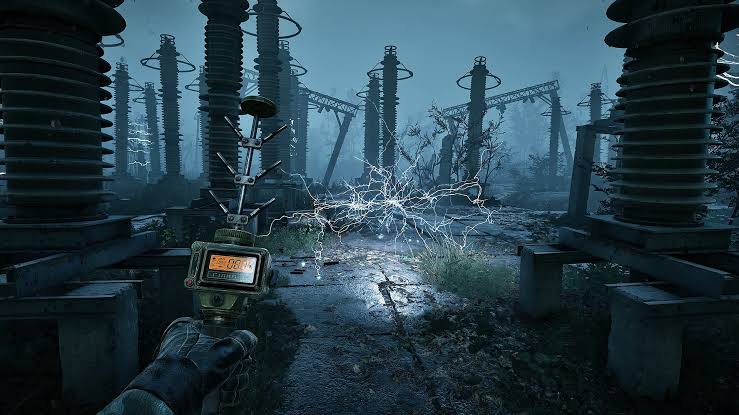
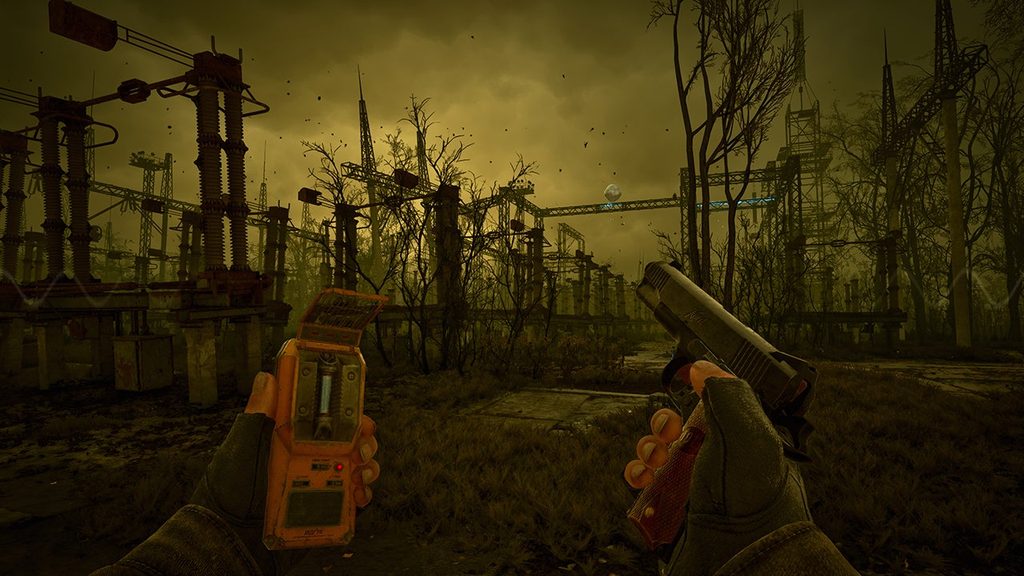
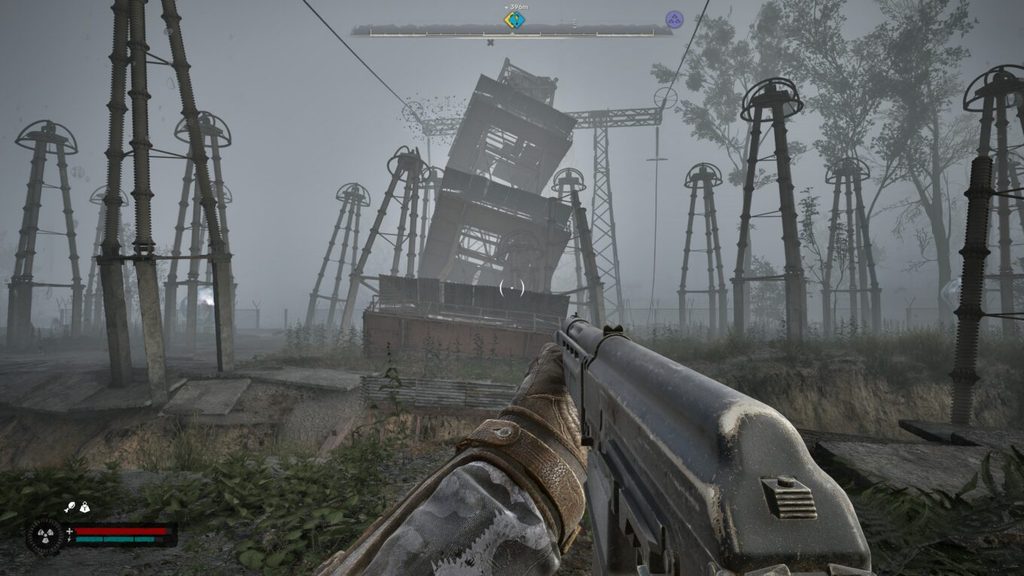
The Iron Forest is the first major addition and immediately one of the best areas GSC has ever built. What used to be a single anomaly in earlier games has been expanded into a sprawling, hostile stretch of twisted metal, half-collapsed electrical infrastructure, and fog that never seems to lift. Radio signals drift through the air carrying the last words of people who died years ago. Snorks hunt in packs. Electrical anomalies crackle without warning. It is the kind of place that makes you slow down, check your ammo, and wonder if the next sound was a mutant or just the wind moving through dead machinery.
The Chornobyl Nuclear Power Plant itself is the emotional centerpiece. The base game’s decision to keep it locked away always felt strange; the entire series is named after this place, and yet Heart of Chornobyl treated it like a distant landmark. Cost of Hope finally lets you walk the grounds. The sarcophagus looms. Reactor Four still radiates quiet menace. The industrial tombs that surround it are solemn rather than constantly lethal, which somehow makes them more effective. You can take your time. You can listen to the silence. You can remember what this place represents outside of video-game lore.
Then there is Lymansk. I do not want to spoil the details, but if you have ever wanted Ravenholm by way of Ukrainian urban horror, this is it. The laws of physics start to bend. Lights fail. Streets lead somewhere they should not. The section is more tightly directed than the rest of the expansion, and that focus pays off. Creeping through those impossible suburbs with a dying flashlight and dwindling ammo is pure S.T.A.L.K.E.R. at its most unforgiving and most memorable.
Combat, Guns, and the Feel of the Zone
The gunplay has always been one of Heart of Chornobyl’s quiet strengths, and Cost of Hope leans into it. New rifles arrive with satisfying weight and bark. Some of the unique weapons tied to specific quests or faction routes feel genuinely special rather than just stat sticks. The handful of set-piece fights—an out-of-control centrifuge, a telekinetic mutant throwing a tantrum in a silo, a counter-sniping duel under a psychic tree—are among the best the series has delivered. Even the more routine firefights still have that heavy, deliberate impact that makes every shot feel like it matters.
A-Life, the system that is supposed to make the Zone feel alive, has improved with the 2.0 update. Enemies still do dumb things sometimes. Patrols can still glitch. But the world reacts more consistently than it did at launch. You will still get the occasional moment where a bloodsucker decides to stare at a wall for thirty seconds, but those moments are rarer. The Zone feels dangerous again in a way that had started to fade after the first hundred hours.
The Faction Problem
Here is the part that does not quite land. Cost of Hope promises a renewed war between Duty and Freedom. What you actually get is something more restrained. For most of the runtime the two factions are still cooperating, or at least tolerating each other, because they have a shared problem. The eventual split feels inevitable rather than explosive. When the choice finally arrives—during “The Destructive Power of the Mind”—it is binary and clear. You pick a side. The remaining missions diverge significantly. Both paths are well written and distinct. Replaying the opposite route later is genuinely interesting because the same battles play out differently depending on who you support.
But the wider Zone does not care as much as it should. Your decision has consequences inside the expansion, and those consequences feel weighty in the moment. Outside of it, the rest of the map barely notices. That is the missed opportunity. Heart of Chornobyl already simplified faction politics compared to the older games. Cost of Hope had a chance to make them matter again in a meaningful, systemic way. Instead it mostly uses them as narrative scaffolding for two solid story branches. It is good scaffolding. It just is not the full-scale faction war some of us were hoping for.
Still, the two endings are strong enough that I finished the expansion, loaded an earlier save, and immediately played the other path. That is rare. Most games cannot make me care enough about a second ending to sit through the same content again. Cost of Hope managed it.
Technical Reality Check
The free 2.0 update that launched alongside the expansion is a bigger deal than many people expected. The jump to Unreal Engine 5.5.4 brings better lighting, improved fog, and noticeable performance gains on most hardware. New weapons and attachments appear in the base game as well. Difficulty options are more flexible. The Zone looks and feels more coherent than it did at launch.
Bugs still exist. I hit a couple of softlocks that required a reload. Enemy AI can still do strange things. Some quest triggers are finicky. None of it is launch-level catastrophic, but it is a reminder that this is still a GSC game. Save often. Expect the occasional oddity. The improvements are real; the polish is not absolute.
Length, Value, and Who This Is For
Story completion sits somewhere between eight and twelve hours if you stick to the critical path. Thorough exploration, side content, and a second ending push that closer to fifteen or twenty. For thirty dollars that is solid value, especially if you already own the Ultimate Edition. The expansion respects your time without feeling short. It also respects the base game’s identity. Nothing here tries to turn S.T.A.L.K.E.R. into something softer or more accessible. The slow-burn pacing, the inventory management, the constant low-level anxiety—they are all still here.
If you bounced off Heart of Chornobyl because of technical issues or because the story never quite clicked, Cost of Hope plus the 2.0 update is the best possible time to try again. The game is more stable, the new locations are some of the strongest the series has ever had, and the Duty/Freedom conflict finally gets the attention it always deserved. If you already love the Zone and have a save sitting around in the mid-to-late game, this is an easy recommendation. Jump back in. The power plant has been waiting.
Final Thoughts
Cost of Hope is not a radical reinvention. It is a careful, atmospheric, often beautiful expansion of a game that was already special despite its flaws. The Iron Forest is unforgettable. The power plant feels like a proper pilgrimage. Lymansk is pure nightmare fuel. The story branches give you real reasons to care about the choice you make. The faction war never fully delivers on its promise, and the technical rough edges have not entirely disappeared, but the strengths of the base game—exploration, tension, that particular brand of post-Soviet melancholy—are used with real confidence here.
Two years on, GSC has delivered the version of Heart of Chornobyl that a lot of us kept hoping would eventually arrive. The Zone is still broken. The Zone is still dangerous. And for the first time in a while, it feels like it is exactly where it needs to be.
If you have any love left for this strange, radioactive corner of Ukraine, put your suit back on. The cost of hope is thirty dollars and a few more sleepless nights. It is worth paying.
